


3 months 3 days ago
What thinkest thou, Simon? of whom do the kings of the earth take custom or tribute? of their own children, or of strangers?
▼
Source
source
17:25 (KJV)

1 week 4 days ago
I have often thought that nothing would do more extensive good at small expense than the establishment of a small circulating library in every county, to consist of a few well-chosen books, to be lent to the people of the country under regulations as would secure their safe return in due time.
▼
Source
source
Letter to John Wyche
2 months 2 weeks ago
During and after World War II, a large number of academic economists were exposed directly to business life, and had more or less extensive opportunities to observe how decisions were actually made in business organizations. Moreover, those who became active in the development of the new management science were faced with the necessity of developing decision-making procedures that could actually be applied in practical situations. Surely these trends would be conducive to moving the basic assumptions of economic rationality in the direction of greater realism.


5 months 1 week ago
There was no denying that he would always be conscious of the fact that an Earthman was an Earthman. He couldn't help that. That was the result of a childhood immersed in an atmosphere of bigotry so complete that it was almost invisible, so entire that you accepted its axioms as second nature. Then you left it and saw it for what it was when you looked back.

4 months 1 week ago
But perhaps I lack the gift. I see I've described her as being like a sword. That's true as far as it goes. But utterly inadequate by itself, and misleading. I ought to have said 'But also like a garden. Like a nest of gardens, wall within wall, hedge within hedge, more secret, more full of fragrant and fertile life, the further you explore.' And then, of her, and every created thing I praise, I should say 'in some way, in its unique way, like Him who made it.' Thus up from the garden to the Gardener, from the sword to the Smith. to the life-giving Life and the Beauty that makes beautiful.

4 months 3 weeks ago
Choose to love whomsoever thou wilt: all else will follow. Thou mayest say, "I love only God, God the Father." Wrong! If Thou lovest Him, thou dost not love Him alone; but if thou lovest the Father, thou lovest also the Son. Or thou mayest say, "I love the Father and I love the Son, but these alone; God the Father and God the Son, our Lord Jesus Christ who ascended into heaven and sitteth at the right hand of the Father, the Word by whom all things were made, the Word who was made flesh and dwelt amongst us; only these do I love." Wrong again! If thou lovest the Head, thou lovest also the members; if thou lovest not the members, neither dost thou love the Head.
▼
Source
source
p 438

4 months 1 week ago
In former days, men sold themselves to the Devil to acquire magical powers. Nowadays they acquire those powers from science, and find themselves compelled to become devils. There is no hope for the world unless power can be tamed, and brought into the service, not of this or that group of fanatical tyrants, but of the whole human race, white and yellow and black, fascist and communist and democrat; for science has made it inevitable that all must live or all must die.
▼
Source
source
Ch. 2: Leaders and Followers

4 months 1 week ago
All the higher, more penetrating ideals are revolutionary. They present themselves far less in the guise of effects of past experience than in that of probable causes of future experience.
▼
Source
source
"The Moral Philosopher and the Moral Life" in address to the Yale Philosophical Club, published in the International Journal of Ethics, April 1891

3 weeks 5 days ago
The shortest way to wealth is through the contempt of wealth.

4 months 2 weeks ago
A strong memory is commonly coupled with infirm judgment.
▼
Source
source
Ch. 9. Of Liars, tr. Cotton, rev. W. Carew Hazlitt, 1877

3 months 1 week ago
The plea of anger or of drunkenness - as having placed the criminal for the moment beyond the control of his reason - relieves him from the charge of premeditated and malicious intent; but a rational legislation will rather provide more severe than milder punishment for such cases, particularly if such a state of mind is habitual with the accused; for a single unlawful act may well constitute an exception from an otherwise blameless life. But a person who pleads, "I habitually get so angry or so drunk as not to be any longer master of my senses!" confesses thereby that he changes himself into a beast on a fixed principle, and that he is, therefore, not fit to live among rational beings.
▼
Source
source
P. 351

5 months 1 week ago
This opinion... appears to be ancient... that the one, excess and defect, are the principles of things... It is not... probable that there are more than three principles... [E]ssence is one certain genus of being: so that principles will differ from each other in prior and posterior alone, but not in genus, for in one genus there is always one contrariety, and all contrarieties appear to be referred to one. That there is neither one element, therefore, nor more than two or three, is evident.
1 week 2 days ago
The vices are very justly man's executioners.
▼
Source
source
Chapter X, p. 85


4 months 1 week ago
Those only are happy (I thought) who have their minds fixed on some object other than their own happiness; on the happiness of others, on the improvement of mankind, even on some art or pursuit, followed not as a means, but as itself an ideal end. Aiming thus at something else, they find happiness by the way.
▼
Source
source
(p. 142)
1 week 5 days ago
"Fire is the first and final mask of my God. We dance and weep between two enormous pyres." Our thoughts and our bodies flash and glitter with reflected light. Between the two pyres I stand serenely, my brain unshaken amid the vertigo, and I say: "Time is most short and space most narrow between these two pyres, the rhythm of this life is most sluggish, and I have no time, nor a place to dance in. I cannot wait." Then all at once the rhythm of the earth becomes a vertigo, time disappears, the moment whirls, becomes eternity, and every point in space - insect or star or idea - turns into dance.

3 months 1 week ago
Each of us is born with a share of purity, predestined to be corrupted by our commerce with mankind, by that sin against solitude.
1 month 1 week ago
The possibility of associating two or three hundred families in agricultural and manufacturing industry depends upon a system so entirely different from what now exists, that it will open to the reader a new social world. He must consequently, in the study which opens before him, follow the guide with confidence, bearing constantly in min the gigantic results which will flow from association. Such results are well worth the sacrifice of a few prejudices. Every sensible reader will be of this opinion, and will concur to follow the advice which I shall constantly give, namely, to neglect the form and style of presentation, and occupy himself solely with the substance of the theory, seeking to determine whether the process of association is really discovered or not.
▼
Source
source
The Theory of Social Organization. Harmonian Man: Selected Writings of Charles Fourier, p. 5.

1 month 2 days ago
He who first shortened the labor of copyists by device of movable types was disbanding hired armies, and cashiering most kings and senates, and creating a whole new democratic world: he had invented the art of printing.
▼
Source
source
Bk. I, ch. 5.

2 months 1 week ago
No longer able to believe in the Church religion, whose falsehood they had detected, and incapable of accepting true Christian teaching, which denounced their whole manner of life, these rich and powerful people, stranded without any religious conception of life, involuntarily returned to that pagan view of things which places life's meaning in personal enjoyment. And then among the upper classes what is called the "Renaissance of science and art" took place, which was really not only a denial of every religion, but also an assertion that religion was unnecessary.
1 week 1 day ago
...that to expect a bad person not to harm others is like expecting fig trees not to secrete juice, babies not to cry, horses not to neigh-the inevitable not to happen.
▼
Source
source
(Hays translation) XII, 16

8 months 3 weeks ago
We cannot stand by while the social contract is broken by those who chose conflict over equality. Those that want equal treatment for themselves have to treat others equally. They cannot lead with exclusion, then turn around and demand equal treatment. It is a double standard. If they are going to exclude first, then justice demands that we, the group that stands with universality, follow our duty to react and exclude those that exclude.

4 months 2 weeks ago
But by far the greatest hindrance and aberration of the human understanding proceeds from the dullness, incompetency, and deceptions of the senses; in that things which strike the sense outweigh things which do not immediately strike it, though they be more important. Hence it is that speculation commonly ceases where sight ceases; insomuch that of things invisible there is little or no observation.
▼
Source
source
Aphorism 50

2 months 1 week ago
Sight-seeing is the art of disappointment.
▼
Source
source
Pt. I, ch. II.
1 month 3 days ago
The history of utopias is no less fascinating than the history of metallurgy or of chemical engineering.
▼
Source
source
New Preface, p. vi
3 weeks 5 days ago
Never give way to melancholy; resist it steadily, for the habit will encroach.
▼
Source
source
Vol. I, ch. 10, p. 372

3 months 3 weeks ago
Write in the sand the flaws of your friend.
▼
Source
source
As quoted in Geary's Guide to the World's Great Aphorists (2007) by James Geary
4 months 1 week ago
When I was a boy, I had a clock with a pendulum that could be lifted off. I found that the clock went very much faster without the pendulum. If the main purpose of a clock is to go, the clock was the better for losing its pendulum. True, it could no longer tell the time, but that did not matter if one could teach oneself to be indifferent to the passage of time. The linguistic philosophy which cares only about language and not about the world, is like the boy who preferred the clock without the pendulum because, although it no longer told the time, it went more easily than before and at a more exhilarating pace.
▼
Source
source
Foreword to Ernest Gellner Words and Things, 1959
1 week 5 days ago
Behind the stream of my mind and body, behind the stream of my race and all mankind, behind the stream of plants and animals, I watch with trembling the Invisible, treading on all visible things and ascending. Behind his heavy and blood-splattered feet I hear all living things being trampled on and crushed. His face is without laughter, dark and silent, beyond joy and sorrow, beyond hope.
3 weeks 5 days ago
What fools these mortals be!

4 months 1 week ago
Rational and kindly behavior tends to produce good results and these results remain good even when the behavior which produced them was itself produced by a pill.
▼
Source
source
"Brave New World Revisited" (1956), in Moksha: Writings on Psychedelics and the Visionary Experience (1977), p. 99
3 months 3 days ago
It is more blessed to give than to receive.
▼
Source
source
Acts 20:35b
3 weeks 1 day ago
Very little of the great cruelty shown by men can really be attributed to cruel instinct. Most of it comes from thoughtlessness or inherited habit. The roots of cruelty, therefore, are not so much strong as widespread. But the time must come when inhumanity protected by custom and thoughtlessness will succumb before humanity championed by thought. Let us work that this time may come.
1 week ago
Those hypotheses do not a little hinder the progress of Humane knowledge, that introduce Morals and Politicks into the Explications of Corporeal Nature, where all things are indeed transacted according to Laws Mechanical.
▼
Source
source
Reflections upon the Hypothesis of Alcali and Acidum (1675) p. 33.
4 months 1 week ago
Tell him to live by yes and no - yes to everything good, no to everything bad.
▼
Source
source
As quoted in The Thought and Character of William James (1935) by Ralph Barton Perry, Vol. II, ch. 91

1 month 2 weeks ago
Echoing the Christian faith in free will, humanists hold that human beings are - or may someday become - free to choose their lives. They forget that the self that does the choosing has not itself been chosen.
▼
Source
source
Beyond the Last Thought: Freud's cigars and the long way round to Nirvana (p. 86)

2 months 4 weeks ago
Man is said to be a reasoning animal. I do not know why he has not been defined as an affective or feeling animal. Perhaps that which differentiates him from other animals is feeling rather than reason. More often I have seen a cat reason than laugh or weep. Perhaps it weeps or laughs inwardly - but then perhaps, also inwardly, the crab resolves equations of the second degree.
4 months 2 weeks ago
It is not the pleasure of curiosity, nor the quiet of resolution, nor the raising of the spirit, nor victory of wit, nor faculty of speech that are the true ends of knowledge, but it is a restitution and reinvesting, in great part, of man to the sovereignty and power, for whensoever he shall be able to call the creatures by their true names, he shall again command them.
▼
Source
source
Valerius Terminus: Of the Interpretation of Nature (ca. 1603), in Works, Vol. I, p. 83; The Works of Francis Bacon (1819), Vol. 2, p. 133
2 months 4 weeks ago
"God is just and punishes us; that is all we need to know; as far as we are concerned the rest is merely curiosity." Such was the conclusion of Lamennais (Essai, etc., partie, chap. vii.), an opinion shared by many others. Calvin also held the same view. But is there anyone content with this? Pure curiosity! - to call this load that well nigh crushes our heart pure curiosity!

5 months 1 day ago
Man has three ways of acting wisely. First, on meditation; that is the noblest. Secondly, on imitation; that is the easiest. Thirdly, on experience; that is the bitterest.

2 months 1 week ago
The sociologist permits himself to see only what is acceptable to his colleagues.
▼
Source
source
(p. 370)
2 months 2 weeks ago
First, most producers are employees of firms, not owners. Viewed from the vantage point of classical economic theory, they have no reason to maximize the profits of firms, except to the extent that they can be controlled by owners. Moreover, profit-making firms, nonprofit organizations, and bureaucratic organizations all have exactly the same problem of inducing their employees to work toward organizational goals. There is no reason, a priori, why it should be easier (or harder) to produce this motivation in organizations aimed at maximizing profits than in organizations with different goals. If it is true in an organizational economy that organizations motivated by profits will be more efficient than other organizations, additional postulates will have to be introduced to account for it.
▼
Source
source
Simon (1991) "Organizations and Markets:" in: Journal of Economic Perspectives. 5 (2 Spring 1991): p. 28.
1 week 4 days ago
To the existence of banks of discount for cash... there can be no objection, because there can be no danger of abuse, and they are a convenience both to merchants and individuals. I think they should even be encouraged, by allowing them a larger than legal interest on short discounts, and tapering thence, in proportion as the term of discount is lengthened, down to legal interest on those of a year or more. Even banks of deposit, where cash should be lodged, and a paper acknowledgment taken out as its representative, entitled to a return of the cash on demand, would be convenient for remittances, travelling persons, etc. But, liable as its cash would be to be pilfered and robbed, and its paper to be fraudulently re-issued, or issued without deposit, it would require skilful and strict regulation.
▼
Source
source
ME 13:431
3 weeks ago
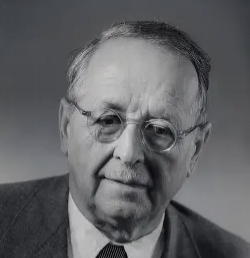
We cannot hope to give here a final clarification of the essence of fact, judgement, object, property; this task leads into metaphysical abysses; about these one has to seek advice from men whose name cannot be stated without earning a compassionate smile-e.g.
▼
Source
source
Fichte. Das Kontinuum. Kritische Untersuchungen uber die Grundlagen der Analysis (1918), as quoted/translated by Erhard Scholz, "Philosophy as a Cultural Resource and Medium of Reflection for Hermann Weyl"
3 weeks 1 day ago
To the man who is truly ethical all life is sacred, including that which from the human point of view seems lower in the scale. He makes distinctions only as each case comes before him, and under the pressure of necessity, as, for example, when it falls to him to decide which of two lives he must sacrifice in order to preserve the other. But all through this series of decisions he is conscious of acting on subjective grounds and arbitrarily, and knows that he bears the responsibility for the life which is sacrificed.
▼
Source
source
p. 269

1 week 1 day ago
I reduce to two the systems of philosophy which deal with man's soul. The first and older system is materialism; the second is spiritualism.
2 months 4 weeks ago
I feel that I have within me a medieval soul, and I believe that the soul of my country is medieval, that it has perforce passed through the Renaissance, the Reformation, and the Revolution - learning from them, yes, but without allowing them to touch the soul, preserving the spiritual inheritance which has come down from what are called the Dark Ages. And Quixotism is simply the most desperate phase of the struggle between the Middle Ages and the Renaissance, which was the offering of the Middle Ages.
CivilSimian.com created by AxiomaticPanic, CivilSimian, Kalokagathia