

8 months 1 week ago
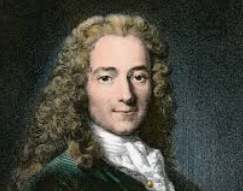
It is very strange that men should deny a creator and yet attribute to themselves the power of creating eels.
▼
Source
source
From the Philosophic Dictionary, as quoted in The life of Pasteur, 1902
6 months 3 weeks ago
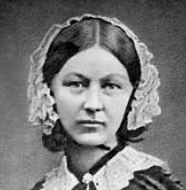
I have lived and slept in the same bed with English countesses and Prussian farm women... no woman has excited passions among women more than I have.
▼
Source
source
As quoted in Parted Lips : Lesbian Love Quotes Through the Ages (2002) by Simone Rich



8 months 1 week ago
Technological progress has merely provided us with more efficient means for going backwards.
▼
Source
source
Ch. 1, p. 9 [2012 reprint]. Also in "Tomorrow and Tomorrow and Tomorrow" in Adonis and the Alphabet (1956); later in Collected Essays (1959), p. 293
6 months 2 weeks ago
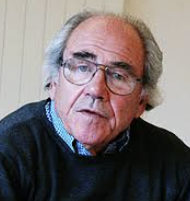
Driving is a spectacular form of amnesia. Everything is to be discovered, everything to be obliterated. Admittedly, there is the primal shock of the deserts and the dazzle of California, but when this is gone, the secondary brilliance of the journey begins, that of the excessive, pitiless distance, the infinity of anonymous faces and distances, or of certain miraculous geological formations, which ultimately testify to no human will, while keeping intact an image of upheaval. This form of travel admits of no exceptions: when it runs up against a known face, a familiar landscape, or some decipherable message, the spell is broken: the amnesic, ascetic, asymptotic charm of disappearance succumbs to affect and worldly semiology.
▼
Source
source
Vanishing Point (pp. 9-10)
6 months 2 weeks ago
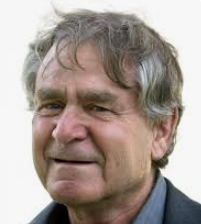
When land and its tillage are the basis of taxation, one need not care exactly how many people there are.
▼
Source
source
Chapter 12, Political Arithmetic, p. 103.

8 months 1 week ago
Ethics is in origin the art of recommending to others the sacrifices required for co-operation with oneself.
▼
Source
source
Ch. 6: On the Scientific Method in Philosophy
8 months 2 weeks ago
Physicians have this advantage: the sun lights their success and the earth covers their failures.
▼
Source
source
Ch. 37
6 months 3 weeks ago
The prestige which constitutes three-fourths of might is first of all made up of that superb indifference which the powerful have for the weak, an indifference so contagious that it is communicated even to those who are its object.
▼
Source
source
in The Simone Weil Reader, p. 168
9 months 1 week ago
Then the case is the same in all the other arts for the orator and his rhetoric; there is no need to know the truth of the actual matters, but one merely needs to have discovered some device of persuasion which will make one appear to those who do not know to know better than those who know.
8 months 1 week ago
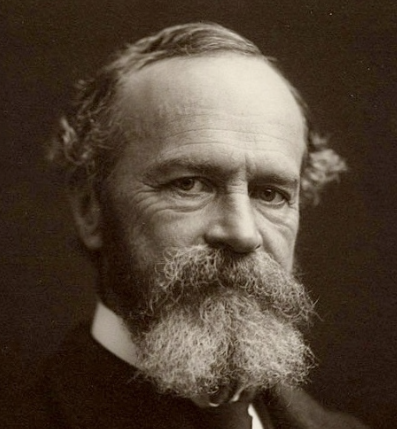
We inherit the warlike type; and for most of the capacities of heroism that the human race is full of we have to thank this cruel history. Dead men tell no tales, and if there were any tribes of other type than this they have left no survivors. Our ancestors have bred pugnacity into our bone and marrow, and thousands of years of peace won't breed it out of us. The popular imagination fairly fattens on the thought of wars. Let public opinion once reach a certain fighting pitch, and no ruler can withstand it. In the Boer war both governments began with bluff, but they couldn't stay there; the military tension was too much for them.
7 months 4 days ago
No system would have ever been framed if people had been simply interested in knowing what is true, whatever it may be. What produces systems is the interest in maintaining against all comers that some favourite or inherited idea of ours is sufficient and right.

8 months 1 week ago
The belief in a political Utopia is especially dangerous. This is possibly connected with the fact that the search for a better world, like the investigation of our environment, is (if I am correct) one of the oldest and most important of all the instincts.
6 months 5 days ago
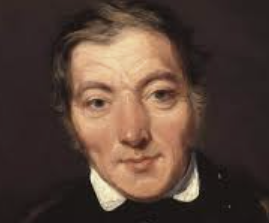
The advantage of pure, and the disadvantage of impure air are experienced each time we breathe, and all who understand the causes of disease know that an impure atmosphere is most unfavourable to the enjoyment of health, and an efficient cause to shorten human existence within the natural life of man. It is therefore most desirable that decisive measures should be devised and generally adopted to ensure to all a pure atmosphere, in which to live during their lives.
▼
Source
source
3rd Part
9 months 1 week ago
Titles are an important part of a story and I take considerable care in choosing one. In fact, I cannot start a story until I have chosen a title.
6 months 1 week ago
Nothing in this book is true.

7 months 1 week ago
It was evident that he revived by fits and starts. He would suddenly come to himself from actual delirium for a few minutes; he would remember and talk with complete consciousness, chiefly in disconnected phrases which he had perhaps thought out and learnt by heart in the long weary hours of his illness, in his bed, in sleepless solitude.
▼
Source
source
Part 2, Chapter 10

4 months 1 week ago
When you wake up in the morning, tell yourself: The people I deal with today will be meddling, ungrateful, arrogant, dishonest, jealous, and surly. They are like this because they can't tell good from evil. But I have seen the beauty of good, and the ugliness of evil, and have recognized that the wrongdoer has a nature related to my own-not of the same blood or birth, but the same mind, and possessing a share of the divine.
▼
Source
source
II. 1, trans. Gregory Hays
6 months 3 weeks ago
In reading Jung's account of his cases, it is impossible not to be aware that his success was due partly to an element of ruthlessness; he was dominated by curiosity rather than compassion.
▼
Source
source
p. 36

8 months 3 weeks ago
In order to enter into a real knowledge of your condition, consider it in this image: A man was cast by a tempest upon an unknown island, the inhabitants of which were in trouble to find their king, who was lost; and having a strong resemblance both in form and face to this king, he was taken for him, and acknowledged in this capacity by all the people.
4 months 3 weeks ago
A great fortune is a great slavery.
▼
Source
source
From Ad Polybium De Consolatione (Of Consolation, To Polybius), chap. VI, line 5
6 months 3 weeks ago
Thinking is more erotic than calculating.
8 months 1 day ago
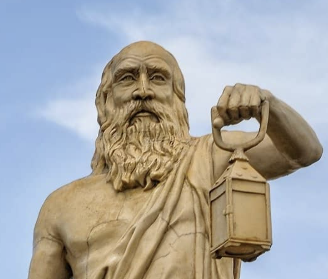
When Alexander the Great addressed him with greetings, and asked if he wanted anything, Diogenes replied "Yes, stand a little out of my sunshine."
▼
Source
source
From Plutarch, Alexander, 14. Cf. Diogenes Laërtius, vi. 38, Cicero, Tusculan Disputations, v. 32
5 months 2 weeks ago
The most important feature of natural selection is that it is a process of drift. Evolution has no end-point or direction, so if the development of society is an evolutionary process it is one that is going nowhere.
▼
Source
source
An Old Chaos: Humanism and Flying Saucers (p. 78)
1 year 1 week ago
Precisely as an enigma, the symptom, so to speak, announces its dissolution through interpretation: the aim of psychoanalysis is to re-establish the broken network of communication by allowing the patient to verbalize the meaning of his symptom: through this verbalization the symptom is automatically dissolved. This, then is the basic point: in its very construction, the symptom implies the field of the big Other as consistent, complete, because its very function is an appeal to the Other which contains its meaning.

8 months 2 days ago
I never believed in a God. There may have been times when I wondered if there might be a God, but it always seemed to me wildly implausible that a God worth worshipping could allow the Holocaust to occur.
▼
Source
source
From an interview, as cited by Dan Goldberg "Peter Singer: is he really the most dangerous man in the world?", The Jewish Chronicle

7 months 1 week ago
Anxiety - or the fanaticism of the worst.
8 months 1 week ago
Our labour preserves us from three great evils -- weariness, vice, and want.
6 months 3 weeks ago
It is clearly absurd to say that if you go on adding atoms together until they have fused into a complex molecule, that molecule will become capable of self-reproduction. It is like saying that a skyscraper is more capable of reproduction than a bungalow. And suppose life did come into being through some accidental interaction of molecules, sun and cosmic rays; why should it not be content to rest passively? Why should it have been possessed of a desire to persist and evolve?
▼
Source
source
p. 259
8 months 2 days ago
Since ancient times, philosophers have maintained that to strive too hard for one's own happiness is self-defeating.
▼
Source
source
Chapter 5, Reason And Genes, p. 145

8 months 1 week ago
The foundations on which several duties are built, and the foundations of right and wrong from which they spring, are not perhaps easily to be let into the minds of grown men, not us'd to abstract their thoughts from common received opinions. Much less are children capable of reasonings from remote principles. They cannot conceive the force of long deductions. The reasons that move them must be obvious, and level to their thoughts, and such as may be felt and touched. But yet, if their age, temper, and inclination be consider'd, they will never want such motives as may be sufficient to convince them.
▼
Source
source
Sec. 81

8 months 2 weeks ago
Concerning the female sorcerer. Roman law also prescribes this. Why does the law name women more than men here, even though men are also guilty of this? Because women are more susceptible to those superstitions of Satan; take Eve, for example. They are commonly called "wise women." Let them be killed.
▼
Source
source
Sermon on Exodus, 1526, WA XVI, p. 551 as quoted in Luther on Women: A Sourcebook, edited by Susan C. Karant-Nunn, Merry E. Wiesner-Hanks, (2003), p. 231
8 months 1 week ago
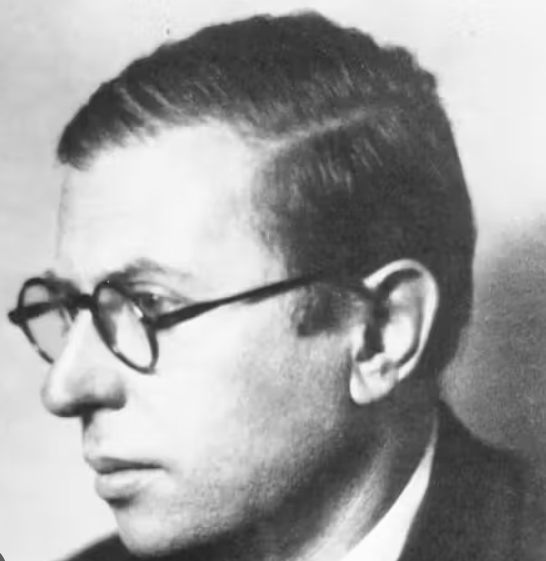
...man first of all exists, encounters himself, surges up in the world - and defines himself afterwards.

6 months 1 week ago
Despite the fact that the doctors treated him, bled him, and gave him medicines to drink, he recovered.
▼
Source
source
[sometimes quoted as "Though the doctors treated him, let his blood, and gave him medications to drink, he nevertheless recovered."] Bk. XV, ch. 12
6 months ago
A single breaker may recede; but the tide is evidently coming in.
▼
Source
source
pp. 266-267
4 months 3 weeks ago
It is always right that a man should be able to render a reason for the faith that is within him.
▼
Source
source
Vol. I, ch. 3, p. 91
4 months 3 weeks ago
The Greeks made Space the subject-matter of a science of supreme simplicity and certainty. and certainty Out of it grew, in the mind of classical antiquity, the idea of pure science. Geometry became one of the most powerful expressions of that sovereignty of the intellect that inspired the thought of those times. At a later epoch, when the intellectual despotism of the Church... had crumbled, and a wave of scepticism threatened to sweep away all that had seemed most fixed, those who believed in Truth clung to Geometry as to a rock, and it was the highest ideal of every scientist to carry on his science "more geometrico". Matter... could be measured as a quantity and... its characteristic expression as a substance was the Law of Conservation of Matter... This, which has hitherto represented our knowledge of space and matter, and which was in many quarters claimed by philosophers as a priori knowledge, absolutely general and necessary, stands to-day a tottering structure.
▼
Source
source
Introduction

7 months 1 week ago
All nature abounds in proofs of other influences than merely mechanical action, even in the physical world. They crowd in upon us at the rate of several every minute. And my observation of men has led me to this little generalization. Speaking only of men who really think for themselves and not of mere reporters, I have not found that it is the men whose lives are mostly passed within the four walls of a physical laboratory who are most inclined to be satisfied with a purely mechanical metaphysics. On the contrary, the more clearly they understand how physical forces work the more incredible it seems to them that such action should explain what happens out of doors. A larger proportion of materialists and agnostics is to be found among the thinking physiologists and other naturalists, and the largest proportion of all among those who derive their ideas of physical science from reading popular books.
▼
Source
source
Lecture II : The Universal Categories, §3. Laws: Nominalism, CP 5.65
8 months 1 week ago
Science is not a system of certain, or well established, statements; nor is it a statement which steadily advances towards state of finality. Our science is not knowledge (epistēmē): it can newer claim to have attained truth, or even substitute for it, such as probability. . . . We do not know; we can only guess.
▼
Source
source
Ch. 10 "Corroboration, or How a Theory Stands up to Tests", section 85: The Path of Science, p. 278.
7 months 4 days ago
Saint-Simon, like Hegel, begins with the assertion that the social order engendered by the French Revolution proved that mankind has reached the adult state. In contrast to Hegel, however, he described this stage primarily in terms of its economy; the industrial process was the sole integrating factor in the new social order.
▼
Source
source
P. 330
5 months 3 weeks ago
Identical in the physical processes by which he originates-identical in the early stages of his formation-identical in the mode of his nutrition before and after birth, with the animals which lie immediately below him in the scale-Man, if his adult and perfect structure be compared with theirs, exhibits, as might be expected, a marvellous likeness of organization. He resembles them as they resemble one another-he differs from them as they differ from one another.-And, though these differences and resemblances cannot be weighed and measured, their value may be readily estimated; the scale or standard of judgment, touching that value, being afforded and expressed by the system of classification of animals now current among zoologists.
▼
Source
source
Ch.2, p. 83
6 months 3 weeks ago
Rituals are also symbolic practices... in the sense that they bring people together to create an alliance, a wholeness, a community.
4 months 1 week ago
Wait for the appointed hour.
▼
Source
source
As quoted in The Lives of the Sophists by Eunapius (online exerpt)
CivilSimian.com created by AxiomaticPanic, CivilSimian, Kalokagathia