


4 months 2 weeks ago
The question of "unreality," which confronts us at this point, is a very important one. Misled by grammar, the great majority of those logicians who have dealt with this question have dealt with it on mistaken lines. They have regarded grammatical form as a surer guide in analysis than, in fact, it is. And they have not known what differences in grammatical form are important.
▼
Source
source
Ch. 16: Descriptions
4 months 1 week ago
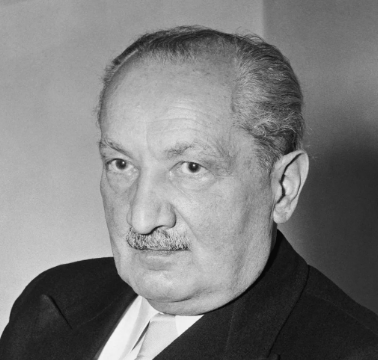
This Europe, which in its ruinous blindness is forever on the point of cutting its own throat, lies today in a great pincers, squeezed between Russia on one side and America on the other. From a metaphysical point of view, Russia and America are the same: the same dreary technological frenzy, the same unrestricted organization of the average man...

1 month 5 days ago
No nation ever had so bad a neighbour as Germany has had in France for the last 400 years; bad in all manner of ways; insolent, rapacious, insatiable, unappeasable, continually aggressive. ... Germany, after 400 years of ill-usage, and generally ill-fortune, from that neighbour, has had at last the great happiness to see its enemy fairly down in this manner; and Germany, I do clearly believe, would be a foolish nation not to think of raising up some secure boundary-fence between herself and such a neighbour now that she has the chance.
▼
Source
source
Letter to The Times on the Franco-Prussian War and Germany's annexation of Alsace-Lorraine (18 November 1870), p. 8

4 months 3 weeks ago
Sir Henry Wotton used to say that critics are like brushers of noblemen's clothes.
▼
Source
source
No. 64
1 month 1 week ago
Nowhere is there more constancy and more unanimity than among the French to subordinate that sex which they pretend to honor so highly.
▼
Source
source
The Theory of Social Organization

2 weeks ago
It is rare that the public sentiment decides immorally or unwisely, and the individual who differs from it ought to distrust and examine well his own opinion.
▼
Source
source
Letter to William Findley, Washington (21 March 1801); published in Thomas Jefferson - A chronology of his thoughts (2002) by Jerry Holmes, p. 175

4 months 2 weeks ago
Cure the drunkard, heal the insane, mollify the homicide, civilize the Pawnee, but what lessons can be devised for the debaucher of sentiment?
▼
Source
source
p. 236
2 months ago
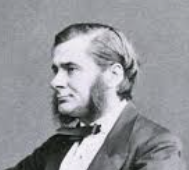
Within the last fifty years, the extraordinary growth of every department of physical science has spread among us mental food of so nutritious and stimulating a character that a new ecdysis seems imminent.
▼
Source
source
Ch.2, p. 73
3 months 1 week ago
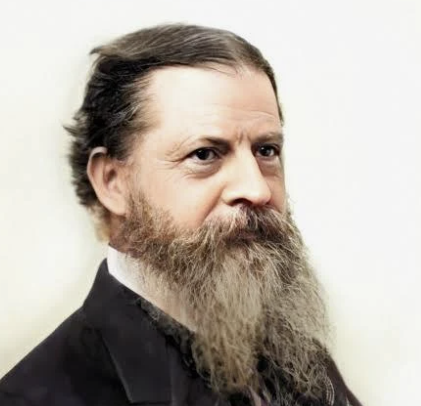
Suppose a surface to be part red and part blue; so that every point on it is either red or blue, and of course, no part can be both red and blue. What then, is the color of the surface in the immediate neighborhood of the point. ...it follows that the boundary is half red and half blue. In like manner, we find it necessary to hold that consciousness essentially occupies time... Thus, the present is half past and half time to come. ...Take another case: the velocity of a particle at any instant of time is its mean velocity during an infinitesimal instant in which that time is consumed. Just so, my immediate feeling is my feeling through an infinitesimal duration containing the present instant.

5 months 2 weeks ago
To stand on one leg and prove God's existence is a very different thing from going on one's knees and thanking Him.
3 weeks 1 day ago
However, what is really required to defend 'the West' against the sudden rise of these barbaric and elemental forces is the strengthening, to an extent perhaps still unknown to Western man, of a heroic vision of life. Apart from the military-technical apparatus the world of the 'Westerners' has at its disposal only a limp and shapeless substance - and the cult of the skin, the myth of 'safety' and of 'war on war', and the ideal of the long, comfortable guaranteed, 'democratic' existence, which is preferred to the ideal of the fulfilment which can be grasped only on the frontiers between life and death in the meeting of the essence of living with the extreme of danger.
▼
Source
source
p. 152

1 month 4 weeks ago
Properties perceived in nature will depend on how one looks and how one looks depends on the economic interest one has in the resources of nature. The value of profit maximization is thus linked to reductionist systems, while the value of life and the maintenance of life is linked to holistic and ecological systems.
▼
Source
source
Staying Alive: Women, Ecology, and Development

3 months 2 weeks ago
As one digs deeper into the national character of the Americans, one sees that they have sought the value of everything in this world only in the answer to this single question: how much money will it bring in?
▼
Source
source
Letter to Ernest de Chabrol, 9 June 1831 Selected Letters, ed. Roger Boesche, UofC Press 1985, p. 39.
5 months 2 weeks ago
Where is the boundary for the single individual in his concrete existence between what is lack of will and what is lack of ability; what is indolence and earthly selfishness and what is the limitation of finitude? For an existing person, when is the period of preparation over, when this question will not arise again in all its initial, troubled severity; when is the time in existence that is indeed a preparation? Let all the dialecticians convene-they will not be able to decide this for a particular individual in concreto.

5 months 1 week ago
Of course, I had to own that he was right; I didn't feel much regret for what I'd done. Still, to my mind, he overdid it, and I'd have liked to have a chance of explaining to him, in a quite friendly, almost affectionate way, that I have never been able to really regret anything in all my life. I've always been far too much absorbed in the present moment, or the immediate future, to think back.

4 months 3 weeks ago
A little of all things, but nothing of everything, after the French manner.
▼
Source
source
Chapter 26. Of the Education of Children

1 week 4 days ago
No longer let thy breathing only act in concert with the air which surrounds thee, but let thy intelligence also now be in harmony with the intelligence which embraces all things. For the intelligent power is no less diffused in all parts and pervades all things for him who is willing to draw it to him than the aërial power for him who is able to respire it.
▼
Source
source
VIII, 54

3 months 3 weeks ago
The proximity between the counterfeit and the good coin does not make the good coin counterfeit nor the counterfeit good. In the same way the proximity between truth and falsehood does not make truth falsehood nor falsehood truth.
▼
Source
source
III. The Classes of Seekers, p. 33.
4 months 2 weeks ago
All this is merely saying that he, in a degree once common, but now very unusual, threw his feelings into his opinions; which truly it is difficult to understand how any one who possesses much of both, can fail to do. None but those who do not care about opinions, will confound it with intolerance. Those, who having opinions which they hold to be immensely important, and their contraries to be prodigiously hurtful, have any deep regard for the general good, will necessarily dislike, as a class and in the abstract, those who think wrong what they think right, and right what they think wrong: though they need not therefore be, nor was my father, insensible to good qualities in an opponent, nor governed in their estimation of individuals by one general presumption, instead of by the whole of their character.
▼
Source
source
(pp. 50-51)

2 months 2 weeks ago
The error arises from the learned jurists deceiving themselves and others, by asserting that government is not what it really is, one set of men banded together to oppress another set of men, but, as shown by science, is the representation of the citizens in their collective capacity.
▼
Source
source
Chapter VI, Attitude of Men of the Present Day to War Variant translation: Government is an association of men who do violence to the rest of us.

4 months 1 week ago
I am a rationalist. ...I mean ...[I] wish... to understand the world, and to learn by arguing with others. (...I do not say a rationalist holds the mistaken theory that men are... rational.)
4 months 4 days ago
What needs saying is worth saying twice.
▼
Source
source
fr. 25

4 months 2 weeks ago
There's only one corner of the universe you can be certain of improving, and that's your own self.

2 months 1 week ago
Dialectic functions by converting everything it touches into figure but metaphor is a means of perceiving one thing in terms of another.
▼
Source
source
(p. 298)
5 months 2 weeks ago
If the ethical, that is, social morality is the highest ... then no categories are needed other than the Greek philosophical categories.

2 weeks ago
A corporation, essentially, is a pile of money to which a number of persons have sold their moral allegiance. Unlike a person, a corporation does not age. It does not arrive, as most persons finally do, at a realization of the shortness and smallness of human lives; it does not come to see the future as the lifetime of the children and grandchildren of anybody in particular.
4 months 3 weeks ago
They are ill discoverers that think there is no land, when they can see nothing but sea.
▼
Source
source
Book II, vii, 5

4 months 3 weeks ago
Omnipotence and foreknowledge of God, I repeat, utterly destroy the doctrine of 'free-will' ... doubtless it gives the greatest possible offense to common sense or natural reason, that God, Who is proclaimed as being full of mercy and goodness, and so on, should of His own mere will abandon, harden and damn men, as though He delighted in the sins and great eternal torments of such poor wretches. It seems an iniquitous, cruel, intolerable thought to think of God; and it is this that has been such a stumbling block to so many great men down through the ages. And who would not stumble at it? I have stumbled at it myself more than once, down to the deepest pit of despair, so that I wished I had never been made a man.
▼
Source
source
(That was before I knew how health-giving that despair was, and how close to grace p. 217)

2 months 2 weeks ago
Possibility is not a luxury; it is as crucial as bread. Undoing Gender.
▼
Source
source
Psychology Press. 2004. p. 29. ISBN 978-0-415-96922-2.

4 months 1 week ago
It is certain that we cannot escape anguish, for we are anguish.
1 week 4 days ago
Let it not be in any man's power to say truly of thee that thou art not simple or that thou art not good; but let him be a liar whoever shall think anything of this kind about thee; and this is altogether in thy power.
▼
Source
source
X, 32
2 months 2 weeks ago
The world is not dialectical -- it is sworn to extremes, not to equilibrium, sworn to radical antagonism, not to reconciliation or synthesis. This is also the principle of evil.
▼
Source
source
Jean Baudrillard in: Eldon Taylor What Does That Mean?: Exploring Mind, Meaning, and Mysteries, Hay House, Inc, 15 January 2010, p. 171
2 weeks ago
The natural progress of things is for liberty to yield, and government to gain ground.
▼
Source
source
Letter to Edward Carrington, Paris
4 months 1 week ago
I exist, that is all, and I find it nauseating.
4 months 2 weeks ago
If the red slayer think he slays, Or if the slain think he is slain, They know not well the subtle ways I keep, and pass, and turn again. Brahma, st. 1 Composed in July 1856 this poem is derived from a major passage of the Bhagavad Gita, one of the most popular of Hindu scriptures, and portions of it were likely a paraphrase of an existing translation. Though titled "Brahma" its expressions are actually more indicative of the Hindu concept "Brahman"

5 months 2 days ago
The order of authority derives from God, as the Apostle says [in Romans 13:1-7]. For this reason, the duty of obedience is, for the Christian, a consequence of this derivation of authority from God, and ceases when that ceases. But, as we have already said, authority may fail to derive from God for two reasons: either because of the way in which authority has been obtained, or in consequence of the use which is made of it. There are two ways in which the first may occur. Either because of a defect in the person, if he is unworthy; or because of some defect in the way itself by which power was acquired, if, for example, through violence, or simony or some other illegal method.
▼
Source
source
in Aquinas: Selected Political Writings (Basil Blackwell: 1974), p. 183
5 months 1 week ago
We get into the habit of living before acquiring the habit of thinking.
2 weeks ago
There are extraordinary situations which require extraordinary interposition. An exasperated people, who feel that they possess power, are not easily restrained within limits strictly regular.

4 months 2 weeks ago
The atheist who affects to reason, and the fanatic who rejects reason, plunge themselves alike into inextricable difficulties. The one perverts the sublime and enlightening study of natural philosophy into a deformity of absurdities by not reasoning to the end. The other loses himself in the obscurity of metaphysical theories, and dishonours the Creator, by treating the study of his works with contempt. The one is a half-rational of whom there is some hope, the other a visionary to whom we must be charitable.
▼
Source
source
A Discourse, &c. &c.

3 months 1 week ago
Everything is nothing, including the consciousness of nothing.

3 months 1 day ago
Just as eunuchs will never know aesthetics as applied to the selection of beautiful women, so neither will pure rationalists ever know ethics, nor will they ever succeed in defining happiness, for happiness is a thing that is lived and felt, not a thing that is reasoned or defined.
4 months 5 days ago
Absurdity is one of the most human things about us: a manifestation of our most advanced and interesting characteristics. ... It is possible only because we possess a certain kind of insight - the capacity to transcend ourselves in thought.If a sense of the absurd is a way of perceiving our true situation (even though the situation is not absurd until the perception arises), then what reason can we have to resent or escape it? ... It results from the ability to understand our human limitations. It need not be a matter of agony unless we make it so. Nor need it evoke a defiant contempt of fate that allows us to feel brave or proud. Such dramatics even if carried on in private, betray a failure to appreciate the cosmic unimportance of the situation. If sub specie aeternitatis there is no reason to believe that anything matters, then that does not matter either, and we can approach our absurd lives with irony instead of heroism or despair.
▼
Source
source
"The Absurd" (1971), p. 23.
2 months 1 week ago
Literacy affects the physiology as well as the psychic life of the African.
▼
Source
source
(p. 38)

4 months 1 week ago
Could the activity of thinking as such, the habit of examining whatever happens to come to pass or to attract attention, regardless of results and specific content, could this activity be among the conditions that make men abstain from evil-doing?
▼
Source
source
p. 5
4 months 4 days ago
What is to prevent one from telling truth as he laughs, even as teachers sometimes give cookies to children to coax them into learning their A B C?
▼
Source
source
Book I, satire i, line 24 (translation by H. Fairclough)
3 months ago
How are we to adjudicate among rival ontologies? Certainly the answer is not provided by the semantical formula "To be is to be the value of a variable"; this formula serves rather, conversely, in testing the conformity of a given remark or doctrine to a prior ontological standard.
▼
Source
source
"On What There Is"
4 months 4 days ago
At times the world sees straight, but many times the world goes astray.
▼
Source
source
Book II, epistle i, line 63
2 weeks ago
'Natural History' ought to form a part of intellectual education, in order to correct certain prejudices which arise from cultivating the intellect by means of mathematics alone and in order to lead the student to see that the division of things into kinds, and the attribution and use of names, are processes susceptible of great precision.

5 months 1 week ago
Moreover, there is a victory and defeat, the first and best of victories, the lowest and worst of defeat, which each man gains or sustains at the hands, not of another, but of himself; this shows that there is a war against ourselves going on within every one of us. Book I Sometimes paraphrased as "The first and best victory is to conquer self".
3 months 1 week ago
To live life well is to express life poorly; if one expresses life too well, one is living it no longer.
▼
Source
source
A Retrospective Glance at the Lifework of a Master of Books
CivilSimian.com created by AxiomaticPanic, CivilSimian, Kalokagathia