


8 months 2 weeks ago
A text is not a text unless it hides from the first comer, from the first glance, the law of its composition and the rules of its game. A text remains, moreover, forever imperceptible. Its law and its rules are not, however, harbored in the inaccessibility of a secret; it is simply that they can never be booked, in the present, into anything that could rigorously be called a perception.
▼
Source
source
Plato's Pharmacy, intro

8 months 1 week ago
Fame and wealth without wisdom are unsafe possessions.

6 months 2 weeks ago
It is perhaps typical of very creative minds that they hit very large nails not quite on the head.
▼
Source
source
Kenneth Boulding in McLuhan: Hot & Cool (1967) p. 68

6 months 3 weeks ago
Pure justice emerges from symmetry applied human life, and human beings as ends in themselves.

7 months 1 week ago
The subversive character of truth inflicts upon thought an imperative quality. Logic centers on judgments which are, as demonstrative propositions, imperatives, - the predicative "is" implies an "ought." ... Verification of the proposition involves a process in fact as well as in thought: (S) must become that which it is. The categorical statement thus turns into a categorical imperative; it does not state a fact but the necessity to bring about a fact. For example, it could be read as follows: man is not (in fact) free, endowed with inalienable rights, etc., but he ought to be.
▼
Source
source
pp. 132-133
4 months 2 weeks ago
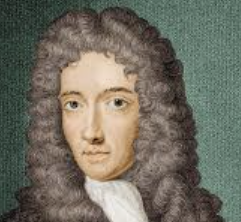
And of universal nature, the notion I would offer, should be something like this. Nature is the aggregate of the bodies, that make up the world, in its present state, considered as a principle, by virtue whereof, they act and suffer, according to the laws of motion, prescribed by the author of things.
▼
Source
source
Sect. 2.
5 months 1 day ago
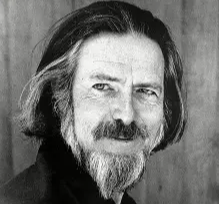
Zen does not confuse spirituality with thinking about God while one is peeling potatoes. Zen spirituality is just to peel the potatoes. Paraphrase of original text which reads "It does not confuse spirituality with thinking about God while one is peeling potatoes. Zen spirituality is just to peel the potatoes.
▼
Source
source
The Way of Zen, Pt. 2, Ch. 2
7 months 2 weeks ago
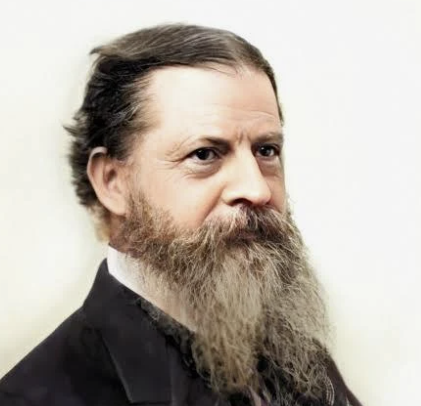
What distinct meaning can attach to saying that an idea in the past in any way affects an idea in the future, from which it is completely detached?
9 months 1 week ago
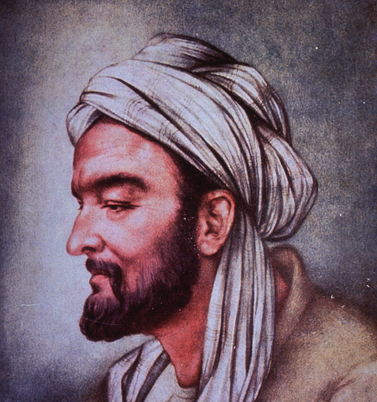
The world is divided into men who have wit and no religion and men who have religion and no wit.

8 months 2 weeks ago
Christian Apocalyptic offers us no such hope. It does not even foretell, (which would be more tolerable to our habits of thought) a gradual decay. It foretells a sudden, violent end imposed from without; an extinguisher popped onto the candle, a brick flung at the gramophone, a curtain rung down on the play - "Halt!"
9 months 3 weeks ago
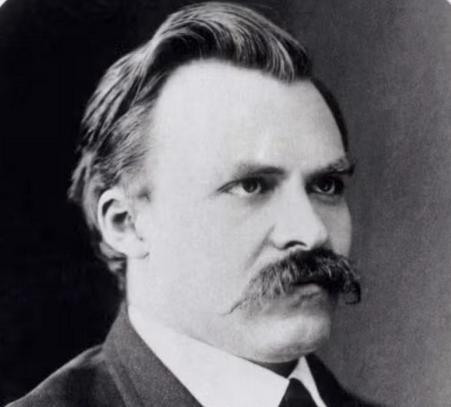
Being silent is something one completely unlearns if, like him, one has been for so long a solitary mole.

7 months 2 weeks ago
An act of the mind of which we are conscious, as such, is called freedom. An act without consciousness of action is called spontaneity. I by no means assume as necessary any immediate consciousness of the act, but merely, that on subsequent reflection thou shouldst perceive it to be an act. The higher question of what it is that prevents any such state of indecision, or any consciousness of the act, we may perhaps subsequently be able to solve. This act of the mind is called thought and it is said that thought is a spontaneous act, to distinguish it from sensation, in which the mind is merely receptive and passive.
▼
Source
source
Jane Sinnett, trans 1846 p. 44
8 months 1 week ago
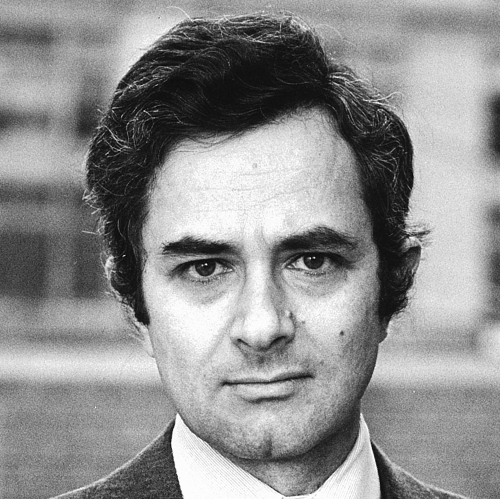
To look for a single general theory of how to decide the right thing to do is like looking for a single theory of how to decide what to believe.
▼
Source
source
"The Fragmentation of Value" (1977), p. 135.
7 months 1 week ago
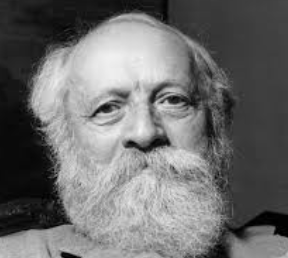
All names of God remain hallowed because they have been used not only to speak of God but also to speak to him.

5 months 5 days ago
Arms observe no bounds; nor can the wrath of the sword, once drawn, be easily checked or stayed; war delights in blood.
▼
Source
source
lines 403-405; (Lycus).
7 months 3 weeks ago
Mathematical Analysis is... the true rational basis of the whole system of our positive knowledge.
▼
Source
source
Bk. 1, chap. 1; as cited in: Robert Edouard Moritz. Memorabilia mathematica; or, The philomath's quotation-book, (1914), p. 224

6 months 2 weeks ago
In many ways an artistic nature unfits a man for practical existence.
▼
Source
source
A Lodging for the Night.
9 months 3 weeks ago
He who humbleth himself wants to be exalted.
5 months ago
First, the physicists in the persons of Faraday and Maxwell, proposed the "electromagnetic field" in contradistinction to matter, as a reality of a different category. Then, during the last century, the mathematicians, ... secretly undermined belief in the evidence of Euclidean Geometry. And now, in our time, there has been unloosed a cataclysm which has swept away space, time, and matter hitherto regarded as the firmest pillars of natural science, but only to make place for a view of things of wider scope and entailing a deeper vision. This revolution was promoted essentially by the thought of one man, Albert Einstein.
▼
Source
source
Introduction

7 months 2 weeks ago
To read is to let someone else work for you - the most delicate form of exploitation.
8 months 3 weeks ago
When we run over libraries, persuaded of these principles, what havoc must we make? If we take in our hand any volume; of divinity or school metaphysics, for instance; let us ask, Does it contain any abstract reasoning concerning quantity or number? No. Does it contain any experimental reasoning concerning matter of fact and existence? No. Commit it then to the flames: For it can contain nothing but sophistry and illusion.
▼
Source
source
Section 12 : Of the Academical or Sceptical Philosophy Pt. 3

4 months 2 weeks ago
I am quite at a loss about the nailboys remaining with mr Stewart. they have long been a dead expence instead of profit to me. in truth they require a vigour of discipline to make them do reasonable work, to which he cannot bring himself. on the whole I think it will be best for them also to be removed to mr Lilly's control.
▼
Source
source
In a letter to James Dinsmore as quoted in The Dark Side of Thomas Jefferson, by Henry Wiencek, Smithsonian Magazine,
6 months 3 weeks ago
This realistic image, however, does not catch at all what really is, but what should not be - death and misery - what should not exist, from our moral and humanistic point of view. And at the same time making an aesthetic and commercial, perfectly immoral use and abuse of this misery. Images that actually testify, behind their pretended "objectivity", of a deep denial of the real, and of an equal denial of the image - assigned to present what does not even want to be represented, assigned to the rape of the real by burglary.

8 months 2 weeks ago
Kant stated defensively that he had "found it necessary to deny knowledge. . . to make room for faith," but he had not made room for faith; he had made room for thought, and he had not "denied knowledge" but separated knowledge from thinking.
▼
Source
source
p. 14

6 months 6 days ago
Only two suppositions seem to be open to us - Either each species of crocodile has been specially created, or it has arisen out of some pre-existing form by the operation of natural causes. Choose your hypothesis; I have chosen mine. I can find no warranty for believing in the distinct creation of a score of successive species of crocodiles in the course of countless ages of time.

7 months 2 weeks ago
The division of Philosopher and Poet is only apparent, and to the disadvantage of both. It is a sign of disease, and of a sickly constitution.

8 months 3 weeks ago
The circulation of capital realizes value, while living labour creates value.
▼
Source
source
Notebook V, The Chapter on Capital, p. 463.

7 months 3 days ago
Jung fiercely resented the implication that he was a hypocritical, self-seeking Judas, a 'rat'. Yet there was just enough truth in it to strike home. He was undoubtedly a man who liked his own way, no matter what the cost to others.
▼
Source
source
p. 72
8 months 2 weeks ago
My argument against God was that the universe seemed so cruel and unjust. But how had I got this idea of just and unjust? A man does not call a line crooked unless he has some idea of a straight line. What was I comparing this universe with when I called it unjust?
▼
Source
source
Book II, Chapter 1, "The Rival Conceptions of God"

8 months 2 weeks ago
A real subjection is born mechanically from a fictitious relation. So it is not necessary to use force to constrain the convict to good behavior, the madman to calm, the worker to work, the schoolboy to application, the patient to the observation of the regulations.
▼
Source
source
Part Four, Complete and austere institutions

7 months 3 weeks ago
The good of the people must be the great purpose of government. By the laws of nature and of reason, the governors are invested with power to that end. And the greatest good of the people is liberty. It is to the state what health is to the individual.
▼
Source
source
Article on Government
7 months 3 weeks ago
There's a bit of testicle at the bottom of our most sublime feelings and our purest tenderness.
▼
Source
source
Letter to Étienne Noël Damilaville

4 months 2 weeks ago
This is a fine saying of Plato: That he who is discoursing about men should look also at earthly things as if he viewed them from some higher place; should look at them... a mixture of all things and an orderly combination of contraries.
▼
Source
source
VII, 48

7 months 1 week ago
Jesus said to His disciples, "Compare me to someone and tell Me whom I am like." Simon Peter said to Him, "You are like a righteous angel." Matthew said to Him, "You are like a wise philosopher." Thomas said to Him, "Master, my mouth is wholly incapable of saying whom You are like." Jesus said, "I am not your master. Because you have drunk, you have become intoxicated by the bubbling spring which I have measured out." And He took him and withdrew and told him three things. When Thomas returned to his companions, they asked him, "What did Jesus say to you?" Thomas said to them, "If I tell you one of the things which he told me, you will pick up stones and throw them at me; a fire will come out of the stones and burn you up."

7 months 3 days ago
There is no greater fallacy than the belief that aims and purposes are one thing, while methods and tactics are another, This conception is a potent menace to social regeneration. All human experience teaches that methods and means cannot be separated from the ultimate aim. The means employed become, through individual habit and social practice, part and parcel of the final purpose; they influence it, modify it, and presently the aims and means become identical.
7 months 2 weeks ago
All philosophers should end their days at Pythia's feet. There is only one philosophy, that of unique moments.

8 months 3 weeks ago
It appears... that a work similar in its object and general conception to that of Adam Smith, but adapted to the more extended knowledge and improved ideas of the present age, is the kind of contribution which Political Economy at present requires. The Wealth of Nations is in many parts obsolete, and in all, imperfect. Political Economy... has grown up almost from infancy since the time of Adam Smith; and the philosophy of society... has advanced many steps beyond the point at which he left it.
▼
Source
source
Preface, 1848
9 months 2 weeks ago
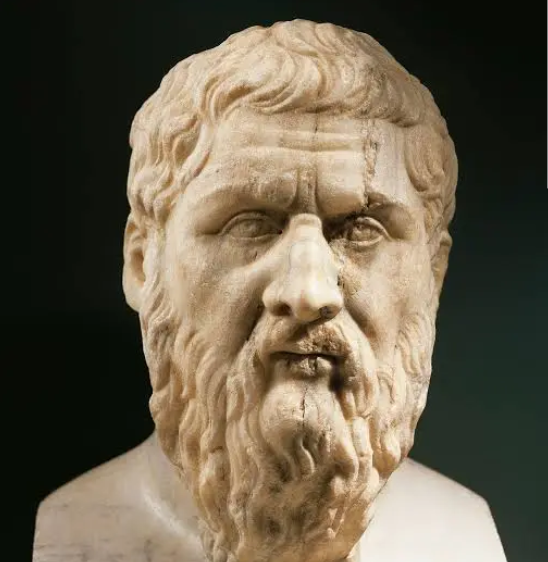
Those who purge the soul believe that the soul can receive no benefit from any teachings offered to it until someone by cross-questioning reduces him who is cross-questioned to an attitude of modesty, by removing the opinions that obstruct the teachings, and thus purges him and makes him think that he knows only what he knows, and no more.
6 months 2 weeks ago
It is sometimes expedient to forget who we are.
▼
Source
source
Maxim 233

6 months 2 weeks ago
It may be that brain hardware has co-evolved with the internal virtual worlds that it creates. This can be called hardware-software co-evolution.
4 months 2 weeks ago
All things are the same,-familiar in enterprise, momentary in endurance, coarse in substance. All things now are as they were in the day of those whom we have buried.
▼
Source
source
IX, 14
4 months 1 week ago
I believe with Schopenhauer: We can do what we wish, but we can only wish what we must. Practically, I am, nevertheless, compelled to act as if freedom of the will existed. If I wish to live in a civilized community, I must act as if man is a responsible being. I know that philosophically a murderer is not responsible for his crime; nevertheless, I must protect myself from unpleasant contacts. I may consider him guiltless, but I prefer not to take tea with him.
4 months 2 weeks ago
The rottenness of the matter which is the foundation of everything!
▼
Source
source
IX, 36

5 months 1 week ago
Such parliamentary bagpipes I myself have heard play tunes, much to the satisfaction of the people.

6 months 2 weeks ago
The savage recognizes life only in himself and his personal desires. His interest in life is concentrated on himself alone. The highest happiness for him is the fullest satisfaction of his desires. The motive power of his life is personal enjoyment. His religion consists in propitiating his deity and in worshiping his gods, whom he imagines as persons living only for their personal aims.
▼
Source
source
Chapter IV, Christianity Misunderstood by Men of ScienceChapter IV, Christianity Misunderstood by Men of Science
5 months 1 week ago
We sometimes imagine, under the influence of Spenglerian philosophy or some other kind of "historical morphology," that we live in a similar age [to the Romans], the last witnesses of a condemned civilization. But condemned by whom? Not by God, but by some supposed "historical laws." For although we do not know any historical laws, we are in fact able of inventing them quite freely, and such laws, once invented, can then be realized in the form of self-fulfilling prophecies.
▼
Source
source
Looking for the Barbarians
8 months 3 weeks ago
Landlords... grow richer, as it were in their sleep, without working, risking, or economizing.
▼
Source
source
Book V, Chapter 1, Section 5
8 months 3 weeks ago
Religion should be .... successively freed from all statutes based on history, and one purely moral religion rule over all, in order that God might be all in all. The veil must fall. The leading-string of sacred tradition with all its appendices becomes by degrees useless, and at last a fetter ... The humiliating difference between laymen and clergymen must disappear, and equality spring from true liberty. All this, however, must not be expected from an exterior revolution, which acts violently, and depends upon fortune In the principle of pure moral religion, which is a sort of divine revelation constantly taking place in the soul of man, must be sought the ground for a passage to the new order of things, which will be accomplished by slow and successive reforms.
▼
Source
source
As quoted in German Thought, From The Seven Years' War To Goethe's Death : Six Lectures (1880) by Karl Hillebrand, p. 208
CivilSimian.com created by AxiomaticPanic, CivilSimian, Kalokagathia