


4 months 3 weeks ago
We believe that the very beginning and end of salvation, and the sum of Christianity, consists of faith in Christ, who by His blood alone, and not by any works of ours, has put away sin, and destroyed the power of death.
▼
Source
source
p. 224
5 months 1 week ago
Art is the activity that exalts and denies simultaneously. "No artist tolerates reality," says Nietzsche.
4 months 2 weeks ago
Every parting gives a foretaste of death, every reunion a hint of the resurrection.
▼
Source
source
Vol. 2, Ch. 26, § 310, as translated by Eric F. J. Payne

4 weeks 1 day ago
No one ever saw Cato change, no matter how often the state changed: he kept himself the same in all circumstances-in the praetorship, in defeat, under accusation, in his province, on the platform, in the army, in death.

3 months 2 weeks ago
I should not be surprized at seeing a French Army conveyed by a British Navy to an attack upon this Kingdom.
▼
Source
source
Letter to French Laurence (12 May 1797) after hearing of the mutinies in the Royal Navy, quoted in R. B. McDowell (ed.)

3 months 1 week ago
If I were asked to summarize as briefly as possible my vision of things, to reduce it to its most succinct expression, I should replace words with an exclamation point, a definitive !

2 weeks ago
In the effort to tell a whole story, to see it whole and clear, I have had to imagine more than I have known.
▼
Source
source
"Imagination in Place"

4 months 2 weeks ago
A man must always live by his work, and his wages must at least be sufficient to maintain him. They must even upon most occasions be somewhat more, otherwise it would be impossible for him to bring up a family, and the race of such workmen could not last beyond the first generation.
▼
Source
source
Chapter VIII, p. 81.
3 months 2 weeks ago
The Doctrine of Knowledge, apart from all special and definite knowing, proceeds immediately upon Knowledge itself, in the essential unity in which it recognises Knowledge as existing; and it raises this question in the first place - How this Knowledge can come into being, and what it is in its inward and essential Nature? The following must be apparent: - There is but One who is absolutely by and through himself, - namely, God; and God is not the mere dead conception to which we have thus given utterance, but he is in himself pure Life. He can neither change nor determine himself in aught within himself, nor become any other Being; for his Being contains within it all his Being and all possible Being, and neither within him nor out of him can any new Being arise.

4 months 2 weeks ago
One cannot too soon forget his errors and misdemeanors. To dwell long upon them is to add to the offense. Repentance and sorrow can only be displaced by something better, which is as free and original as if they had not been.
▼
Source
source
January 9, 1842

4 months 2 weeks ago
...You could take up the line that some of the gnostics took up - a line which I often thought was a very plausible one - that as a matter of fact this world that we know was made by the devil at a moment when God was not looking. There is a good deal to be said for that, and I am not concerned to refute it.
▼
Source
source
"The Moral Arguments for Deity"
1 month 1 week ago
We seek not what God could have done but what He has done.... God could have caused birds to fly with bones of solid gold, with veins full of quicksilver, with flesh heavier than lead and very small and heavy wings, so as to better show His power ... but He wanted to make their bones, flesh and feathers very light ... to teach us that He likes simplicity and ease.
▼
Source
source
Notes in a copy of Jean-Baptiste Morin's "Famous and ancient problems of the earth's motion or rest, yet to be solved" (published 1631).
4 months 5 days ago
I think of the course of human history as a long, swelling, increasingly polyphonic poem - a poem that leads up to nothing save itself. When the species is extinct, "human nature's total message" will not be a set of propositions, but a set of vocabularies - the more, and the more various, the better.
▼
Source
source
Response to Hartshorne in 'Rorty and Pragmatism, The Philosopher Responds to his Critics', p. 33
4 months 5 days ago
For a thinking man is where Wisdom is at home.
▼
Source
source
Ahunuvaiti Gatha; Yasna 30, 9.
3 weeks 1 day ago
The Americans' "open-mindedness", which is sometimes cited in their favor, is the other side of their interior formlessness. The same goes for their "individualism". Individualism and personality are not the same: the one belongs to the formless world of quantity, the other to the world of quality and hierarchy. The Americans are the living refutation of the Cartesian axiom, "I think, therefore I am": Americans do not think, yet they are. The American "mind", puerile and primitive, lacks characteristic form and is therefore open to every kind of standardization.
▼
Source
source
American "Civilization" (1945) · Excerpts
2 weeks ago
We were laboring under a dropsical fulness of circulating medium. Nearly all of it is now called in by the banks, who have the regulation of the safety-valves of our fortunes, and who condense and explode them at their will. Lands in this State cannot now be sold for a year's rent; and unless our Legislature have wisdom enough to effect a remedy by a gradual diminution only of the medium, there will be a general revolution of property in this state.
▼
Source
source
Letter to John Adams (7 November 1819) ME 15:224 : The Writings of Thomas Jefferson "Memorial Edition" (20 Vols., 1903-04) edited by Andrew A. Lipscomb and Albert Ellery Bergh, Vol. 15, p. 224
1 month 4 days ago
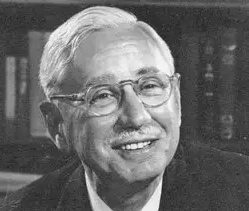
Excellence is an art won by training and habituation: we do not act rightly because we have virtue or excellence, but we rather have these because we have acted rightly; 'these virtues are formed in man by his doing the actions'; we are what we repeatedly do. Excellence, then, is not an act but a habit: 'the good of man is a working of the soul in the way of excellence in a complete life... for as it is not one swallow or one fine day that makes a spring, so it is not one day or a short time that makes a man blessed and happy'.
▼
Source
source
p. 87; the quoted phrases within the quotation are from the Nicomachean Ethics, Book II, 4; Book I, 7
2 months 1 week ago
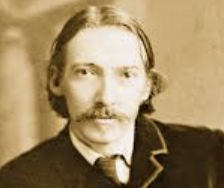
Them that die will be the lucky ones!
▼
Source
source
Ch. 20, Silver's Embassy.
1 week 4 days ago
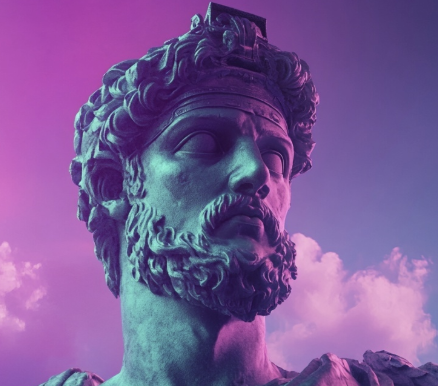
Think not so much of what thou hast not as of what thou hast: but of the things which thou hast, select the best, and then reflect how eagerly they would have been sought, if thou hadst them not. At the same time, however, take care that thou dost not, through being so pleased with them, accustom thyself to overvalue them, so as to be disturbed if ever thou shouldst not have them.
▼
Source
source
Variant Translation: Let not thy mind run on what thou lackest as much as on what thou hast already. VII, 27

3 months 2 weeks ago
A gentleman, even if he loses everything he owns, must show no emotion. Money must be so far beneath a gentleman that it is hardly worth troubling about.
2 months 1 week ago
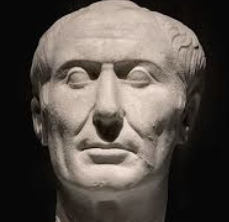
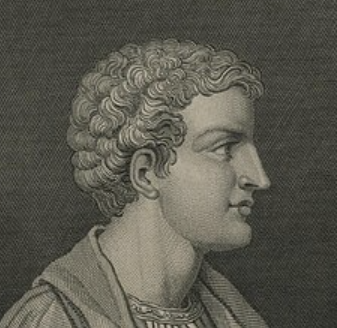
As men, we are all equal in the presence of death.
▼
Source
source
Maxim 1
4 months 4 days ago
In peace, as a wise man, he should make suitable preparation for war.
▼
Source
source
Book II, satire ii, line 111

3 months 2 weeks ago
They (the emperors) frequently abused their power arbitrarily to deprive their subjects of property or of life: their tyranny was extremely onerous to the few, but it did not reach the greater number; .. But it would seem that if despotism were to be established amongst the democratic nations of our days it might assume a different character; it would be more extensive and more mild, it would degrade men without tormenting them.
▼
Source
source
Book Four, Chapter VI.
2 months ago
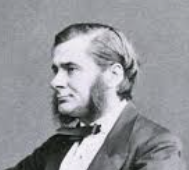
Perhaps the most valuable result of all education is the ability to make yourself do the thing you have to do, when it ought to be done, whether you like it or not; it is the first lesson that ought to be learned; and, however early a man's training begins, it is probably the last lesson that he learns thoroughly.
▼
Source
source
Technical Education
2 months 2 weeks ago
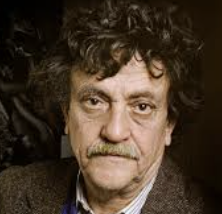
There are plenty of good reasons for fighting," I said, "but no good reason ever to hate without reservation, to imagine that God Almighty Himself hates with you, too. Where's evil? It's that large part of every man that wants to hate without limit, that wants to hate with God on its side. It's that part of every man that finds all kinds of ugliness so attractive.

3 months 1 week ago
I came to set fire to the earth, and I wish it were already on fire!
▼
Source
source
12:49 (CEV)
3 months 2 weeks ago
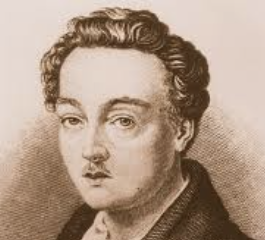
Germany is now a field of cadavers, soon she will be a paradise.

2 months 1 week ago
The audience, as ground, shapes and controls the work of art.
▼
Source
source
p. 48
1 month 3 weeks ago
Philosophy in its very act is a process of translation!
▼
Source
source
Chapter 4, Philosophy As Writing: The Case Of Hegel, p. 81
4 months 1 week ago
Clearly when the liberties are left unrestricted they collide with one another.
▼
Source
source
Chapter IV, Section 32, p. 203
5 months 4 days ago
The silent treasuring up of knowledge; learning without satiety; and instructing others without being wearied: which one of these things belongs to me? To keep silently in mind what one has seen and heard, to study hard and never feel contented, to teach others tirelessly; have I done (all of) these things?
3 months 1 week ago
To be or not to be is not the question where transcendence is concerned. The statement of being's other, of the otherwise than being, claims to state a difference over and beyond that which separates being from nothingness - the very difference of the beyond, the difference of transcendence.
▼
Source
source
Otherwise than Being, or Beyond Essence (1974) Chapter I, Section 1.
3 weeks 1 day ago
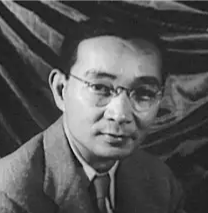
This is a personal testimony, a testimony of my own experience of thought and life. It is not intended to be objective and makes no claim to establish eternal truths. In fact I rather despise claims to objectivity in philosophy; the point of view is the thing. I should have liked to call it "A Lyrical Philosophy," using the word "lyrical" in the sense of being a highly personal and individual outlook...
▼
Source
source
Preface

4 months 2 weeks ago
Whatever we may think or affect to think of the present age, we cannot get out of it; we must suffer with its sufferings, and enjoy with its enjoyments; we must share in its lot, and, to be either useful or at ease, we must even partake its character.
▼
Source
source
"The Spirit of the Age, I", Examiner (9 January 1831), p. 20 Full text online

1 month 5 days ago
A loving heart is the beginning of all knowledge.
▼
Source
source
Article on Biography.

2 months 3 weeks ago
The evolutionary urge drives man to seek for intenser forms of fulfillment, since his basic urge is for more life, more consciousness, and this contentment has an air of stagnation that the healthy mind rejects. (This recognition lies at the centre of my own 'outsider theory': that there are human beings to whom comfort means nothing, but whose happiness consists in following an obscure inner-drive, an 'appetite for reality'.)
▼
Source
source
p. 32
4 weeks 1 day ago
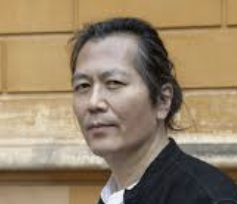
Clothe yourself with a hero's courage, and withdraw for a little space from the opinions of the common man. Form a proper conception of the image of virtue, a thing of exceeding beauty and grandeur; this image is not to be worshipped by us with incense or garlands, but with sweat and blood.
2 months 3 weeks ago
Power is never naked. Rather, it is eloquent.
4 months 2 weeks ago
The good life is one inspired by love and guided by knowledge.
4 months 2 weeks ago
Nothing is so much to be feared as fear. Atheism may comparatively be popular with God himself.
▼
Source
source
September 7, 1851
1 month 2 weeks ago
Some people steal from others, or defraud them, or enslave them, seizing their product and preventing them from living as they choose, or forcibly exclude others from competing in exchanges. None of these are permissible modes of transition from one situation to another.
▼
Source
source
Ch. 7 : Distributive Justice, Section I, The Entitlement Theory, p. 152
3 months 2 weeks ago
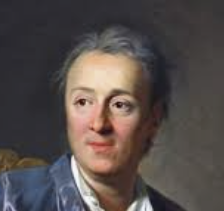
Man was born to live with his fellow human beings. Separate him, isolate him, his character will go bad, a thousand ridiculous affects will invade his heart, extravagant thoughts will germinate in his brain, like thorns in an uncultivated land.
▼
Source
source
The character Suzanne Simon, in La Religieuse [The Nun]

4 months 2 weeks ago
The bitterest tragic element in life to be derived from an intellectual source is the belief in a brute Fate or Destiny.
▼
Source
source
"The Tragic", p. 217. From The Dial (April 1844) p. 515
1 week 6 days ago
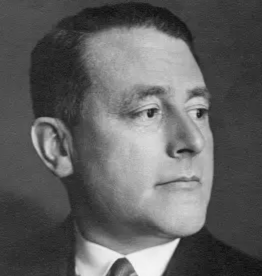
The political is the most intense and extreme antagonism, and every concrete antagonism becomes that much more political the closer it approaches the most extreme point, that of the friend-enemy grouping.

3 months 3 weeks ago
It is requisite to defend those who are unjustly accused of having acted injuriously, but to praise those who excel in a certain good.
▼
Source
source
Pythagorean Ethical Sentences From Stobæus

4 months 4 weeks ago
What is food to one, is to others bitter poison.
▼
Source
source
Book IV, line 637 (reported in Bartlett's Familiar Quotations) Compare: "What's one man's poison, signor, / Is another's meat or drink", Beaumont and Fletcher, Love's Cure (1647), Act III, scene 2

4 months 3 weeks ago
You venerate the saints, and you take pleasure in touching their relics. But you disregard their greatest legacy, the example of a blameless life. No devotion is more pleasing to Mary than the imitation of Mary's humility. No devotion is more acceptable and proper to the saints than striving to imitate their virtues.
▼
Source
source
The Erasmus Reader (1990), p. 144.
4 months 2 weeks ago
The Grecian are youthful and erring and fallen gods, with the vices of men, but in many important respects essentially of the divine race. In my Pantheon, Pan still reigns in his pristine glory, with his ruddy face, his flowing beard, and his shaggy body, his pipe and his crook, his nymph Echo, and his chosen daughter Iambe; for the great god Pan is not dead, as was rumored. No god ever dies. Perhaps of all the gods of New England and of ancient Greece, I am most constant at his shrine.
2 months 2 weeks ago
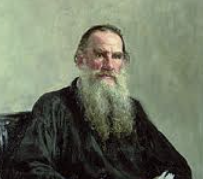
It is not sufficient to observe our mysteries in the seclusion of our lodge-we must act-act! We are drowsing, but we must act. (Pierre raised his notebook and began to read.) For the dissemination of pure truth and to secure the triumph of virtue," he read, "we must cleanse men from prejudice, diffuse principles in harmony with the spirit of the times, undertake the education of the young, unite ourselves in indissoluble bonds with the wisest men, boldly yet prudently overcome superstitions, infidelity, and folly, and form of those devoted to us a body linked together by unity of purpose and possessed of authority and power.
1 week 3 days ago
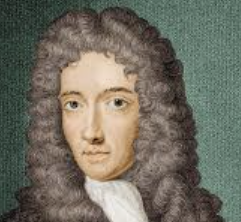
And truly... if men could be persuaded to mind more the advancement of natural philosophy than that of their own reputations, it were not, methinks, very uneasy to make them sensible, that one of the considerablest services, that they could do mankind, were to set themselves diligently and industriously to make experiments and collect observations, without being over-forward to establish principles and axioms, believing it uneasy to erect such theories, as are capable to explicate all the phænomena of nature, before they have been able to take notice of the tenth part of those phænomena, that are to be explicated.
CivilSimian.com created by AxiomaticPanic, CivilSimian, Kalokagathia