

4 months ago
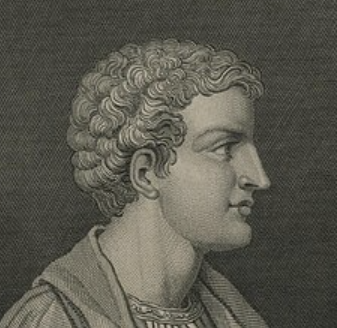
Think to yourself that every day is your last; the hour to which you do not look forward will come as a welcome surprise.
▼
Source
source
Book I, epistle iv, line 13-14
4 months 2 weeks ago
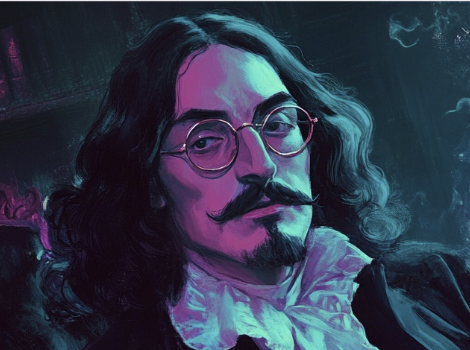
Good sense is, of all things among men, the most equally distributed; for every one thinks himself so abundantly provided with it, that those even who are the most difficult to satisfy in everything else, do not usually desire a larger measure of this quality than they already possess.

4 months 2 weeks ago
There is no need for you to develop an armed insurrection. Christ himself has already begun an insurrection with his mouth.
▼
Source
source
pp. 67-68

1 week ago
What is divine is full of Providence. Even chance is not divorced from nature, from the inweaving and enfolding of things governed by Providence. Everything proceeds from it.
▼
Source
source
(Hays translation) All that is from the gods is full of Providence. II, 3

1 month 1 day ago
Every pitifulest whipster that walks within a skin has had his head filled with the notion that he is, shall be, or by all human and divine laws ought to be, 'happy.' His wishes, the pitifulest whipster's, are to be fulfilled for him; his days, the pitifulest whipster's, are to flow on in an ever-gentle current of enjoyment, impossible even for the gods. The prophets preach to us, Thou shalt be happy; thou shalt love pleasant things, and find them. The people clamor, Why have we not found pleasant things? ...God's Laws are become a Greatest Happiness Principle. There is no religion; there is no God; man has lost his soul.
▼
Source
source
Bk. III, ch. 4.
3 months 2 days ago
Writing is like getting married. One should never commit oneself until one is amazed at one's luck.
▼
Source
source
The Black Prince (1973); 2003, p. 10.
Just now
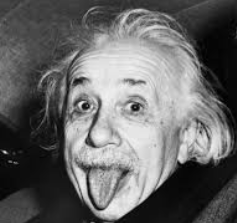
We may assume the existence of an aether; only we must give up ascribing a definite state of motion to it, i.e. we must by abstraction take from it the last mechanical characteristic which Lorentz had still left it. ... But this ether may not be thought of as endowed with the quality characteristic of ponderable media, as consisting of parts which may be tracked through time. The idea of motion may not be applied to it.
▼
Source
source
On the irrelevance of the luminiferous aether hypothesis to physical measurements, in [https://www.refcm.org/scripture-science-stott/aarch/pages/12-einstein-sidelights-relativity.htm an address at the University of Leiden (5 May 1920)]

2 months 3 weeks ago
Racism has always been a divisive force separating black men and white men, and sexism has been a force that unites the two groups.

5 months 1 week ago
For well-being and health, again, the homestead should be airy in summer, and sunny in winter. A homestead possessing these qualities would be longer than it is deep; and its main front would face the south.

3 months 1 week ago
It is a melancholy truth; yet such is the blessed effect of civilization! the most respectable women are the most oppressed; and, unless they have understandings far superiour to the common run of understandings, taking in both sexes, they must, from being treated like contemptible beings, become contemptible.
▼
Source
source
Ch. 9

4 months 2 weeks ago
Next to the ridicule of denying an evident truth, is that of taking much pains to defend it; and no truth appears to me more evident, than that beasts are endow'd with thought and reason as well as men. The arguments are in this case so obvious, that they never escape the most stupid and ignorant.
▼
Source
source
Part 3, Section 16

3 months 2 weeks ago
All things are in all.
▼
Source
source
V 9; as translated by Dorothea Waley Singer

3 months 2 weeks ago
To ruminate upon evils, to make critical notes upon injuries, and be too acute in their apprehensions, is to add unto our own tortures, to feather the arrows of our enemies, to lash ourselves with the scorpions of our foes, and to resolve to sleep no more.
▼
Source
source
Part III, Section XII

4 months 1 week ago
The religious world is but the reflex of the real world.
▼
Source
source
Vol. I, Ch. 1, Section 4, pg. 91.
4 months 6 days ago
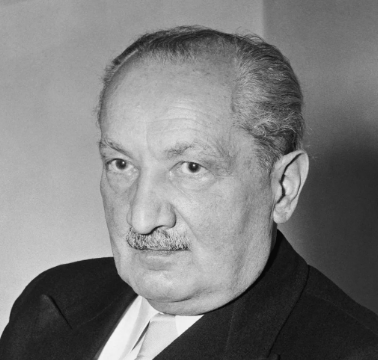
"Here is the chalk." This is a truth; and here and the now hereby characterize the chalk so that we emphasize by saying; the chalk, which means "this." We take a scrap of paper and we write the truth down: "Here is the chalk." We lay this written statement beside the thing of which it is the truth. After the lecture is finished both doors are opened, the classroom is aired, there will be a draft, and the scrap of paper, let us suppose, will flutter out into the corridor. A student finds it on his way to the cafeteria, reads the sentence. "Here is the chalk," and ascertains that this is not true at all. Through the draft the truth has become an untruth. Strange that a truth should depend on a gust of wind. ... We have made the truth about the chalk independent of us and entrusted it to a scrap of paper.
▼
Source
source
p. 29-30
3 weeks ago
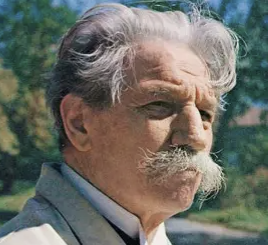
To the question whether I am a pessimist or an optimist, I answer that my knowledge is pessimistic, but my willing and hoping are optimistic.
▼
Source
source
Epilogue, p. 242

4 months 2 weeks ago
A man must be a little mad if he does not want to be even more stupid.
▼
Source
source
Ch. 9

4 months 2 weeks ago
Aristotle, a mere bond-servant to his logic, thereby rendering it contentious and well nigh useless.
▼
Source
source
Rerum Novarum

3 months 3 days ago
The man old in days will not hesitate to ask a small child seven days old about the place of life, and he will live. For many who are first will become last, and they will become one and the same.

5 months ago
Since it is every man's interest to be happy through the whole of life, it is the wisdom of every one to employ philosophy in the search of felicity without delay; and there cannot be a greater folly, than to be always beginning to live.
3 months 1 day ago
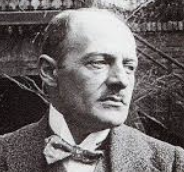
To its very core, the mind of ressentiment man is filled with envy, the impulse to detract, malice, and secret vindictiveness. These affects have become fixed attitudes, detached from all determinate objects. Independently of his will, this man's attention will be instinctively drawn by all events which can set these affects in motion. The ressentiment attitude even plays a role in the formation of perceptions, expectations, and memories. It automatically selects those aspects of experience which can justify the factual application of this pattern of feeling.
▼
Source
source
L. Coser, trans. (1973), p. 74
1 month 1 day ago
What is all Knowledge too but recorded Experience, and a product of History; of which, therefore, Reasoning and Belief, no less than Action and Passion, are essential materials?
▼
Source
source
Carlyle, Essays, On History. Quote reported in Hoyt's New Cyclopedia Of Practical Quotations (1922), p. 419-23.

4 months 2 weeks ago
Among civilized and thriving nations, on the contrary, though a great number of people do no labor at all, many of whom consume the produce of ten times, frequently of a hundred times more labour than the greater part of those who work; yet the produce of the whole labour of the society is so great, that all are often abundantly supplied, and a workman, even of the lowest and poorest order, if he is frugal and industrious, may enjoy a greater share of the necessaries and conveniencies of life than it is possible for any savage to acquire.
▼
Source
source
Introduction and Plan of the Work, p. 2.

3 months 1 week ago
Death is too exact; it has all the reasons on its side. Mysterious for our instincts, it takes shape, to our reflection, limpid, without glamor, and without the false lures of the unknown. By dint of accumulating non-mysteries and monopolizing non-meanings, life inspires more dread than death: it is life which is the Great Unknown.

2 months 3 weeks ago
The contention that a standing army and navy is the best security of peace is about as logical as the claim that the most peaceful citizen is he who goes about heavily armed. The experience of every-day life fully proves that the armed individual is invariably anxious to try his strength. The same is historically true of governments. Really peaceful countries do not waste life and energy in war preparations, with the result that peace is maintained.

1 month 2 weeks ago
It is because human needs are contradictory that no human life can be perfect. That does not mean that human life is imperfect. It means that the idea of perfection has no meaning.
▼
Source
source
'Modus Vivendi' (p.29)

2 months 3 weeks ago
The aim is to replace economic oligarchies by the State, which has a will-to-power of its own and is quite as little concerned with the public good; and a will-to-power, moreover, which is not economic but military and therefore much more dangerous to any good folk who have a taste for staying alive. And on the bourgeois side what on earth is the sense of objecting to State control in economic affairs if one accepts private monopolies which have all the economic and technical disadvantages of State monopolies and possibly some others as well?
▼
Source
source
p. 230

5 months 1 week ago
Out of love, God becomes man. He says: Here you see what it is to be a human being; but he adds: Take care, for I am also God - blessed is he who takes no offense at me.
▼
Source
source
As translated by Howard V. Hong and EdnaH. Hong (1980) Variant translation; Out of love, God becomes man. He says: "See, here is what it is to be a human being."
1 week ago
How easy it is to repel and to wipe away every impression which is troublesome or unsuitable, and immediately to be in all tranquility. To shrug it all off and wipe it clean--every annoyance and distraction--and reach utter stillness. Child's play.
▼
Source
source
(Hays translation) V, 2
1 week 3 days ago
Let me say and not mourn: the world lives in the death of speech and sings there.
▼
Source
source
The Silence



1 month 1 week ago
In order to properly understand the big picture, everyone should fear becoming mentally clouded and obsessed with one small section of truth.
▼
Source
source
Quoted in: Joan Klostermann-Ketels (2011) HumaniTrees, p. 96

4 months 1 week ago
The original scriptures of most religions are poetical and unsystematic. Theology, which generally takes the form of a reasoned commentary on the parables and aphorisms of the scriptures, tends to make its appearance at a later stage of religious history. The Bhagavad-Gita occupies an intermediate position between scripture and theology; for it combines the poetical qualities of the first with the clear-cut methodicalness of the second... one of the clearest and most comprehensive summaries of the Perennial Philosophy ever to have been made. Hence its enduring value, not only for Indians, but for all mankind.
4 months 3 weeks ago
It is necessary to have regard to the person whom we wish to persuade, of whom we must know the mind and the heart, what principles he acknowledges, what things he loves; and then observe in the thing in question what affinity it has with the acknowledged principles, or with the objects so delightful by the pleasure which they give him.

3 months 3 days ago
Animals are born and bred in litters. Solitude grows blessed and peaceful only in old age.
▼
Source
source
p. 61

4 months 1 week ago
Ha! to forget. How childish! I feel you in my bones. Your silence screams in my ears. You may nail your mouth shut, you may cut out your tongue, can you keep yourself from existing? Will you stop your thoughts.
▼
Source
source
Inès reiterating to Garcin that they cannot ignore one another, Act 1, sc. 5
4 months 1 week ago
Every true thinker for himself is so far like a monarch; he is absolute, and recognises nobody above him. His judgments, like the decrees of a monarch, spring from his own sovereign power and proceed directly from himself. He takes as little notice of authority as a monarch does of a command; nothing is valid unless he has himself authorised it. On the other hand, those of vulgar minds, who are swayed by all kinds of current opinions, authorities, and prejudices, are like the people which in silence obey the law and commands.
▼
Source
source
"Thinking for Oneself," H. Dirks, trans.
3 months 2 weeks ago
For nature is not merely present, but is implanted within things, distant from none; naught is distant from her except the false, and that which existed never and nowhere-nullity. And while the outer face of things changeth so greatly, there flourisheth the origin of being more intimately within all things than they themselves. The fount of all kinds, Mind, God, Being, One, Truth, Destiny, Reason, Order.
▼
Source
source
VIII 10 as translated by Dorothea Waley Singer
3 months 2 weeks ago
There is surely a piece of Divinity within us, something that was before the Elements, and owes no homage unto the Sun.
▼
Source
source
Section 11

3 months 1 week ago
One that confounds good and evil is an enemy to the good.
▼
Source
source
Speech in opening the impeachment of Warren Hastings (18 February 1788), quoted in The Works of the Right Honourable Edmund Burke, Volume the Tenth (1899), p. 48

4 months 1 week ago
Capacity for the nobler feelings is in most natures a very tender plant, easily killed, not only by hostile influences, but by the mere want of sustenance; and in the majority of young persons it speedily dies away if the occupations to which their position in life has devoted them, and the society into which it has thrown them, are not favourable to keeping that higher capacity in existence.
▼
Source
source
Ch. 2
2 months 2 weeks ago
Even Darwin's natural selection only predicts that survivors will be fit enough, that is, fitter than their losing competitors; it postulates satisficing, not optimizing.
▼
Source
source
p. 166; As cited in Ronald J. Baker (2010, p. 122).

3 months 2 weeks ago
What a hell of an economic system! Some are replete with everything while others, whose stomachs are no less demanding, whose hunger is just as recurrent, have nothing to bite on. The worst of it is the constrained posture need puts you in. The needy man does not walk like the rest; he skips, slithers, twists, crawls.
3 months 3 days ago
Look at the birds of the air, for they neither sow nor reap nor gather into barns; yet your heavenly Father feeds them.
▼
Source
source
Matthew 6:26 (NKJV)
3 months 1 week ago
They made and recorded a sort of institute and digest of anarchy, called the rights of man, in such a pedantic abuse of elementary principles as would have disgraced boys at school; but this declaration of rights was worse than trifling and pedantic in them; as by their name and authority they systematically destroyed every hold of authority by opinion, religious or civil, on the minds of the people. By this mad declaration they subverted the state; and brought on such calamities as no country, without a long war, has ever been known to suffer, and which may in the end produce such a war, and perhaps, many such.
▼
Source
source
Speech in the House of Commons (9 February 1790), quoted in The Parliamentary History of England, From the Earliest Period to the Year 1803, Vol. XXVIII (1816), column 358
3 months 3 days ago
A scientist can hardly meet with anything more undesirable than to have the foundations give way just as the work is finished. I was put in this position by a letter from Mr. Bertrand Russell when the work was nearly through the press.
▼
Source
source
Note in the appendix of Grundlagen der Arithmetik (Vol. 2) after Frege had received a letter of Bertrand Russell in which Russell had explained his discovery of, what is now known as, Russell's paradox.

3 weeks 4 days ago
What we should be after death, we have to attain in life, i.e. holiness and bliss. Here on earth the Kingdom of God begins.
1 month 1 day ago
Innumerable men had passed by, across this Universe, with a dumb vague wonder, such as the very animals may feel; or with a painful, fruitlessly inquiring wonder, such as men only feel;-till the great Thinker came, the original man, the Seer; whose shaped spoken Thought awakes the slumbering capability of all into Thought. It is ever the way with the Thinker, the spiritual Hero. What he says, all men were not far from saying, were longing to say. The Thoughts of all start up, as from painful enchanted sleep, round his Thought; answering to it, Yes, even so! Joyful to men as the dawning of day from night;-is it not, indeed, the awakening for them from no-being into being, from death into life? We still honor such a man; call him Poet, Genius, and so forth: but to these wild men he was a very magician, a worker of miraculous unexpected blessing for them; a Prophet, a God!

4 months 1 week ago
Superstition is to religion what astrology is to astronomy, the mad daughter of a wise mother. These daughters have too long dominated the earth.
▼
Source
source
"Whether it is useful to maintain the people in superstition," Treatise on Toleration, 1763
2 months 3 days ago
One's language is a spiritual location. It houses your soul. If you were born in America all essential communication, your deepest conversations with yourself, will be in English. ... Your English is the principal instrument of your humanity.
▼
Source
source
Part I, p. 27
CivilSimian.com created by AxiomaticPanic, CivilSimian, Kalokagathia