


4 months 2 weeks ago
Good bye, proud world! I'm going home; Thou art not my friend; I am not thine.
▼
Source
source
Good-bye, st. 1
3 months 4 days ago
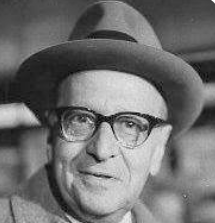
As soon as a thought or word becomes a tool, one can dispense with actually 'thinking' it, that is, with going through the logical acts involved in verbal formulation of it. As has been pointed out, often and correctly, the advantage of mathematics-the model of all neo-positivistic thinking-lies in just this 'intellectual economy.' Complicated logical operations are carried out without actual performance of the intellectual acts upon which the mathematical and logical symbols are based. ... Reason ... becomes a fetish, a magic entity that is accepted rather than intellectually experienced.
▼
Source
source
p. 23.

2 months 1 week ago
The compassionate are not rich; therefore, the rich are not compassionate.
▼
Source
source
p. 89
4 months 1 week ago
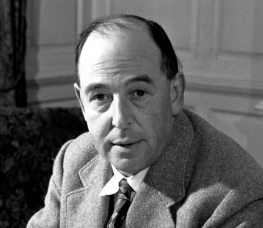
I do not think the resemblance between the Christian and the merely imaginative experience is accidental. I think that all things, in their own way, reflect heavenly truth, the imagination not least. "Reflect" is the important word. This lower life of the imagination is not a beginning of, nor a step toward, the higher life of the spirit, merely an image.
3 months 2 weeks ago
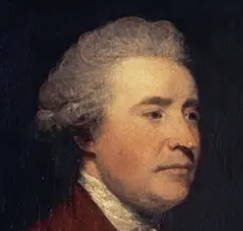
Law and arbitrary power are in eternal enmity. Name me a magistrate, and I will name property; name me power, and I will name protection. It is a contradiction in terms, it is blasphemy in religion, it is wickedness in politics, to say that any man can have arbitrary power. In every patent of office the duty is included. For what else does a magistrate exist? To suppose for power is an absurdity in idea. Judges are guided and governed by the eternal laws of justice, to which we are all subject. We may bite our chains, if we will, but we shall be made to know ourselves, and be taught that man is born to be governed by law; and he that will substitute will in the place of it is an enemy to God.
▼
Source
source
Speech in opening the impeachment of Warren Hastings (16 February 1788), quoted in The Works of the Right Honourable Edmund Burke, Volume the Ninth (1899), p. 458
4 months 4 days ago
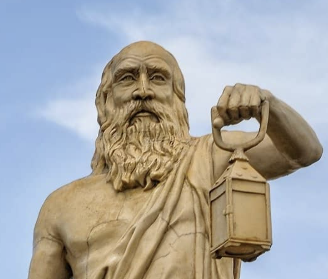
Self-taught poverty is a help toward philosophy, for the things which philosophy attempts to teach by reasoning, poverty forces us to practice.
▼
Source
source
Stobaeus, iv. 32a. 11

1 month 2 weeks ago
Hayek's blind spot with regard to politics was clear in the early 1980s when the first Thatcher government, in an attempt to reduce inflation and bring the public finances closer to a balanced budget, was raising interest rates and cutting public spending. As he had done during the 1930s, Hayek attacked these policies as not being severe enough. It would be better, he told me in a conversation we had around this time, if Thatcher imposed a more drastic contraction on the economy so that the wage-setting power of the trade unions could be broken. He appeared unfazed by unemployment, which was already higher (more than three million people) than at any time since the 1930s, and would rise much further if his recommendations were accepted.

2 weeks ago
The whole history of these books is so defective and doubtful that it seems vain to attempt minute enquiry into it: and such tricks have been played with their text, and with the texts of other books relating to them, that we have a right, from that cause, to entertain much doubt what parts of them are genuine. In the New Testament there is internal evidence that parts of it have proceeded from an extraordinary man; and that other parts are of the fabric of very inferior minds. It is as easy to separate those parts, as to pick out diamonds from dunghills
▼
Source
source
Letter to John Adams, on Christian scriptures

4 months 2 weeks ago
The position of the revolutionary party in Germany is certainly difficult at the moment, but, with some critical analysis of the circumstances, clear nevertheless. As to the "governments," it is obvious from every point of view, if only for the sake of Germany's existence, that the demand must be put to them not to remain neutral, but, as you rightly say, to be patriotic. But the revolutionary point is to be given to the affair simply by emphasising the antagonism to Russia more strongly than the antagonism against Boustrapa.
▼
Source
source
Letter to Friedrich Engels (18 May 1859), quoted in Karl Marx and Friedrich Engels, Selected Correspondence, 1846-1895 (1943), p. 122
1 week 5 days ago
We cannot think with precision unless in our own minds we use words with precision.
▼
Source
source
General Introduction

4 months 2 weeks ago
So monstrous is the making and keeping them slaves at all, abstracted from the barbarous usage they suffer, and the many evils attending the practice; as selling husbands away from wives, children from parents, and from each other, in violation of sacred and natural ties; and opening the way for adulteries, incests, and many shocking consequences, for all of which the guilty Masters must answer to the final Judge.
4 months 2 weeks ago
I deny that anyone knows, or can know, the nature of the two sexes, as long as they have only been seen in their present relation to one another. If men had ever been found in society without women, or women without men, or if there had been a society of men and women in which the women were not under the control of the men, something might have been positively known about the mental and moral differences which may be inherent in the nature of each. What is now called the nature of women is an eminently artificial thing - the result of forced repression in some directions, unnatural stimulation in others.
▼
Source
source
Ch. 1

1 week 3 days ago
Remember that neither the future nor the past pains thee, but only the present. But this is reduced to a very little, if thou only circumscribest it, and chidest thy mind, if it is unable to hold out against even this.
▼
Source
source
VIII, 36
4 months 2 weeks ago
Since reasoning, or inference, the principal subject of logic, is an operation which usually takes place by means of words, and in complicated cases can take place in no other way: those who have not a thorough insight into both the signification and purpose of words, will be under chances, amounting almost to certainty, of reasoning or inferring incorrectly.
▼
Source
source
p. 11: Cited in Gaines (1976) "Foundations of fuzzy reasoning" in: International Journal of Man-Machine Studies 8(6), p. 623

1 month 5 days ago
Man is not the creature and product of Mechanism; but, in a far truer sense, its creator and producer: it is the noble People that makes the noble Government; rather than conversely.
5 months 2 weeks ago
A whole is that which has beginning, middle, and end.
2 weeks ago
I shall often go wrong through defect of judgment. When right, I shall often be thought wrong by those whose positions will not command a view of the whole ground. I ask your indulgence for my own errors, which will never be intentional, and your support against the errors of others, who may condemn what they would not if seen in all its parts.
4 months 3 weeks ago
The souls of emperors and cobblers are cast in the same mould.... The same reason that makes us wrangle with a neighbour causes a war betwixt princes.
▼
Source
source
Book II, Ch. 12. Apology for Raimond Sebond

5 months 1 week ago
Socrates: Dear Pan and all the other Gods of this place, grant that I may be beautiful inside. Let all my external possessions be in friendly harmony with what is within. May I consider the wise man rich. As for gold, let me have as much as a moderate man could bear and carry with him. Do we need anything more, Phaedrus? For me that prayer is enough. Phaedrus: Let me also share in this prayer; for friends have all things in common.

4 months 2 weeks ago
To found a great empire for the sole purpose of raising up a people of customers, may at first appear a project fit only for a nation of shopkeepers. It is however, a project altogether unfit for a nation of shopkeepers; but extremely fit for a nation whose government is influenced by shopkeepers.
▼
Source
source
Chapter VII, Part Third, p. 667.

4 months 2 weeks ago
A wise man's kingdom is his own breast: or, if he ever looks farther, it will only be to the judgment of a select few, who are free from prejudices, and capable of examining his work. Nothing indeed can be a stronger presumption of falsehood than the approbation of the multitude; and Phocion, you know, always suspected himself of some blunder when he was attended with the applauses of the populace.
▼
Source
source
Playfully ironic letter to Adam Smith regarding the positive reception of "The Theory of Moral Sentiments"

3 months 1 week ago
The farther men get from God, the farther they advance into the knowledge of religions.

4 months 3 weeks ago
Hope is a good breakfast, but it is a bad supper.
▼
Source
source
No. 36

3 months ago
Raillery is a mode of speaking in favor of one's wit at the expense of one's better nature.
4 months 4 days ago
All of us, I believe, are fortunate to have been born.
▼
Source
source
"Death" (1970), p. 7.
4 months 3 days ago
Ah, Postumus! they fleet away, our years, nor piety one hour can win from wrinkles and decay, and Death's indomitable power.
▼
Source
source
Book II, ode xiv, line 1 (trans. John Conington)
3 months 5 days ago
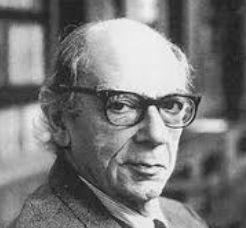
Philosophers are adults who persist in asking childish questions.
▼
Source
source
As quoted in The Listener
2 months 2 weeks ago
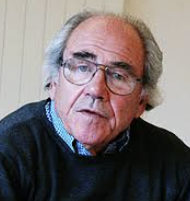
To challenge and to cope with this paradoxical state of things, we need a paradoxical way of thinking; since the world drifts into delirium, we must adopt a delirious point of view. We must no longer assume any principle of truth, of causality, or any discursive norm. Instead, we must grant both the poetic singularity of events and the radical uncertainty of events. It is not easy. We usually think that holding to the protocols of experimentation and verification is the most difficult thing. But in fact the most difficult thing is to renounce the truth and the possibility of verification, to remain as long as possible on the enigmatic, ambivalent, and reversible side of thought.
▼
Source
source
The Vital Illusion (2000) "The Murder of the Real". Wellek Library Lectures given May 1999 at the University of California, Irvine

5 months 1 week ago
There is less trouble and trauma involved in writing a new piece than in trying to salvage an unsatisfactory old one.

4 months 4 weeks ago
But if we discard this definition of a people, and, assuming another, say that a people is an assemblage of reasonable beings bound together by a common agreement as to the objects of their love, then, in order to discover the character of any people, we have only to observe what they love. Yet whatever it loves, if only it is an assemblage of reasonable beings and not of beasts, and is bound together by an agreement as to the objects of love, it is reasonably called a people; and it will be a superior people in proportion as it is bound together by higher interests, inferior in proportion as it is bound together by lower.
▼
Source
source
XIX, 24
1 month 5 days ago
A loving heart is the beginning of all knowledge.
▼
Source
source
Article on Biography.
2 months 4 weeks ago
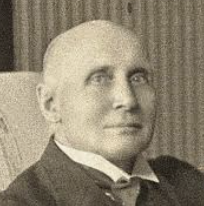
Every human being is the natural guardian of his own importance.
▼
Source
source
Ch. 9: "Science and Philosophy", p. 195
2 months 1 week ago
The more is given the less the people will work for themselves, and the less they work the more their poverty will increase.
▼
Source
source
Help for the Starving, Pt. III

4 months 3 weeks ago
For where God built a church, there the Devil would also build a chapel...Thus is the Devil ever God's ape.
▼
Source
source
67. Compare "Where God hath a temple, the Devil will have a chapel", Robert Burton, Anatomy of Melancholy, part III, section 4, member 1, subsection 1

5 months 3 days ago
Sincerity becomes apparent. From being apparent, it becomes manifest. From being manifest, it becomes brilliant. Brilliant, it affects others. Affecting others, they are changed by it. Changed by it, they are transformed. It is only he who is possessed of the most complete sincerity that can exist under heaven, who can transform.

3 months 3 weeks ago
Without Justice, no realm may prosper.
2 months 1 week ago
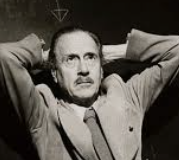
Applied knowledge in the Renaissance had to take the form of translation of the auditory into visual terms, of the plastic into retinal form.
▼
Source
source
(p. 180)
4 months 2 weeks ago
Value, therefore, does not stalk about with a label describing what it is.
▼
Source
source
Vol. I, Ch. 1, Section 4, pg. 85.

4 months 1 week ago
The purely corporeal can be uncanny. Compare the way angels and devils are portrayed. So-called "miracles" must be connected with this. A miracle must be, as it were, a sacred gesture.
▼
Source
source
p. 50e
3 months 2 weeks ago
I am well aware, that men love to hear of their power, but have an extreme disrelish to be told of their duty.
▼
Source
source
p. 441

4 months 2 weeks ago
Is a democracy, such as we know it, the last improvement possible in government? Is it not possible to take a step further towards recognizing and organizing the rights of man? There will never be a really free and enlightened State until the State comes to recognize the individual as a higher and independent power, from which all its own power and authority are derived, and treats him accordingly. I please myself with imagining a State at least which can afford to be just to all men, and to treat the individual with respect as a neighbor; which even would not think it inconsistent with its own repose if a few were to live aloof from it, not meddling with it, nor embraced by it, who fulfilled all the duties of neighbors and fellow-men. A State which bore this kind of fruit, and suffered it to drop off as fast as it ripened, would prepare the way for a still more perfect and glorious State, which also I have imagined, but not yet anywhere seen.
▼
Source
source
Final lines

4 months 1 week ago
The political triumph of Donald Trump is a symbol and symptom-not cause or origin-of our imperial meltdown. Trump is neither alien nor extraneous to American culture and history. In fact, he is as American as apple pie. Yet he is a sign of our spiritual bankruptcy-all spectacle and no substance, all narcissism and no empathy, all appetite and greed and no wisdom and maturity. Yet his triumph flows from the implosion of a Republican Party establishment beholden to big money, big military, and big scapegoating of vulnerable peoples of color, LGBTQ peoples, immigrants, Muslims, and women; from a Democratic Party establishment beholden to big money, big military, and the clever deployment of peoples of color, LGBTQ peoples, immigrants, Muslims, and women to hide and conceal the lies and crimes of neoliberal policies here and abroad; and from a corporate media establishment that aided and abetted Trump owing to high profits and revenues.
▼
Source
source
2017 introduction
4 months 4 weeks ago
Anger is a weed; hate is the tree.
▼
Source
source
58 Alternate versions: Anger is a stem, hate is a trunk. Anger is the mote, hate is the beam.
5 months 2 weeks ago
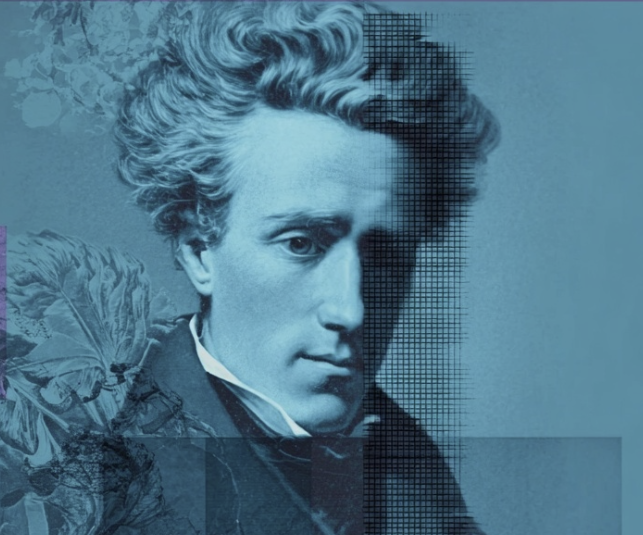
Editor Preface In this book, originating in the year 1848, the requirement for being a Christian is forced up by the pseudonymous author to the supreme ideality. Yet the requirement should indeed be stated, presented, and heard. From the Christian point of view, there ought to be no scaling down of the requirement, nor suppression of it-instead of a personal admission and confession. The requirement should be heard-and I understand what is said as spoken to me alone-so that I might learn not only to resort to grace but to resort to it in relation to the use of grace.
4 months 2 weeks ago
Daughters of Time, the hypocritic Days, Muffled and dumb like barefoot dervishes, And marching single in an endless file, Bring diadems and fagots in their hands.
▼
Source
source
Days
3 weeks 3 days ago
I am of course confident that I will fulfil my tasks as a writer in all circumstances - from my grave even more successfully and more irrefutably than in my lifetime. No one can bar the road to truth, and to advance its cause I am prepared to accept even death. But may it be that repeated lessons will finally teach us not to stop the writer's pen during his lifetime? At no time has this ennobled our history.
▼
Source
source
Open letter to the Fourth Soviet Writers' Congress (16 May 1967); as translated in Solzhenitsyn: A Documentary Record (1970) edited by Leopold Labedz
4 months 2 weeks ago
Natural religion supplies still all the facts which are disguised under the dogma of popular creeds. The progress of religion is steadily to its identity with morals.
▼
Source
source
p. 223

4 months 4 days ago
Truth is great and its effectiveness endures.
▼
Source
source
Maxim no. 5. Cf. 1 Esdras 4:41
2 months 4 weeks ago
The main importance of Francis Bacon's influence does not lie in any peculiar theory of inductive reasoning which he happened to express, but in the revolt against second-hand information of which he was a leader.
CivilSimian.com created by AxiomaticPanic, CivilSimian, Kalokagathia