


2 months 3 weeks ago
Once again, I experienced that overwhelming joy in the universe that I had felt in London outside the V and A. But this time, my consciousness of the world seemed larger, more complex. It was the mystic's sensation of oneness, of everything blending into everything else. Everything I looked at reminded me of something else, which also became present to my consciousness, as if I were simultaneously seeing a million worlds and smelling a million scents and hearing a million sounds-- not mixed up, but each separate and clear. I was overwhelmed with a sense of my smallness in the face of this vast, beautiful, objective universe, this universe whose chief miracle is that it exists, as well as myself. It is no dream, but a great garden in which life is trying to obtain a foothold. I experienced a desire to burst into tears of gratitude; then I controlled it, and the feeling subsided into a calm sense of immense, infinite beauty.
▼
Source
source
pp. 237-238

3 months 6 days ago
The harvest truly is plenteous, but the labourers are few; Pray ye therefore the Lord of the harvest, that he will send forth labourers into his harvest.
▼
Source
source
9:37-38 (KJV)

1 week 6 days ago
It is said that our paper is as good as silver, because we may have silver for it at the bank where it issues. This is not true. One, two, or three persons might have it; but a general application would soon exhaust their vaults, and leave a ruinous proportion of their paper in its intrinsic worthless form.
▼
Source
source
ME 13:426

4 months 3 weeks ago
Now when God sends forth his holy Gospel, He deals with us in a twofold manner, the first outwardly, then inwardly. Outwardly he deals with us through the oral word of the Gospel and through material sings, that is, baptism adndthe sacrament of the altar. Inwardly He deals with us through the Holy spirit, faith, and other gifts. But whatever their measure of order the outward factors should and must procede. The inward experience follows and is effected by the outward. God has determined to give the inward to no one except through the outward.
▼
Source
source
Luthers Works, 40 p. 146 as quoted in Against the Idols: The Reformation of Worship from Erasmus to Calvinby Carlos M. N. Eire, p. 72

2 months 1 week ago
Ignorance, to a scientist, is an itch that begs to be pleasurably scratched. Ignorance, if you are a theologian, is something to be washed away by shamelessly making something up.
▼
Source
source
The Intellectual and Moral Courage of Atheism

4 months 1 week ago
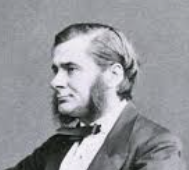
The limits of my language mean the limits of my world. (5.6) Variant translations: The limits of my language stand for the limits of my world. The limits of my language are the limits of my mind. All I know is what I have words for.
▼
Source
source
Original German: Die Grenzen meiner Sprache bedeuten die Grenzen meiner Welt.
1 month 4 weeks ago
The foundation of morality is to have done, once and for all, with lying; to give up pretending to believe that for which there is no evidence, and repeating unintelligible propositions about things beyond the possibilities of knowledge.
▼
Source
source
Science and Morals

1 week 4 days ago
Faith and patriotism are the two great thaumaturges of this world. Both are divine; all their actions are prodigies. Do not go to them talking of examination, choice, or discussion; they will say that you blaspheme. They know only two words: submission and belief; with these two levers they raise the world. Even their errors are sublime. These two children of Heaven prove their origin to all eyes by creating and conserving; but if they unite, join their forces, and together take possession of a nation, they exalt it, they divinize it, and they increase its forces a hundred-fold.
▼
Source
source
p. 88

4 months 1 week ago
The First [Friend] is the alter ego, the man who first reveals to you that you are not alone in the world by turning out (beyond hope) to share all your most secret delights. There is nothing to be overcome in making him your friend; he and you join like raindrops on a window. But the Second Friend is the man who disagrees with you about everything... Of course he shares your interests; otherwise he would not become your friend at all. But he has approached them all at a different angle. he has read all the right books but has got the wrong thing out of every one... How can he be so nearly right, and yet, invariably, just not right? He is as fascinating (and infuriating) as a woman.
4 months 4 weeks ago
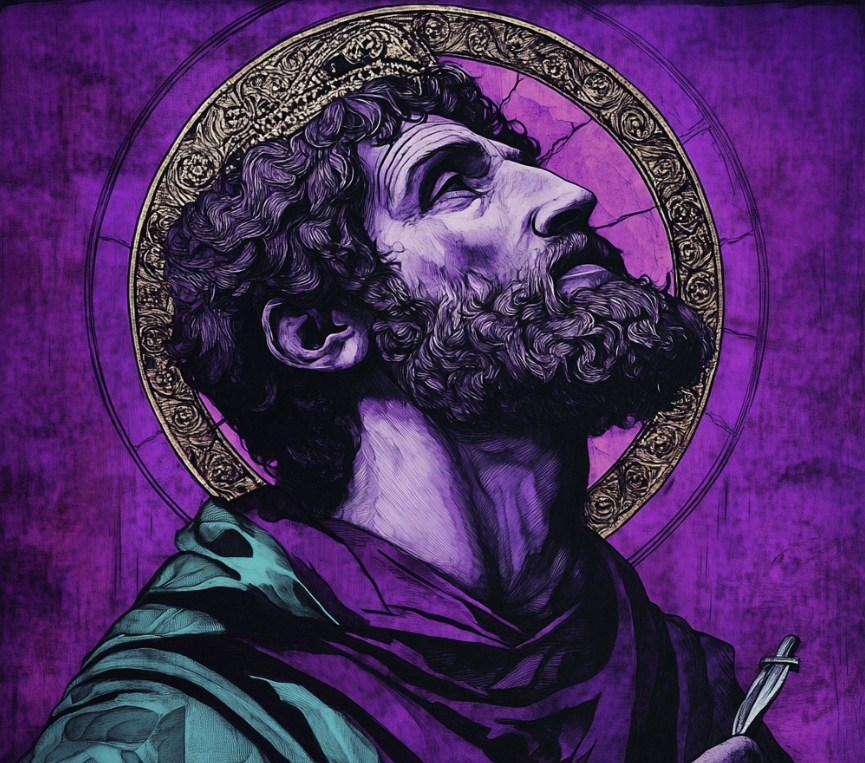
If there is something more excellent than the truth, then that is God; if not, then truth itself is God.
4 months 4 days ago
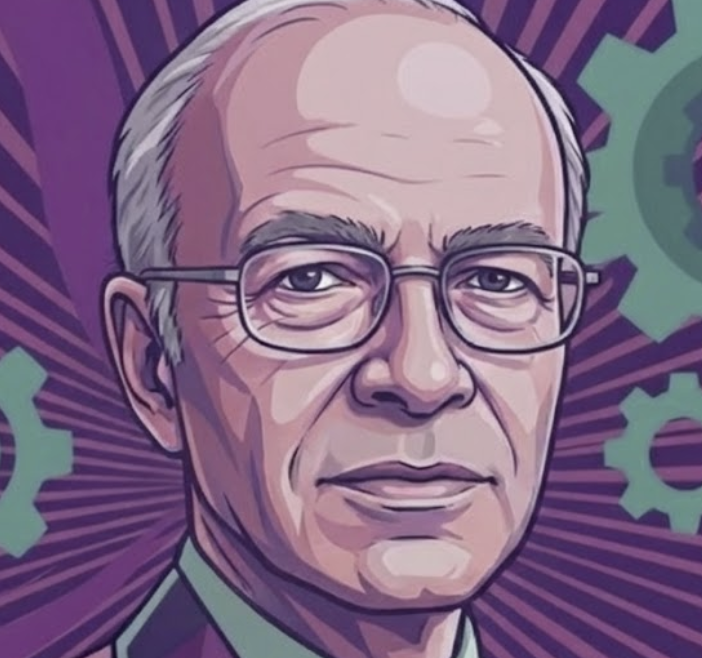
How far down the evolutionary scale shall we go? Shall we eat fish? What about shrimps? Oysters? To answer these questions we must bear in mind the central principle on which our concern for other beings is based. As I said ... the only legitimate boundary to our concern for the interests of other beings is the point at which it is no longer accurate to say that the other being has interests. To have interests, in a strict, nonmetaphorical sense, a being must be capable of suffering or experiencing pleasure. If a being suffers, there can be no moral justification for disregarding that suffering, or for refusing to count it equally with the like suffering of any other being. But the converse of this is also true. If a being is not capable of suffering, or of enjoyment, there is nothing to take into account.
▼
Source
source
Ch. 4: Becoming a Vegetarian
2 months 2 weeks ago
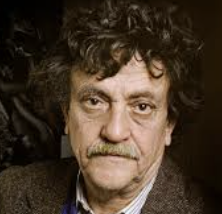
My theory is that all women have hydrofluoric acid bottled up inside.
▼
Source
source
On difficulties with women, as quoted in "Kurt Vonnegut, Writer of Classics of the American Counterculture, Dies at 84" by Dinitia Smith in The New York Times
3 months 1 week ago
The dream is the small hidden door in the deepest and most intimate sanctum of the soul, which opens to that primeval cosmic night that was soul long before there was conscious ego and will be soul far beyond what a conscious ego could ever reach.
▼
Source
source
The Meaning of Psychology for Modern Man
3 months 6 days ago
I have said these things to you so that by means of me you may have peace. In the world you will have tribulation, but take courage! I have conquered the world.
▼
Source
source
16:33, NWT

4 months 2 weeks ago
All men would then be necessarily equal, if they were without needs. It is the poverty connected with our species which subordinates one man to another. It is not inequality which is the real misfortune, it is dependence.
▼
Source
source
"Equality", 1764


4 months 1 week ago
Nicias, do you think you can erase with good deeds the wrongs you committed against your mother? What good deed will ever reach her? Her soul is a scorching noon time, without a single breath of a breeze, nothing moves, nothing changes, nothing lives there; a great emaciated sun, an immobile sun eternally consumes her.
▼
Source
source
King Aegistheus, Act 2

1 month 4 days ago
O poor mortals, how ye make this earth bitter for each other.
▼
Source
source
Pt. I, Bk. V, ch. 5.
1 week 3 days ago
Look to the essence of a thing, whether it be a point of doctrine, of practice, or of interpretation.
▼
Source
source
VIII, 22
2 months 3 weeks ago
Temperament refers to the mode of reaction and is constitutional and not changeable; character is essentially formed by a person's experiences, especially of those in early life, and changeable, to some extent, by insights and new kinds of experiences. If a person has a choleric temperament, for instance, his mode of reaction is "quick and strong." But what he is quick or strong about depends on his kind of relatedness, his character. If he is a productive, just, loving person he will react quickly and strongly when he loves, when he is enraged by injustice, and when he is impressed by a new idea. If he is a destructive or sadistic character, he will be quick and strong in his destructiveness or in his cruelty. The confusion between temperament and character has had serious consequences for ethical theory. Preferences with regard to differences in temperament are mere matters of subjective taste. But differences in character are ethically of the most fundamental importance.
▼
Source
source
Ch. 3

1 week 2 days ago
As the entire middle class, the bourgeois and petty bourgeois intelligentsia, boycotted the Soviet government for months after the October Revolution and crippled the railroad, post and telegraph, and educational and administrative apparatus, and, in this fashion, opposed the workers government, naturally all measures of pressure were exerted against it. These included the deprivation of political rights, of economic means of existence, etc., in order to break their resistance with an iron fist. It was precisely in this way that the socialist dictatorship expressed itself, for it cannot shrink from any use of force to secure or prevent certain measures involving the interests of the whole.
3 months 5 days ago
The discovery that mass changes with velocity, a discovery made when minute bodies came under consideration, finally forced surrender of the notion that mass is a fixed and inalienable possession of ultimate elements or individuals, so that time is now considered to be their fourth dimension.

4 months 2 weeks ago
"And your education! Is not that also social, and determined by the social conditions under which you educate, by the intervention, direct or indirect, of society, by means of schools, etc.? The Communists have not invented the intervention of society in education; they do but seek to alter the character of that intervention, and to rescue education from the influence of the ruling class."
▼
Source
source
As quoted in The Communist Manifesto (21 February 1848), p19-20.

3 months ago
It is the vital asserting itself, and in order to assert itself it creates, with the help of its enemy, the rational, a complete dogmatic structure, and this the Church defends against rationalism, against Protestantism, and against Modernism. The Church defends life. It stood up against Galileo, and it did right; for his discovery, in its inception and until it became assimilated to the general body of human knowledge, tended to shatter the anthropomorphic belief that the universe was created for man. It opposed Darwin, and it did right, for Darwinism tends to shatter our belief that man is an exceptional animal, created expressly to be eternalized. And lastly, Pius IX, the first Pontiff to be proclaimed infallible, declared he was irreconcilable with the so-called modern civilization. And he did right.

5 months 2 weeks ago
Whoever has overthrown an existing law of custom has hitherto always first been accounted a bad man: but when, as did happen, the law could not afterwards be reinstated and this fact was accepted, the predicate gradually changed: - history treats almost exclusively of these bad men who subsequently became good men!

2 months 3 weeks ago
To be in touch with senses and emotions beyond conquest is to enter the realm of the mysterious.
▼
Source
source
Chapter 2, Altars of Sacrifice

4 months 2 weeks ago
In all determinations of morality, this circumstance of public utility is ever principally in view; and wherever disputes arise, either in philosophy or common life, concerning the bounds of duty, the question cannot, by any means, be decided with greater certainty, than by ascertaining, on any side, the true interests of mankind. If any false opinion, embraced from appearances, has been found to prevail; as soon as farther experience and sounder reasoning have given us juster notions of human affairs, we retract our first sentiment, and adjust anew the boundaries of moral good and evil.
▼
Source
source
§ 2.17 : Of Benevolence, Pt. 2

4 weeks ago
A great fortune is a great slavery.
▼
Source
source
From Ad Polybium De Consolatione (Of Consolation, To Polybius), chap. VI, line 5
1 week 4 days ago
Nothing great has great beginnings.
▼
Source
source
XXIII, p. 73
3 months 6 days ago
Unto whomsoever much is given, of him shall be much required: and to whom men have committed much, of him they will ask the more.
▼
Source
source
12:48
4 months 4 days ago
We are responsible not only for what we do but also for what we could have prevented.
▼
Source
source
Introduction (p. xv)
3 weeks 2 days ago
The social game has a deeper double meaning-that it is played not only in a society as its outward bearer but that with its help people actually "play" "society."
▼
Source
source
Sociability (1910) in On Individuality and Social Forms (1971), p. 134

4 months 3 weeks ago
To an atheist all writings tend to atheism: he corrupts the most innocent matter with his own venom.
▼
Source
source
Ch. 12

3 months 1 week ago
When you have understood that nothing is, that things do not even deserve the status of appearances, you no longer need to be saved, you are saved, and miserable forever.
1 week 6 days ago
The mother principle is that 'governments are republican only in proportion as they embody the will of their people, and execute it.
1 week 4 days ago
The sentiment that dominates all Rousseau's works is a certain plebeian anger that excites him against every kind of superiority. The energetic submission of the wise man bends nobly under the indispensable empire of social distinctions, and never does be appear greater than when he bows; but Rousseau has nothing at all of this loftiness. Weak and surly, he spent his life spouting insults to the great, as he would have offered the same to the people if he had been born a great lord.
4 months 3 weeks ago
No circumstance is ever so desperate that one cannot nurture some spark of hope.
▼
Source
source
Act I, scene i
2 months 3 weeks ago
Even if we consider not words by themselves but rules deciding what words may appropriately be produced in certain contexts - even if we consider, in computer jargon, programs for using words - unless those programs themselves refer to something extra-linguistic there is still no determinate reference that those words possess. This will be a crucial step in the process of reaching the conclusion that the Brain-in-a-Vat Worlders cannot refer to anything external at all (and hence cannot say that they are Brain-in-a-Vat Worlders).
▼
Source
source
Chap. 1 : Brains in a vat
1 month 4 days ago
War is a quarrel between two thieves too cowardly to fight their own battle; therefore they take boys from one village and another village, stick them into uniforms, equip them with guns, and let them loose like wild beasts against each other.
▼
Source
source
Quoted by Emma Goldman in her essay, "Patriotism: A Menace to Liberty", chapter five of Anarchism and Other Essays (2nd revised edition, 1911).
1 week 3 days ago
Every soul, the philosopher says, is involuntarily deprived of truth; consequently in the same way it is deprived of justice and temperance and benevolence and everything of the kind. It is most necessary to keep this in mind, for thus thou wilt be more gentle towards all.
▼
Source
source
VII, 63
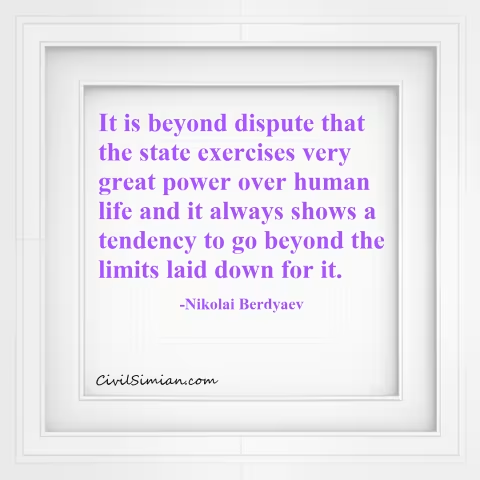
1 week 4 days ago
Government is a true religion: it has its dogmas, its mysteries, and its ministers. To annihilate it or submit it to the discussion of each individual is the same thing; it lives only through national reason, that is to say through political faith, which is a creed.
▼
Source
source
p. 87
1 month 4 days ago
The seeing eye! It is this that discloses the inner harmony of things; what Nature meant, what musical idea Nature has wrapped up in these often rough embodiments. Something she did mean. To the seeing eye that something were discernible. Are they base, miserable things? You can laugh over them, you can weep over them; you can in some way or other genially relate yourself to them; - you can, at lowest, hold your peace about them, turn away your own and others' face from them, till the hour come for practically exterminating and extinguishing them!

4 months 2 weeks ago
It is from the Bible that man has learned cruelty, rapine, and murder; for the belief of a cruel God makes a cruel man.
▼
Source
source
A Letter: Being an Answer to a Friend, on the publication of The Age of Reason" (12 May 1797), published in an 1852 edition of The Age of Reason, p. 205
4 weeks 1 day ago
Feuerbach ... recognizes ... "even love, in itself the truest, most inward sentiment, becomes an obscure, illusory one through religiousness, since religious love loves man only for God's sake, therefore loves man only apparently, but in truth God only." Is this different with moral love? Does it love the man, this man for this man's sake, or for morality's sake, for Man's sake, and so-for homo homini Deus-for God's sake?
▼
Source
source
Cambridge 1995, p. 56
3 months 1 week ago
In a word, we reject all legislation, all authority, and all privileged, licensed, official, and legal influence, even though arising from universal suffrage, convinced that it can turn only to the advantage of a dominant minority of exploiters against the interest of the immense majority in subjection to them. This is the sense in which we are really Anarchists.
1 week 3 days ago
External things are not the problem. It's your assessment of them. Which you can erase right now.
▼
Source
source
(Hays translation) VIII, 47
4 months 3 weeks ago
Since the law is good, the will, which is hostile to it, cannot be good.
▼
Source
source
Thesis 87
4 months 3 weeks ago
An armed insurrection ... would hinder and bring into disrepute this spiritual insurrection.
▼
Source
source
p. 68
4 months 1 week ago
There are infinitely many variations of the initial situation and therefore no doubt indefinitely many theorems of moral geometry.
▼
Source
source
Chapter III, Section 21, pg. 126
CivilSimian.com created by AxiomaticPanic, CivilSimian, Kalokagathia