


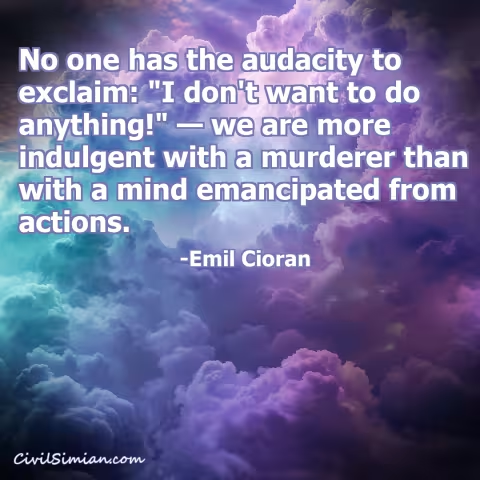

2 months 4 weeks ago
When we come to think about the several benefits in regard to their cause, how have they arisen? Have they arisen out of hate of others and injuring others? Of course we should say no. We should say they have arisen out of love of others and benefiting others. If we should classify one by one all those who love others and benefit others, should we find them to be partial or universal? Of course we should say they are universal. Now, since universal love is the cause of the major benefits in the world, therefore Mozi proclaims universal love is right. And, as has already been said, the interest of the magnanimous lies in procuring benefits for the world and eliminating its calamities. Now that we have found out the consequences of universal love to be the major benefits of the world and the consequences of partiality to be the major calamities in the world; this is the reason why Mozi said partiality is wrong and universality is right.
▼
Source
source
Book 4; Universal Love III

6 months 3 weeks ago
He who does not give himself leisure to be thirsty cannot take pleasure in drinking.
▼
Source
source
Ch. 42

5 months 6 days ago
A man should be mourned at his birth, not at his death.
▼
Source
source
No. 40. (Usbek writing to Ibben)

5 months 1 day ago
People do not go into the company of their fellow-creatures for what would seem a very sufficient reason, namely, that they have something to say to them, or something that they want to hear from them; but in the vague hope that they may find something to say.
7 months 2 weeks ago
Earth governments in moments of stress are not famous for being reasonable.

5 months 1 week ago
Science is the knowledge of Consequences, and dependence of one fact upon another: by which, out of that we can presently do, we know how to do something else when we will, or the like, another time.
▼
Source
source
The First Part, Chapter 5, p. 21

6 months 2 weeks ago
The disciple must break the glass, or better the mirror, the reflection, his infinite speculation on the master. And start to speak.
▼
Source
source
Cogito and The History of Madness, p.37 (Routledge classics edition)
3 months 1 day ago
Our trouble is that we have ignored and thus feel insecure in the enormous spectrum of love which lies between rather formal friendship and genital sexuality, and thus are always afraid that once we overstep the bounds of formal friendship we must slide inevitably to the extreme of sexual promiscuity.
▼
Source
source
p. 91
7 months 1 week ago
The institutions of the Ruler are rooted in his own character and conduct, and sufficient attestation of them is given by the masses of the people. He examines them by comparison with those of the three kings, and finds them without mistake. He sets them up before Heaven and Earth, and finds nothing in them contrary to their mode of operation. He presents himself with them before spiritual beings, and no doubts about them arise. He is prepared to wait for the rise of a sage a hundred ages after, and has no misgivings. His presenting himself with his institutions before spiritual beings, without any doubts arising about them, shows that he knows Heaven. His being prepared, without any misgivings, to wait for the rise of a sage a hundred ages after, shows that he knows men.

6 months 2 weeks ago
We boil at different degrees.
▼
Source
source
Eloquence
5 months 6 days ago
...as the great Unitarian preacher Channing pointed out, that in France and Spain there are multitudes who have proceeded from rejecting Popery to absolute atheism, because "the fact is, that false and absurd doctrines, when exposed, have a natural tendency to beget skepticism in those who receive them without reflection. None are so likely to believe too little as those who have begun by believing too much." Here is, indeed, the terrible danger of believing too much. But no! the terrible danger comes from another quarter - from seeking to believe with the reason and not with the life.
7 months 2 weeks ago
They do not know the penalty of unrighteousness, which is the thing they most ought to know. For it is not what they think it is scourgings and death, which they sometimes escape entirely when they have done wrong but a penalty which it is impossible to escape. Two patterns, my friend, are set up in the world, the divine, which is most blessed, and the godless, which is most wretched, and their silliness and extreme foolishness blind them to the fact that through their unrighteous acts they are made like the one and unlike the other. They therefore pay the penalty for this by living a life that conforms to the pattern they resemble.
6 months 2 weeks ago
As the chosen people bore in their features the sign manual of Jehovah, so the division of labour brands the manufacturing workman as the property of capital.
▼
Source
source
Vol. I, Ch. 14, Section 5, pg. 396.
4 months 2 weeks ago
Whom Fortune wishes to destroy she first makes mad.
▼
Source
source
Maxim 911

7 months 4 days ago
Why dost thou not retire like a guest sated with the banquet of life, and with calm mind embrace, thou fool, a rest that knows no care?
▼
Source
source
Book III, lines 938-939 (tr. Bailey)
6 months 2 weeks ago
Beauty without grace is the hook without the bait.
▼
Source
source
Beauty
7 months 2 weeks ago
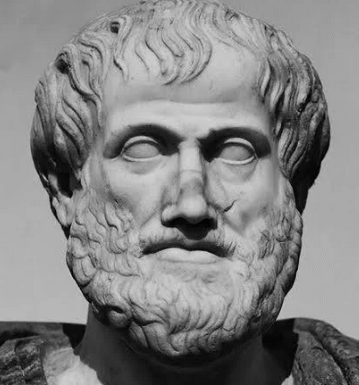
It is the mark of an educated man to look for precision in each class of things just so far as the nature of the subject admits; it is evidently equally foolish to accept probable reasoning from a mathematician and to demand from a rhetorician scientific proofs.
6 months 2 weeks ago
Unlimited exploitation of cheap labour-power is the sole foundation of their power to compete.
▼
Source
source
Vol. I, Ch. 15, Section 8, pg. 520.
5 months 1 week ago
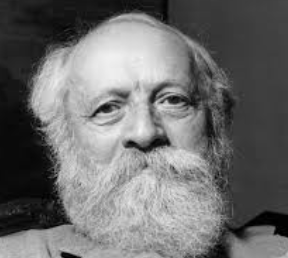
The real struggle is not between East and West, or capitalism and communism, but between education and propaganda.
▼
Source
source
As quoted in Encounter with Martin Buber (1972) by Aubrey Hodes, p. 135
2 months 4 weeks ago
The Chinese do not draw any distinction between food and medicine.
▼
Source
source
Ch. IX : The Enjoyment of Living, p. 249, as quoted in Fred R Shapiro (2006). The Yale Book of Quotations. Yale University Press. p. 467. ISBN 0-300-10798-6.
6 months 3 weeks ago
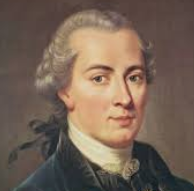
Two things fill the mind with ever-increasing wonder and awe, the more often and the more intensely the mind of thought is drawn to them: the starry heavens above me and the moral law within me.
▼
Source
source
Translated by Lewis White Beck Two things fill the heart with renewed and increasing awe and reverence the more often and the more steadily that they are meditated on: the starry skies above me and the moral law inside me.

5 months 2 weeks ago
Is there in the whole world a being who would have the right to forgive and could forgive? I don't want harmony. From love for humanity I don't want it. I would rather be left with the unavenged suffering. I would rather remain with my unavenged suffering and unsatisfied indignation, even if I were wrong. Besides, too high a price is asked for harmony; it's beyond our means to pay so much to enter on it. And so I hasten to give back my entrance ticket, and if I am an honest man I am bound to give it back as soon as possible. And that I am doing. It's not God that I don't accept, Alyosha, only I most respectfully return him the ticket.
▼
Source
source
Book II, Chapter 4: Rebellion (trans. Constance Garnett)
3 months 2 weeks ago
There is no idea more novel, more surprising, than that of associating three hundred families of different degrees of fortune, knowledge and capacity.
▼
Source
source
The Theory of Social Organization. Harmonian Man: Selected Writings of Charles Fourier, p. 5.
6 months 3 weeks ago
The entire lower world was created in the likeness of the higher world. All that exists in the higher world appears like an image in this lower world; yet all this is but One.

7 months 2 weeks ago
The evil that is in the world always comes of ignorance, and good intentions may do as much harm as malevolence, if they lack understanding. On the whole men are more good than bad; that, however, isn't the real point. But they are more or less ignorant, and it is this that we call vice or virtue; the most incorrigible vice being that of an ignorance which fancies it knows everything and therefore claims for itself the right to kill. There can be no true goodness, nor true love, without the utmost clear-sightedness.
3 months 2 weeks ago
All repressed passion produces its counter-passion which is as malevolent as the natural passion would be beneficial.
▼
Source
source
Le nouveau monde amoureux

5 months 2 weeks ago
All philosophers should end their days at Pythia's feet. There is only one philosophy, that of unique moments.
6 months 2 weeks ago
Kant's philosophy shifts for the first time the whole of modern thought and being (Desein) into the clarity and transparency of the foundation (Begrundung). This determines every attitude toward knowledge since then, as well as the bounds (Abgrenzungen) and appraisals of the sciences in the nineteenth century up to the present time. Therein Kant towers so far above all who precede and follow that even those who reject him or go beyond him still remain entirely dependent upon him.
▼
Source
source
p. 55-56
2 months 2 weeks ago
The goodness and greatness of a man do not justify us in accepting a belief upon the warrant of his authority, unless there are reasonable grounds for supposing that he knew the truth of what he was saying. And there can be no grounds for supposing that a man knows that which we, without ceasing to be men, could not be supposed to verify.
2 months 2 weeks ago
"Do not die that we may not die," the dead cry out within you. "We had no time to enjoy the women we desired; be in time, sleep with them! We had no time to turn our thoughts into deeds; turn them into deeds! We had no time to grasp and to crystallize the face of our hope; make it firm!" ... But you must choose with care whom to hurl down again into the chasms of your blood, and whom you shall permit to mount once more into the light and the earth.
6 months 2 weeks ago
The best way to drive out the devil, if he will not yield to texts of Scripture, is to jeer and flout him, for he cannot bear scorn.
▼
Source
source
Martin Luther, quoted at the beginning of The Screwtape Letters
2 months 2 weeks ago
It may possibly be true that, to continue to live on and to act in a world like ours, it is vitally necessary to seek a way out of this uncertainty of multiple alternatives; and accordingly people may be led to embrace some immediate goal as if it were absolute, by which they hope to make their problems appear concrete and real. But it is not primarily the man of action who seeks the absolute and immutable, but rather it is he who wishes to induce others to hold on to the status quo because he feels comfortable and smug under conditions as they are.
7 months 3 weeks ago
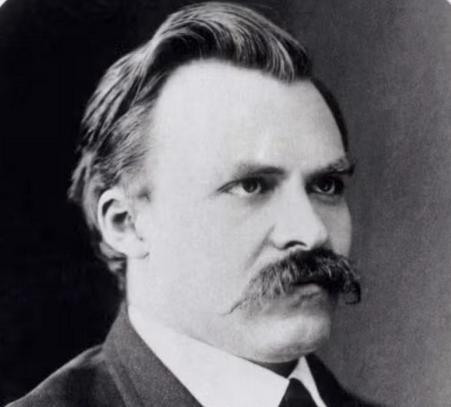
Haste is universal because everyone is in flight from himself.

2 months 2 weeks ago
The mixture of children and men is precisely one of the most beautiful features of aristocratic government. All roles are distributed wisely in the world: that of the young is to do good, and that of old age is to prevent evil. The impetuosity of young men, who demand only action and creation, is very useful to the State; but they are too likely to innovate and destroy, and they would do much evil without the elderly, who are there to stop them. The latter in their turn oppose even useful reforms; they are too inflexible, they do not know how to accommodate themselves to circumstances, and sometimes a twenty-year old senator can very well be placed beside another of eighty.
▼
Source
source
p. 137
6 months 1 week ago
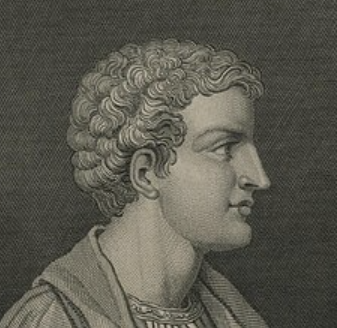
Anger is a momentary madness so control your passion or it will control you.
▼
Source
source
Book I, epistle ii, line 62
6 months 2 weeks ago
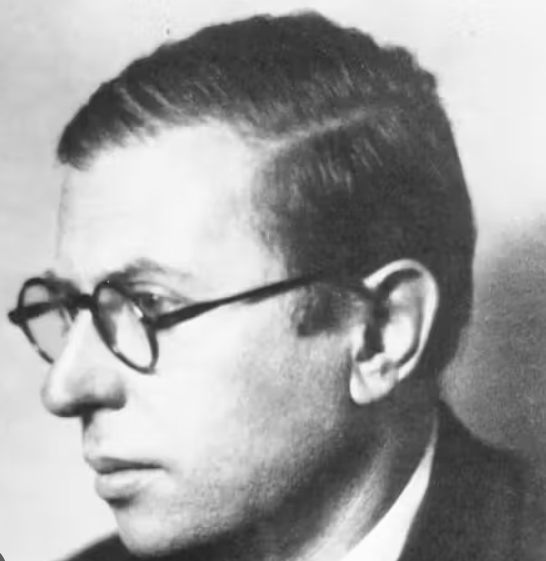
In some places the metropolis makes do with paying a clique of feudal overlords; in others, it has fabricated a fake bourgeoisie of colonized subjects in a system of divide and rule; elsewhere, it has killed two birds with one stone: the colony is both settlement and exploitation.
▼
Source
source
p. xlvi
6 months 2 weeks ago
I have known only one person in my life who claimed to have seen a ghost. It was a woman; and the interesting thing is that she disbelieved in the immortality of the soul before seeing the ghost and still disbelieves after having seen it. She thinks it was a hallucination. In other words, seeing is not believing. This is the first thing to get clear in talking about miracles.
▼
Source
source
"Miracles" (1942), p. 25
4 months 1 week ago
In politics continental Europe was infantile - horrifying. What America lacked, for all its political stability, was the capacity to enjoy intellectual pleasures as though they were sensual pleasures. This is what Europe offered, or was said to offer.
▼
Source
source
"My Paris" (1983), p. 235

3 months 1 week ago
There is a science of Dynamics in man's fortunes and nature, as well as of Mechanics. There is a science which treats of, and practically addresses, the primary, unmodified forces and energies of man, the mysterious springs of Love, and Fear, and Wonder, of Enthusiasm, Poetry, Religion, all which have a truly vital and infinite character; as well as a science which practically addresses the finite, modified developments of these, when they take the shape of immediate "motives," as hope of reward, or as fear of punishment.
3 months 1 week ago
To all Christian governments Christianity was not a rule of means but a means of rule; Christ was for the people, Machiavelli was preferred by the kings. The state in some measure had civilized man, but who would civilize the state?
▼
Source
source
Chapter 6, p. 229
3 months 2 weeks ago
There is only one purpose to which a whole society can be directed by a deliberate plan. That purpose is war, and there is no other.
▼
Source
source
Ch. V: "The Totalitarian Regimes", §7, p. 90

5 months 3 days ago
Could it be that sexual perversion and romanticism sprang from the same longing for distant horizons?
▼
Source
source
p. 17

2 months 2 weeks ago
The only thing that isn't worthless: to live this life out truthfully and rightly. And be patient with those who don't.
▼
Source
source
(Hays translation) VI, 47
3 months 1 week ago
In the meanest mortal there lies something nobler. The poor swearing soldier, hired to be shot, has his "honor of a soldier," different from drill-regulations and the shilling a day. It is not to taste sweet things, but to do noble and true things, and vindicate himself under God's Heaven as a god-made Man, that the poorest son of Adam dimly longs. Show him the way of doing that, the dullest day-drudge kindles into a hero. They wrong man greatly who say he is to be seduced by ease.
2 months 2 weeks ago
But we, O blockhead, with dogged spite and armored loveshall force those deaf dark powers to grow ears and hear us!I know that God is earless, eyeless, and heartless too,a brainless Dragon Worm that crawls on earth and hopesin anguish and then in secret that we'll give him soul,for then he, too, may sprout ears, eyes, to match his growth,but God is clay in my ten fingers, and I mould him!
▼
Source
source
Odysseus to Kentaur, Book VIII, line 829

6 months 2 weeks ago
Pure Mathematics is the class of all propositions of the form "p implies q," where p and q are propositions containing one or more variables, the same in the two propositions, and neither p nor q contains any constants except logical constants. And logical constants are all notions definable in terms of the following: Implication, the relation of a term to a class of which it is a member, the notion of such that, the notion of relation, and such further notions as may be involved in the general notion of propositions of the above form. In addition to these, mathematics uses a notion which is not a constituent of the propositions which it considers, namely the notion of truth.
▼
Source
source
Principles of Mathematics (1903), Ch. I: Definition of Pure Mathematics, p. 3
CivilSimian.com created by AxiomaticPanic, CivilSimian, Kalokagathia