


7 months 2 weeks ago
The source of an emotion is very difficult to grasp, but it comes to just that. That holds for all phenomena, for faith, etc. Why did it begin, how did it develop? and so forth-only he who has the gift of divination can perceive where it really comes from. But it is not accessible to reflection.
7 months 1 week ago
The society which projects and undertakes the technological transformation of nature alters the base of domination by gradually replacing personal dependence (of the slave on the master, the serf on the lord of the manor, the lord on the donor of the fief, etc.) with dependence on the "objective order of things" (on economic laws, the market etc.).
▼
Source
source
p. 144
9 months 5 days ago
Practice yourself, for heaven's sake, in little things; and thence proceed to greater.
▼
Source
source
Book I, ch. 18, 18.
8 months 1 week ago
The investigation of the meaning of words is the beginning of education.
▼
Source
source
Arrian, Discourses of Epictetus, i. 17



4 months 2 weeks ago
A teacher's major contribution may pop out anonymously in the life of some ex-student's grandchild. A teacher, finally, has nothing to go on but faith, a student nothing to offer in return but testimony.
▼
Source
source
"Wallace Stegner and the Great Community"
7 months 2 weeks ago
Knowledge is the plague of life, and consciousness, an open wound in its heart.
5 months 6 days ago
Do I write out of love to men? No, I write because I want to procure for my thoughts an existence in the world; and, even if I foresaw that these thoughts would deprive you of your rest and your peace, even if I saw the bloodiest wars and the fall of many generations springing up from this seed of thought - I would nevertheless scatter it. Do with it what you will and can, that is your affair and does not trouble me.
▼
Source
source
Cambridge 1995, p. 262, 263
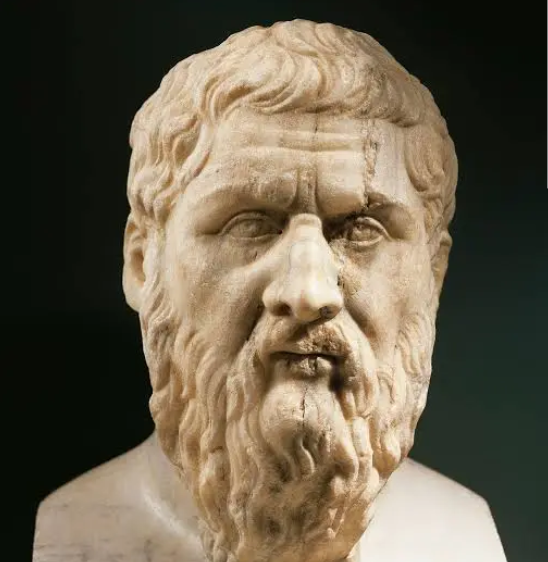
9 months 2 weeks ago
There is no one who ever acts honestly in the administration of states, nor any helper who will save any one who maintains the cause of the just.
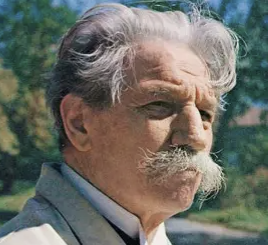
5 months 1 day ago
The only way out of today's misery is for people to become worthy of each other's trust.
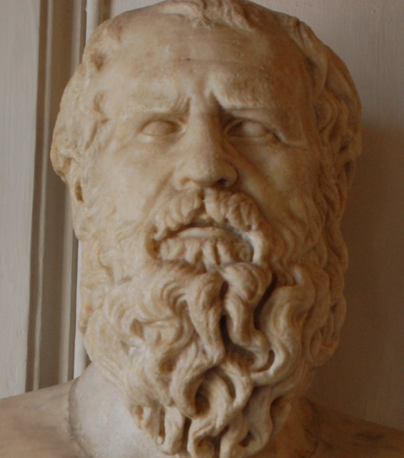
9 months 1 week ago
War is the father and king of all: some he has made gods, and some men; some slaves and some free.

7 months 1 week ago
Imagination, which is the social sense, animates the inanimate and anthropomorphizes everything; it humanizes everything and even makes everything identical with man. And the work of man is to supernaturalize Nature - that is to say, to make it divine by making it human, to help it to become conscious of itself, in short. The action of reason, on the other hand, is to mechanize or materialize.
7 months 2 weeks ago
To try curing someone of a "vice," of what is the deepest thing he has, is to attack his very being, and this is indeed how he himself understands it, since he will never forgive you for wanting him to destroy himself in your way and not his.

8 months 2 weeks ago
There is object proof that homosexuality is more interesting than heterosexuality. It's that one knows a considerable number of heterosexuals who would wish to become homosexuals, whereas one knows very few homosexuals who would really like to become heterosexuals.
▼
Source
source
As quoted in Who's Who in Contemporary Gay & Lesbian History: From World War II to the Present Day (2001) by Robert Aldrich and Gary Wotherspoon ISBN 041522974X

7 months 3 weeks ago
This whole which is visible in different ways in bodies, as far as formation, constitution, appearance, colors and other properties and common qualities, is none other than the diverse face of the same substance - a changeable, mobile face, subject to decay, of an immobile, permanent and eternal being.
▼
Source
source
As translated by Paul Harrison
5 months 6 days ago
Whoever will be free must make himself free. Freedom is no fairy gift to fall into a man's lap. What is freedom? To have the will to be responsible for one's self.
▼
Source
source
Attributed in Forbes Vol 38 Iss. 2 (1936) p. 18, and in Lifetime Speaker's Encyclopedia (1962) by Jacob Morton Braude, p. 275

9 months 6 days ago
In a quarrel for earth, turn not to earth.
▼
Source
source
First Homily, as translated by John Burnaby (1955), p. 267

8 months 2 weeks ago
What has to be accepted, the given, is - so one could say - forms of life.
▼
Source
source
Pt II, p. 226 of the 1968 English edition
9 months 3 weeks ago
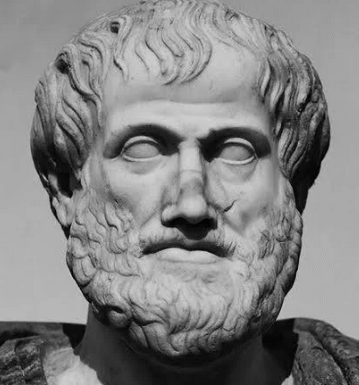
How will one part of the infinite be above, and another below? Or how will it have extremes or a middle? Further still, every sensible body is in place; but the species and differences of place are upward and downward, before and behind, to the right hand and to the left: and these things not only thus subsist with relation to us, and by position, but have a definite subsistence in the universe itself. But it is impossible that these things should be in the infinite: and... that there should be an infinite place. But every body is in place; and therefore it is also impossible that there should be an infinite body. ...Therefore ...there is not an infinite body in energy.

7 months 2 weeks ago
The more we try to wrest ourselves from our ego, the deeper we sink into it.
4 months 3 weeks ago
We, who are dying, are doing better, than they, who will live. For Crete doesn't need householders, she needs madmen like us. These madmen make Crete immortal.
▼
Source
source
Freedom and Death
7 months 2 weeks ago
Liberty is so great a magician, endowed with so marvelous a power of productivity, that under the inspiration of this spirit alone, North America was able within less than a century to equal, and even surpass, the civilization of Europe.

5 months 5 days ago
Withdraw into yourself, as far as you can. Associate with those who will make a better man of you. Welcome those whom you yourself can improve. The process is mutual; for men learn while they teach.
▼
Source
source
Line 8.
4 months 3 weeks ago
Our profound human duty is not to interpret or to cast light on the rhythm of God's arch, but to adjust, as much as we can, the rhythm of our small and fleeting life to his. Only thus may we mortals succeed in achieving something immortal, because then we collaborate with One who is Deathless. Only thus may we conquer mortal sin, the concentration on details, the narrowness of our brains; only thus may we transubstantiate into freedom the slavery of earthen matter given us to mold.

8 months 3 weeks ago
I believe that Communism is necessary to the world, and I believe that the heroism of Russia has fired men's hopes in a way which was essential to the realization of Communism in the future. Regarded as a splendid attempt, without which ultimate success would have been very improbable, Bolshevism deserves the gratitude and admiration of all the progressive part of mankind.
▼
Source
source
Preface

7 months 1 week ago
For the Lawes of Nature (as Justice, Equity, Modesty, Mercy, and (in summe)doing to others, as wee would be done to,) of themselves, without the terrour of some Power, to cause them to be observed, are contrary to our naturall Passions, that carry us to Partiality, Pride, Revenge, and the like. And Covenants, without the Sword, are but Words, and of no strength to secure a man at all.
▼
Source
source
The Second Part, Chapter 17, p. 85
7 months 2 weeks ago
Every utopia about to be realized resembles a cynical dream.
8 months 3 weeks ago
We live to improve, or we live in vain.
▼
Source
source
Address and Declaration at a Select Meeting of the Friends of Universal Peace and Liberty (August 20, 1791) p. 5
8 months 3 weeks ago
A thing, moderately good, is not so good as it ought to be. Moderation in temper, is always a virtue; but moderation in principle, is a species of vice.
6 months 3 weeks ago
Although it is commonly supposed that war making is the specific activity of nations, the blind rage that motivates war destroys the very social bonds that make nations possible. Of course, it can fortify the nationalism of a nation, producing a provisional coherence bolstered by war and enmity, but it also erodes the social relations that make politics possible. The power of destruction unleashed by war breaks social ties and produces anger, revenge, and distrust ("embitterment") such that it becomes unclear whether reparation is possible, undermining not only those relations that may have been built in the past, but also the future possibility of peaceful coexistence.
▼
Source
source
p. 154
4 months 2 weeks ago
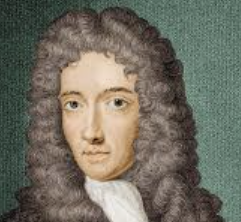
Those hypotheses do not a little hinder the progress of Humane knowledge, that introduce Morals and Politicks into the Explications of Corporeal Nature, where all things are indeed transacted according to Laws Mechanical.
▼
Source
source
Reflections upon the Hypothesis of Alcali and Acidum (1675) p. 33.

8 months 2 weeks ago
The consciousness of being betrayed is to the collective consciousness of a sacred group what a certain form of schizophrenia is to the individual...it is a form of madness.
▼
Source
source
p. 193

7 months 1 week ago
Whoever believes and is baptized will be saved, but whoever does not believe will be condemned. And these signs will accompany those who believe: In my name they will drive out demons; they will speak in new tongues; they will pick up snakes with their hands; and when they drink deadly poison, it will not hurt them at all; they will place their hands on sick people, and they will get well.
▼
Source
source
Jesus, Mark 16:16-18

6 months 2 weeks ago
Computers can do better than ever what needn't be done at all. Making sense is still a human monopoly.
▼
Source
source
(p. 109)
7 months 1 week ago
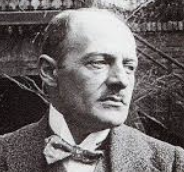
When we cannot obtain a thing, we comfort ourselves with the reassuring thought that it is not worth nearly as much as we believed.
▼
Source
source
L. Coser, trans. (1973), p. 73
7 months 6 days ago
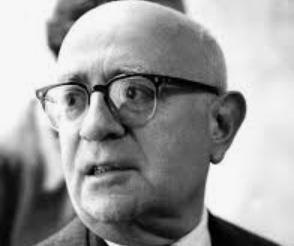
Philosophy ... should not imagine that specialized work in epistemological theory, or whatever else prides itself on being research, is actually philosophy. Yet a philosophy forswearing all of that must in the end be irreconcilably at odds with the dominant consciousness. Nothing else raises it above the suspicion of apologetics. Philosophy that satisfies its own intention, and does not childishly skip behind its own history and the real one, has its lifeblood in the resistance against the common practices of today and what they serve, against the justification of what happens to be the case.
▼
Source
source
p. 6
7 months 2 weeks ago
Love's great (and sole) originality is to make happiness indistinct from misery.

4 months 2 weeks ago
Whatever happens to you has been waiting to happen since the beginning of time. The twining strands of fate wove both of them together: your own existence and the things that happen to you.
▼
Source
source
V. 8, trans. Gregory Hays
7 months 2 weeks ago
To revolt is a natural tendency of life. Even a worm turns against the foot that crushes it. In general, the vitality and relative dignity of an animal can be measured by the intensity of its instinct to revolt.
▼
Source
source
"On the International Workingmen's Association and Karl Marx"
4 months 2 weeks ago
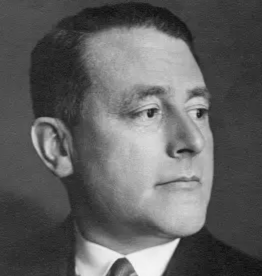
The state as the decisive political entity possesses an enormous power: the possibility of waging war and thereby publicly disposing of the lives of men. The jus belli contains such a disposition. It implies a double possibility: the right to demand from its own members the readiness to die and unhesitatingly to kill enemies.
5 months 1 week ago
Power dements even more than it corrupts, lowering the guard of foresight and raising the haste of action.
▼
Source
source
Ch. IV : The Convention: September 21, 1792 - October 26, 1795, Part V : The Reign of Terror: September 17, 1793 - July 28, 1794, § 4 : The Revolution Eats Its Children
CivilSimian.com created by AxiomaticPanic, CivilSimian, Kalokagathia