


7 months 1 week ago
But the capacity to enjoy is impossible without the capacity to suffer; and the faculty of enjoyment is one with that of pain. Whosoever does not suffer does not enjoy, just as whosoever is insensible to cold is insensible to heat.

7 months 3 weeks ago
The idea does not belong to the soul; it is the soul that belongs to the idea.
▼
Source
source
Vol. I, par. 216
8 months 4 weeks ago
For instance, if you have by a lie hindered a man who is even now planning a murder, you are legally responsible for all the consequences. But if you have strictly adhered to the truth, public justice can find no fault with you, be the unforeseen consequence what it may. It is possible that whilst you have honestly answered Yes to the murderer's question, whether his intended victim is in the house, the latter may have gone out unobserved, and so not have come in the way of the murderer, and the deed therefore have not been done; whereas, if you lied and said he was not in the house, and he had really gone out (though unknown to you) so that the murderer met him as he went, and executed his purpose on him, then you might with justice be accused as the cause of his death. For, if you had spoken the truth as well as you knew it, perhaps the murderer while seeking for his enemy in the house might have been caught by neighbours coming up and the deed been prevented.

7 months 1 week ago
The success of most things depends upon knowing how long it will take to succeed.

7 months 1 week ago
I feel sure that the police are helping us more than I could do in ten years. They are making more anarchists than the most prominent people connected with the anarchist cause could make in ten years. If they will only continue I shall be very grateful; they will save me lots of work.
▼
Source
source
As quoted in "Arrest in Chicago of Emma Goldman, Preacher of Anarchy", The San Francisco Call
8 months 4 weeks ago
Being of opinion that the doctrine and history of so extraordinary a sect as the Quakers were very well deserving the curiosity of every thinking man, I resolved to make myself acquainted with them, and for that purpose made a visit to one of the most eminent of that sect in England, who, after having been in trade for thirty years, had the wisdom to prescribe limits to his fortune, and to his desires, and withdrew to a small but pleasant retirement in the country, not many miles from London. Here it was that I made him my visit. His house was small, but neatly built, and with no other ornaments but those of decency and convenience.
7 months 1 week ago
The Fathers of the Church can well afford to preach the gospel of Christ. It contains nothing dangerous to the regime of authority and wealth; it stands for self-denial and self-abnegation, for penance and regret, and is absolutely inert in the face of every indignity, every outrage imposed upon mankind.
4 months 3 weeks ago
In Deductive Reasoning, we cannot have any truth in the conclusion which is not virtually contained in the premises.



7 months ago
Yet sometimes vegetables and animals are, by certain epithets or circumstances, extended to other significations; as a Tree, when called the tree of life or of knowledge; and a Beast, when called the old serpent, or worshiped. When a Beast or Man is put for a kingdom, his parts and qualities are put for the analogous parts and qualities of the kingdom; as the head of a Beast, for the great men who precede and govern; the tail for the inferior people, who follow and are governed; the heads, if more than one, for the number of capital parts, or dynasties, or dominions in the kingdom, whether collateral or successive, with respect to the civil government; the horns on any head, for the number of kingdoms in that head, with respect to military power...
▼
Source
source
Vol. I, Ch. 2: Of the Prophetic Language

6 months 3 weeks ago
Until writing was invented, man lived in acoustic space: boundless, directionless, horizonless, in the dark of the mind, in the world of emotion, by primordial intuition, terror. Speech is a social chart of this bog.
▼
Source
source
(p. 48)
8 months 1 week ago
Anger begins in folly, and ends in repentance.
▼
Source
source
As quoted in Treasury of Thought: Forming an Encyclopædia of Quotations from Ancient and Modern Authors (1894) by Maturin Murray Ballou

8 months 1 day ago
The good of the people must be the great purpose of government. By the laws of nature and of reason, the governors are invested with power to that end. And the greatest good of the people is liberty. It is to the state what health is to the individual.
▼
Source
source
Article on Government

7 months 3 weeks ago
An event has happened, upon which it is difficult to speak, and impossible to be silent.
▼
Source
source
Speech on the sixth article of charge in the impeachment of Warren Hastings (5 May 1789), quoted in The Works of the Right Honourable Edmund Burke, Volume the Tenth (1899), p. 306

9 months 1 week ago
So potent was Religion in persuading to do wrong.
▼
Source
source
Book I, line 101 (tr. Alicia Stallings) H. A. J. Munro's translation: So great the evils to which religion could prompt! W. H. D. Rouse's translation: So potent was Superstition in persuading to evil deeds.

8 months 4 weeks ago
He that thinks diversion may not lie in hard and painful labour, forgets the early rising, hard riding, heat, cold and hunger of huntsmen, which is yet known to be the constant recreation of men of the greatest condition.
▼
Source
source
Sec. 206

7 months 1 week ago
The necessity for power is obvious, because life cannot be lived without order; but the allocation of power is arbitrary because all men are alike, or very nearly. Yet power must not seem to be arbitrarily allocated, because it will not then be recognized as power. Therefore prestige, which is illusion, is of the very essence of power.
▼
Source
source
p. 235
9 months 2 weeks ago
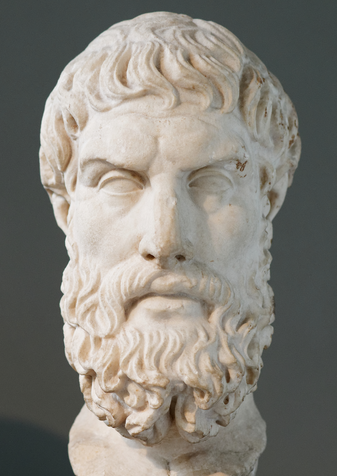
The happiness which belongs to man, is that state in which he enjoys as many of the good things, and suffers as few of the evils incident to human nature as possible; passing his days in a smooth course of permanent tranquility. A wise man, though deprived of sight or hearing, may experience happiness in the enjoyment of the good things which yet remain; and when suffering torture, or laboring under some painful disease, can mitigate the anguish by patience, and can enjoy, in his afflictions, the consciousness of his own constancy.
5 months 5 days ago
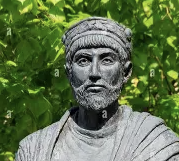
The end and aim of the Cynic philosophy, as indeed of every philosophy, is happiness, but happiness that consists in living according to nature, and not according to the opinions of the multitude.
▼
Source
source
Oration to the Uneducated Cynics

9 months 1 week ago
For it still seemed to me that it is not we who sin, but some other nature sinned in us. And it gratified my pride to be beyond blame, and when I did anything wrong not to have to confess that I had done wrong. I loved to excuse my soul and to accuse something else inside me (I knew not what) but which was not I. But, assuredly, it was I, and it was my impiety that had divided me against myself. That sin then was all the more incurable because I did not deem myself a sinner.
▼
Source
source
A. Outler, trans. (Dover: 2002), Book 5, Chapter 10, p. 77
8 months 4 weeks ago
This body which called itself and which still calls itself the Holy Roman Empire was in no way holy, nor Roman, nor an empire.
▼
Source
source
Essai sur l'histoire générale et sur les mœurs et l'esprit des nations, Chapter 70, 1756
5 months 3 weeks ago
The principles of the good society call for a concern with an order of being--which cannot be proved existentially to the sense organs--where it matters supremely that the human person is inviolable, that reason shall regulate the will, that truth shall prevail over error.
▼
Source
source
p. 127

5 months 2 weeks ago
Normal science, the activity in which most scientists inevitably spend almost all their time, is predicated on the assumption that the scientific community knows what the world is like. Normal science often suppresses fundamental novelties because they are necessarily subversive of its basic commitments.
▼
Source
source
p. 5
7 months 3 weeks ago
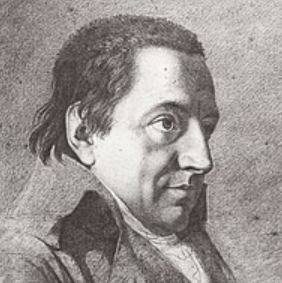
Blessed be the hour in which I was first led to inquire into my own spiritual nature and destination! All my doubts are removed; I know what I can know, and have no fears for what I cannot know. I am satisfied; perfect clearness and harmony reign in my soul, and a new and more glorious existence begins for me. My entire destiny I cannot comprehend; what I am to become, exceeds my present power of conception. A part, which is concealed from me, is visible to the father of spirits. I know only that it is secure, everlasting and glorious. That part of it which is confided to me I know, for it is the root of all my other knowledge.
▼
Source
source
Jane Sinnett, trans 1846 p.120

8 months 3 weeks ago
I am a democrat because I believe in the Fall of Man. I think most people are democrats for the opposite reason.
4 months 3 weeks ago
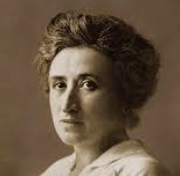
If we assume the viewpoint claimed as his own by Lenin and we fear the influence of intellectuals in the proletarian movement, we can conceive of no greater danger to the Russian party than Lenin's plan of organization. Nothing will more surely enslave a young labor movement to an intellectual elite hungry for power than this bureaucratic straightjacket, which will immobilize the movement and turn it into an automaton manipulated by a Central Committee. On the other hand there is no more effective guarantee against opportunist intrigue and personal ambition than the independent revolutionary action of the proletariat, as a result of which the workers acquire the sense of political responsibility and self-reliance.

8 months 1 day ago
The First thing that strikes a traveler in the United States is the innumerable multitude of those who seek to emerge from their original condition; and the second is the rarity of lofty ambition to be observed in the midst of the universally ambitious stir of society. No Americans are devoid of a yearning desire to rise, but hardly any appear to entertain hopes of great magnitude or to pursue very lofty aims. All are constantly seeking to acquire property, power, and reputation.
▼
Source
source
Book Three, Chapter XIX.

7 months 3 weeks ago
A gentleman, even if he loses everything he owns, must show no emotion. Money must be so far beneath a gentleman that it is hardly worth troubling about.
7 months 1 week ago
What objection is there in reason to there being no other purpose in the sum of things save only to exist and happen as it does exist and happen? For him who places himself outside of himself, none; but for him who lives and suffers and desires within himself - for him it is a question of life or death.

4 months 3 weeks ago
Let opinion be taken away, and no man will think himself wronged. If no man shall think himself wronged, then is there no more any such thing as wrong.
▼
Source
source
IV. 7, trans. Méric Casaubon

8 months 3 weeks ago
There are two things which make it impossible to believe that this world is the successful work of an all-wise, all-good, and, at the same time, all-powerful Being; firstly, the misery which abounds in it everywhere; and secondly, the obvious imperfection of its highest product, man, who is a burlesque of what he should be.
▼
Source
source
"On the Sufferings of the World"

7 months 3 weeks ago
The more you live, the less useful it seems to have lived.

6 months 5 days ago
If we don't address the genetic causes of suffering (physical and mental) we will find ourselves in 500 years enjoying material abundance via nanotech, living in a perfect democracy, colonizing space, and still sitting around wondering "Why are we miserable so much of the time? Why can't we all just get along? Why are we not all happy?"
▼
Source
source
David Pearce in SF, Qualia Computing, 7 Oct. 2018
5 months 1 week ago
Anyone who proposes to do good must not expect people to roll stones out of his way, but must accept his lot calmly if they even roll a few more upon it. A strength which becomes clearer and stronger through its experience of such obstacles is the only strength that can conquer them. Resistance is only a waste of strength.
▼
Source
source
p. 164

9 months 4 days ago
The demands of a free populace, too, are very seldom harmful to liberty, for they are due either to the populace being oppressed or to the suspicious that it is going to be oppressed... and, should these impressions be false, a remedy is provided in the public platform on which some man of standing can get up, appeal to the crowd, and show that it is mistaken. And though, as Tully remarks, the populace may be ignorant, it is capable of grasping the truth and readily yields when a man, worthy of confidence, lays the truth before it.
▼
Source
source
Book 1, Ch. 4 (as translated by LJ Walker and B Crick)

5 months 1 week ago
What fools these mortals be!

4 months 3 weeks ago
Before Descartes, some of the ancients made the essence of matter consist in solid extension. But this opinion, of which all the Cartesians have made much, has at all times been victoriously combated...
▼
Source
source
Ch. III Concerning the Extension of Matter

9 months 4 days ago
Let us give Nature a chance; she knows her business better than we do.
▼
Source
source
Ch. 13

7 months 1 week ago
These are the visionary, mystical moments, when a man 'completes his partial mind'. His everyday conscious self is only a small part of the mind, like the final crescent of the moon. In moments of crisis, the full moon suddenly appears.
▼
Source
source
p. 156

4 months 3 weeks ago
If we can but prevent the government from wasting the labors of the people, under the pretense of taking care of them, they must become happy.
▼
Source
source
Letter to Thomas Cooper
7 months 5 days ago
We distinguish diagrammatic from sentential paper-and-pencil representations of information by developing alternative models of information-processing systems that are informationally equivalent and that can be characterized as sentential or diagrammatic. Sentential representations are sequential, like the propositions in a text. Diagrammatic representations are indexed by location in a plane. Diagrammatic representations also typically display information that is only implicit in sentential representations and that therefore has to be computed, sometimes at great cost, to make it explicit for use. We then contrast the computational efficiency of these representations for solving several.illustrative problems in mathematics and physics.
▼
Source
source
p. 65

9 months 3 weeks ago
For those of us who have been thrown into hell, mysterious melodies and the torturing images of a vanished beauty will always bring us, in the midst of crime and folly, the echo of that harmonious insurrection which bears witness, throughout the centuries, to the greatness of humanity.

6 months 3 weeks ago
One is ashamed to say how little is needed for all men to be delivered from those calamities which now oppress them; it is only needful not to lie.
▼
Source
source
Ch. 17
8 months 4 weeks ago
The king Frederic has sent me some of his dirty linen to wash; I will wash yours another time.
▼
Source
source
Reply to General Manstein. Voltaire writes to his niece Dennis, July 24, 1752, "Voilà le roi qui m'envoie son linge à blanchir"; reported in Bartlett's Familiar Quotations, 10th ed.,1919
4 months 3 weeks ago
What a strange machine man is! You fill him with bread, wine, fish, and radishes, and out comes sighs, laughter, and dreams.
▼
Source
source
Ch. 23

CivilSimian.com created by AxiomaticPanic, CivilSimian, Kalokagathia