


3 weeks 4 days ago
What anger is has been sufficiently explained. The difference between it and irascibility is evident: it is the same as that between a drunken man and a drunkard; between a frightened man and a coward. It is possible for an angry man not to be irascible; an irascible man may sometimes not be angry. I shall omit the other varieties of anger, which the Greeks distinguish by various names, because we have no distinctive words for them in our language, although we call men bitter and harsh, and also peevish, frantic, clamorous, surly and fierce: all of which are different forms of irascibility.

3 months 6 days ago
The universal view melts things into a blur.
5 months ago
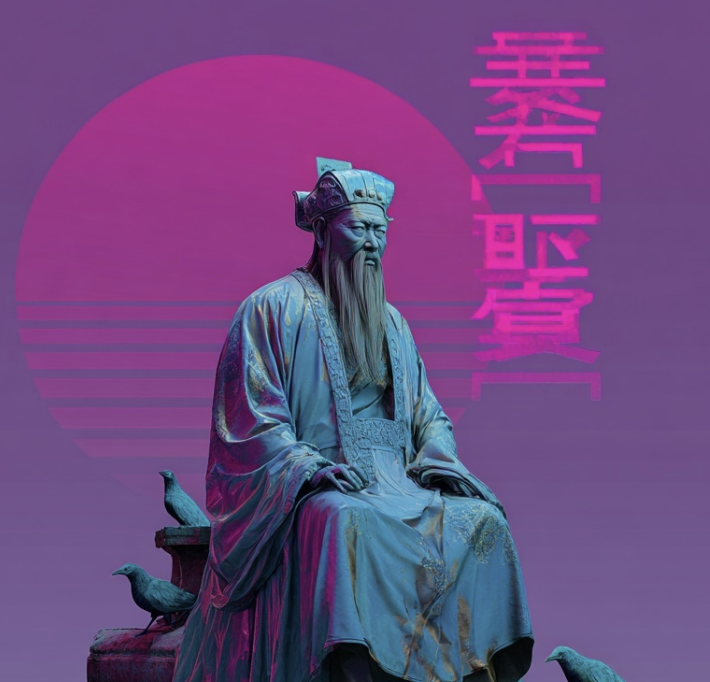
At fifteen my heart was set on learning; at thirty I stood firm; at forty I had no more doubts; at fifty I knew the will of heaven; at sixty my ear was obedient; at seventy I could follow my heart's desire without overstepping the boundaries of what was right.
3 months 1 day ago
Existential envy which is directed against the other person's very nature, is the strongest source of ressentiment. It is as if it whispers continually: "I can forgive everything, but not that you are- that you are what you are-that I am not what you are-indeed that I am not you." This form of envy strips the opponent of his very existence, for this existence as such is felt to be a "pressure," a "reproach," and an unbearable humiliation. In the lives of great men there are always critical periods of instability, in which they alternately envy and try to love those whose merits they cannot but esteem. Only gradually, one of these attitudes will predominate. Here lies the meaning of Goethe's reflection that "against another's great merits, there is no remedy but love."
▼
Source
source
L. Coser, trans. (1973), pp. 52-53
3 months 6 days ago
If every pure character in the Old Testament announces the Messiah, if every unworthy person is his torturer and every woman his Mother, does not the Book of Books lose all life with this obsessive theme? On the doctrine of prefiguration.
▼
Source
source
Persons or Figures
1 week 3 days ago
You will next read the new testament. It is the history of a personage called Jesus. Keep in your eye the opposite pretensions 1. of those who say he was begotten by God, born of a virgin, suspended & reversed the laws of nature at will, & ascended bodily into heaven: and 2. of those who say he was a man of illegitimate birth, of a benevolent heart, enthusiastic mind, who set out without pretensions to divinity, ended in believing them, & was Punished capitally for sedition by being gibbeted according to the Roman law which punished the first commission of that offence by whipping, & the second by exile or death in furcâ.
3 months 1 week ago
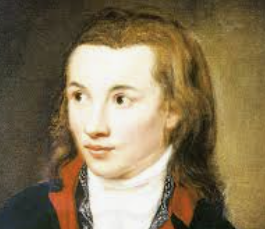
I was still blind, but twinkling stars did dance Throughout my being's limitless expanse, Nothing had yet drawn close, only at distant stages I found myself, a mere suggestion sensed in past and future ages.
▼
Source
source
As quoted in Romantic Vision, Ethical Context: Novalis and Artistic Autonomy (1987) by Géza von Molnár, p. 2
1 week 3 days ago
The naturalists, you know, distribute the history of nature into three kingdoms or departments: zoology, botany, mineralogy. Ideology, or mind, however, occupies so much space in the field of science, that we might perhaps erect it into a fourth kingdom or department. But inasmuch as it makes a part of the animal construction only, it would be more proper to subdivide zoology into physical and moral.
▼
Source
source
Thomas Jefferson, Letter (24 Mar 1824) to Mr. Woodward. Collected in The Writings of Thomas Jefferson: Correspondence (1854), 339.

4 months 2 weeks ago
Avarice and injustice are always shortsighted, and they did not foresee how much this regulation must obstruct improvement, and thereby hurt in the long-run the real interest of the landlord.
▼
Source
source
Chapter II, p. 426-427.
4 months 4 weeks ago
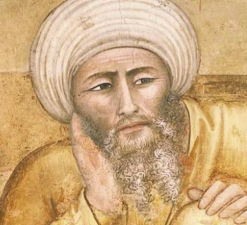
This is one of the most intricate problems of religion. For if you look into the traditional arguments (Hadith) about this problem you will find them contradictory; such also being the case with arguments of reason. The contradiction in the arguments of the first kind is found in the Qur'an and the Hadith.
3 weeks 4 days ago
Man is a reasoning animal.
1 month 4 weeks ago
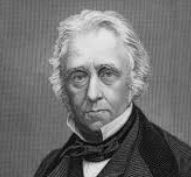
We hardly know any instance of the strength and weakness of human nature so striking, and so grotesque, as the character of this haughty, vigilant, resolute, sagacious blue-stocking, half Mithridates and half Trissotin, bearing up against a world in arms, with an ounce of poison in one pocket and a quire of bad verses in the other.
▼
Source
source
'Frederic the Great', The Edinburgh Review (April 1842), quoted in T. B. Macaulay, Critical and Historical Essays Contributed to The Edinburgh Review: A New Edition (1852), p. 802
1 week ago
This is a fine saying of Plato: That he who is discoursing about men should look also at earthly things as if he viewed them from some higher place; should look at them... a mixture of all things and an orderly combination of contraries.
▼
Source
source
VII, 48

1 month 1 day ago
In the learned professions as in the unlearned, and in human things throughout, in every place and in every time, the true function of intellect is not that of talking, but of understanding and discerning with a view to performing!

4 months 1 week ago
Capital is money: Capital is commodities. [...] For the movement, in the course of which it adds surplus-value, is its own movement, its expansion, therefore, is automatic expansion. Because it is value, it has acquired the occult quality of being able to add value to itself. It brings forth living offspring, or, at the least, lays golden eggs.
▼
Source
source
Vol. I, Ch. 2, pg. 171.
4 months 1 week ago
I am at heart more of a United-States-man than an Englishman.
▼
Source
source
Letter to Andrew Jackson (14 June 1830), quoted in Correspondence of Andrew Jackson, Volume 4, ed. David Maydole Matteson (1929), p. 146

5 months 1 week ago
A robot must obey the orders given it by human beings except where such orders would conflict with the First Law.
4 months 1 week ago
Old-fashioned determinism was what we may call hard determinism. It did not shrink from such words as fatality, bondage of the will, necessitation, and the like. Nowadays, we have a soft determinism which abhors harsh words, and, repudiating fatality, necessity, and even predetermination, says that its real name is freedom; for freedom is only necessity understood, and bondage to the highest is identical with true freedom.
▼
Source
source
The Dilemma of Determinism (1884) republished in The Will to Believe, Dover, 1956, p. 149
4 months 1 week ago
The Theophilanthropists believe in the existence of God, and the immortality of the soul.
▼
Source
source
Introduction
2 months 1 week ago
Photography and cinema contributed in large part to the secularization of history, to fixing it in its visible, "objective" form at the expense of the myths that once traversed it. Today cinema can place all its talent, all its technology in the service of reanimating what it itself contributed to liquidating. It only resurrects ghosts, and it itself is lost therein.
▼
Source
source
"History: A Retro Scenario," p. 48

4 months 1 week ago
As soon as it is held that any belief, no matter what, is important for some other reason than that it is true, a whole host of evils is ready to spring up. Discouragement of inquiry, ... is the first of these, but others are pretty sure to follow. Positions of authority will be open to the orthodox. Historical records must be falsified if they throw doubt on received opinion. Sooner or later unorthodoxy will come to be considered a crime to be dealt with by the stake, the purge, or the concentration camp. I can respect the men who argue that religion is true and therefore ought to be believed, but I can only feel profound moral reprobation for those who say that religion ought to be believed because it is useful, and that to ask whether it is true is a waste of time.
▼
Source
source
3 quoted from Why I Am Not a Muslim (1995), Ibn Warraq
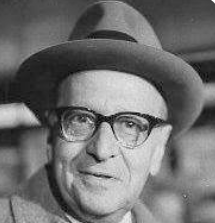
3 months 1 day ago
The world is so possessed by the power of what is and the efforts of adjustment to it, that the adolescent's rebellion, which once fought the father because his practices contradicted his own ideology, can no longer crop up. ... Psychologically, the father is ... replaced by the world of things.
▼
Source
source
p. 41-42.
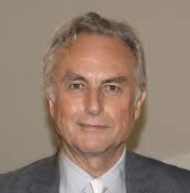
2 months 1 week ago
To this day, and in quarters where they should know better, Darwinism is widely regarded as a theory of 'chance'.It is grindingly, creakingly, crashingly obvious that, if Darwinism were really a theory of chance, it couldn't work. You don't need to be a mathematician or physicist to calculate that an eye or a haemoglobin molecule would take from here to infinity to self-assemble by sheer higgledy-piggledy luck. Far from being a difficulty peculiar to Darwinism, the astronomic improbability of eyes and knees, enzymes and elbow joints and the other living wonders is precisely the problem that any theory of life must solve, and that Darwinism uniquely does solve.
▼
Source
source
Chapter 3, "The Message from the Mountain" (p. 77)
5 months ago
What Heaven has conferred is called The Nature; an accordance with this nature is called The Path of duty; the regulation of this path is called Instruction. The path may not be left for an instant. If it could be left, it would not be the path. On this account, the superior man does not wait till he sees things, to be cautious, nor till he hears things, to be apprehensive.
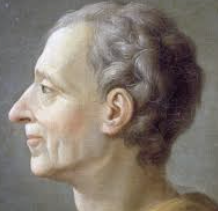
2 months 3 weeks ago
The success of most things depends upon knowing how long it will take to succeed.
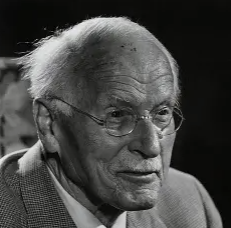
3 months 1 week ago
That higher and "complete" man is begotten by the "unknown" father and born from Wisdom, and it is he who, in the figure of the puer aeternus-"vultu mutabilis albus et ater"-represents our totality, which transcends consciousness. It was this boy into whom Faust had to change, abandoning his inflated onesidedness which saw the devil only outside. Christ's "Except ye become as little children" is a prefiguration of this, for in them the opposites lie close together; but what is meant is the boy who is born from the maturity of the adult man, and not the unconscious child we would like to remain.
▼
Source
source
Answer to Job, R. Hull, trans. (1984), pp. 157-158
4 months 1 week ago
It appears then, that capitalist production comprises conditions independent of good or bad will, conditions which permit the working-class to enjoy that relative prosperity only momentarily, and at that always only as the harbinger of a coming crisis.
▼
Source
source
Vol. II, Ch. XX, p. 415.
3 weeks 4 days ago
Who profits by a sin has done the sin.

2 months 1 week ago
Remember then: there is only one time that is important-Now! It is the most important time because it is the only time when we have any power. The most necessary man is he with whom you are, for no man knows whether he will ever have dealings with any one else: and the most important affair is, to do him good, because for that purpose alone was man sent into this life!
▼
Source
source
Part VII: Stories Given to Aid Persecuted Jews (1903) "Three Questions", translated by Louise and Aylmer Maude, p271.
3 months 3 days ago
The subversive character of truth inflicts upon thought an imperative quality. Logic centers on judgments which are, as demonstrative propositions, imperatives, - the predicative "is" implies an "ought." ... Verification of the proposition involves a process in fact as well as in thought: (S) must become that which it is. The categorical statement thus turns into a categorical imperative; it does not state a fact but the necessity to bring about a fact. For example, it could be read as follows: man is not (in fact) free, endowed with inalienable rights, etc., but he ought to be.
▼
Source
source
pp. 132-133

2 months 1 week ago
The fall or scrapping of a cultural world puts us all into the same archetypal cesspool, engendering nostalgia for earlier conditions.
▼
Source
source
p. 103

4 months 1 week ago
We are told that Christ was killed for us, that His death has washed out our sins, and that by dying He has disabled death itself. That is the formula. That is Christianity. That is what has to be believed. Any theories we build up as to how Christ's death did all this are, in my view, quite secondary: mere plans or diagrams to be left alone if they do not help us, and, if they do help us, not to be confused with the thing itself.
▼
Source
source
Book II, Chapter 4, "The Perfect Penitent"
4 months 1 week ago
You must picture me alone in that room in Magdalen, night after night, feeling, whenever my mind lifted even for a second from my work, the steady, unrelenting approach of Him whom I so earnestly desired not to meet. That which I greatly feared had at last come upon me. In the Trinity Term of 1929 I gave in, and admitted that God was God, and knelt and prayed: perhaps, that night, the most dejected and reluctant convert in all England.
3 weeks ago
For us in Russia, communism is a dead dog, while, for many people in the West, it is still a living lion.
▼
Source
source
BBC Radio broadcast, Russian service, as quoted in The Listener
3 weeks 4 days ago
I shall never be ashamed of citing a bad author if the line is good.
▼
Source
source
Alternate translation: I shall never be ashamed to go to a bad author for a good quotation. Chapter 11, Section 8
3 months 6 days ago
A word, once dissected, no longer signifies anything, is nothing. Like a body that, after an autopsy, is less than a corpse.

4 months 6 days ago
Philosophical problems can be compared to locks on safes, which can be opened by dialing a certain word or number, so that no force can open the door until just this word has been hit upon, and once it is hit upon any child can open it.
▼
Source
source
Ch. 9 : Philosophy, p. 175
3 months 2 days ago
The artist in realizing his own individuality reveals potentialities hitherto unrealized. The revelation is the inspiration of other individuals to make the potentialities real, for it is not sheer revolt against things as they are which stirs human endeavor to its depth, but vision of what might be and is not. Subordination of the artists to any special cause no matter how worthy does violence not only to the artist but to the living source of a new and better future.
4 months 1 day ago
Practice no sloth, so that the duty and good work, which it is necessary for thee to do, may not remain undone.
▼
Source
source
(p. 59)
1 month ago
There is no greater drama in human record than the sight of a few Christians, scorned or oppressed by a succession of emperors, bearing all trials with a fierce tenacity, multiplying quietly, building order while their enemies generated chaos, fighting the sword with the word, brutality with hope, and at last defeating the strongest state that history has known. Caesar and Christ had met in the arena, and Christ had won.
▼
Source
source
Chapter 30, part 1, p. 652
1 week 4 days ago
The centuries are thick, dark waves that rise and fall, steeped in blood. Every moment is a gaping abyss. Gaze on the dark sea without staggering, confront the abyss every moment without illusion or impudence or fear. ... But this is not enough; take a further step: battle to give meaning to the confused struggles of man.

4 months 2 weeks ago
It is more of a job to interpret the interpretations than to interpret the things, and there are more books about books than about any other subject: we do nothing but write glosses about each other.
▼
Source
source
Ch. 13
2 months 3 days ago
We do not merely study the past: we inherit it, and inheritance brings with it not only the rights of ownership, but the duties of trusteeship. Things fought for and died for should not be idly squandered. For they are the property of others, who are not yet born.
3 months 1 week ago
Man is a sun and his senses are the planets.

4 months 1 week ago
To travel is to discover that everyone is wrong.
▼
Source
source
Part II: Malaya,
1 week ago
Remember that man lives only in the present, in this fleeting instant; all the rest of his life is either past and gone, or not yet revealed. Short, therefore, is man's life, and narrow is the corner of the earth wherein he dwells.
▼
Source
source
III, 10
4 months 5 days ago
Do not ask who I am and do not ask me to remain the same: leave it to our bureaucrats and our police to see that our papers are in order. At least spare us their morality when we write.
▼
Source
source
The Archaeology of Knowledge (1972), tr. A. M. Sheridan Smith (New York: Pantheon)
4 months 3 weeks ago
Who dismisses his adulterous wife and marries another woman, whereas his first wife still lives, remains perpetually in the state of adultery. Such a man does not any efficacious penance while he refuses to abandon the new wife. If he is a catechumen, he cannot be admitted to baptism, because his will remains rooted in the evil. If he is a (baptized) penitent, he cannot receive the (ecclesiastical) reconciliation as long as he does not break with his bad attitude.
▼
Source
source
De adulterinis coniugiis, 2, 16, in Bishop Athanasius Schneider, Reaction to Synod Door to communion for divorced & remarried officially kicked open, November 2nd, 2015
1 month 6 days ago
Let men be happy, informed, skillful, well behaved, and productive.
▼
Source
source
Freedom and the control of men (1955/1956) American Scholar, 25 (1), 47-65
5 months 1 week ago
It is impossible that evils should be done away with, for there must always be something opposed to the good; and they must inevitably hover about mortal nature and this earth. Therefore we ought to try to escape from earth to the dwelling of the gods as quickly as we can; and to escape is to become like God, so far as this is possible, God is in no wise and in no manner unrighteous, but utterly and perfectly righteous, and there is nothing so like him as that one of us who in turn becomes most nearly perfect in righteousness.
CivilSimian.com created by AxiomaticPanic, CivilSimian, Kalokagathia