


4 months 5 days ago
The rottenness of the matter which is the foundation of everything!
▼
Source
source
IX, 36


8 months 3 weeks ago
Two principles we should always have ready that there is nothing good or evil save in the will; and that we are not to lead events, but to follow them.
▼
Source
source
Book III, ch. 10, 18.

4 months 4 weeks ago
Literary men are...a perpetual priesthood.
▼
Source
source
The State of German Literature.


8 months 1 week ago
Pray go back and recollect one of the conclusions to which I sought to lead you in my very first lecture. You may remember how I there argued against the notion that the worth of a thing can be decided by its origin. Our spiritual judgment, I said, our opinion of the significance and value of a human event or condition, must be decided on empirical grounds exclusively. If the fruits for life of the state of conversion are good, we ought to idealize and venerate it, even though it be a piece of natural psychology; if not, we ought to make short work of it, no matter what supernatural being may have infused it.
▼
Source
source
Lecture IX, "Conversion, concluded"

8 months 1 week ago
Most shocking of all is alledging the Sacred Scriptures to favour this wicked practice. One would have thought none but infidel cavillers would endeavour to make them appear contrary to the plain dictates of natural light, and Conscience, in a matter of common Justice and Humanity; which they cannot be. Such worthy men, as referred to before, judged otherways; Mr. Baxter declared, the Slave-Traders should be called Devils, rather than Christians; and that it is a heinous crime to buy them.

8 months 1 week ago
The measure of action is the sentiment from which it proceeds. The greatest action may easily be one of the most private circumstance.
▼
Source
source
Goethe; or, The Writer
3 months 4 weeks ago
I see a clock, but I cannot envision the clockmaker. The human mind is unable to conceive of the four dimensions, so how can it conceive of a God, before whom a thousand years and a thousand dimensions are as one?

6 months 6 days ago
Environment is process, not container.
▼
Source
source
(p. 30)
7 months 1 week ago
The subject must distinguish itself through opposition from the rational being, which it has assumed outside of itself. The subject has posited itself as one, which contains in itself the last ground of something that is in it, (for this is the condition of Egohood, or of Rationality generally;) but it has also posited a being outside of itself, as the last ground of this something in it. It is to have the power of distinguishing itself from this other being; and this is, under our presupposition, possible only, if the subject can distinguish in that given something how far the ground of this something lies in itself and how far it lies outside of itself.
▼
Source
source
P. 63

4 months 1 week ago
The religion-builders have so distorted and deformed the doctrines of Jesus, so muffled them in mysticisms, fancies and falsehoods, have caricatured them into forms so monstrous and inconceivable, as to shock reasonable thinkers, to revolt them against the whole, and drive them rashly to pronounce its founder an impostor.
▼
Source
source
Letter to w:Timothy Pickering, Esq., 27 February 1821

8 months 1 week ago
"Say what you like," we shall be told, "the apocalyptic beliefs of the first Christians have been proved to be false. It is clear from the New Testament that they all expected the Second Coming in their own lifetime. And, worse still, they had a reason, and one which you will find very embarrassing. Their Master had told them so. He shared, and indeed created, their delusion. He said in so many words, 'this generation shall not pass till all these things be done.' And he was wrong. He clearly knew no more about the end of the world than anyone else." It is certainly the most embarrassing verse in the Bible.
8 months 1 week ago
A man must be perfectly crazy who, where there is tolerable security, does not employ all the stock which he commands…
▼
Source
source
Chapter I, p. 313 (see opportunity cost).
4 months 5 days ago
Respect the faculty that forms thy judgments.
▼
Source
source
III, 9
8 months 1 week ago
Explore, and explore, and explore. Be neither chided nor flattered out of your position of perpetual inquiry. Neither dogmatise yourself, nor accept another's dogmatism. Why should you renounce your right to traverse the star-lit deserts of truth, for the premature comforts of an acre, house, and barn? Truth also has its roof, and bed, and board. Make yourself necessary to the world, and mankind will give you bread, and if not store of it, yet such as shall not take away your property in all men's possessions, in all men's affections, in art, in nature, and in hope.
6 months 4 days ago
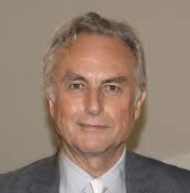
Darwin's 'survival of the fittest' is really a special case of a more general law of survival of the stable. The universe is populated by stable things. The universe is populated by stable things. A stable thing is a collection of atoms that is permanent enough or common enough to deserve a name. It may be a unique collection of atoms, such as the Matterhorn, that lasts long enough to be worth naming. Or it may be a class of entities, such as rain drops, that come into existence at a sufficiently high rate to deserve a collective name, even if any one of them is short-lived.
▼
Source
source
Ch. 2. The replicators
7 months 4 weeks ago
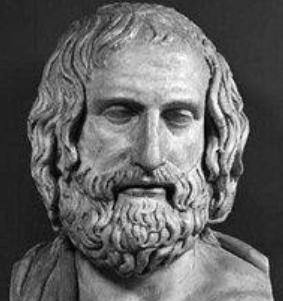
The Greeks follow a wrong usage in speaking of coming into being and passing away; for nothing comes into being or passes away, but there is mingling and separation of things that are. So they would be right to call coming into being mixture, and passing away separation.
▼
Source
source
Frag. B 17, quoted in John Burnet's Early Greek Philosophy, (1920), Chapter 6.
6 months 4 days ago
With so many mind-bytes to be downloaded, so many mental codons to be replicated, it is no wonder that child brains are gullible, open to almost any suggestion, vulnerable to subversion, easy prey to Moonies, Scientologists and nuns. Like immune-deficient patients, children are wide open to mental infections that adults might brush off without effort.
5 months 2 weeks ago
If I'm a cruel satirist at least I'm not a hyprocrite: I never judge what other people do. Neither a politician nor a priest, I never censor what others do. Neither a philospher nor a psychiatrist, I never bother trying to analyze or resolve my fears and neuroses.
▼
Source
source
"Hypocrisy"
9 months 1 week ago
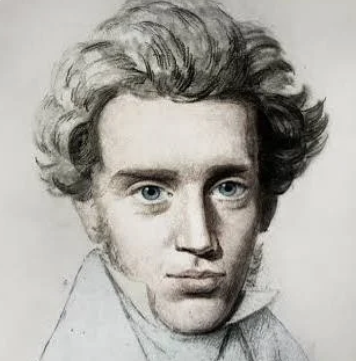
Consciousness presupposes itself, and asking about its origin is an idle and just as sophistical a question as that old one, "What came first, the fruit-tree or the stone? Wasn't there a stone out of which came the first fruit-tree? Wasn't there a fruit-tree from which came the first stone?
4 months 1 week ago
In the North they are cool, sober, laborious, persevering, independent, jealous of their own liberties, and just to those of others, interested, chicaning, superstitious and hypocritical in their religion. In the South they are fiery, voluptuary, indolent, unsteady, independent, zealous for their own liberties, but trampling on those of others, generous, candid, without attachment or pretensions to any religion but that of the heart.
▼
Source
source
Letter to François-Jean de Chastellux (September 2, 1785). archives.gov Also quoted in Thomas Jefferson, Writings, ed. Merrill D. Peterson (1984), p. 827

8 months 1 week ago
One who believes, as I do, that the free intellect is the chief engine of human progress, cannot but be fundamentally opposed to Bolshevism, as much as to the Church of Rome.
▼
Source
source
Part I, Ch. 9: International Policy
6 months 4 days ago
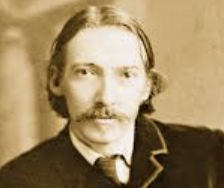
There is certainly some chill and arid knowledge to be found upon the summits of formal and laborious science; but it is all round about you, and for the trouble of looking, that you will acquire the warm and palpitating facts of life.
▼
Source
source
An Apology for Idlers.

7 months 1 week ago
We must not always judge of the generality of the opinion by the noise of the acclamation.
▼
Source
source
No. 1


7 months 1 day ago
Why do ye also transgress the commandment of God by your tradition? For God commanded, saying, Honour thy father and mother: and, He that curseth father or mother, let him die the death. But ye say, Whosoever shall say to his father or his mother, It is a gift, by whatsoever thou mightest be profited by me; And honour not his father or his mother, he shall be free. Thus have ye made the commandment of God of none effect by your tradition. Ye hypocrites, well did Esaias prophesy of you, saying, This people draweth nigh unto me with their mouth, and honoureth me with their lips; but their heart is far from me. But in vain they do worship me, teaching for doctrines the commandments of men.
▼
Source
source
15:3-9 (KJV)

5 months 4 days ago
Empire is emerging today as the center that supports the globalization of productive networks and casts its widely inclusive net to try to envelop all power relations within its world order - and yet at the same time it deploys a powerful police function against the new barbarians and the rebellious slaves who threaten its order.

6 months 2 weeks ago
You believe that I run after the strange because I do not know the beautiful; no, it is because you do not know the beautiful that I seek the strange.
▼
Source
source
F160
8 months 1 week ago
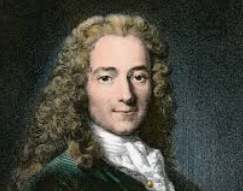
A testimony is sufficient when it rests on: 1st. A great number of very sensible witnesses who agree in having seen well. 2d. Who are sane, bodily and mentally. 3d. Who are impartial and disinterested. 4th. Who unanimously agree. 5th. Who solemnly certify to the fact.
▼
Source
source
As quoted by H. P. Blavatsky in Isis Unveiled, Vol. I, p. 108, 1877
8 months 1 week ago
It is the natural effect of improvement, however, to diminish gradually the real price of almost all manufactures.
▼
Source
source
Chapter XI, Part III, (Conclusion..) p. 282.
9 months 1 week ago
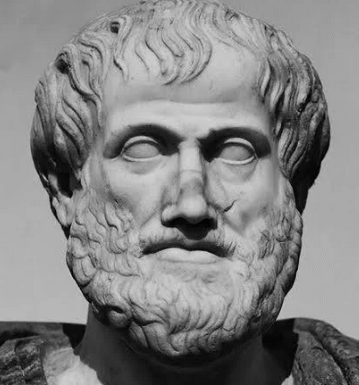
My lectures are published and not published; they will be intelligible to those who heard them, and to none beside.

7 months 1 day ago
Art like life should be free, since both are experimental.
▼
Source
source
Ch. IX.: Justification of Art

8 months 1 week ago
In a field of ripening corn I came to a place which had been trampled down by some ruthless foot; and as I glanced amongst the countless stalks, every one of them alike, standing there so erect and bearing the full weight of the ear, I saw a multitude of different flowers, red and blue and violet. How pretty they looked as they grew there so naturally with their little foliage! But, thought I, they are quite useless; they bear no fruit; they are mere weeds, suffered to remain only because there is no getting rid of them. And yet, but for these flowers, there would be nothing to charm the eye in that wilderness of stalks. They are emblematic of poetry and art, which, in civic life-so severe, but still useful and not without its fruit-play the same part as flowers in the corn.
▼
Source
source
"Similes, Parables and Fables" Parerga and Paralipomena, vol. 2, § 380A

7 months 1 week ago
In democratic ages men rarely sacrifice themselves for another, but they show a general compassion for all the human race. One never sees them inflict pointless suffering, and they are glad to relieve the sorrows of others when they can do so without much trouble to themselves. They are not disinterested, but they are gentle.
▼
Source
source
Book Three, Chapter I.
7 months 1 week ago
Strange incongruities must ever perplex those, who confound the unhappiness of civil dissensions with the crime of treason.
3 months 4 weeks ago
How can it be that mathematics, being, after all, a product of human thought which is independent of experience, is so admirably appropriate to the objects of reality? Is human reason, then, without experience, merely by taking thought, able to fathom the properties of real things?
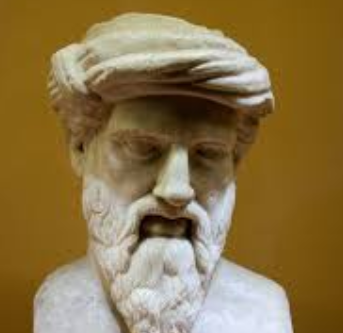
7 months 2 weeks ago
Dear youths, I warn you cherish peace divine, And in your hearts lay deep these words of mine.
▼
Source
source
As reported by Heraclides, son of Sarapion, and Diogenes Laërtius, in Lives and Opinions of Eminent Philosophers, "Pythagoras", Sect. 7, in the translation of C. D. Yonge
7 months 2 weeks ago
Remind yourself that all men assert that wisdom is the greatest good, but that there are few who strenuously seek out that greatest good.
▼
Source
source
Pythagorean Ethical Sentences From Stobæus
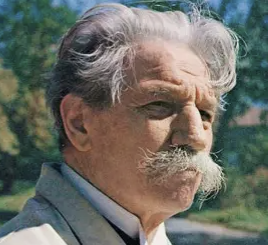
4 months 2 weeks ago
Awakening of Western thought will not be complete until that thought steps outside itself and comes to an understanding with the search for a world-view as this manifests itself in the thought of mankind as a whole. We have too long been occupied with the developing series of our own philosophical systems, and have taken no notice of the fact that there is a world-philosophy of which our Western philosophy is only a part. If, however, one conceives philosophy as being a struggle to reach a view of the world as a whole, and seeks out the elementary convictions which are to deepen it and give it a sure foundation, one cannot avoid setting our own thought face to face with that of the Hindus, and of the Chinese in the Far East. ... Our Western philosophy, if judged by its own latest pronouncements, is much naiver than we admit to ourselves, and we fail to perceive this only because we have acquired the art of expressing what is simple in a pedantic way.
8 months 1 week ago
The necessaries of life occasion the great expense of the poor. They find it difficult to get food, and the greater part of their little revenue is spent in getting it. The luxuries and vanities of life occasion the principal expense of the rich, and a magnificent house embellishes and sets off to the best advantage all the other luxuries and vanities which they possess. A tax upon house-rents, therefore, would in general fall heaviest upon the rich; and in this sort of inequality there would not, perhaps, be anything very unreasonable. It is not very unreasonable that the rich should contribute to the public expense, not only in proportion to their revenue, but something more than in that proportion.
▼
Source
source
Chapter II, Part II, Article I, p. 911.
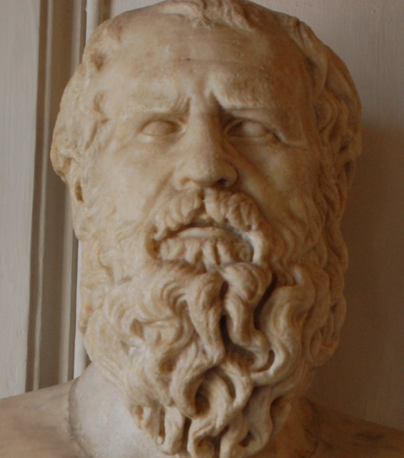
8 months 4 weeks ago
Speaking with sense we must fortify ourselves in the common sense of all, as a city is fortified by its law, and even more forcefully. For all human laws are nourished by the one divine law. For it prevails as far as it will and suffices for all and is superabundant.
5 months 4 days ago
We are by no means opposed to the globalization of relationships as such-in fact, as we said, the strongest forces of Leftist internationalism have effectively led this process. The enemy, rather, is a specific regime of global relations that we call Empire.
▼
Source
source
45-46



4 months 2 weeks ago
When we try to develop and procure benefits for the world with universal love as our standard, then attentive ears and keen eyes will respond in service to one another, then limbs will be strengthened to work for one another, and those who know the Tao will untiringly instruct others. Thus the old and those who have neither wife nor children will have the support and supply to spend their old age with, and the young and weak and orphans will have the care and admonition to grow up in. When universal love is adopted as the standard, then such are the consequent benefits. It is incomprehensible, then, why people should object to universal love when they hear it.
▼
Source
source
Book 4; Universal Love III

8 months 2 weeks ago
A prince who is not wise himself will never take good advice.
▼
Source
source
The Prince (1513), Ch. 23; translated by W. K. Marriot

9 months 6 days ago
It's my belief that the Universe possesses, in its essence, fractal properties of a very complex sort and that the pursuit of science shares those properties. It follows that any part of the Universe that remains un-understood, and any part of scientific investigation that remains unresolved, however small that might be in comparison to what is understood and resolved, contains within it all the complexity of the original. Therefore, we'll never finish. No matter how far we go, the road ahead will be as long as it was at the start, and that's the secret of the Universe.
CivilSimian.com created by AxiomaticPanic, CivilSimian, Kalokagathia