



7 months 4 days ago
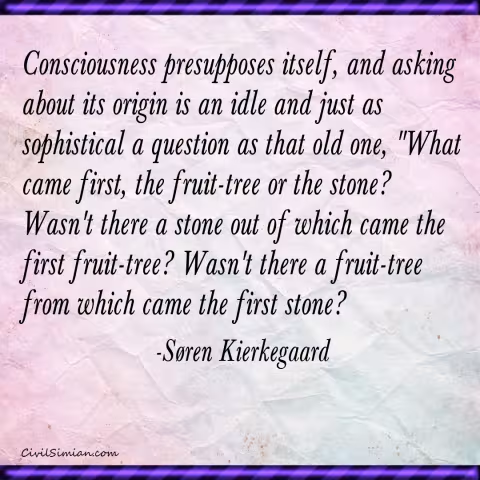
There is something between the gross specialised values of the mere practical man, and the thin specialised values of the mere scholar. Both types have missed something; and if you add together the two sets of values, you do not obtain the missing elements.
▼
Source
source
Ch. 13: "Requisites for Social Progress", p. 279
6 months 3 weeks ago
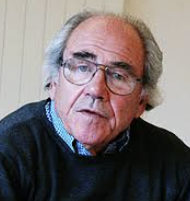
The great event of this period, the great trauma, is this decline of strong referentials, these death pangs of the real and of the rational that open onto an age of simulation. Whereas so many generations, and particularly the last, lived in the march of history, in the euphoric or catastrophic expectation of a revolution-today one has the impression that history has retreated, leaving behind it an indifferent nebula, traversed by currents, but emptied of references. It is into this void that the phantasms of a past history recede, the panoply of events, ideologies, retro fashions-no longer so much because people believe in them or still place some hope in them, but simply to resurrect the period when at least there was history, at least there was violence (albeit fascist), when at least life and death were at stake.
▼
Source
source
"History: A Retro Scenario," pp. 43-44
5 months 1 day ago
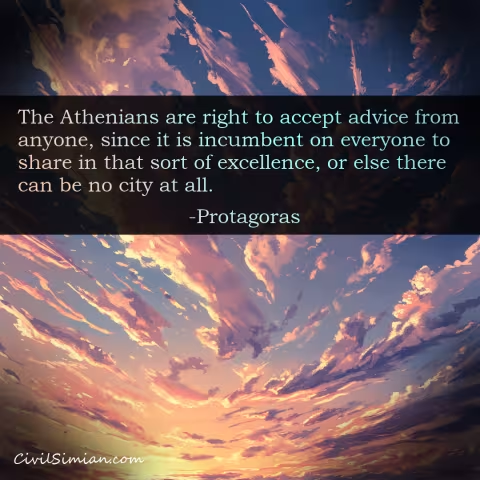
We, holding Art in our hands, confidently consider ourselves to be its masters; boldly we direct it, we renew, reform and manifest it; we sell it for money, use it to please those in power; turn to it at one moment for amusement - right down to popular songs and night-clubs, and at another - grabbing the nearest weapon, cork or cudgel - for the passing needs of politics and for narrow-minded social ends. But art is not defiled by our efforts, neither does it thereby depart from its true nature, but on each occasion and in each application it gives to us a part of its secret inner light.

5 months 1 week ago
A man of Intellect, of real and not sham Intellect, is by the nature of him likewise inevitably a man of nobleness, a man of courage, rectitude, pious strength; who, even because he is and has been loyal to the Laws of this Universe, is initiated into discernment of the same; to this hour a Missioned of Heaven; whom if men follow, it will be well with them; whom if men do not follow, it will not be well. Human Intellect, if you consider it well, is the exact summary of Human Worth; and the essence of all worth-ships and worships is reverence for that same.
5 months 5 days ago
Manners are the shadows of virtues; the momentary display of those qualities which our fellow creatures love, and respect.
▼
Source
source
Sermon XII, Sermons

6 months 2 weeks ago
All media work us over completely. They are so pervasive in their personal, political, economic, aesthetic, psychological, moral, ethical, and social consequences that they leave no part of us untouched, unaffected, unaltered. The medium is the massage. Any understanding of social and cultural change is impossible without a knowledge of the way media work as environments. All media are extensions of some human faculty - psychic or physical.
▼
Source
source
(p. 26)
6 months 6 days ago
In an ideal University, as I conceive it, a man should be able to obtain instruction in all forms of knowledge, and discipline in the use of all the methods by which knowledge is obtained. In such a University, the force of living example should fire the student with a noble ambition to emulate the learning of learned men, and to follow in the footsteps of the explorers of new fields of knowledge. And the very air he breathes should be charged with that enthusiasm for truth, that fanaticism of veracity, which is a greater possession than much learning; a nobler gift than the power of increasing knowledge; by so much greater and nobler than these, as the moral nature of man is greater than the intellectual; for veracity is the heart of morality.
▼
Source
source
Universities, Actual and Ideal

8 months 2 weeks ago
I should as soon think of swimming across Charles River when I wish to go to Boston, as of reading all my books in originals when I have them rendered for me in my mother tongue.
▼
Source
source
Books
9 months 2 weeks ago
We get into the habit of living before acquiring the habit of thinking.
8 months 1 week ago
The covetous man is ever in want.
▼
Source
source
Book I, epistle ii, line 56
9 months 3 weeks ago
Good prose is written only face to face with poetry.
5 months 1 week ago
A mystic bond of brotherhood makes all men one.
▼
Source
source
Essays, Goethe's Works.
8 months 3 weeks ago
War involves in its progress such a train of unforeseen and unsupposed circumstances ... that no human wisdom can calculate the end. Prospects on the Rubicon
▼
Source
source
London: J. Debrett, 1787
8 months 1 week ago
Antagoras the poet was boiling a conger, and Antigonus, coming behind him as he was stirring his skillet, said, "Do you think, Antagoras, that Homer boiled congers when he wrote the deeds of Agamemnon?" Antagoras replied, "Do you think, O king, that Agamemnon, when he did such exploits, was a peeping in his army to see who boiled congers?"
▼
Source
source
46 Antigonus I
8 months 2 weeks ago
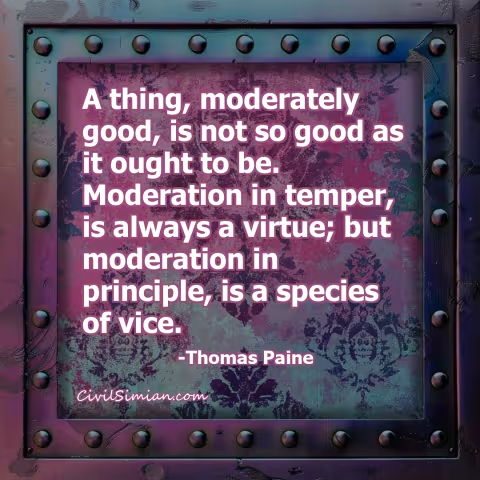
The virtues of society are the vices of the saints.
▼
Source
source
Circles


9 months 4 days ago
If you well apprehend and keep in mind these things, nature free at once and rid of her haughty lords is seen to do all things spontaneously of herself without the meddling of the gods.
▼
Source
source
Book II, lines 1090-1092 (tr. Munro)
5 months 2 weeks ago
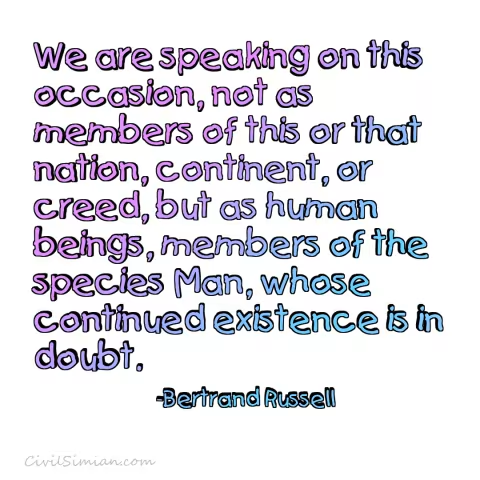
The totalitarian states, whether of the fascist or the communist persuasion, are more than superficially alike as dictatorships, in the suppression of dissent, and in operating planned and directed economies. They are profoundly alike.
▼
Source
source
Ch. V: "The Totalitarian Regimes", §7, p. 89

8 months 3 weeks ago
I soon perceived that she possessed in combination, the qualities which in all other persons whom I had known I had been only too happy to find singly. In her, complete emancipation from every kind of superstition (including that which attributes a pretended perfection to the order of nature and the universe), and an earnest protest against many things which are still part of the established constitution of society, resulted not from the hard intellect, but from strength of noble and elevated feeling, and co-existed with a highly reverential nature.
▼
Source
source
(p. 186)

5 months 5 days ago
Then it is that the height of unhappiness is reached, when men are not only attracted, but even pleased, by shameful things, and when there is no longer any room for a cure, now that those things which once were vices have become habits.

4 months 2 weeks ago
To be sane in a mad time is bad for the brain, worse for the heart.
▼
Source
source
"The Mad Farmer Manifesto: The First Amendment" in The Country of Marriage
5 months 5 days ago
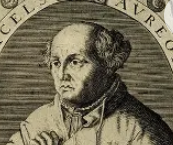
God, our Father, has given us the life and the art of healing to protect and maintain it.
8 months 2 weeks ago
The faith that stands on authority is not faith.
▼
Source
source
The Over-soul

8 months 3 weeks ago
All movements go too far.

8 months 2 weeks ago
One always dies too soon - or too late. And yet, life is there, finished: the line is drawn, and it must all be added up. You are nothing other than your life.
▼
Source
source
Inès, Act 1, sc. 5
7 months 2 weeks ago
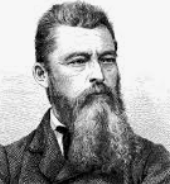
What man calls Absolute Being, his God, is his own being. The power of the object over him is therefore the power of his own being. Thus, the power of the object of feeling is the power of feeling itself; the power of the object of reason is the power of reason itself; and the power of the object of will is the power of will itself.
▼
Source
source
Introduction, Z. Hanfi, trans., in The Fiery Brook (1972), p. 102
9 months 2 weeks ago
A man is more a man through the things he keeps to himself than through those he says.
7 months 4 days ago
Education is the acquisition of the art of the utilisation of knowledge.

7 months 3 weeks ago
Sleep is a death; oh, make me try By sleeping what it is to die, And as gently lay my head On my grave as now my bed.
▼
Source
source
Section 12
7 months 1 week ago
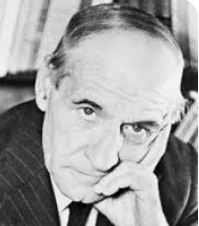
Human life, by its very nature, has to be dedicated to something, an enterprise glorious or humble, a destiny illustrious or trivial. We are faced with a condition, strange but inexorable, involved in our very existence.
▼
Source
source
Chapter XIV: Who Rules The World?
8 months 2 weeks ago
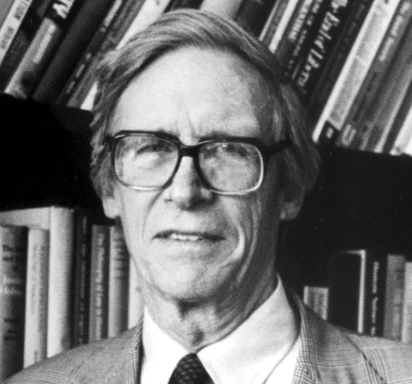
A conception of justice cannot be deduced from self evident premises or conditions on principles; instead, its justification is a matter of the mutual support of many considerations, of everything fitted together into one coherent view.
▼
Source
source
Chapter I, Section 4, p. 21
8 months 2 weeks ago
Immortality. I notice that as soon as writers broach this question they begin to quote. I hate quotation. Tell me what you know.
▼
Source
source
May 1849
8 months 3 weeks ago
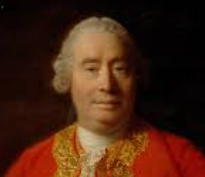
This avidity alone, of acquiring goods and possessions for ourselves and our nearest friends, is insatiable, perpetual, universal, and directly destructive of society.
▼
Source
source
Part 2, Section 2
7 months 1 week ago
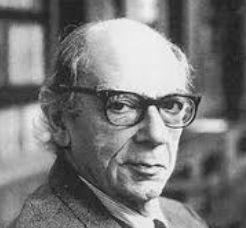
The very desire for guarantees that our values are eternal and secure in some objective heaven is perhaps only a craving for the certainties of childhood or the absolute values of our primitive past.

7 months 1 week ago
The harvest truly is plenteous, but the labourers are few; Pray ye therefore the Lord of the harvest, that he will send forth labourers into his harvest.
▼
Source
source
9:37-38 (KJV)
7 months 1 week ago
It is not meet to take the children's bread, and to cast it to dogs.
▼
Source
source
15:26 (KJV)

7 months 1 week ago
The wretched consciousness shrinks from it own annihilation, and just as an animal spirit newly severed from the womb of the world, finds itself confronted with the world and knows itself distinct from it, so consciousness must needs desire to possess another life than that of the world itself.
7 months 2 days ago
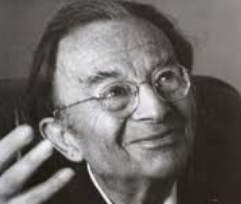
Man is born as a freak of nature, being within nature and yet transcending it. He has to find principles of action and decision-making which replace the principles of instincts. He has to have a frame of orientation which permits him to organize a consistent picture of the world as a condition for consistent actions. He has to fight not only against the dangers of dying, starving, and being hurt, but also against another danger which is specifically human: that of becoming insane. In other words, he has to protect himself not only against the danger of losing his life but also against the danger of losing his mind.
▼
Source
source
The Revolution of Hope: Toward a Humanized Technology (1968), p. 61
9 months 4 days ago
Life is one long struggle in the dark.
▼
Source
source
Book II, line 54 (tr. Rouse)
9 months 2 weeks ago
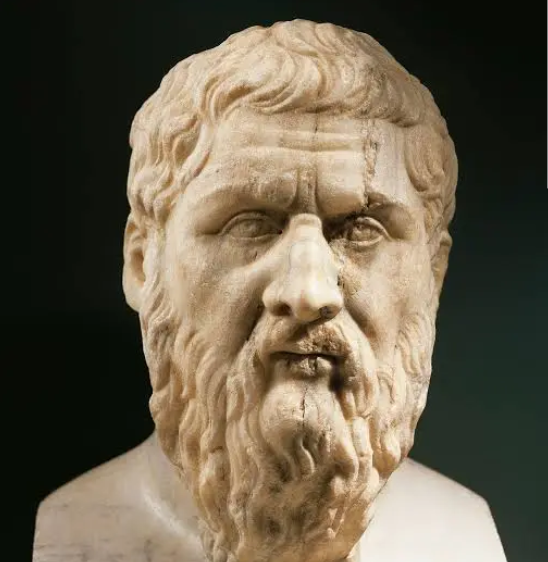
It would be better for me that multitudes of men should disagree with me rather than that I, being one, should be out of harmony with myself.
7 months ago
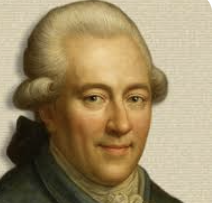
Once the good man was dead, one wore his hat and another his sword as he had worn them, a third had himself barbered as he had, a fourth walked as he did, but the honest man that he was - nobody any longer wanted to be that.
▼
Source
source
C 36

6 months 2 weeks ago
To attain this end we must secure a preponderance of virtue over vice and must endeavor to secure that the honest man may, even in this world, receive a lasting reward for his virtue. But in these great endeavors we are gravely hampered by the political institutions of today. What is to be done in these circumstances? To favor revolutions, overthrow everything, repel force by force?... No! We are very far from that. Every violent reform deserves censure, for it quite fails to remedy evil while men remain what they are, and also because wisdom needs no violence.
▼
Source
source
Book V, Ch. 7
CivilSimian.com created by AxiomaticPanic, CivilSimian, Kalokagathia