

7 months 3 weeks ago
I have lived an honest and useful life to mankind; my time has been spend in doing good and I die in perfect composure and resignation to the will of my Creator, God.
▼
Source
source
Last will (1809), as quoted in The Fortnightly Review, vol. 31, pp. 398-399
5 months 3 weeks ago
Books are good enough in their own way, but they are a mighty bloodless substitute for life.
▼
Source
source
An Apology for Idlers.
6 months 1 week ago
No particular experiences are linked with any particular statements in the interior of the field, except indirectly through considerations of equilibrium affecting the field as a whole.
▼
Source
source
"Two Dogmas of Empiricism"



6 months 1 week ago
Racism has always been a divisive force separating black men and white men, and sexism has been a force that unites the two groups.

5 months 4 weeks ago
I can calculate the motions of erratic bodies, but not the madness of a multitude.
▼
Source
source
As quoted in "Mammon and the Money Market", in The Church of England Quarterly Review (1850), p. 142

7 months 3 weeks ago
The fact that labour is external to the worker, i.e., it does not belong to his intrinsic nature; that in his work, therefore he does not affirm himself but denies himself, does not feel content but unhappy, does not develop freely his physical and mental energy but mortifies his body and his mind. The worker therefore only feels himself outside his work, and in his work feels outside himself.
▼
Source
source
Estranged Labour, p. 30.

7 months 3 weeks ago
The world is full of conflicts; and, overshadowing all minor conflicts, the titanic struggle between Communism and anti-Communism. Almost everybody who is politically conscious has strong feelings about one or more of these issues; but we want you, if you can, to set aside such feelings and consider yourselves only as members of a biological species which has had a remarkable history, and whose disappearance none of us can desire. We shall try to say no single word which should appeal to one group rather than to another. All, equally, are in peril, and, if the peril is understood, there is hope that they may collectively avert it.

6 months 4 days ago
Since my world picture approximates reality only crudely, I cannot aspire to optimize anything; at most, I can aim at satisficing. Searching for the best can only dissipate scarce cognitive resources; the best is the enemy of the good.
▼
Source
source
(p.361) p. 361; As cited in Ronald J. Baker (2010) Implementing Value Pricing: A Revolutionary Business Model for Professional Firms. p. 122.
7 months 2 days ago
Since therefore, as well those degrees of heat that are not painful, as those that are, can exist in a thinking substance; may we not conclude that external bodies are absolutely incapable of any degree of heat whatsoever?
▼
Source
source
Philonous to Hylas. Hylas replies with, "So it seems".

3 months 3 weeks ago
Whether we and our politicians know it or not, Nature is party to all our deals and decisions, and she has more votes, a longer memory, and a sterner sense of justice than we do.
▼
Source
source
Part of an endorsement statement for The Dying of the Trees (1997) by Charles E. Little

4 months 1 week ago
What we should be after death, we have to attain in life, i.e. holiness and bliss. Here on earth the Kingdom of God begins.

7 months 3 weeks ago
No matter how abstract our theories may sound or how consistent our arguments may appear, there are incidents and stories behind them which, at least for ourselves, contain as in a nutshell the full meaning of whatever we have to say.
▼
Source
source
Thinking Without a Banister: Essays in Understanding, 1953-1975
5 months 2 weeks ago
National loyalty involves a love of home and a preparedness to defend it; nationalism is a belligerent ideology, which uses national symbols in order to conscript the people to war.

8 months 1 week ago
Why, what is weeping and sighing? A judgement. What is misfortune? A judgement. What are strife, disagreement, fault-finding, accusing, impiety, foolishness? They are all judgements.
▼
Source
source
Book III, ch. 3, 18, 19.

3 months 3 weeks ago
Look round at the courses of the stars, as if thou wert going along with them; and constantly consider the changes of the elements into one another; for such thoughts purge away the filth of the terrene life.
▼
Source
source
VII, 47
5 months 3 weeks ago
Literature is idiosyncratic arrangements in horizontal lines in only twenty-six symbols, ten arabic numbers, and about eight punctuation marks.
▼
Source
source
Public conversation with Lee Stringer, in Like Shaking Hands With God
5 months 4 weeks ago
Every body continues in its state of rest, or of uniform motion in a right line, unless it is compelled to change that state by forces impressed upon it.
▼
Source
source
Laws of Motion, I
4 months 2 weeks ago
Philosophy accepts the hard and hazardous task of dealing with problems not yet open to the methods of science - problems like good and evil, beauty and ugliness, order and freedom, life and death; so soon as a field of inquiry yields knowledge susceptible of exact formulation it is called science. Every science begins as philosophy and ends as art; it arises in hypothesis and flows into achievement.
5 months 2 weeks ago
Believe me, my friends, you are yet very deficient with regard to the best modes of training your children, or of arranging your domestic concerns.
6 months 2 weeks ago
The world is a perpetual caricature of itself; at every moment it is the mockery and the contradiction of what it is pretending to be.
▼
Source
source
"Dickens"

6 months 1 week ago
Thinking is more erotic than calculating.
7 months 3 weeks ago
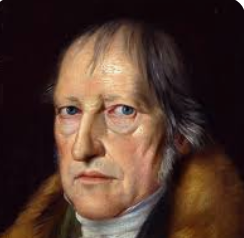
Very similar were the views expressed by Raymundus of Sabunde or Sabeyde, a Spaniard of the fifteenth century, and professor at Toulouse about the year 1437. In his theologia natural is, which he handled in a speculative spirit, he dealt with the Nature of things, and with the revelation of God in Nature and in the history of the God-man. He sought to prove to unbelievers the Being, the trinity, the incarnation, the life, and the revelation of God in Nature, and in the history of the God-man, basing his arguments on Reason. From the contemplation of Nature he rises to God; and in the same way he reaches morality from; observation of man's inner nature. This purer and simpler style must be set off against the other, if we are to do justice to the Scholastic theologians in their turn.
▼
Source
source
Georg Wilhelm Friedrich Hegel, Lectures on the Philosophy of History Vol 3 1837 translated by ES Haldane and Francis H. Simson) first translated 1896 P. 91-92
6 months 1 week ago
The quest for certainty blocks the search for meaning. Uncertainty is the very condition to impel man to unfold his powers.
▼
Source
source
Ch. 3

5 months 3 weeks ago
The move from a structuralist account in which capital is understood to structure social relations in relatively homologous ways to a view of hegemony in which power relations are subject to repetition, convergence, and rearticulation brought the question of temporality into the thinking of structure, and marked a shift from a form of Althusserian theory that takes structural totalities as theoretical objects to one in which the insights into the contingent possibility of structure inaugurate a renewed conception of hegemony as bound up with the contingent sites and strategies of the rearticulation of power.
▼
Source
source
"Further Reflections on the Conversations of Our Time" (1997), which received first place in the Philosophy and Literature Bad Writing Contest
7 months 3 weeks ago
All men would then be necessarily equal, if they were without needs. It is the poverty connected with our species which subordinates one man to another. It is not inequality which is the real misfortune, it is dependence.
▼
Source
source
"Equality", 1764
4 months 1 week ago
The interventionists do not approach the study of economic matters with scientific disinterestedness. Most of them are driven by an envious resentment against those whose incomes are larger than their own. This bias makes it impossible for them to see things as they really are. For them the main thing is not to improve the conditions of the masses, but to harm the entrepreneurs and capitalists even if this policy victimizes the immense majority of the people.

4 months 2 weeks ago
...shall we say that the difference between a vegetarian and a cannibal is just a matter of taste?
▼
Source
source
"The Idolatry of Politics", New Republic, 1986-June-16, page 31.

3 months 3 weeks ago
The liberty of the whole earth was depending on the issue of the contest, and was ever such a prize won with so little innocent blood? My own affections have been deeply wounded by some of the martyrs to this cause, but rather than it should have failed, I would have seen half the earth desolated. Were there but an Adam & an Eve left in every country, & left free, it would be better than as it now is.
▼
Source
source
Letter to William Short (January 3, 1793), quoted in Stanley Elkins and Eric McKitrick, The Age of Federalism (1995), pp. 316-317

7 months 3 weeks ago
The only non-Christians who seemed to me really to know anything were the Romantics; and a good many of them were dangerously tinged with something like religion, even at times with Christianity. The upshot of it all could nearly be expressed in a perversion of Roland's great line in the Chanson: 'Christians are wrong, but all the rest are bores.'
3 months 3 weeks ago
The true foundation of republican government is the equal right of every citizen, in his person and property, and in their management. Try by this, as a tally, every provision of our constitution, and see if it hangs directly on the will of the people. Reduce your legislature to a convenient number for full, but orderly discussion. Let every man who fights or pays, exercise his just and equal right in their election.
7 months 4 weeks ago
Human reason is by nature architectonic.
▼
Source
source
B 502


7 months 3 weeks ago
No particular results then, so far, but only an attitude of orientation, is what the pragmatic method means. The attitude of looking away from first things, principles, 'categories,' supposed necessities; and of looking towards last things, fruits, consequences, facts.
▼
Source
source
Lecture II, What Pragmatism Means

7 months 3 weeks ago
All war propaganda consists, in the last resort, in substituting diabolical abstractions for human beings. Similarly, those who defend war have invented a pleasant sounding vocabulary of abstractions in which to describe the process of mass murder.
▼
Source
source
"Pacifism and Philosophy", 1936
7 months 3 weeks ago
Capital is dead labor, that vampire-like, only lives by sucking living labor, and lives the more, the more labor it sucks.
▼
Source
source
Vol. I, Ch. 10, Section 1, p. 257.
5 months 1 week ago
I wonder why I bother to tell the truth when people ask me what I think of this and that and how I feel about this and that. I get so complicated and introspective that people often don't understand and are frankly puzzled and (naturally enough) bored. So why bother! It would be so much easier to say what they expected you to, and everything would be easy and pleasant.
6 months 1 week ago
The most important misunderstanding seems to me to lie in a confusion between the human necessities which I consider part of human nature, and the human necessities as they appear as drives, needs, passions, etc., in any given historical period. This division is not very different from Marx's concept of "human nature in general", to be distinguished from "human nature as modified in each historical period". The same distinction exists in Marx when he distinguishes between "constant" or "fixed" drives and "relative" drives. The constant drives "exist under all circumstances and ... can be changed by social conditions only as far as form and direction are concerned". The relative drives "owe their origin only to a certain type of social organization".

4 months 2 weeks ago
Consider, for example, the state of Science generally, in Europe, at this period. It is admitted, on all sides, that the Metaphysical and Moral Sciences are falling into decay, while the Physical are engrossing, every day, more respect and attention. In most of the European nations there is now no such thing as a Science of Mind; only more or less advancement in the general science, or the special sciences, of matter.
6 months 1 week ago
What appears as the positive is essentially the negative, i.e. the thing that is to be criticized.
▼
Source
source
p. 18
3 months 3 weeks ago
The Science of Hydrostatics depends upon the Fundamental Principle that 'fluids press equally in all directions'. This Principle necessarily results from the conception of a Fluid, as a body of which the parts are perfectly moveable in all directions. For since the Fluid is a body, it can transmit pressure; and the transmitted pressure is equal to the original pressure, in virtue of the Axiom that Reaction is equal to Action. That the Fundamental Principle is not derived from experience, is plain both from its evidence and from its history.
4 months 2 weeks ago
It was a rude gross error, that of counting the Great Man a god. Yet let us say that it is at all times difficult to know what he is, or how to account of him and receive him!
7 months 3 weeks ago
As a rule we disbelieve all the facts and theories for which we have no use.
▼
Source
source
"The Will to Believe" p. 10
CivilSimian.com created by AxiomaticPanic, CivilSimian, Kalokagathia