But in life, as we are cognizant of it, mental development can go but a little way. The mind hardly begins to awake ere the bodily powers decline — it but becomes dimly conscious of the vast fields before it, but begins to learn and use its strength, to recognize relations and extend its sympathies, when, with the death of the body, it passes away. Unless there is something more, there seems here a break, a failure. Whether it be a Humboldt or a Herschel, a Moses who looks from Pisgah, a Joshua who leads the host, or one of those sweet and patient souls who in narrow circles live radiant lives, there seems, if mind and character here developed can go no further, a purposelessness inconsistent with what we can see of the linked sequence of the universe.
0
0
Those who are most to be considered, those for whose help the struggle must be made, if labor is to be enfranchised, and social justice won, are those least able to help or struggle for themselves, those who have no advantage of property or skill or intelligence, — the men and women who are at the very bottom of the social scale. In securing the equal rights of these we shall secure the equal rights of all. Hence it is, as Mazzini said, that it is around the standard of duty rather than around the standard of self-interest that men must rally to win the rights of man. And herein may we see the deep philosophy of Him who bade men love their neighbors as themselves. In that spirit, and in no other, is the power to solve social problems and carry civilization onward.
0
0
Source
source
Ch. 21 : Conclusion
The aim of protection, in short, is to prevent the bringing into a country of things in themselves useful and valuable, in order to compel the making of such things. But what all mankind in the individual affairs of every-day life, regard as to be desired is not the making of things, but the possession of things.
0
0
Source
source
Henry George, page 39, (1896)
The needs of labor require more than kind words, and are not to be satisfied by such soft phrases as we address to a horse when we want to catch him that we may put a bit in his mouth and a saddle on his back. Let me ask those who are disposed to regard protection as favorable to the aspirations of labor, to consider whether it can be true that what labor needs is to be protected? To admit that labor needs protection is to acknowledge its inferiority; it is to acquiesce in an assumption that degrades the workman to the position of a dependent, and leads logically to the claim that the employee is bound to vote in the interest of the employer who provides him with work. There is something in the very word "protection" that ought to make workingmen cautious of accepting anything presented to them under it. The protection of the masses has in all times been the pretense of tyranny — the plea of monarchy, of aristocracy, of special privilege of every kind. The slave owners justified slavery as protecting the slaves.
0
0
Source
source
Ch. 2
When we consider that labor is the producer of all wealth, is it not evident that the impoverishment and, dependence of labor are abnormal conditions resulting from restrictions and usurpations, and that instead of accepting protection, what labor should demand is freedom. That those who advocate any extension of freedom choose to go no further than suits their own special purpose is no reason why freedom itself should be distrusted.
0
0
Source
source
Ch. 2
Free trade consists simply in letting people buy and sell as they want to buy and sell. It is protection that requires force, for it consists in preventing people from doing what they want to do. Protective tariffs are as much applications of force as are blockading squadrons, and their object is the same—to prevent trade. The difference between the two is that blockading squadrons are a means whereby nations seek to prevent their enemies from trading; protective tariffs are a means whereby nations attempt to prevent their own people from trading. What protection teaches us, is to do to ourselves in time of peace what enemies seek to do to us in time of war.
0
0
Source
source
Ch. 6
Trade has ever been the extinguisher of war, the eradicator of prejudice, the diffuser of knowledge.
0
0
Source
source
Ch. 6
My primary object is to defend and advance a principle in which I see the only possible relief from much that enthralls and degrades and distorts, turning light to darkness and good to evil, rather than to gage a philosopher or weigh a philosophy. Yet the examination I propose must lead to a decisive judgment upon both.
0
0
Source
source
Introduction : The Reason for the Examination
The respect for authority, the presumption in favor of those who have won intellectual reputation, is within reasonable limits, both prudent and becoming. But it should not be carried too far, and there are some things especially as to which it behooves us all to use our own judgment and to maintain free minds. For not only does the history of the world show that undue deference to authority has been the potent agency through which errors have been enthroned and superstitions perpetuated, but there are regions of thought in which the largest powers and the greatest acquirements cannot guard against aberrations or assure deeper insight. One may stand on a box and look over the heads of his fellows, but he no better sees the stars. The telescope and the microscope reveal depths which to the unassisted vision are closed. Yet not merely do they bring us no nearer to the cause of suns and animal-cula, but in looking through them the observer must shut his eyes to what lies about him. That intension is at the expense of extension is seen in the mental as in the physical sphere. A man of special learning may be a fool as to common relations. And that he who passes for an intellectual prince may be a moral pauper there are examples enough to show.
0
0
Source
source
Introduction : The Reason for the Examination
The rights of men to the use of land are not joint rights: they are equal rights. Were there only one man on earth, he would have a right to the use of the whole earth or any part of the earth. When there is more than one man on earth, the right to the use of land that any one of them would have, were he alone, is not abrogated: it is only limited. The right of each to the use of land is still a direct, original right, which he holds of himself, and not by the gift or consent of the others; but it has become limited by the similar rights of the others, and is therefore an equal right.
0
0
Source
source
Part I : Declaration, Ch. III : "Social Statics" — The Right of Property
Men must have rights before they can have equal rights. Each man has a right to use the world because he is here and wants to use the world. The equality of this right is merely a limitation arising from the presence of others with like rights. Society, in other words, does not grant, and cannot equitably withhold from any individual, the right to the use of land. That right exists before society and independently of society, belonging at birth to each individual, and ceasing only with his death. Society itself has no original right to the use of land. What right it has with regard to the use of land is simply that which is derived from and is necessary to the determination of the rights of the individuals who compose it. That is to say, the function of society with regard to the use of land only begins where individual rights clash, and is to secure equality between these clashing rights of individuals.
0
0
Source
source
Part I : Declaration, Ch. IV : Mr. Spencer's Confusion as to Rights
As man is so constituted that it is utterly impossible for him to attain happiness save by seeking the happiness of others, so does it seem to be of the nature of things that individuals and classes can obtain their own just rights only by struggling for the rights of others.
0
0
Source
source
Ch. 21 : Conclusion
I am firmly convinced, as I have already said, that to effect any great social improvement, it is sympathy rather than self-interest, the sense of duty rather than the desire for self-advancement, that must be appealed to. Envy is akin to admiration, and it is the admiration that the rich and powerful excite which secures the perpetuation of aristocracies.
0
0
Source
source
Ch. 21 : Conclusion
The intelligence required for the solving of social problems is not a thing of the mere intellect. It must be animated with the religious sentiment and warm with sympathy for human suffering. It must stretch out beyond self-interest, whether it be the self-interest of the few or of the many. It must seek justice. For at the bottom of every social problem we will find a social wrong.
0
0
Source
source
Ch. 1 : The Increasing Importance of Social Questions
How can a man be said to have a country where he has no right to a square inch of soil...
0
0
Source
source
Ch. 2 : Political Dangers
A great change is going on all over the civilized world similar to that infeudation which, in Europe, during the rise of the feudal system, converted free proprietors into vassals, and brought all society into subordination to a hierarchy of wealth and privilege. Whether the new aristocracy is hereditary or not makes little difference. Chance alone may determine who will get the few prizes of a lottery. But it is not the less certain that the vast majority of all who take part in it must draw blanks. The forces of the new era have not yet had time to make status hereditary, but we may clearly see that when the industrial organization compels a thousand workmen to take service under one master, the proportion of masters to men will be but as one to a thousand, though the one may come from the ranks of the thousand. "Master"! We don't like the word. It is not American! But what is the use of objecting to the word when we have the thing? The man who gives me employment, which I must have or suffer, that man is my master, let me call him what I will.
0
0
Source
source
Ch. 5 : The March of Concentration
No amount of force will break an egg-shell if exerted on one side alone. So capital could not squeeze labor as long as labor was free to natural opportunities, and in a world where these natural materials and opportunities were as free to all as is the air to us, there could be no difficulty in finding employment, no willing hands conjoined with hungry stomachs, no tendency of wages toward the minimum on which the worker could barely live. In such a world we would no more think of thanking anybody for furnishing us employment than we here think of thanking anybody for furnishing us with appetites. That the Creator might have put us in the kind of world I have sought to imagine, as readily as in this kind of a world, I have no doubt. Why he has not done so may, however, I think, be seen. That kind of a world would be best for fools. This is the best for men who will use the intelligence with which they have been gifted. Of this, however, I shall speak hereafter. What I am now trying to do by asking my readers to endeavor to imagine a world in which natural opportunities were "as free as air," is to show that the barrier which prevents labor from freely using land is the nether millstone against which labor is ground, the true cause of the difficulties which are apparent through the whole industrial organization.
0
0
Source
source
Ch. 13 : Unemployed Labor
To prevent government from becoming corrupt and tyrannous, its organization and methods should be as simple as possible, its functions be restricted to those necessary to the common welfare, and in all its parts it should be kept as close to the people and as directly within their control as may be.
0
0
Source
source
Ch. 17 : The Functions of Government
More is given to us than to any people at any time before; and, therefore, more is required of us. We have made, and still are making, enormous advances on material lines. It is necessary that we commensurately advance on moral lines. Civilization, as it progresses, requires a higher conscience, a keener sense of justice, a warmer brotherhood, a wider, loftier, truer public spirit. Falling these, civilization must pass into destruction. It cannot be maintained on the ethics of savagery. For civilization knits men more and more closely together, and constantly tends to subordinate the individual to the whole, and to make more and more important social conditions.
0
0
Source
source
[http://www.wealthandwant.com/HG/SP/SP22_Conclusion.htm Ch. 21 : Conclusion]
I ask no one who may read this book to accept my views. I ask him to think for himself. Whoever, laying aside prejudice and self-interest, will honestly and carefully make up his own mind as to the causes and the cure of the social evils that are so apparent, does, in that, the most important thing in his power toward their removal. This primary obligation devolves upon us individually, as citizens and as men. Whatever else we may be able to do, this must come first. For "if the blind lead the blind, they both shall fall into the ditch." Social reform is not to be secured by noise and shouting; by complaints and denunciation; by the formation of parties, or the making of revolutions; but by the awakening of thought and the progress of ideas. Until there be correct thought, there cannot be right action; and when there is correct thought, right action will follow. Power is always in the hands of the masses of men. What oppresses the masses is their own ignorance, their own short-sighted selfishness.
0
0
Source
source
Ch. 21 : Conclusion
The great work of the present for every man, and every organization of men, who would improve social conditions, is the work of education — the propagation of ideas. It is only as it aids this that anything else can avail. And in this work every one who can think may aid — first by forming clear ideas himself, and then by endeavoring to arouse the thought of those with whom he comes in contact.
0
0
Source
source
Ch. 21 : Conclusion
Many there are, too depressed, too embruted with hard toil and the struggle for animal existence, to think for themselves. Therefore the obligation devolves with all the more force on those who can. If thinking men are few, they are for that reason all the more powerful. Let no man imagine that he has no influence. Whoever he may be, and wherever he may be placed, the man who thinks becomes a light and a power. That for every idle word men may speak they shall give an account at the day of judgment, seems a hard saying. But what more clear than that the theory of the persistence of force, which teaches us that every movement continues to act and react, must apply as well to the universe of mind as to that of matter? Whoever becomes imbued with a noble idea kindles a flame from which other torches are lit, and influences those with whom he comes in contact, be they few or many. How far that influence, thus perpetuated, may extend, it is not given to him here to see. But it may be that the Lord of the Vineyard will know.
0
0
Source
source
Ch. 21 : Conclusion
The progress of civilization necessitates the giving of greater and greater attention and intelligence to public affairs. And for this reason I am convinced that we make a great mistake in depriving one sex of voice in public matters, and that we could in no way so increase the attention, the intelligence and the devotion which may be brought to the solution of social problems as by enfranchising our women.
0
0
Source
source
Ch. 21 : Conclusion
The primary error of the advocates of land nationalization is in their confusion of equal rights with joint rights, and in their consequent failure to realize the nature and meaning of economic rent… In truth the right to the use of land is not a joint or common right, but an equal right; the joint or common right is to rent, in the economic sense of the term. Therefore it is not necessary for the state to take land, it is only necessary for it to take rent. This taking by the commonalty of what is of common right, would of itself secure equality in what is of equal right — for since the holding of land could be profitable only to the user, there would be no inducement for any one to hold land that he could not adequately use, and monopolization being ended no one who wanted to use land would have any difficulty in finding it.
0
0
Source
source
Part III : Recantation, Ch. XI Compensation
It is not merely the authority of Mr. Spencer as a teacher on social subjects that I would discredit; but the blind reliance upon authority. For on such subjects the masses of men cannot safely trust authority. Given a wrong which affects the distribution of wealth and differentiates society into the rich and the poor, and the recognized organs of opinion and education, since they are dominated by the wealthy class, must necessarily represent the views and wishes of those who profit or imagine they profit by the wrong. That thought on social questions is so confused and perplexed, that the aspirations of great bodies of men, deeply though vaguely conscious of injustice, are in all civilized countries being diverted to futile and dangerous remedies, is largely due to the fact that those who assume and are credited with superior knowledge of social and economic laws have devoted their powers, not to showing where the injustice lies but to hiding it; not to clearing common thought but to confusing it.
0
0
Source
source
Conclusion : The Moral of this Examination
Stepping out of their proper sphere and arrogating to themselves an authority to which they have no claim, professed teachers of spiritual truths long presumed to deny the truths of the natural sciences. But now professed teachers of the natural sciences, stepping in turn out of their proper sphere and arrogating to themselves an authority to which they have no claim, presume to deny spiritual truths. And there are many, who having discarded an authority often perverted by the influence of dominant wrong, have in its place accepted another authority which in its blank materialism affords as efficient a means for stilling conscience and defending selfish greed as any perversion of religious truth. Mr. Spencer is the foremost representative of this authority. Widely regarded as the scientific philosopher; eulogized by his admirers as the greatest of all philosophers — as the man who has cleared and illuminated the field of philosophy by bringing into it the exact methods of science — he carries to the common mind the weight of the marvelous scientific achievements of our time as applied to the most momentous of problems. The effect is to impress it with a vague belief that modern science has proved the idea of God to be an ignorant superstition and the hope of a future life a vain delusion.

0
0
Source
source
Conclusion : The Moral of this Examination
People do not argue with the teaching of George; they simply do not know it. And it is impossible to do otherwise with his teaching, for he who becomes acquainted with it cannot but agree.
0
0
Source
source
Leo Tolstoy, “A Great Iniquity,” letter to The London Times (1905)
An important recurring theme in George is the purposeful corruption of the science of economics in order to serve and apologize for wealthy special interests. As a self trained economist, the academics preferred to ignore the uncomfortable realities George’s work exposed.
0
0
Source
source
Stephen Zarlenga, 2001, https://monetary.org/articles/henry-georges-concept-of-money/
Henry George, the eminent social philosopher of a century ago, turned the attention of planners and economists, however briefly, to the indefeasible factor of land scarcity. Capital and labor can increase; land cannot. Accordingly, George was the apostle of the single tax. It aimed most directly at land speculators. His insights would focus now on the limitations on the use of land imposed by zoning. If John Jones wants an acre protecting his house, he is laying claim to something that cannot expand in size. Since land, in George's analysis, is forever limited, it must be thought of and treated as common property. And therefore the rental value of one acre should constitute a tax (the single tax) on the person who sequesters it for himself. A strong case can be made for the amenities of zoning laws. But they have an effect on the availability of housing, and on its cost. One result is that housing costs are increasing faster than inflation. But is the Henry George factor likely to be espoused in political platforms? It cannot happen soon because too many interests are vested in zoning laws. But sharp political eyes should be trained on the question, in search of a viable formulation designed to fight against homelessness for grandchildren who cannot be expected to pay the projected cost of housing.
0
0
Source
source
William F. Buckley, “Home, Dear Home,” commentary for Real Clear Politics (2005)
[http://www.henrygeorgefoundation.org/ The Henry George Foundation (United Kingdom)]
0
0
[http://www.hgfa.org.au/ The Henry George Foundation of Australia]
0
0
[http://www.henrygeorge.org/LIFEofHG/ The Life of Henry George, by Henry George Jr, 1904]
0
0
[http://www.econlib.org/library/Enc/bios/George.html Biography of Henry George. Library of Economics and Liberty (Econlib)], links to online works
0
0
[http://www.schalkenbach.org/library/george.henry/ Online Works of Henry George]
0
0
[http://www.wealthandwant.com/ Wealth and Want]
0
0
[http://www.historyisaweapon.com/defcon1/georgecripov.html The Crime of Poverty by Henry George]
0
0
Each generation repeats its leaders. Each sees men endowed with superior inventiveness, energy, and genius for business, inspired by love of power and possession, launch selfish schemes-Carnegies, Rockefellers, Goulds [...] Each generation has had its Henry George, its Bellamy, its Bryan, intent on persuading mankind that he had found the way, could lead men to the good life. In each generation employer and employee have faced the decision-war or cooperation.
0
0
Source
source
Ida Tarbell, All in the Day's Work (1939)
I have already read Henry George's great book and really learnt a great deal from it. Yesterday evening I read with admiration the address about Moses. Men like Henry George are rare unfortunately. One cannot imagine a more beautiful combination of intellectual keenness, artistic form and fervent love of justice. Every line is written as if for our generation. The spreading of these works is a really deserving cause, for our generation especially has many and important things to learn from Henry George.
0
0
Source
source
Albert Einstein, in a [http://www.cooperativeindividualism.org/einstein-albert_letters-to-anna-george-demille-1934.html letter to Anna George De Mille, published in Land and Freedom (May-June 1934)]
As there are many to whom the beauty and harmony of economic laws are hidden, and to whom the inspiring thought of a social order in which there should be work for all, leisure for all, and abundance for all — in which all might be at least as true, as generous and as manful as they wish to be — is shut out by the deference paid to economic authorities who have as it were given bonds not to find that for which they profess to seek, so there are many to-day to whom any belief in the spiritual element, in the existence of God and in a future life, is darkened or destroyed, not so much by difficulties they themselves find, but by what they take to be the teachings of science.
0
0
Source
source
Conclusion : The Moral of this Examination
We have tested, in matters where ordinary intelligence and knowledge are competent to judge, the logical methods and intellectual honesty of the foremost of those who in the name of science eliminate God and degrade man, taking from human life its highest dignity and deepest hope. Now, if in simple matters we find such confusion, such credulity, such violation of every canon of sound reasoning as we have found here, shall we blindly trust in deeper matters — in those matters which always have and always must perplex the intellect of man? Let us rather, as I said in the beginning, not too much underrate our own powers in what is concerned with common facts and general relations. While we may not be scientists or philosophers we too are men. And as to things which the telescope cannot resolve, nor the microscope reveal, nor the spectrum analysis throw light on, nor the tests of the chemist discover, it is as irrational to accept blindly the dictum of those who say, "Thus saith science!" as it is in things that are the proper field of the natural sciences to bow before the dictum of those who say, "Thus saith religion!"
0
0
Source
source
Conclusion : The Moral of this Examination
I care nothing for creeds. I am not concerned with any one's religious belief. But I would have men think for themselves. If we do not, we can only abandon one superstition to take up another, and it may be a worse one. It is as bad for a man to think that he can know nothing as to think he knows all. There are things which it is given to all possessing reason to know, if they will but use that reason. And some things it may be there are, that — as was said by one whom the learning of the time sneered at, and the high priests persecuted, and polite society, speaking through the voice of those who knew not what they did, crucified — are hidden from the wise and prudent and revealed unto babes.
0
0
Source
source
Conclusion : The Moral of this Examination
Why should charity be offered the unemployed? It is not alms they ask. They are insulted and embittered and degraded by being forced to accept as paupers what they would gladly earn as workers. What they ask is not charity, but the opportunity to use their own labor in satisfying their own wants. Why can they not have that? It is their natural right. He who made food and clothing and shelter necessary to man's life has also given to man, in the power of labor, the means of maintaining that life; and when, without fault of their own, men cannot exert that power, there is somewhere a wrong of the same kind as denial of the right of property and denial of the right of life — a wrong equivalent to robbery and murder on the grandest scale. Charity can only palliate present suffering a little at the risk of fatal disease. For charity cannot right a wrong; only justice can do that. Charity is false, futile, and poisonous when offered as a substitute for justice.
0
0
Source
source
p. 179
In any country, however new and vast, it would be possible to change "scarcity of labor" into "scarcity of employment" by increasing the price put on the use of land. If three families settled a virgin continent, one family could command the services of the others as laborers for hire just as fully as though they were its chattel slaves, if it was accorded the ownership of the land and could put its own price on its use. Wakefield proposed only that land should be held at what he called "a sufficient price "— that is, a price high enough to keep wages in new colonies only a little higher than wages in the mother-country, and to produce not actual inability to get employment on the part of laborers, but only such difficulty as would keep them tractable, and ready to accept what from his standpoint were reasonable wages. Yet it is evident that it would only require a somewhat greater increase in the price of land to go beyond this point and to bring about in the midst of abundant natural opportunities for the employment of labor, the phenomena of laborers vainly seeking employment. Now, in the United States we have not attempted to create "scarcity of employment" by Wakefield's plan. But we have made haste by sale and gift to put the public domain in the hands of private owners, and thus allowed speculation to bring about more quickly and effectually than he could have anticipated, more than Wakefield aimed at. The public domain is now practically gone; land is rising to European prices, and we are at last face to face with social difficulties which in the youth of men of my time we were wont to associate with "the effete monarchies of the Old World."
0
0
Source
source
p. 182
Under existing conditions in the civilized world, the great struggle among men is for the possession of wealth. Would it not then be irrational to expect that the science which treats of the production and distribution of wealth should be exempt from the influence of that struggle? Macaulay has well said that if any large pecuniary interest were concerned in disputing the attraction of gravitation, that most obvious of all facts would not yet be accepted. What, then, can we look for in the teaching of a science which directly concerns the most powerful of "vested rights" — which deals with rent and wages and interest, with taxes and tariffs, with privileges and franchises and subsidies, with currencies and land tenures and public debts, with the ideas on which trade unions are based and the pleas by which combinations of capitalists are defended? Economic truth, under existing conditions, has not merely to overcome the inertia of indolence or habit; it is in its very nature subject to suppressions and distortions from the influence of the most powerful and vigilant interests. It has not merely to make its way; it must constantly stand on guard.
0
0
Source
source
General Introduction
All large political questions are at bottom economic questions.
0
0
Source
source
General Introduction
We cannot think with precision unless in our own minds we use words with precision.
0
0
Source
source
General Introduction
All of his speeches were with high moral enthusiasm and humanitarian fervor.
0
0
Source
source
Jane Addams, 20 Years at Hull House (1910)
He was curious and he was alertly attentive to all that went on around him. He had that rarest of all attributes in the scholar and historian — that gift without which all education is useless. He had mother wit. He read what he needed to read, and he understood what he read. And he was fortunate; he lived and worked in a rapidly developing society. George had the unique opportunity of studying the formation of a civilization — the change of an encampment into a thriving metropolis. He saw a city of tents and mud change into a fine town of paved streets and decent housing, with tramways and buses. And as he saw the beginning of wealth, he noted the first appearance of pauperism. He saw degradation forming as he saw the advent of leisure and affluence, and he felt compelled to discover why they arose concurrently.
0
0
Source
source
Agnes de Mille, in an Afterword for editions of Progress and Poverty
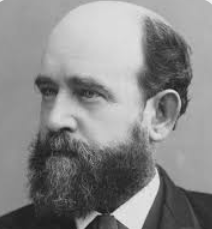
[http://gettysburg.cdmhost.com/u?/p126301coll1,2 Henry George Photograph part of the Nineteenth Century Notables Digital Collection at Gettysburg College]
0
0
There is, and always has been, a widespread belief among the more comfortable classes that the poverty and suffering of the masses are due to their lack of industry, frugality, and intelligence. This belief, which at once soothes the sense of responsibility and flatters by its suggestion of superiority, is probably even more prevalent in countries like the United States, where all men are politically equal, and where, owing to the newness of society, the differentiation into classes has been of individuals rather than of families, than it is in older countries, where the lines of separation have been longer, and are more sharply, drawn. It is but natural for those who can trace their own better circumstances to the superior industry and frugality that gave them a start, and the superior intelligence that enabled them to take advantage of every opportunity, to imagine that those who remain poor do so simply from lack of these qualities. But whoever has grasped the laws of the distribution of wealth, as in previous chapters they have been traced out, will see the mistake in this notion. The fallacy is similar to that which would be involved in the assertion that every one of a number of competitors might win a race. That any one might is true; that every one might is impossible. For, as soon as land acquires a value, wages, as we have seen, do not depend upon the real earnings or product of labor, but upon what is left to labor after rent is taken out; and when land is all monopolized, as it is everywhere except in the newest communities, rent must drive wages down to the point at which the poorest paid class will he just able to live and reproduce, and thus wages are forced to a minimum fixed by what is called the standard of comfort — that is, the amount of necessaries and comforts which habit leads the working classes to demand as the lowest on which they will consent to maintain their numbers. This being the case, industry, skill, frugality, and intelligence can avail the individual only in so far as they are superior to the general level just as in a race speed can avail the runner only in so far as it exceeds that of his competitors. If one man work harder, or with superior skill or intelligence than ordinary, he will get ahead; but if the average of industry, skill, or intelligence be brought up to the higher point, the increased intensity of application will secure but the old rate of wages, and he who would get ahead must work harder still.
0
0

CivilSimian.com created by AxiomaticPanic, CivilSimian, Kalokagathia