

3 months 2 weeks ago
Democratic socialists are either proletarians who are not yet sufficiently clear about the conditions of the liberation of their class, or they are representatives of the petty bourgeoisie, a class which, prior to the achievement of democracy and the socialist measures to which it gives rise, has many interests in common with the proletariat. It follows that, in moments of action, the communists will have to come to an understanding with these democratic socialists, and in general to follow as far as possible a common policy with them - provided that these socialists do not enter into the service of the ruling bourgeoisie and attack the communists. It is clear that this form of co-operation in action does not exclude the discussion of differences.

4 months 3 weeks ago
Do not allow your dreams of a beautiful world to lure you away from the claims of men who suffer here and now.
▼
Source
source
p. 485
4 months 1 week ago
And what he fears he cannot make attractive with his touch he abandons.
▼
Source
source
Line 149 (tr. H. R. Fairclough)
4 months 1 week ago
In speaking of the move from subjective to objective characterization, I wish to remain noncommittal about the existence of an endpoint, the completely objective intrinsic nature of the thing, which one might or might not be able to reach. It may be more accurate to think of objectivity as a direction in which the understanding can travel. And in understanding a phenomenon like lightning, it is legitimate to go as far away as one can from a strictly human viewpoint.But in the case of experience, on the other hand, the connexion with a particular point of view seems much closer. It is difficult to understand what could be meant by the objective character of an experience, apart from the particular point of view from which its subject apprehends it. After all, what would be left of what it was like to be a bat if one removed the viewpoint of the bat?
▼
Source
source
p. 173.
4 months 1 week ago
Contemporary intellectuals have given up the Enlightenment assumption that religion, myth, and tradition can be opposed to something ahistorical, something common to all human beings qua human.

5 months 3 weeks ago
Oh, can I really believe the poet's tales, that when one first sees the object of one's love, one imagines one has seen her long ago, that all love like all knowledge is remembrance, that love too has its prophecies in the individual. ... it seems to me that I should have to possess the beauty of all girls in order to draw out a beauty equal to yours; that I should have to circumnavigate the world in order to find the place I lack and which the deepest mystery of my whole being points towards, and at the next moment you are so near to me, filling my spirit so powerfully that I am transfigured for myself, and feel that it's good to be here.

3 months 5 days ago
As of old, the most enlightened, even, hope for a miracle from the twentieth-century deity, - suffrage. Life, happiness, joy, freedom, independence, - all that, and more, is to spring from suffrage. In her blind devotion woman does not see what people of intellect perceived fifty years ago: that suffrage is an evil, that it has only helped to enslave people, that it has but closed their eyes that they may not see how craftily they were made to submit.

3 months 2 weeks ago
Plants are Children of the Earth; we are Children of the Æther. Our Lungs are properly our Root; we live, when we breathe; we begin our life with breathing.
5 months 3 weeks ago
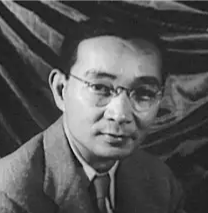
Is there anything we cannot contrive to call the demands of the times, and is there anything that does not acquire a certain prestige by being the demand of the times? But for decisive religious categories to become the demand for the times is eo ipso a contradiction. “The times” is too abstract a category to be able as claimant to demand the decisive religious categories that belong specifically to individuality and particularity; loud collective demands en mass for what can be shared only by the single individual in particularity, in solitariness, in silence, cannot be made.
▼
Source
source
Two Ages: The Age of Revolution and the Present Age. A Literary Review.
1 month ago
I feel, like all modern Americans, no consciousness of sin and simply do not believe in it. All I know is that if God loves me only half as much as my mother does, he will not send me to Hell. That is a final fact of my inner consciousness, and for no religion could I deny its truth.
▼
Source
source
p. 407

3 months 3 weeks ago
Nothing is so fatal to Religion as indifference which is, at least, half Infidelity.
▼
Source
source
Letter to William Smith, Member of the Irish Parliament (29 January 1795), quoted in R. B. McDowell (ed.)

4 months 3 weeks ago
This is the contradiction of racism, colonialism, and all forms of tyranny: in order to treat a man like a dog, one must first recognize him as a man.

3 months 3 weeks ago
"You're a gentleman," they used to say to him. "You shouldn't have gone murdering people with a hatchet; that's no occupation for a gentleman."
1 month 1 week ago
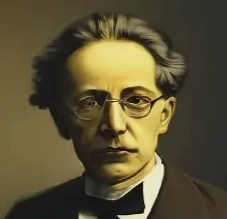
But let the individual man lay claim to ever so many rights because Man or the concept man 'entitles' him to them, because his being man does it: what do I care for his right and his claim? If he has his right only from Man and does not have it from me, then for me he has no right. His life, for example, counts to me only for what it is worth to me. I respect neither a so-called right of property (or his claim to tangible goods) nor yet his right to the 'sanctuary of his inner nature' (or his right to have the spiritual goods and divinities, his gods, remain un-aggrieved). His goods, the sensuous as well as the spiritual, are mine, and I dispose of them as proprietor, in the measure of my - might.
▼
Source
source
Cambridge 1995, p. 219
2 months 3 weeks ago
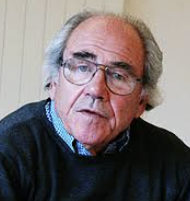
Seduction is the world's elementary dynamic... All this has changed significantly for us, at least in appearance. For what has happened to good and evil? Seduction hurls them against one another, and unites them beyond meaning, in a paroxysm [sudden outbreak of emotion] of intensity and charm.
▼
Source
source
(p. 59)
3 months 1 week ago
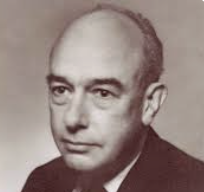
Wyman's overpopulated universe is in many ways unlovely. It offends the aesthetic sense of us who have a taste for desert landscapes.
▼
Source
source
"On What There Is", p. 4. a humorous comment on the idea "unactualized possible".

2 months 2 weeks ago
All meaning alters with acceleration, because all patterns of personal and political interdependence change with any acceleration of information.
▼
Source
source
(p. 178-179)
3 weeks 1 day ago
War is an instrument entirely inefficient toward redressing wrong; and multiplies, instead of indemnifying losses.
▼
Source
source
Letter to John Sinclair

4 months 3 weeks ago
As to love our neighbour as we love ourselves is the great law of Christianity, so it is the great precept of nature to love ourselves only as we love our neighbour, or what comes to the same thing, as our neighbour is capable of loving us. Section I, Chap. V.
3 months 4 days ago
Just as modern mass production requires the standardization of commodities, so the social process requires standardization of man, and this standardization is called equality.
▼
Source
source
Ch. 2

4 months 3 weeks ago
He who is in love is wise and is becoming wiser, sees newly every time he looks at the object beloved, drawing from it with his eyes and his mind those virtues which it possesses.
▼
Source
source
The Method of Nature, 1841

2 months 3 weeks ago
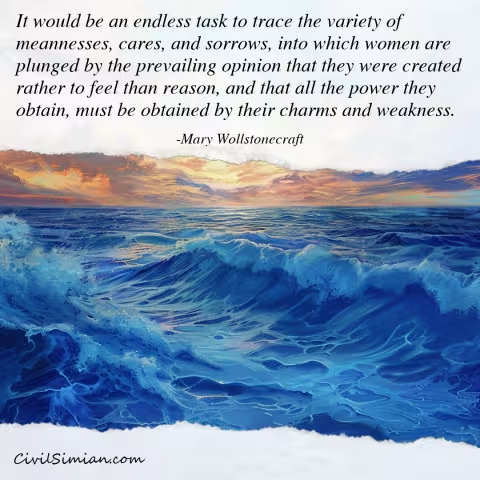
Simulation is no longer that of a territory, a referential being or substance. It is a generation by models of a real without origin or reality: a hyperreal.
▼
Source
source
"The Precession of Simulacra," p. 1


3 months 6 days ago
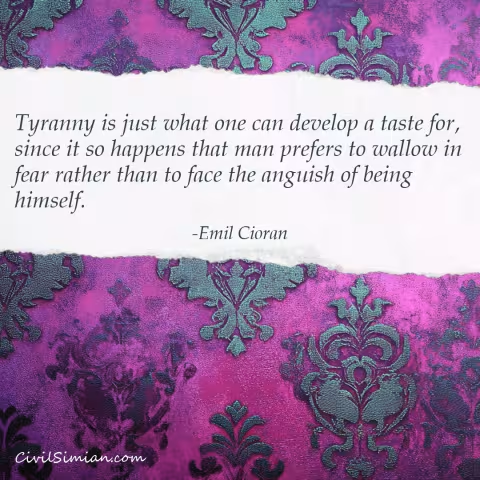
The pursuit of mathematics is a divine madness of the human spirit.
▼
Source
source
Ch. 2: "Mathematics as an Element in the History of Thought", p. 30

5 months 2 weeks ago
An intellectual is someone whose mind watches itself.
3 weeks 2 days ago
While experiencing happiness, we have difficulty in being conscious of it. Only when the happiness is past and we look back on it we do suddenly realize - sometimes with astonishment - how happy we had been.
▼
Source
source
Ch. 6
3 months 3 weeks ago
This Being out of God cannot, by any means, be a limited, completed, and inert Being, since God himself is not such a dead Being, but, on the contrary, is Life; - but it can only be a Power, since only a Power is the true formal picture or Schema of Life. And indeed it can only be the Power of realising that which is contained in itself - a Schema.
1 month 3 days ago
Literature that is not the breath of contemporary society, that dares not transmit the pains and fears of that society, that does not warn in time against threatening moral and social dangers - such literature does not deserve the name of literature; it is only a façade. Such literature loses the confidence of its own people, and its published works are used as wastepaper instead of being read.
▼
Source
source
Open letter to the Fourth Soviet Writers' Congress (16 May 1967) "The Struggle Intensifies," Solzhenitsyn: A Documentary Record, ed. Leopold Labedz

2 months 1 day ago
Today, status quo bias runs deep. Conservation biology is an ideology masquerading as a science. Many researchers seek to extend the tenets of conservation biology to humans. By contrast, a benevolent superintelligence might view Darwinian life on Earth as an infestation of biological malware and act accordingly. The amount of suffering caused by Homo sapiens is hard to quantify. But the suffering is immense and growing daily with the spread of industrialised animal abuse. Reply to "Why would someone want to end humanity?"
▼
Source
source
, Quora, 10 Mar. 2018

4 months 3 weeks ago
Art may make a suit of clothes; but nature must produce a man.
▼
Source
source
Part I, Essay 15: The Epicurean
2 months 1 week ago
To have been a Sovereign, yet the champion of liberty,-a revolutionary leader, yet the supporter of social order, is the peculiar glory of William. Till his accession the British Constitution was in its Chaos. It had contained, from a very remote period, the simple elements of an harmonious government. But they were in a state not of amalgamation, but of conflict,-not of equilibrium but of alternate elevation and depression. The tyranny of Charles the first produced civil war and anarchy. Tyranny had now again produced resistance and revolution. And, but for the wisdom of the new King, it seems probable that the same cycle of misery would have been again described.
▼
Source
source
'Essay on the Life and Character of King William III' (1822), written for the Greaves Historical Prize at Cambridge, quoted in The Times Literary Supplement (1 May 1969), p. 469
3 months 3 weeks ago
Every other art,-as poetry, music, painting,-may be practised without the process showing forth the rules according to which it is conducted ;-but in the self-cognizant art of the philosopher, no step can be taken without declaring the grounds upon which it proceeds.
▼
Source
source
p. 14

3 months 4 days ago
What are novels? What is the secret of the charm of every romance that ever was written? The first thing in a good novel is to place the persons together in circumstances which naturally call out the high feelings and thoughts of the character, which afford food for sympathy between them on these points - romantic events they are called. The second is that the heroine has generally no family ties (almost invariably no mother), or, if she has, these do not interfere with her entire independence. These two things constitute the main charm of reading novels.

2 months 3 weeks ago
The error arises from the learned jurists deceiving themselves and others, by asserting that government is not what it really is, one set of men banded together to oppress another set of men, but, as shown by science, is the representation of the citizens in their collective capacity.
▼
Source
source
Chapter VI, Attitude of Men of the Present Day to War Variant translation: Government is an association of men who do violence to the rest of us.
4 months 3 weeks ago
I have no need for good souls: an accomplice is what I wanted.
▼
Source
source
Electra to her brother Orestes, Act 2

5 months ago
A Christian has no need of any law in order to be saved, since through faith we are free from every law. Thus all the acts of a Christian are done spontaneously, out of a sense of pure liberty. As Christians we do not seek our own advantage or salvation because we are already fully satisfied and saved by God's grace through faith. Now our only motive is to do that which is pleasing to God.
▼
Source
source
pp. 75-76
3 weeks 1 day ago
I see too many proofs of the imperfection of human reason, to entertain wonder or intolerance at any difference of opinion on any subject; and acquiesce in that difference as easily as on a difference of feature or form; experience having long taught me the reasonableness of mutual sacrifices of opinion among those who are to act together for any common object, and the expediency of doing what good we can, when we cannot do all we would wish.
▼
Source
source
Letter to John Randolph (1 December 1803), published in The Works of Thomas Jefferson in Twelve Volumes, Federal Edition, Paul Leicester Ford, ed., New York: G. P. Putnam's Sons, 1904, Vol. 109, pp. 54

3 months 2 weeks ago
Life is too full of death for death to be able to add anything to it.

2 weeks 5 days ago
Let there be freedom from perturbations with respect to the things which come from the external cause; and let there be justice in the things done by virtue of the internal cause, that is, let there be movement and action terminating in this, in social acts, for this is according to thy nature.
▼
Source
source
IX, 31

2 months 2 weeks ago
Let us try to teach generosity and altruism, because we are born selfish. Let us understand what our own selfish genes are up to, because we may then at least have a chance to upset their designs, something that no other species has ever aspired to do.
▼
Source
source
Ch. 1. Why Are People?

5 months ago
How many valiant men we have seen to survive their own reputation!
▼
Source
source
Ch. 16

4 months 3 weeks ago
One mode of emotional excitability is exceedingly important in the composition of the energetic character, from its peculiarly destructive power over inhibitions. I mean what in its lower form is mere irascibility, susceptibility to wrath, the fighting temper; and what in subtler ways manifests itself as impatience, grimness, earnestness, severity of character. Earnestness means willingness to live with energy, though energy bring pain. The pain may be pain to other people or pain to one's self - it makes little difference; for when the strenuous mood is on one, the aim is to break something, no matter whose or what. Nothing annihilates an inhibition as irresistibly as anger does it; for, as Moltke says of war, destruction pure and simple is its essence.
3 months 3 weeks ago
The science of government being, therefore, so practical in itself, and intended for such practical purposes, a matter which requires experience, and even more experience than any person can gain in his whole life, however sagacious and observing he may be, it is with infinite caution that any man ought to venture upon pulling down an edifice which has answered in any tolerable degree for ages the common purposes of society, or on building it up again without having models and patterns of approved utility before his eyes.
2 weeks 5 days ago
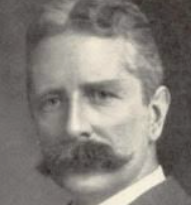
The spiritual men of India, a great and watchful multitude whose spiritual status is unattainable, are many of them catholics in a deeper sense than we of the West have yet given to the word ....
▼
Source
source
In his book, Two Letters, 1934
3 months 2 weeks ago
Love works magic. It is the final purpose Of the world story, The Amen of the universe.
3 months 2 weeks ago
And though this may seem to subtile a deduction of the Lawes of Nature, to be taken notice of by all men;whereof the most part are too busie in getting food, and the rest too negligent to understand; yet to leave all men unexcusable, they have been contracted into one easie sum, intelligble, even to the meanest capacity; and that is, Do not that to another, which thou wouldest not have done to thyselfe; which sheweth him, that he has no more to do in learning the Lawes of Nature, but, when weighing the actions of other men with his own, they seem too heavy, to put them into the other part of the balance, and his own into their place, that his own passions, and selfe love, may adde nothing to the weight; and then there is none of these Laws of Nature that will not appear unto him very reasonable.
▼
Source
source
The First Part, Chapter 15, p. 79

4 months 3 weeks ago
Only the skilled can judge the skilfulness, but that is not the same as judging the value of the result.
▼
Source
source
A Preface to Paradise Lost (1942), Chapter 2: "Is Criticism Possible?"
4 months 3 weeks ago
Very similar were the views expressed by Raymundus of Sabunde or Sabeyde, a Spaniard of the fifteenth century, and professor at Toulouse about the year 1437. In his theologia natural is, which he handled in a speculative spirit, he dealt with the Nature of things, and with the revelation of God in Nature and in the history of the God-man. He sought to prove to unbelievers the Being, the trinity, the incarnation, the life, and the revelation of God in Nature, and in the history of the God-man, basing his arguments on Reason. From the contemplation of Nature he rises to God; and in the same way he reaches morality from; observation of man's inner nature. This purer and simpler style must be set off against the other, if we are to do justice to the Scholastic theologians in their turn.
▼
Source
source
Georg Wilhelm Friedrich Hegel, Lectures on the Philosophy of History Vol 3 1837 translated by ES Haldane and Francis H. Simson) first translated 1896 P. 91-92
CivilSimian.com created by AxiomaticPanic, CivilSimian, Kalokagathia