

2 months 1 day ago
It is better to live under a tree in a jungle inhabited by tigers and elephants, to maintain oneself in such a place with ripe fruits and spring water, to lie down on grass and to wear the ragged barks of trees than to live amongst one's relations when reduced to poverty.
2 months 2 weeks ago
Be your money's master, not its slave.
▼
Source
source
Maxim 657

4 months 3 weeks ago
The perception of beauty is a moral test.
▼
Source
source
June 21, 1852

4 months 3 weeks ago
The criticism of religion ends with the doctrine that man is the supreme being for man, hence the categorical imperative to overthrow all those conditions in which man is degraded, enslaved, neglected, contemptible being-conditions which can hardly be better described than in the exclamation of a Frenchman on the occasion of a proposed tax upon dogs: 'Wretched dogs! They want to treat you like men!'

3 weeks ago
When, in the Course of human events, it becomes necessary for one people to dissolve the political bands which have connected them with another, and to assume among the powers of the earth, the separate and equal station to which the Laws of Nature and of Nature's God entitle them, a decent respect to the opinions of mankind requires that they should declare the causes which impel them to the separation.


5 months 6 days ago
So it is more useful to watch a man in times of peril, and in adversity to discern what kind of man he is; for then at last words of truth are drawn from the depths of his heart, and the mask is torn off, reality remains.
▼
Source
source
Book III, lines 55-58 (reported in Bartlett's Familiar Quotations)
3 months 2 weeks ago
Our dignity is not in what we do, but in what we understand. The whole world is doing things.
▼
Source
source
p. 199
3 months 2 weeks ago
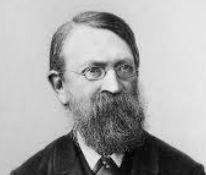
Scientists believe there is a hierarchy of facts and that among them may be made a judicious choice. They are right, since otherwise there would be no science... One need only open the eyes to see that the conquests of industry which have enriched so many practical men would never have seen the light, if these practical men alone had existed and if they had not been preceded by unselfish devotees who died poor, who never thought of utility, and yet had a guide far other than caprice.As Mach says, these devotees have spared their successors the trouble of thinking.
▼
Source
source
Henri Poincaré, The Value of Science (1907) Author's Essay Prefatory to the Translation: "The Choice of Facts," p.4, Tr. George Bruce Halsted

4 months 3 weeks ago
Talent works for money and fame; the motive which moves genius to productivity is, on the other hand, less easy to determine. It isn't money, for genius seldom gets any. It isn't fame: fame is too uncertain and, more closely considered, of too little worth. Nor is it strictly for its own pleasure, for the great exertion involved almost outweighs the pleasure. It is rather an instinct of a unique sort by virtue of which the individual possessed of genius is impelled to express what he has seen and felt in enduring works without being conscious of any further motivation. It takes place, by and large, with the same sort of necessity as a tree brings forth fruit, and demands of the world no more than a soil on which the individual can flourish.
▼
Source
source
Vol. 2 "On Philosophy and the Intellect" as translated in Essays and Aphorisms (1970), as translated by R. J. Hollingdale
1 month ago
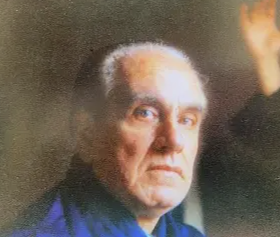
In our opinion, the task of a far-sighted policy of the Third Reich ought to have been that of seeking every possible means to obtain at least the neutrality of the western nations so as to have free hands for a devestating attack exclusively against the Soviet Union-but that would have required the shrewdness and genius of a Metternich.
▼
Source
source
pp. 81-82
3 months 2 weeks ago
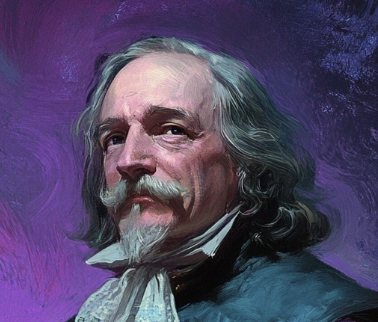
And the Science of them, is the true and onely Moral Philosophy. For Moral Philosophy is nothing else but the Science of what is Good, and Evill, in the conversation, and Society of mankind. Good, and Evill, are names that signify our Appetites, and Aversions; which in different tempers, customes, and doctrines of men, are different.
▼
Source
source
The First Part, Chapter 15, p. 79
4 months 1 week ago
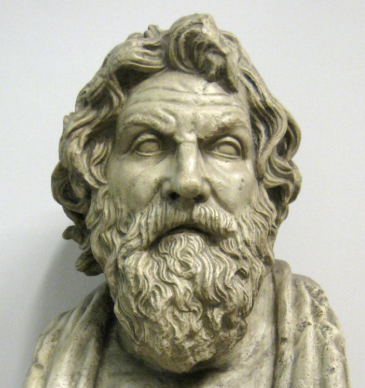
Ill repute is a good thing and much the same as pain.
▼
Source
source
§ 5

2 months 1 week ago
I now propose briefly to... set forth, in a form intelligible to those who possess no special acquaintance with anatomical science, the chief facts upon which all conclusions respecting the nature and the extent of the bonds which connect man with the brute world must be based: I shall then indicate the one immediate conclusion which, in my judgment, is justified by those facts, and I shall finally discuss the bearing of that conclusion upon the hypotheses which have been entertained respecting the Origin of Man.
▼
Source
source
Ch.2, p. 74
1 month 1 week ago
British rule in India is the most sordid and criminal exploitation of one nation by another in all recorded history. I propose to show that England has year by year been bleeding India to the point of death, and that self-government of India by the Hindus could not within any reasonable probability, have worse results than the present form of alien domination.
2 months 2 weeks ago
Any artist should be grateful for a naïve grace which puts him beyond the need to reason elaborately.
▼
Source
source
Foreword to The Closing of the American Mind by Allan Bloom
3 weeks ago
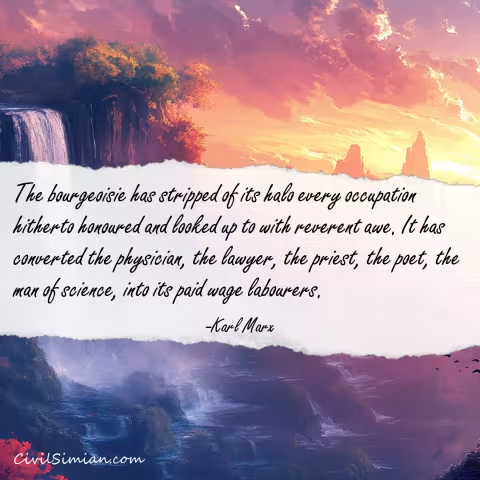
Merchants have no country. The mere spot they stand on does not constitute so strong an attachment as that from which they draw their gains. In every country and in every age, the priest has been hostile to liberty. He is always in alliance with the despot, abetting his abuses in return for protection to his own. It is easier to acquire them, and to effect this, they have perverted the best religion ever preached to man into mystery and jargon, unintelligible to all mankind, and therefore the safer engine for their purposes. With the lawyers it is a new thing. They have, in the mother country, been generally the primest supporters of the free principles of their constitution. But there, too, they have changed.
▼
Source
source
Letter to Horatio G. Spafford
2 months 3 weeks ago
Dying is nothing. You have to know how to disappear. Dying comes down to a biological chance and that is of no consequence. Disappearing is of a far higher order of necessity. You must not leave it to biology to decide when you will disappear. To disappear is to pass into an enigmatic state which is neither life nor death. Some animals know how to do this, as do savages, who withdraw while still alive, from the sight of their own people.

4 months 3 weeks ago
If any philosopher had been asked for a definition of infinity, he might have produced some unintelligible rigmarole, but he would certainly not have been able to give a definition that had any meaning at all.
▼
Source
source
Ch. 5: Mathematics and the Metaphysicians
4 months 1 week ago
For many, as Cranton tells us, and those very wise men, not now but long ago, have deplored the condition of human nature, esteeming life a punishment, and to be born a man the highest pitch of calamity; this, Aristotle tells us, Silenus declared when he was brought captive to Midas.

1 month 4 weeks ago
Humans kill one another - and in some cases themselves - for many reasons, but none is more human than the attempt to make sense of their lives. More than the loss of life, they fear loss of meaning.
▼
Source
source
In the Puppet Theatre: Roof Gardens, Feathers and Human Sacrifice (p. 87)
2 months 2 weeks ago
Every one excels in something in which another fails.
▼
Source
source
Maxim 17
2 months 1 week ago
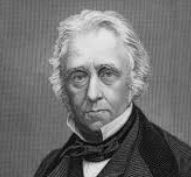
A life of action, if it is to be useful, must be a life of compromise. But speculation admits of no compromise. A public-man is often under the necessity of consenting to measures which he dislikes, lest he should endanger the success of measures which he thinks of vital importance.
▼
Source
source
War of the Succession in Spain', The Edinburgh Review (January 1833), quoted in T. B. Macaulay, Critical and Historical Essays Contributed to The Edinburgh Review, Vol. II (1843), p. 91

3 months 5 days ago
Now, obviously, the human race is on the point of an extremely interesting evolutionary development. The first step towards escape from this vicious circle is to recognize that the apparent "ordinariness" of the world is a delusion. If we could become deeply and permanently convinced that the world "out there" is endlessly exciting, we would never again allow ourselves to become trapped in the swamp of "taken-for-grantedness". And we would become practically unkillable. Shaw says of his "Ancients" in Back to Methuselah "Even in the moment of death, their life does not fail them". "Life failure" is that feeling that there is nothing new under the sun, and that we all have to accept defeat in the end. If we could learn the mental trick of causing the dynamo to accelerate, this illusion would never again be able to exert its power over us.
▼
Source
source
p. 14

2 months 2 weeks ago
Human vanity cherishes the absurd notion that our species is the final goal of evolution.
▼
Source
source
Chapter 3 "Accumulating Small Change" (p. 50)

3 months 6 days ago
The pursuit of mathematics is a divine madness of the human spirit.
▼
Source
source
Ch. 2: "Mathematics as an Element in the History of Thought", p. 30
1 month ago
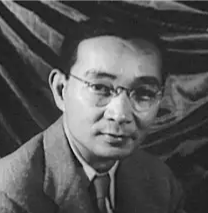
What is patriotism but love of the good things we ate in our childhood? I have said elsewhere that the loyalty to Uncle Sam is the loyalty to doughnuts and ham and sweet potatoes and the loyalty to the German Vaterland is the loyalty to Pfannkuchen and Christmas Stollen. As for international understanding, I feel that macaroni has done more for our appreciation of Italy than Mussolini... in food, as in death, we feel the essential brotherhood of mankind.
▼
Source
source
Ch. IV : On Having A Stomach, p. 46
1 month ago
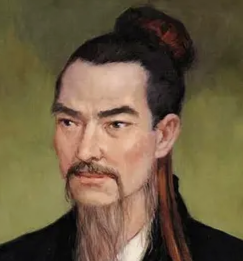
The purpose of the magnanimous is to be found in procuring benefits for the world and eliminating its calamities. ... Mutual attacks among states, mutual usurpation among houses, mutual injuries among individuals; the lack of grace and loyalty between ruler and ruled, the lack of affection and filial piety between father and son, the lack of harmony between elder and younger brothers - these are the major calamities in the world.
▼
Source
source
Book 4; Universal Love II

5 months 2 weeks ago
You have already grasped that Sisyphus is the absurd hero. He is, as much through his passions as through his torture. His scorn of the gods, his hatred of death, and his passion for life won him that unspeakable penalty in which the whole being is exerted toward accomplishing nothing. This is the price that must be paid for the passions of this earth. Nothing is told us about Sisyphus in the underworld. Myths are made for the imagination to breathe life into them.

3 months 1 day ago
It is in the gift for employing all the vicissitudes of life to one's own advantage and to that of one's craft that a large part of genius consists.
▼
Source
source
K 48
2 weeks 4 days ago
Nothing can come out of nothing, any more than a thing can go back to nothing.
▼
Source
source
IV, 4
4 months 3 weeks ago
The harm that is done by a religion is of two sorts, the one depending on the kind of belief which it is thought ought to be given to it, and the other upon the particular tenets believed. As regards the kind of belief: it is thought virtuous to have faith-that is to say, to have a conviction which cannot be shaken by contrary evidence. Or, if contrary evidence might induce doubt, it is held that contrary evidence must be suppressed.
▼
Source
source
preface xxiii
3 months 2 weeks ago
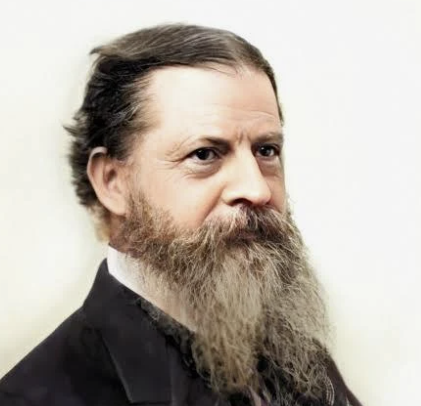
In the case of colors, there is a tridimensional spread of feelings. Originally all feelings may have been connected in the same way, and the presumption is that the number of dimensions was endless. For development essentially involves a limitation of possibilities. But given a number of dimensions of feeling, all possible varieties are obtainable by varying the intensities of the different elements.

2 months 4 days ago
I must write it all out, at any cost. Writing is thinking. It is more than living, for it is being conscious of living.
▼
Source
source
Locked Rooms and Open Doors

3 months 2 weeks ago
Reason ... contradicts the established order of men and things on behalf of existing societal forces that reveal the irrational character of this order - for "rational" is a mode of thought and action which is geared to reduce ignorance, destruction, brutality, and oppression.
▼
Source
source
pp. 141-142

3 months 2 weeks ago
To suffer is the great modality of taking the world seriously.

5 months 1 week ago
The dominion of bad men is hurtful chiefly to themselves who rule, for they destroy their own souls by greater license in wickedness; while those who are put under them in service are not hurt except by their own iniquity. For to the just all the evils imposed on them by unjust rulers are not the punishment of crime, but the test of virtue. Therefore the good man, although he is a slave, is free; but the bad man, even if he reigns, is a slave, and that not of one man, but, what is far more grievous, of as many masters as he has vices; of which vices when the divine Scripture treats, it says, For of whom any man is overcome, to the same he is also the bond-slave.
▼
Source
source
IV, 3 Variant translation: The good man, though a slave, is free; the wicked, though he reigns, is a slave, and not the slave of a single man, but — what is worse — the slave of as many masters as he has vices.

4 months 3 weeks ago
From the winter of 1821, when I first read Bentham, and especially from the commencement of the Westminster Review, I had what might truly be called an object in life; to be a reformer of the world. My conception of my own happiness was entirely identified with this object. The personal sympathies I wished for were those of fellow labourers in this enterprise. I endeavoured to pick up as many flowers as I could by the way; but as a serious and permanent personal satisfaction to rest upon, my whole reliance was placed on this...
▼
Source
source
(p. 132)
2 weeks 4 days ago
To change your mind and to follow him who sets you right is to be nonetheless the free agent that you were before. Remember that to change thy opinion and to follow him who corrects thy error is as consistent with freedom as it is to persist in thy error.
▼
Source
source
(Long translation) VIII, 16

4 months 3 weeks ago
Avarice, the spur of industry, is so obstinate a passion, and works its way through so many real dangers and difficulties, that it is not likely to be scared by an imaginary danger, which is so small, that it scarcely admits of calculation. Commerce, therefore, in my opinion, is apt to decay in absolute governments, not because it is there less secure, but because it is less honourable.
▼
Source
source
Part I, Essay 12: Of Civil Liberty
3 months 2 weeks ago
And whereas many men, by accident unevitable, become unable to maintain themselves by their labour; they ought not to be left to the Charity of private persons; but to be provided for, (as far-forth as the necessities of Nature require,) by the Lawes of the Common-wealth. For as it is Unchariablenesse in any man, to neglect the impotent; so it is in the Soveraign of a Common-wealth, to expose them to the hazard of such uncertain Charity.
▼
Source
source
The Second Part, Chapter 30, p. 181
2 months 4 days ago
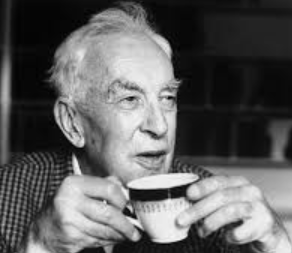
The difference between a Humanist and a lunatic is in fact one of degree.
▼
Source
source
Vol. 9
5 months 2 weeks ago
The greatest and noblest conceptions have no image wrought plainly for human vision, which he who wishes to satisfy the mind of the inquirer can apply to some one of his senses and by mere exhibition satisfy the mind. We must therefore endeavor by practice to acquire the power of giving and understanding a rational definition of each one of them; for immaterial things, which are the noblest and greatest, can be exhibited by reason only, and it is for their sake that all we are saying is said. But it is always easier to practice in small matters than in greater ones.
1 month 2 days ago
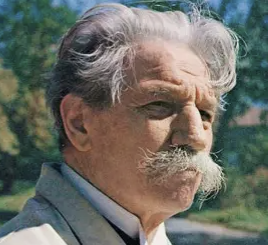
I don't know what your destiny will be, but one thing I know, the only ones among you who will be really happy are those who have sought and found how to serve.
▼
Source
source
Widely attributed to Schwietzer online, no known original source.
5 months 4 days ago
They men have corrupted this order by making profane things what they should make of holy things, because in fact, we believe scarcely any thing except which pleases us.

3 months 2 weeks ago
Aion is a child at play, gambling; a child's is the kingship. Telesphorus traverses the dark places of the world, like a star flashing from the deep, leading the way to the gates of the sun and the land of dreams.
▼
Source
source
Combining fragments of Heraclitus and Homer

1 month 2 weeks ago
The capitalist call workers to the factory, for example, directing them to collaborate and communicate in production and giving them the means to do so. In the paradigm of immaterial production, in contrast, labor itself tends to produce the means of interaction, communication, and cooperation for production directly. Affective labor always directly constructs a relationship.
▼
Source
source
147

4 months 3 weeks ago
One always speaks badly when one has nothing to say.
▼
Source
source
1827
3 months 2 weeks ago
It has been a long time since philosophers have read men's souls. It is not their task, we are told. Perhaps. But we must not be surprised if they no longer matter much to us.

4 months 1 week ago
Thou shouldst not become presumptuous through life; for death comes upon thee at last, and the perishable part falls to the ground.
CivilSimian.com created by AxiomaticPanic, CivilSimian, Kalokagathia