

4 months 3 weeks ago
It is hardly in human nature that a man should quite accurately gauge the limits of his own insight; but it is the duty of those who profit by his work to consider carefully where he may have been carried beyond it. If we must needs embalm his possible errors along with his solid achievements, and use his authority as an excuse for believing what he cannot have known, we make of his goodness an occasion to sin.
9 months 3 weeks ago
These people who have fled inward for their freedom also have to live outwardly, become visible, let themselves be seen; they are united with mankind through countless ties of blood, residence, education, fatherland, chance, the importunity of others; they are likewise presupposed to harbour countless opinions simply because these are the ruling opinions of the time; every gesture which is not clearly a denial counts as agreement.

8 months 2 weeks ago
In the tragedies of the early seventeenth century, madness too provided the dénouement, but it did so in liberating the truth. It still opened onto language, to a renewed form of speech, that of explanation and of the real regained. The most it could ever be was the penultimate moment of tragedy. Not the closing moment, as in Andromaque, where no truth appears, other than, in Delirium, the truth of a passion that finds its fullest, most perfect expression in madness.
▼
Source
source
Part Two: 2. The Transcendence of Delirium

8 months 3 weeks ago
A gun gives you the body, not the bird.
▼
Source
source
Quoted by Ralph Waldo Emerson, in C. J. Woodbury (ed.) Talks with Ralph Waldo Emerson, 1890

5 months 2 weeks ago
Jesus, in some respects, was an anarchist, for he had no idea of civil government. That government seems to him purely and simply an abuse.
▼
Source
source
Ch. 7.

7 months 1 week ago
And he arrives at the cogito ergo sum, which St. Augustine had already anticipated... "I think therefore I am," can only mean "I think, therefore I am a thinker"; this being of "I am," which is deduced from "I think," is merely a knowing; this being is a knowledge, but not life. And the primary reality is not that I think, but that I live, for those also live who do not think. Although this living may not be a real living. God! what contradictions when we seek to join in wedlock life and reason!
4 months 2 weeks ago
We hear only ourselves.

8 months 3 weeks ago
Long discourses, and philosophical readings, at best, amaze and confound, but do not instruct children. When I say, therefore, that they must be treated as rational creatures, I mean that you must make them sensible, by the mildness of your carriage, and in the composure even in the correction of them, that what you do is reasonable in you, and useful and necessary for them; and that it is not out of caprichio, passion or fancy, that you command or forbid them any thing.
▼
Source
source
Sec. 81
9 months 1 week ago
It is the way of the superior man to prefer the concealment of his virtue, while it daily becomes more illustrious, and it is the way of the mean man to seek notoriety, while he daily goes more and more to ruin. It is characteristic of the superior man, appearing insipid, yet never to produce satiety; while showing a simple negligence, yet to have his accomplishments recognized; while seemingly plain, yet to be discriminating. He knows how what is distant lies in what is near. He knows where the wind proceeds from. He knows how what is minute becomes manifested. Such a one, we may be sure, will enter into virtue.

7 months 2 weeks ago
Life is possible only by the deficiencies of our imagination and memory.

4 months 3 weeks ago
I come into the presence of still water. And I feel above me the day-blind stars waiting with their light. For a time I rest in the grace of the world, and am free.
▼
Source
source
The Peace of Wild Things in Green River Review, No. 1
7 months 2 weeks ago
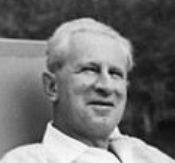
The happy consciousness is shaky enough-a thin surface over fear, frustration, and disgust.
▼
Source
source
p. 76
7 months 3 weeks ago
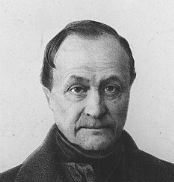
In the final, positive state, the mind has given over the vain search after Abolute notions, the origin and destination of the universe, and the cause of phenomenon, and applies itself to the tudy of their laws, - that is, their invariable relations of succession and resemblance. Reasoning and observation, duly combined, are the means of this knowledge. What is now understood when we speak of an explanation of the facts is simply the establishment of a connection between single phenomena and some general facts, the number of which continually diminishes with the progress of science.
▼
Source
source
Vol I

8 months 2 weeks ago
He is dead, and my hatred has died with him.
▼
Source
source
Electra, before the dead Aegistheus, Act 2
7 months 3 weeks ago
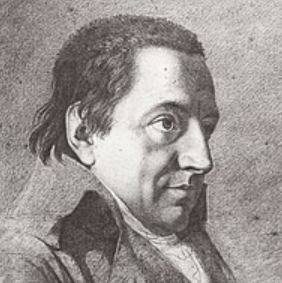
The voice in my soul in which I will have faith, and for the sake of which I have faith in all else, does not merely command me generally to act, but in every particular situation it declares what I shall do and what leave undone; it accompanies me through every event of my life, and it is impossible for me to contend against it. To listen to it and obey it honestly and impartially, without fear or equivocation, is the business of my existence. My life is no longer an empty I play without truth or significance. It is appointed that what I conscience ordains me shall be done, and for this purpose am I here. I have understanding to know, and power to execute it. By conscience alone comes truth and reality into my representations.
▼
Source
source
Jane Sinnett, trans 1846 p. 77
4 months 3 weeks ago
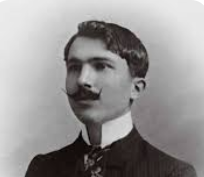
I strive to discover how to signal my companions before I die, how to give them a hand, how to spell out for them in time one complete word at least, to tell them what I think this procession is, and toward what we go. And how necessary it is for all of us together to put our steps and hearts in harmony. To say in time a simple word to my companions, a password, like conspirators. Yes, the purpose of Earth is not life, it is not man. Earth has existed without these, and it will live on without them. They are but the ephemeral sparks of its violent whirling. Let us unite, let us hold each other tightly, let us merge our hearts, let us create - so long as the warmth of this earth endures, so long as no earthquakes, cataclysms, icebergs or comets come to destroy us - let us create for Earth a brain and a heart, let us give a human meaning to the superhuman struggle. This anguish is our second duty.
5 months 2 weeks ago
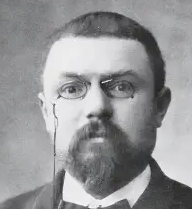
It is often said that experiments should be made without preconceived ideas. That is impossible. Not only would it make every experiment fruitless, but even if we wished to do so, it could not be done. Every man has his own conception of the world, and this he cannot so easily lay aside. We must, for example, use language, and our language is necessarily steeped in preconceived ideas.
▼
Source
source
Ch. IX: Hypotheses in Physics, Tr. George Bruce Halsted
8 months 3 weeks ago
This freedom from absolute, arbitrary power, is so necessary to, and closely joined with a man's preservation, that he cannot part with it, but by what forfeits his preservation and life together: for a man, not having the power of his own life, cannot, by compact, or his own consent, enslave himself to any one, nor put himself under the absolute, arbitrary power of another, to take away his life, when he pleases.
▼
Source
source
Second Treatise of Civil Government, Ch. IV, sec. 23

8 months 2 weeks ago
Even atheists rebel and express, like Hardy and Housman, their rage against God although (or because) He does not, on their view, exist...
7 months 1 week ago
Not only are we unable to conceive of the full and living God as masculine simply, but we are unable to conceive of Him as individual simply, as the projection of a solitary I, an unsocial I, an I that is in reality an abstract I. My living I is an I that is really a We; my living personal I lives only in other, of other, and by other I's; I am sprung from a multitude of ancestors. I carry them within me in extract, and at the same time I carry within me, potentially, a multitude of descendants, and God, the projection of my I to the infinite - or rather I, the projection of God to the finite - must also be a multitude. Hence, in order to save the personality of God - that is to say, in order to save the living God - faith's need - the need of the feeling and the imagination - of conceiving Him and feeling Him as possessed of a certain internal multiplicity.

8 months 2 weeks ago
To convince someone of the truth, it is not enough to state it, but rather one must find the path from error to truth.
▼
Source
source
Ch. 7 : Remarks on Frazer's Golden Bough, p. 119
8 months 1 week ago
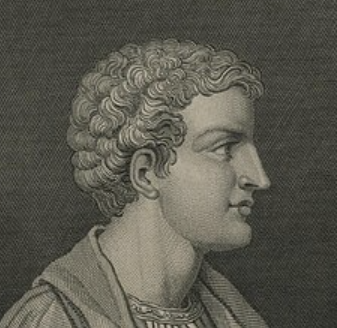
It is your concern when your neighbor's wall is on fire.
▼
Source
source
Book I, epistle xviii, line 84
8 months 3 weeks ago
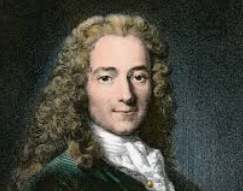
All men would then be necessarily equal, if they were without needs. It is the poverty connected with our species which subordinates one man to another. It is not inequality which is the real misfortune, it is dependence.
▼
Source
source
"Equality", 1764

9 months 5 days ago
For as children tremble and fear everything in the blind darkness, so we in the light sometimes fear what is no more to be feared than the things that children in the dark hold in terror and imagine will come true. This terror, therefore, and darkness of mind must be dispelled not by the rays of the sun and glittering shafts of daylight, but by the aspect and law of nature.
▼
Source
source
Book II, lines 55-61 (tr. Rouse)

8 months 1 week ago
Living a minimally acceptable ethical life involves using a substantial part of our spare resources to make the world a better place. Living a fully ethical life involves doing the most good we can.
▼
Source
source
Preface (p. vii)

8 months 3 weeks ago
To discover the various use of things is the work of history.
▼
Source
source
Vol. I, Ch. 1, Section 1, pg. 42.

6 months 5 days ago
The ideology of development has implied the globalization of the priorities, patterns, and prejudices of the West. Instead of self-generated, development is imposed. Instead of coming from within, it is externally guided. Instead of contributing to the maintenance of diversity, development has created homogeneity...
▼
Source
source
Monocultures of the Mind: Perspectives on Biodiversity and Biotechnology
7 months 3 weeks ago
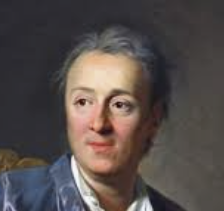
We are far more liable to catch the vices than the virtues of our associates.
▼
Source
source
As quoted in Thesaurus of Epigrams: A New Classified Collection of Witty Remarks, Bon Mots and Toasts (1942) by Edmund Fuller

8 months 4 weeks ago
Truly man is a marvellously vain, diverse, and undulating object. It is hard to found any constant and uniform judgement on him.
▼
Source
source
Ch. 1. That Men by various Ways arrive at the same End (tr. Donald M. Frame)Cotton, rev. W. Hazlitt, 1842
8 months 4 weeks ago
Covetousness is both the beginning and the end of the devil's alphabet- the first vice in corrupt nature that moves, and the last which dies.

7 months 2 weeks ago
Life is not, and death is a dream. Suffering has invented them both as self-justification. Man alone is torn between an unreality and an illusion.

8 months 3 weeks ago
False and doubtful positions, relied upon as unquestionable maxims, keep those who build on them in the dark from truth. Such are usually the prejudices imbibed from education, party, reverence, fashion, interest, et cetera.
▼
Source
source
Book IV, Ch. 7
6 months 4 days ago
I ... understand why the saints were rarely married women. I am convinced it has nothing inherently to do, as I once supposed, with chastity or children. It has primarily to do with distractions ... Women's normal occupations in general run counter to creative life, or contemplative life or saintly life.
▼
Source
source
Ch. 2

8 months 3 weeks ago
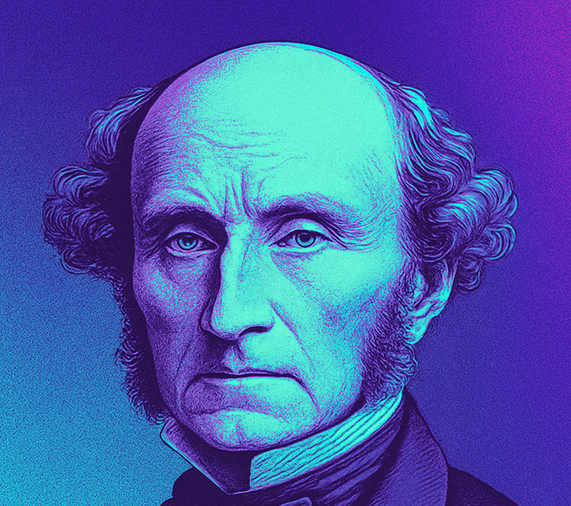
Moreover, if the character is formed, and the mind made up, on the few cardinal points of human opinion, agreement of conviction and feeling on these, has been felt in all times to be an essential requisite of anything worthy the name of friendship, in a really earnest mind. All these circumstances united, made the number very small of those whose society, and still more whose intimacy, I now voluntarily sought.
▼
Source
source
(p. 229)
8 months 3 days ago
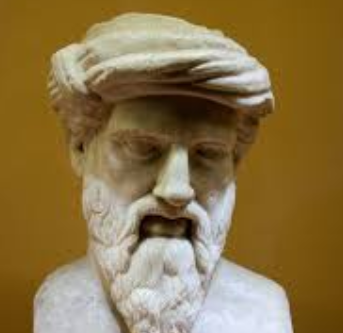
Many words befall men, mean and noble alike; do not be astonished by them, nor allow yourself to be constrained. If a lie is told, bear with it gently. But whatever I tell you, let it be done completely. Let no one persuade you by word or deed to do or say whatever is not best for you.
▼
Source
source
As quoted in Divine Harmony: The Life and Teachings of Pythagoras by John Strohmeier and Peter Westbrook.

7 months 2 weeks ago
I disclose my mysteries to those who are worthy of my mysteries.
8 months 2 weeks ago
A teacher who can show good, or indeed astounding results while he is teaching, is still not on that account a good teacher, for it may be that, while his pupils are under his immediate influence, he raises them to a level which is not natural to them, without developing their own capacities for work at this level, so that they immediately decline again once the teacher leaves the schoolroom.
▼
Source
source
p. 43e

4 months 3 weeks ago
As you say of yourself, I too am an Epicurian. I consider the genuine (not the imputed) doctrines of Epicurus as containing everything rational in moral philosophy which Greece and Rome have left us.
▼
Source
source
Letter to William Short
9 months ago
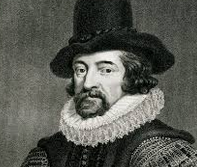
The human understanding is of its own nature prone to suppose the existence of more order and regularity in the world than it finds. And though there be many things in nature which are singular and unmatched, yet it devises for them parallels and conjugates and relatives which do not exist. Hence the fiction that all celestial bodies move in perfect circles, spirals and dragons being (except in name) utterly rejected.
▼
Source
source
Aphorism 45
4 months 4 weeks ago
Immortality is the privilege of the few, and, according to the Aryan conception, specifically the privilege of heroes. Continuing to live - not as a shadow, but as a demigod - is reserved to those which a special spiritual action has elevated from the one nature to the other.
▼
Source
source
p. 102

8 months 4 weeks ago
This adoration, too, was not the same as the worship of God. In my opinion they did not yet recognize him as God, but they acted in keeping with the custom mentioned in Scripture, according to which Kings and important people were worshiped; this did not mean more than falling down before them at their feet and honoring them.
▼
Source
source
Sermon on The Gospel for the Festival of the Epiphany, 1522. Luther's Works, American Ed., Hans J. Hillerbrand, Helmut T. Lehmann eds., Philadelphia, Concordia Publishing House/Fortress Press, 1974, ISBN 0800603524 (Sermons II), vol. 52:198
CivilSimian.com created by AxiomaticPanic, CivilSimian, Kalokagathia