"Critical Path is a way to dig yourself out from all that misinformation."
- Buckminster Fuller
See biography for Buckminster Fuller:
https://civilsimian.com/Buckminster-Fuller
Read Buckminster Fuller's work:
https://civilsimian.com/user/280/content



If I knew for a certainty that a man was coming to my house with the conscious design of doing me good, I should run for my life.
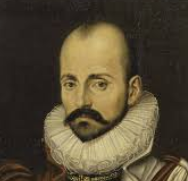
I live from day to day, and content myself with having enough to meet my present and ordinary needs; for the extraordinary, all the provision in the world could not suffice.

To believe is to know you believe, and to know you believe is not to believe.

I feel that I have within me a medieval soul, and I believe that the soul of my country is medieval, that it has perforce passed through the Renaissance, the Reformation, and the Revolution - learning from them, yes, but without allowing them to touch the soul, preserving the spiritual inheritance which has come down from what are called the Dark Ages. And Quixotism is simply the most desperate phase of the struggle between the Middle Ages and the Renaissance, which was the offering of the Middle Ages.

When thou art offended at any man's fault, forthwith turn to thyself and reflect in what manner thou doest error thyself... For by attending to this thou wilt quickly forget thy anger, if this consideration is also added, that the man is compelled; for what else could he do? or, if thou art able, take away from him the compulsion.

The question here is the same as the question I addressed with regard to madness, disease, delinquency and sexuality. In all of these cases, it was not a question of showing how these objects were for a long time hidden before being finally discovered, nor of showing how all these objects are only wicked illusions or ideological products to be dispelled in the light of reason finally having reached its zenith. It was a matter of showing by what conjunctions a whole set of practices-from the moment they become coordinated with a regime of truth-was able to make what does not exist (madness, disease, delinquency, sexuality, etcetera), nonetheless become something.

There are two forms of knowledge, one genuine, one obscure. To the obscure belong all of the following: sight, hearing, smell, taste, feeling. The other form is the genuine, and is quite distinct from this. [And then distinguishing the genuine from the obscure, he continues:] Whenever the obscure [way of knowing] has reached the minimum sensibile of hearing, smell, taste, and touch, and when the investigation must be carried farther into that which is still finer, then arises the genuine way of knowing, which has a finer organ of thought.
Whenever I have read any part of the Vedas, I have felt that some unearthly and unknown light illuminated me. In the great teaching of the Vedas, there is no touch of sectarianism. It is of all ages, climes and nationalities and is the royal road for the attainment of the Great Knowledge. When I am at it, I feel that I am under the spangled heavens of a summer night.
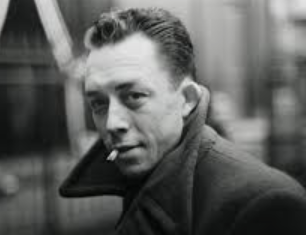
A man is more a man through the things he keeps to himself than through those he says.

A large part of mankind is angry not with the sins, but with the sinners.

There never, gentlemen, was a period in which the steadfastness of some men has been nut to so sore a trial. It is not very difficult for well-formed minds to abandon their interest; but the separation of fame and virtue is an harsh divorce. Liberty is in danger of being made unpopular to Englishmen. Contending for an imaginary power, we begin to acquire the spirit of domination, and to lose the relish of honest equality.

She became the Mother of God, in which work so many and such great good things are bestowed on her as pass man's understanding. For on this there follows all honor, all blessedness, and her unique place in the whole of mankind, among which she has no equal, namely, that she had a child by the Father in heaven, and such a Child.... Hence men have crowded all her glory into a single word, calling her the Mother of God.... None can say of her nor announce to her greater things, even though he had as many tongues as the earth possesses flowers and blades of grass: the sky, stars; and the sea, grains of sand. It needs to be pondered in the heart what it means to be the Mother of God.
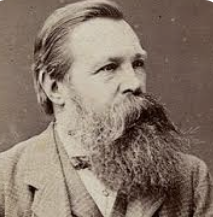
The slave is outside competition; the proletarian is in it and experiences all its vagaries.

The premonition of madness is complicated by the fear of lucidity in madness, the fear of the moments of return and reunion, when the intuition of disaster is so painful that it almost provokes a greater madness. One would welcome chaos if one were not afraid of lights in it.
Faith which does not doubt is dead faith.
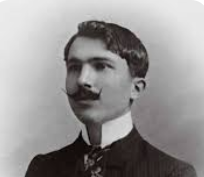
I put my body through its paces like a war horse; I keep it lean, sturdy, prepared. I harden it and I pity it. I have no other steed. I keep my brain wide awake, lucid, unmerciful. I unleash it to battle relentlessly so that, all light, it may devour the darkness of the flesh. I have no other workshop where I may transform darkness into light. I keep my heart flaming, courageous, restless. I feel in my heart all commotions and all contradictions, the joys and sorrows of life. But I struggle to subdue them to a rhythm superior to that of the mind, harsher than that of my heart - to the ascending rhythm of the Universe.

Passing from quantity to quality of population, we come to the question of eugenics. We may perhaps assume that, if people grow less superstitious, government will acquire the right to sterilize those who are not considered desirable as parents. This power will be used, at first, to diminish imbecility, a most desirable object. But probably, in time, opposition to the government will be taken to prove imbecility, so that rebels of all kinds will be sterilized. Epileptics, consumptives, dipsomaniacs and so on will gradually be included; in the end, there will be a tendency to include all who fail to pass the usual school examinations. The result will be to increase the average intelligence; in the long run, it may be greatly increased. But probably the effect upon really exceptional intelligence will be bad. Mr. Micawber, who was Dickens's father, would hardly have been regarded as a desirable parent. How many imbeciles ought to outweigh one Dickens I do not profess to know.

I have lived through much, and now I think I have found what is needed for happiness. A quiet secluded life in the country, with the possibility of being useful to people to whom it is easy to do good, and who are not accustomed to have it done to them; then work which one hopes may be of some use; then rest, nature, books, music, love for one's neighbor -- such is my idea of happiness. And then, on the top of all that, you for a mate, and children perhaps -- what more can the heart of man desire?

Behind man lies the abyss, nothingness; the Outsider knows this; it is his business to sink claws of iron into life to grasp it tighter than the indifferent bourgeois, to build, to Will, in spite of the abyss.
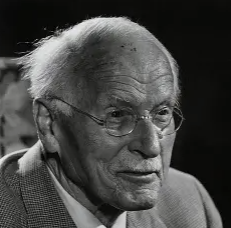
When one is not understood one should as a rule lower one's voice, because when one really speaks loudly enough and is not heard, it is because people do not want to hear. One had better begin to mutter to oneself, then they get curious.

Too much consistency is as bad for the mind as it is for the body. Consistency is contrary to nature, contrary to life. The only completely consistent people are the dead. Consistent intellectualism and spirituality may be socially valuable, up to a point; but they make, gradually, for individual death.
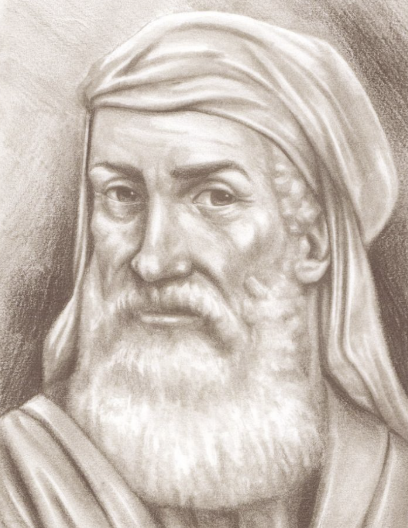
Nothing of the All is either empty or superfluous.
Useless laws weaken the necessary laws.
What is called politics is comparatively something so superficial and inhuman, that, practically, I have never fairly recognized that it concerns me at all. The newspapers, I perceive, devote some of their columns specially to politics or government without charge; and this, one would say, is all that saves it; but, as I love literature, and, to some extent, the truth also, I never read those columns at any rate. I do not wish to blunt my sense of right so much.
It is no longer a question anywhere of inventing interconnections from out of our brains, but of discovering them in the facts.
Having seen that I was not capable of using all my resources in political action, I returned to my literary activity. There lay the battlefield suited to my temperament. I wanted to make my novels the extension of my own father's struggle for liberty. But gradually, as I kept deepening my responsibility as a writer, the human problem came to overshadow political and social questions. All the political, social, and economic improvements, all the technical progress cannot have any regenerating significance, so long as our inner life remains as it is at present. The more the intelligence unveils and violates the secrets of Nature, the more the danger increases and the heart shrinks.
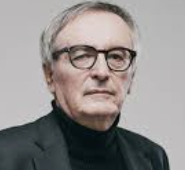
The belief that torture is always wrong is a prejudice inherited from an obsolete philosophy. We need to shed the belief that human rights are violated when a terrorist is tortured. As Rawls and others have shown, basic freedoms must form a coherent whole. Self-evidently, there can be no right to attack basic human rights. Therefore, once the proper legal procedures are in place, torturing terrorists cannot violate their rights. In fact, in a truly liberal society, terrorists have an inalienable right to be tortured.This is what demonstrates the moral superiority of liberal societies over others, past and present. Other societies have degraded terrorists by subjecting them to lawless and unaccountable power. In the new world that is taking shape, terrorists, although they themselves degrade human rights by practising terrorism, will be afforded the full dignity of due legal process, even while being tortured.
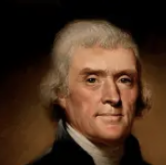
There is an error into which most of the speculators on government have fallen, and which the well-known state of society of our Indians ought, before now, to have corrected. In their hypothesis of the origin of government, they suppose it to have commenced in the patriarchal or monarchical form. Our Indians are evidently in that state of nature which has passed the association of a single family... The Cherokees, the only tribe I know to be contemplating the establishment of regular laws, magistrates, and government, propose a government of representatives, elected from every town. But of all things, they least think of subjecting themselves to the will of one man.

Wisdom is passionless. But faith by contrast is what Kierkegaard calls a passion.

Your god is too small.
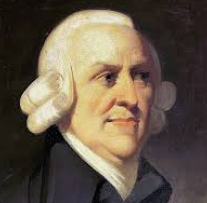
The commodities of Europe were almost all new to America, and many of those of America were new to Europe. A new set of exchanges, therefore, began..and which should naturally have proved as advantageous to the new, as it certainly did to the old continent. The savage injustice of the Europeans rendered an event, which ought to have been beneficial to all, ruinous and destructive to several of those unfortunate countries.
The ascetic morality is a negative morality. And strictly, what is important for a man is not to die, whether he sins or not.
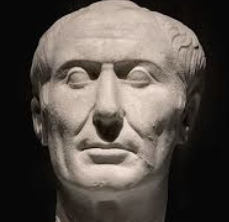
Life is short, but its ills make it seem long.
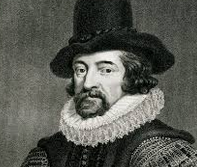
For a man to love again where he is loved, it is the charity of publicans contracted by mutual profit and good offices; but to love a man's enemies is one of the cunningest points of the law of Christ, and an imitation of the divine nature.
The violence and injustice of the rulers of mankind is an ancient evil, for which, I am afraid, the nature of human affairs can scarce admit a remedy.
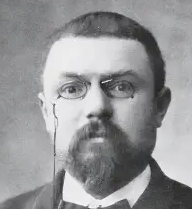
What we call objective reality is, in the last analysis, what is common to many thinking beings, and could be common to all; this common part, we shall see, can only be the harmony expressed by mathematical laws. It is this harmony... which is the sole objective reality, the only truth we can attain; and when I add that the universal harmony of the world is the source of all beauty, it will be understood what price we should attach to the slow and difficult progress which little by little enables us to know it better.
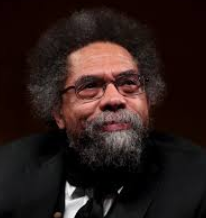
Harvard now, I think, suffers from a kind of self-idolatry, that it needs to be critical of itself in order to grow. And again, if you can be in contact with the best of its past, then it's got a chance. But if it just remains well adjusted to the status quo, generating careerist and opportunist students rather than critically oriented students who have a heart and soul, concerned about suffering here and around the world - then Harvard has a chance. I'm not giving up on Harvard, but I am making my way to New York.
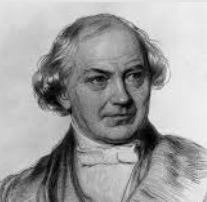
New terms and changes of terms, which are not needed in order to express truth, are to be avoided.

Might is that which makes a thing of anybody who comes under its sway. When exercised to the full, it makes a thing of man in the most literal sense, for it makes him a corpse.
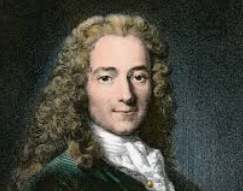
All styles are good except the boring kind.
Self-pity is not as sterile as we suppose. Once we feel its mere onset, we assume a thinker's attitude, and come to think of it, we come to think!

The President ... may err ... Congress may decide amiss ... But if the Supreme Court is ever composed of imprudent or bad men, the Union may be plunged into anarchy or civil war.
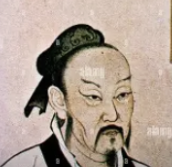
If the king loves music, there is little wrong in the land.

You have not that power you ought to have over him, till he comes to be more afraid of offending so good a friend than of losing some part of his future expectation.
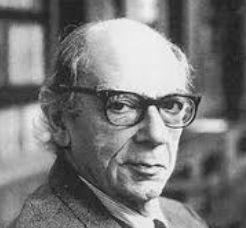
The very desire for guarantees that our values are eternal and secure in some objective heaven is perhaps only a craving for the certainties of childhood or the absolute values of our primitive past.
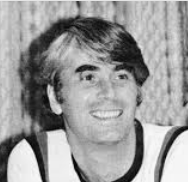
One persistent strand in utopian thinking, as we have often mentioned, is the feeling that there is some set of principles obvious enough to be accepted by all men of good will, precise enough to give unambiguous guidance in particular situations, clear enough so that all will realize its dictates, and complete enough to cover all problems which actually arise. Since I do not assume that there are such principles, I do not presume that the political realm will whither away. The messiness of the details of a political apparatus and the details of how it is to be controlled and limited do not fit easily into one's hopes for a sleek, simple utopian scheme.
CivilSimian.com created by AxiomaticPanic, CivilSimian, Kalokagathia