


7 months 3 days ago
The terrible struggle of the thinking man and woman against political, social and moral conventions owes its origin to the family, where the child is ever compelled to battle against the internal and external use of force. The categorical imperatives: You shall! you must! this is right! that is wrong! this is true! that is false! shower like a violent rain upon the unsophisticated head of the young being and impress upon its sensibilities that it has to bow before the long established and hard notions of thoughts and emotions.
8 months 4 weeks ago
It would be an unsound fancy and self-contradictory to expect that things which have never yet been done can be done except by means which have never yet been tried.
▼
Source
source
Aphorism 6

7 months 3 weeks ago
In the deep discovery of the Subterranean world, a shallow part would satisfy some enquirers.
▼
Source
source
Chapter I

8 months 2 weeks ago
There are, besides, eternal truths, such as Freedom, Justice, etc., that are common to all states of society. But Communism abolishes eternal truths, it abolishes all religion, and all morality, instead of constituting them on a new basis; it therefore acts in contradiction to all past historical experience.
▼
Source
source
Section 2, paragraph 63

8 months 2 weeks ago
Many Catholic mystics have affirmed that, at a certain stage of that contemplative prayer in which, according to the most authoritative theologians, the life of Christian perfection ultimately consists, it is necessary to put aside all thought of the Incarnation as distracting from the higher knowledge of that which has been incarnated. From this fact have arisen misunderstandings in plenty and a number of intellectual difficulties.
7 months 2 weeks ago
Blessed be the hour in which I was first led to inquire into my own spiritual nature and destination! All my doubts are removed; I know what I can know, and have no fears for what I cannot know. I am satisfied; perfect clearness and harmony reign in my soul, and a new and more glorious existence begins for me. My entire destiny I cannot comprehend; what I am to become, exceeds my present power of conception. A part, which is concealed from me, is visible to the father of spirits. I know only that it is secure, everlasting and glorious. That part of it which is confided to me I know, for it is the root of all my other knowledge.
▼
Source
source
Jane Sinnett, trans 1846 p.120
9 months 2 weeks ago
The orators and the despots have the least power in their cities since they do nothing that they wish to do, practically speaking, though they do whatever they think to be best.

6 months 4 weeks ago
I think part of the appeal of mathematical logic is that the formulas look mysterious - you write backward Es!
▼
Source
source
Putnam as quoted in: Julian Baggini, Jeremy Stangroom (2005) What Philosophers Think. p. 233
7 months 1 week ago
Our questions and answers are in part determined by the historical tradition in which we find ourselves. We apprehend truth from our own source within the historical tradition. The content of our truth depends upon our appropriating the historical foundation. Our own power of generation lies in the rebirth of what has been handed down to us. If we do not wish to slip back, nothing must be forgotten; but if philosophising is to be genuine our thoughts must arise from our own source. Hence all appropriation of tradition proceeds from the intentness of our own life. The more determinedly I exist, as myself, within the conditions of the time, the more clearly I shall hear the language of the past, the nearer I shall feel the glow of its life.

5 months 1 week ago
I esteem the modern error, That all goes by self-interest and the checking and balancing of greedy knaveries, and that in short, there is nothing divine whatever in the association of men, a still more despicable error, natural as it is to an unbelieving century, than that of a "divine right" in people called Kings. I say, Find me the true Konning, King, or Able-man, and he has a divine right over me.

8 months 2 weeks ago
The sublime is excited in me by the great stoical doctrine, Obey thyself.
▼
Source
source
p. 14
8 months 3 weeks ago
The spurious axioms of the third kind from conditions proper to the subject whence they are transferred rashly to the object are plentiful, not, as in those of the Second Class, because the only way to the intellectual concept lies through the sensuous data, but because only by aid of the latter can the concept be applied to that which is given by experience, that is, can we know whether something is contained under a certain intellectual concept or not. To this class belongs the threadbare one of the schools: whatever exists contingently does at some time not exist. This spurious principle springs from the poverty of the intellect, having insight frequently into the nominal, rarely into the real, marks of contingency or necessity.
6 months 2 weeks ago
There has been progress in design, but not progress in accomplishment.
▼
Source
source
Chapter 7 "Constructive Evolution" (p. 186)
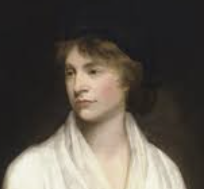
7 months 2 weeks ago
It is the preservation of the species, not of individuals, which appears to be the design of Deity throughout the whole of nature.
▼
Source
source
Letter 22
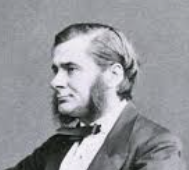
6 months 6 days ago
Within the last half century, the labours of such men as Von Baer, Rathke, Reichert, Bischof, and Remak, have almost completely unravelled... the successive stages of development which... are now as well known to the embryologist as are the steps of the metamorphosis of the silk-worm moth to the school boy.
▼
Source
source
Ch.2, p. 75

4 months 2 weeks ago
"Earth loves the rain, the proud sky loves to give it." The whole world loves to create futurity. I say then to the world, "I share your love." Is this not the source of the phrase, "This loves to happen"?
▼
Source
source
X, 21
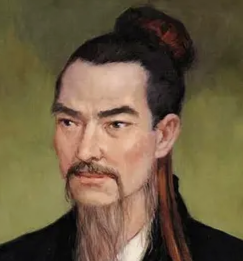
4 months 4 weeks ago
If the rulers sincerely desire the empire to be wealthy and dislike to have it poor, desire to have it orderly and dislike to have it chaotic, they should bring about universal love and mutual aid. This is the way of the sage-kings and the way to order for the world, and it should not be neglected.
▼
Source
source
Book 4; Universal Love II
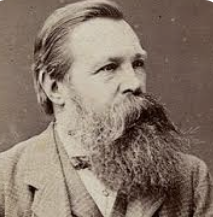
7 months 2 weeks ago
The capitalists soon had everything in their hands and nothing remained to the workers.
9 months 3 weeks ago
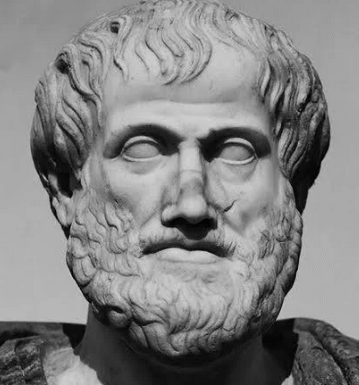
This opinion... appears to be ancient... that the one, excess and defect, are the principles of things... It is not... probable that there are more than three principles... Essence is one certain genus of being: so that principles will differ from each other in prior and posterior alone, but not in genus, for in one genus there is always one contrariety, and all contrarieties appear to be referred to one. That there is neither one element, therefore, nor more than two or three, is evident.
5 months 1 week ago
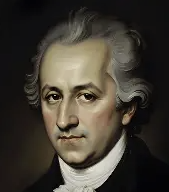
Nothing is great but truth, and the smallest truth is great. The other day I had a thought, which I put like this: Even a harmful truth is useful, for it can be harmful only for the moment and will lead to other truths, which must always become useful, very much so. Conversely, even a useful error is harmful, for it can be useful only for the moment, enticing us into other errors, which become more and more harmful.
▼
Source
source
Letter to Charlotte von Stein (1787) in Goethe's World View: Presented in His Reflections and Maxims (1963), Edited with an Introduction by Frederick Ungar, Translated by Heinz Norden, pp. 72-73, Frederick Ungar Publishing Company, New York.
7 months 2 weeks ago
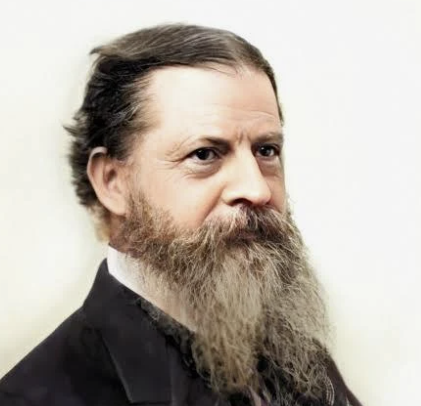
In the case of colors, there is a tridimensional spread of feelings. Originally all feelings may have been connected in the same way, and the presumption is that the number of dimensions was endless. For development essentially involves a limitation of possibilities. But given a number of dimensions of feeling, all possible varieties are obtainable by varying the intensities of the different elements.
9 months 3 weeks ago
Every art, and every system, and in like manner every action and purpose aims, it is thought, at some good; for which reason a common and by no means a bad description of the good is, that at which all things aim.
7 months 1 week ago
I like to walk about amidst the beautiful things that adorn the world; but private wealth I should decline, or any sort of personal possessions, because they would take away my liberty.
▼
Source
source
"The Irony of Liberalism"
8 months 2 weeks ago
Tis the good reader that makes the good book; in every book he finds passages which seem confidences or asides hidden from all else and unmistakenly meant for his ear.
▼
Source
source
Success

8 months 4 weeks ago
Concerning the female sorcerer. Roman law also prescribes this. Why does the law name women more than men here, even though men are also guilty of this? Because women are more susceptible to those superstitions of Satan; take Eve, for example. They are commonly called "wise women." Let them be killed.
▼
Source
source
Sermon on Exodus, 1526, WA XVI, p. 551 as quoted in Luther on Women: A Sourcebook, edited by Susan C. Karant-Nunn, Merry E. Wiesner-Hanks, (2003), p. 231

7 months 2 weeks ago
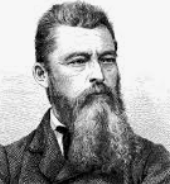
I have always taken as the standard of the mode of teaching and writing, not the abstract, particular, professional philosopher, but universal man, that I have regarded man as the criterion of truth, and not this or that founder of a system, and have from the first placed the highest excellence of the philosopher in this, that he abstains, both as a man and as an author, from the ostentation of philosophy, i.e., that he is a philosopher only in reality, not formally, that he is a quiet philosopher, not a loud and still less a brawling one.
▼
Source
source
Preface to Second Edition
6 months 2 weeks ago
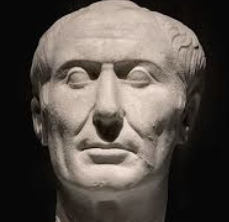
To do two things at once is to do neither.

8 months 2 weeks ago
The new governmental reason does not deal with what I would call the things in themselves of governmentality, such as individuals, things, wealth, and land. It no longer deals with these things in themselves. It deals with the phenomena of politics, that is to say, interests, which precisely constitute politics and its stakes; it deals with interests, or that respect in which a given individual, thing, wealth, and so on interests other individuals or the collective body of individuals. ... In the new regime, government is basically no longer to be exercised over subjects and other things subjected through these subjects. Government is now to be exercised over what we could call the phenomenal republic of interests. The fundamental question of liberalism is: What is the utility value of government and all actions of government in a society where exchange determines the value of things?
▼
Source
source
Lecture 2, January 17, 1979, pp. 45-46
7 months 2 weeks ago
What will be the attitude of communism to existing nationalities? The nationalities of the peoples associating themselves in accordance with the principle of community will be compelled to mingle with each other as a result of this association and thereby to dissolve themselves, just as the various estate and class distinctions must disappear through the abolition of their basis, private property.
4 months 2 weeks ago
Think on this doctrine,-that reasoning beings were created for one another's sake; that to be patient is a branch of justice, and that men sin without intending it.
▼
Source
source
IV, 3
5 months 1 week ago
Rosa Luxemburg is an outstanding example of a type of mind that is often met with in the history of Marxism and appears to be specially attracted by the Marxist outlook. It is characterized by slavish submission to authority, together with a belief that in that submission the values of scientific thought can be preserved. No doctrine was so well suited as Marxism to satisfy both these attitudes, or to provide a mystification combining extreme dogmatism with the cult of "scientific" thinking, in which the disciple could find mental and spiritual peace. Marxism thus played the part of a religion for the intelligentsia, which did not prevent some of them, like Rosa Luxemburg herself, from trying to improve the deposit of faith by reverting to first principles, thus strengthening their own belief that they were independent of dogma.
▼
Source
source
(pp. 94-5)
5 months 1 week ago
"Detect quacks"? Yes do, for Heaven's sake; but know withal the men that are to be trusted! Till we know that, what is all our knowledge; how shall we even so much as "detect"? For the vulpine sharpness, which considers itself to be knowledge, and "detects" in that fashion, is far mistaken. Dupes indeed are many: but, of all dupes, there is none so fatally situated as he who lives in undue terror of being duped.
9 months 1 week ago
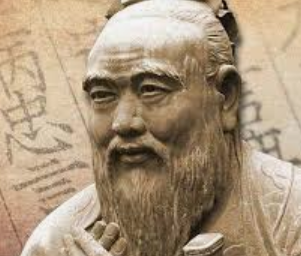
Perfect is the virtue which is according to the Mean! Rare have they long been among the people, who could practice it!
7 months 1 week ago
No one is guiltless...But no one is beyond the pale of human existence, provided he pays for his guilt.

7 months 1 week ago
The vanity of the passing world and love are the two fundamental and heart-penetrating notes of true poetry. And they are two notes of which neither can be sounded without causing the other to vibrate. The feeling of the vanity of the passing world kindles love in us, the only thing that triumphs over the vain and transitory, the only thing that fills life again and eternalizes it.
6 months 2 weeks ago
I don't want to sound callous. I mean, even if I have nothing to offer, that doesn't matter, because that still doesn't mean that what anybody else has to offer therefore has to be true.

8 months 3 weeks ago
No nation was ever so virtuous as each believes itself, and none was ever so wicked as each believes the other.
▼
Source
source
Justice in War-Time (1916), p. 70
4 months 2 weeks ago
What a stupendous, what an incomprehensible machine is man! Who can endure toil, famine, stripes, imprisonment and death itself in vindication of his own liberty, and the next moment, be deaf to all those motives whose powers supported him through his trial, and inflict on his fellow men a bondage, one hour of which is fraught with more misery than ages of that which he rose in rebellion to oppose.
▼
Source
source
Letter to Jean Nicholas Demeunier (24 January 1786) Bergh 17:103

5 months 3 weeks ago
If our universe is one of many, unlike others in containing observers like ourselves, there is no need to posit a designer. Most universes will be too chaotic to allow the emergence of life or mind. In that case, the fact that humans exist in this universe needs no special explanation.
▼
Source
source
Sweet Morality (p. 222)
8 months 2 weeks ago
Wherever Macdonald sits, there is the head of the table.
▼
Source
source
par. 37
8 months 3 weeks ago
I think all the great religions of the world - Buddhism, Hinduism, Christianity, Islam, and Communism - both untrue and harmful. It is evident as a matter of logic that, since they disagree, not more than one of them can be true. With very few exception, the religions which a man accepts is that of the community in which he lives, which makes it obvious that the influence of environment is what has led him to accept the religion in question.
▼
Source
source
Preface, 1957
8 months 3 weeks ago
We do not directly go about the execution of the purpose that thrills us, but shut our doors behind us, and ramble with prepared minds, as if the half were already done. Our resolution is taking root or hold on the earth then, as seeds first send a shoot downward, which is fed by their own albumen, ere they send one upwards to the light.
▼
Source
source
Pearls of Thought (1881) p. 61

4 months 2 weeks ago
The line that connects the bombing of civilian populations to the mountain removed by strip mining ... to the tortured prisoner seems to run pretty straight. We're living, it seems, in the culmination of a long warfare - warfare against human beings, other creatures and the Earth itself.
▼
Source
source
Commencement address at Lindsey Wilson College
4 months 2 weeks ago
Never forget: We are alive within mysteries.
8 months 3 weeks ago
Theologian: But what is to love? Philosopher: To be delighted by the happiness of another.
▼
Source
source
Confessio philosophi, 1673


6 months 2 weeks ago
You worldly-minded people are most unfortunate! You are surrounded with sorrows and troubles overhead and underfoot and to the right and to the left, and you are enigmas even to yourselves.
▼
Source
source
p. 37

8 months 2 weeks ago
A man who is free is like a mangy sheep in a herd. He will contaminate my entire kingdom and ruin my work.
▼
Source
source
King Aegistheus, Act 2
CivilSimian.com created by AxiomaticPanic, CivilSimian, Kalokagathia