

6 months 2 weeks ago
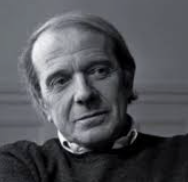
Instead of gambling on the eternal impossibility of the revolution and on the fascist return of a war-machine in general, why not think that a new type of revolution is in the course of becoming possible, and that all kinds of mutating, living machines conduct wars, are combined and trace out a plane of consistence which undermines the plane of organization of the World and the States?
▼
Source
source
from Dialogues with Claire Parnet, p. 147 [emphasis in original].
4 months 1 week ago
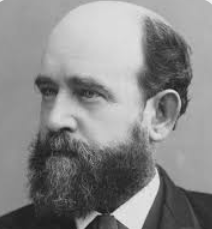
As there are many to whom the beauty and harmony of economic laws are hidden, and to whom the inspiring thought of a social order in which there should be work for all, leisure for all, and abundance for all - in which all might be at least as true, as generous and as manful as they wish to be - is shut out by the deference paid to economic authorities who have as it were given bonds not to find that for which they profess to seek, so there are many to-day to whom any belief in the spiritual element, in the existence of God and in a future life, is darkened or destroyed, not so much by difficulties they themselves find, but by what they take to be the teachings of science.
▼
Source
source
Conclusion : The Moral of this Examination

1 year 1 week ago
Canned laughter: After some supposedly funny or witty remark you can hear the laughter and applause included in the soundtrack of the show itself - here we have the exact counterpart of the Chorus in classical tragedy; it is here that we have to look for 'living Antiquity.' That is to say, why this laughter? The first possible answer - that it serves to remind us when to laugh - is interesting enough, because it implies the paradox that laughter is a matter of duty and not of some spontaneous feeling; but this answer is not sufficient because we do not usually laugh. The only correct answer would be that the Other - embodied in the television set - is relieving us even of our duty to laugh - is instead laughing for us. So even if, tired from a hard days stupid work, all evening we did nothing but gaze drowsily into the television screen, we can say afterwards that objectively, through the medium of the other, we had a really good time.

8 months 1 week ago
Two Chinamen visiting Europe went to the theatre for the first time. One of them occupied himself with trying to understand the theatrical machinery, which he succeeded in doing. The other, despite his ignorance of the language, sought to unravel the meaning of the play. The former is like the astronomer, the latter the philosopher.
▼
Source
source
Vol. 2 "On Various Subjects" as translated in Essays and Aphorisms (1970), as translated by R. J. Hollingdale

8 months 2 weeks ago
The Clergy is the greatest hindrance to faith.
▼
Source
source
58

4 months 3 weeks ago
Why should I not regard this as desirable-not because the fire, burns me, but because it does not overcome me?

8 months 1 week ago
What strikes one here above all is the crudely empirical conception of profit derived from the outlook of the ordinary capitalist, which wholly contradicts the better esoteric understanding of Adam Smith.
▼
Source
source
Vol. II, Ch. X, p. 202.

8 months 1 week ago
The normal process of life contains moments as bad as any of those which insane melancholy is filled with, moments in which radical evil gets its innings and takes its solid turn. The lunatic's visions of horror are all drawn from the material of daily fact. Our civilization is founded on the shambles, and every individual existence goes out in a lonely spasm of helpless agony. If you protest, my friend, wait till you arrive there yourself! ... Here on our very hearths and in our gardens the infernal cat plays with the panting mouse, or holds the hot bird fluttering in her jaws. Crocodiles and rattlesnakes and pythons are at this moment vessels of life as real as we are; their loathsome existence fills every minute of every day that drags its length along; and whenever they or other wild beasts clutch their living prey, the deadly horror which an agitated melancholiac feels is the literally right reaction on the situation.
▼
Source
source
Lectures VI and VII, "The Sick Soul"

8 months 1 week ago
In a head-on clash between violence and power, the outcome is hardly in doubt. Nowhere is the self-defeating factor in the victory of violence over power more evident than in the use of terror to maintain domination, about whose weird successes and eventual failures we know perhaps more than any generation before us. Violence can destroy power; it is utterly incapable of creating it.
▼
Source
source
On Violence

8 months 1 week ago
The Prodigal Son at least walked home on his own feet. But who can duly adore that Love which will open the high gates to a prodigal who is brought in kicking, struggling, resentful, and darting his eyes in every direction for a chance of escape?

6 months 1 week ago
Mysticism is just tomorrow's science dreamed today.
8 months 1 week ago
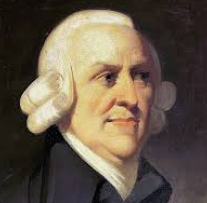
In every country it always is and must be the interest of the great body of the people to buy whatever they want of those who sell it cheapest. The proposition is so very manifest that it seems ridiculous to take any pains to prove it; nor could it ever have been called in question had not the interested sophistry of merchants and manufacturers confounded the common sense of mankind. Their interest is, in this respect, directly opposite to that of the great body of the people.
▼
Source
source
Chapter III, Part II, p. 531.
4 months 1 week ago
One cannot reduce terror by holding over the world the threat of what it most fears.
7 months 1 week ago
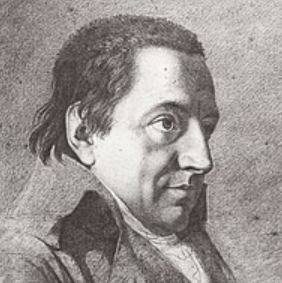
The administrators of the executive power may be either elective or not; and in the former case all or only some of them may be elective. They are elective in a proper democracy, that is to say, in a democracy which recognizes representation. If all the public officials are directly elected by the whole people, the democracy is a pure democracy; if only some, it is a mixed democracy. The public officials may also fill vacancies themselves; this is the case in a pure aristocracy. But if only some of the magistrates are thus replaced by the public officers, and if the others are again directly elected by the people, then the form of government is that of a democratic aristocracy. A permanent president (monarch) may also be elected to exercise the executive power during his lifetime. In all these cases, either all citizens of the commonwealth, or only some of them, are eligible to office. Eligibility may, therefore, be limited or unlimited.
5 months 3 weeks ago
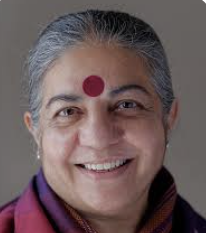
When Bill Gates pours money into Africa for feeding the poor in Africa and preventing famine, he's pushing the failed Green Revolution, he's pushing chemicals, pushing GMOs, pushing patterns.
▼
Source
source
On Bill Gate's philanthropic activities, from "Bill Gates is continuing the work of Monsanto, Vandana Shiva tells France24" France24

6 months 3 weeks ago
The Diary of Vaslav Nijinjsky reaches a limit of sincerity beyond any of the documents that we have referred to on this study. There are other modern works that express the same sense that civilized life is a form of living death; notably the poetry of T. S. Eliot and the novels of Franz Kafka; but there is an element of prophetic denunciation in both, the attitude of healthy men rebuking their sick neighbors. We possess no other record of the Outsider's problems that was written by a man about to be defeated and permanently smashed by those problems.
▼
Source
source
p. 115

8 months 1 week ago
The fundamental concept in social science is Power, in the same sense in which Energy is the fundamental concept in physics.
▼
Source
source
Ch. 1: The Impulse to Power
8 months 1 week ago
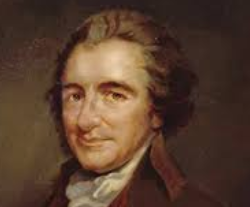
There are, in every country, some magnificent charities established by individuals. It is, however, but little that any individual can do, when the whole extent of the misery to be relieved is considered. He may satisfy his conscience, but not his heart. He may give all that he has, and that all will relieve but little. It is only by organizing civilization upon such principles as to act like a system of pulleys, that the whole weight of misery can be removed.
▼
Source
source
Means by Which the Fund Is to Be Created
6 months 3 days ago
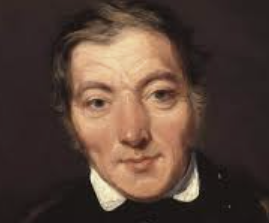
Believe me, my friends, you are yet very deficient with regard to the best modes of training your children, or of arranging your domestic concerns.
5 months 4 weeks ago
Free trade, one of the greatest blessings which a government can confer on a people, is in almost every country unpopular.
▼
Source
source
p. 161

7 months 4 weeks ago
There are many who know many things, yet are lacking in wisdom.
9 months 1 week ago
We certainly must contend by every argument against him who does away with knowledge or reason or mind and then makes any dogmatic assertion about anything. The philosopher, who pays the highest honor to these things, must necessarily, as it seems, because of them refuse to accept the theory of those who say the universe is at rest, whether as a unity or in many forms, and must also refuse utterly to listen to those who say that being is universal motion; he must say that being and the universe consist of both.
6 months 3 weeks ago
The unbeliever walks for a quadrillion miles, yet one moments of reality makes up for it.
▼
Source
source
Chapter Seven, The Great Synthesis…

5 months ago
I suggest that scientific knowledge, though logically more articulate and far more complex, is of this sort. The books and teachers from whom it is acquired present concrete examples together with a multitude of theoretical generalizations. Both are essential carriers of knowledge, and it is therefore Pickwickian to seek a methodological criterion that supposes the scientist can specify in advance whether each imaginable instance fits or would falsify his theory.
▼
Source
source
"Logic of Discovery or Psychology of Research?", Criticism and the growth of knowledge edited by Imre Lakatos and Alan Musgrave
6 months 4 weeks ago
Whenever convictions are not arrived at by direct contact with the world and the objects themselves, but indirectly through a critique of the opinions of others, the processes of thinking are impregnated with ressentiment. The establishment of "criteria" for testing the correctness of opinions then becomes the most important task. Genuine and fruitful criticism judges all opinions with reference to the object itself. Ressentiment criticism, on the contrary, accepts no "object" that has not stood the test of criticism.
▼
Source
source
L. Coser, trans. (1973), pp. 67-68
8 months 1 week ago
I have received, sir, your new book against the human species, and I thank you for it. You will please people by your manner of telling them the truth about themselves, but you will not alter them. The horrors of that human society-from which in our feebleness and ignorance we expect so many consolations-have never been painted in more striking colours: no one has ever been so witty as you are in trying to turn us into brutes: to read your book makes one long to go on all fours. Since, however, it is now some sixty years since I gave up the practice, I feel that it is unfortunately impossible for me to resume it: I leave this natural habit to those more fit for it than are you and I.
▼
Source
source
Letter to Jean-Jacques Rousseau, August 30, 1755 referring to Rousseau's Discourse on Inequality.
8 months 2 weeks ago
Peace is more important than all justice; and peace was not made for the sake of justice, but justice for the sake of peace.
▼
Source
source
On Marriage

8 months 1 week ago
A general State education is a mere contrivance for molding people to be exactly like one another; and as the mold in which it casts them is that which pleases the dominant power in the government, whether this be a monarch, an aristocracy, or a majority of the existing generation; in proportion as it is efficient and successful, it establishes a despotism over the mind, leading by a natural tendency to one over the body.
▼
Source
source
Ch. V: Applications
9 months 1 week ago
The attempt to separate everything from everything else is not only not in good taste but also shows that a man is utterly uncultivated and unphilosophical. The complete separation of each thing from all is the utterly final obliteration of all discourse. For our power of discourse is derived from the interweaving of the classes or ideas with one another.
8 months 1 week ago
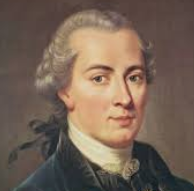
To require that a so-called layman should not use his own reason in religious matters, particularly since religion is to be appreciated as moral, but instead follow the appointed clergyman and thus someone else's reason, is an unjust demand because as to morals every man must account for all his doings. The clergyman will not and even cannot assume such a responsibility.
▼
Source
source
Kant, Immanuel (1996), pages 94-95
8 months 1 week ago
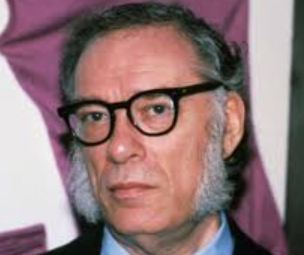
Percepts and phenomena which precedes the logical use of the intellect is called appearance, while the reflex knowledge originating from several appearances compared by the intellect is called experience.


9 months 1 week ago
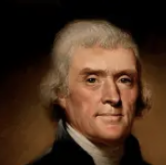
To the rest of the Galaxy, if they are aware of us at all, Earth is but a pebble in the sky. To us it is home, and all the home we know.
4 months 1 week ago
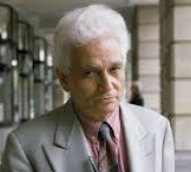
We took the liberty to make some enquiries concerning the ground of their pretentions to make war upon nations who had done them no injury, and observed that we considered all mankind as our friends who had done us no wrong, nor had given us any provocation.
8 months 4 days ago
To live, by definition, is not something one learns. Not from oneself, it is not learned from life, taught by life. Only from the other and by death. In any case from the other at the edge of life. At the internal border or the external border, it is a heterodidactics between life and death.
▼
Source
source
Exordium

8 months 2 weeks ago
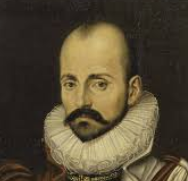
When I play with my cat, who knows if I am not a pastime to her more than she is to me?
▼
Source
source
Ch. 12 (tr. Donald M. Frame) , tr. David Wills, 2008
8 months 1 week ago
The history of all hitherto existing society is the history of class struggles.
▼
Source
source
Section 1, paragraph 1, lines 1-2.
8 months 1 week ago
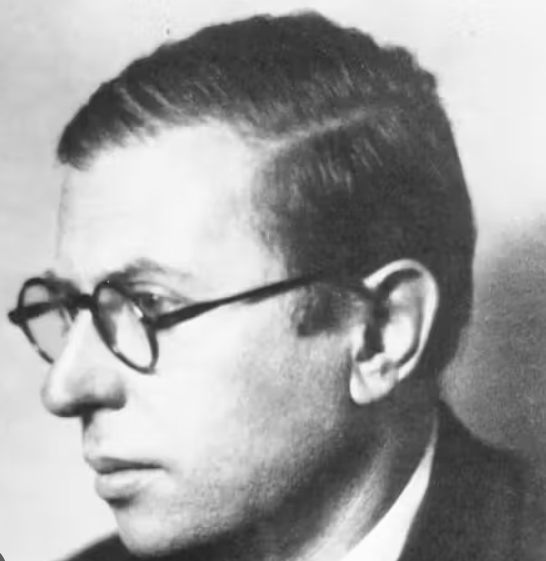
The French bourgeois doesn't dislike shit, provided it is served up to him at the right time.
▼
Source
source
Book 2, "To Succeed in Being All, Strive to be Nothing in Anything"
6 months 2 weeks ago
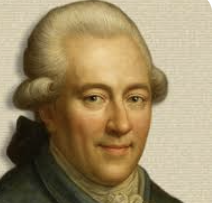
A good means to discovery is to take away certain parts of a system to find out how the rest behaves.
▼
Source
source
As quoted in A Dictionary of Scientific Quotations (1991) edited by Alan Lindsay Mackay, p. 154
6 months 3 weeks ago
And at once I saw with great clarity that human beings possess two bodies. One is the physical body, the other -- just as real, just as self-contained -- is the emotional body. Like the physical body, the emotional body reaches a certain level of growth, and then stops. But it stops rather sooner than the physical body. So most of us possess the emotional body of a retarded adolescent.
▼
Source
source
p. 23
8 months 1 week ago
His obedience is real since he really and truly fulfills his mission, since he runs real risks in order to carry out the beloved's orders. But, on the other hand, it is imaginary because he submits only to a creature of his mind.
▼
Source
source
p. 152
4 months 1 week ago
I deplore with you the putrid state into which our newspapers have passed, and the malignity, the vulgarity, & mendacious spirit of those who write for them: and I enclose you a recent sample, the production of a New England judge, as a proof of the abyss of degradation into which we are fallen. These ordures are rapidly depraving the public taste and lessening its relish for sound food. As vehicles of information and a curb on our functionaries, they have rendered themselves useless by forfeiting all title to belief. That this has in a great degree been produced by the violence and malignity of party spirit I agree with you...
▼
Source
source
Letter to Walter Jones (2 January 1814)
8 months 1 week ago
The necessity of speaking, the predicament of having nothing to say, and the desire for tact are three things that can turn the greatest man into a laughingstock.

8 months 3 weeks ago
Wonderful is the depth of Thy oracles, whose surface is before us, inviting the little ones; and yet wonderful is the depth, O my God, wonderful is the depth. It is awe to look into it; and awe of honour, and a tremor of love. The enemies thereof I hate vehemently. Oh, if Thou wouldest slay them with Thy two-edged sword, that they be not its enemies! For thus do I love, that they should be slain unto themselves that they may live unto Thee.
▼
Source
source
XII, 14

8 months 1 week ago
Merely to come into the world the heir of a fortune is not to be born, but to be still-born, rather. To be supported by the charity of friends, or a government-pension, - provided you continue to breathe, - by whatever fine synonymes you describe these relations, is to go into the almshouse.
▼
Source
source
p. 487
7 months 2 weeks ago
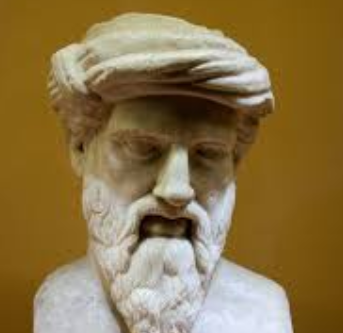
A fool is known by his Speech; and a wise man by Silence.
8 months 2 weeks ago
There is no need for you to develop an armed insurrection. Christ himself has already begun an insurrection with his mouth.
▼
Source
source
pp. 67-68

4 months 6 days ago
Because most of what we say and do is not essential. If you can eliminate it, you'll have more time, and more tranquillity. Ask yourself at every moment, "Is this necessary?" But we need to eliminate unnecessary assumptions as well. To eliminate the unnecessary actions that follow.
▼
Source
source
(Hays translation) IV, 24
8 months 1 week ago
To those who inquire as to the purpose of mathematics, the usual answer will be that it facilitates the making of machines, the travelling from place to place, and the victory over foreign nations, whether in war or commerce. ... The reasoning faculty itself is generally conceived, by those who urge its cultivation, as merely a means for the avoidance of pitfalls and a help in the discovery of rules for the guidance of practical life.
CivilSimian.com created by AxiomaticPanic, CivilSimian, Kalokagathia