


4 months 2 weeks ago
I should as soon think of swimming across Charles River when I wish to go to Boston, as of reading all my books in originals when I have them rendered for me in my mother tongue.
▼
Source
source
Books

4 months 2 weeks ago
The philosophy of Plotinus has the defect of encouraging men to look within rather than to look without: when we look within we see nous, which is divine, while when we look without we see the imperfections of the sensible world. This kind of subjectivity was a gradual growth; it is to be found in the doctrines of Protagoras, Socrates, and Plato, as well as in the Stoics and Epicureans. But at first it was only doctrinal, not temperamental; for a long time it failed to kill scientific curiosity. [...] Plotinus is both an end and a beginning-an end as regards the Greeks, a beginning as regards Christendom.
▼
Source
source
Russell, Bertrand (2008). History of Western Philosophy. Simon and Schuster. pp. 296-297. ISBN 978-1-4165-9915-9.

4 months 2 weeks ago
Unbelievers (so called) as well as of believers, there are many species, including almost every variety of moral type. But the best among them, as no one who has had opportunities of really knowing them will hesitate to affirm (believers rarely have that opportunity), are more genuinely religious, in the best sense of the word religion, than those who exclusively arrogate to themselves the title.
▼
Source
source
(pp. 45-46)

5 months 2 weeks ago
Truth, like light, blinds. Falsehood, on the contrary, is a beautiful twilight that enhances every object.
4 months 2 weeks ago
Either Man will abolish war, or war will abolish Man.
▼
Source
source
Fact and Fiction (1961), Part IV, Ch. 10: "Can War Be Abolished?", p. 276

2 months 2 weeks ago
Practice is the best of all instructors.
▼
Source
source
Maxim 439

3 months 1 week ago
If the flesh came into being because of spirit, it is a wonder. But if spirit came into being because of the body, it is a wonder of wonders. Indeed, I am amazed at how this great wealth has made its home in this poverty.
4 months 3 weeks ago
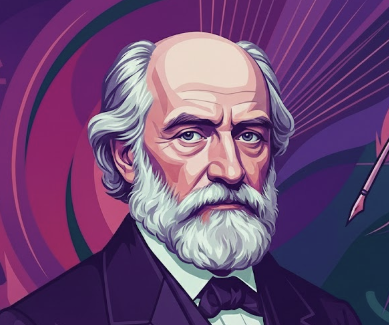
There are, first of all, two kinds of authors: those who write for the subject's sake, and those who write for writing's sake. The first kind have had thoughts or experiences which seem to them worth communicating, while the second kind need money and consequently write for money.
4 months 3 weeks ago
My basis is supported by the authority of the greatest moralist of modern times; for such, undoubtedly, J. J. Rousseau is,-that profound reader of the human heart, who drew his wisdom not from books, but from life, and intended his doctrine not for the professorial chair, but for humanity; he, the foe of all prejudice, the foster-child of nature, whom alone she endowed with the gift of being able to moralise without tediousness, because he hit the truth and stirred the heart.
▼
Source
source
Part III, Ch. VIII, 9, p. 230

4 months 3 weeks ago
There are some defeats more triumphant than victories.
▼
Source
source
Ch. 30. Of Cannibals, tr. Cotton, rev. W. Hazlitt, 1842
1 month 4 weeks ago
All art is autobiographical; the pearl is the oyster's autobiography.
▼
Source
source
On the autobiographical nature of his films, in The Atlantic
2 months 3 weeks ago
Distinctive signs, full signs, never seduce us.
▼
Source
source
(p. 59)
2 months 4 weeks ago
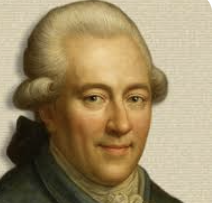
It is said that truth comes from the mouths of fools and children: I wish every good mind which feels an inclination for satire would reflect that the finest satirist always has something of both in him.
▼
Source
source
J 157
1 month ago
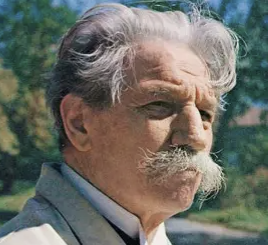
Example is not the main thing. It is the only thing. That is, if the one giving the example is not saying to himself, 'Behold I am giving an example.' That spoils it. Anyone thinking of the example he will give to others has lost his simplicity. Only as a man has simplicity can his example influence others. Sometimes presented in paraphrased form, such as "Example is not the main thing in influencing others, it is the only thing".

3 months 2 days ago
The liturgy of emptiness dispels the capitalist economy of the commodity.
3 months 1 week ago
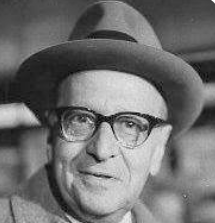
Notwithstanding their attacks on the basic conception of rationalism, on synthetic a priori judgments, that is, material propositions that cannot be contradicted by any experience, the empiricist posits the forms of being as constant.
▼
Source
source
p. 146.

2 months 2 weeks ago
Every technology contrived and "outered" by man has the power to numb human awareness during the period of its first interiorization.
▼
Source
source
(p. 174)
2 weeks 1 day ago
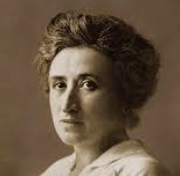
But here is the "ego" of the Russian revolutionary again! Pirouetting on its head, it once more proclaims itself to be the all-powerful director of history - this time with the title of His Excellency the Central Committee of the Social Democratic Party of Russia.

3 months 2 weeks ago
Volumes might be written upon the impiety of the pious.
▼
Source
source
Pt. I, The Unknowable; Ch. V, The Reconciliation

4 months 3 weeks ago
I. The subjects of every state ought to contribute towards the support of the government, as nearly as possible, in proportion to their respective abilities, that is, in proportion to the revenue which they respectively enjoy under the protection of the state.
▼
Source
source
Chapter II, Part II, p. 892.

3 months 2 weeks ago
I feel effective, competent, likely to do something positive only when I lie down and abandon myself to an interrogation without object or end.

3 months 2 weeks ago
One may observe, that men of all persuasions confine the word persecution, and all the ill ideas of injustice and violence which belong to it, solely to those severities which are exercised upon themselves, or upon the party they are inclined to favour. Whatever is inflicted upon others, is a just punishment upon obstinate impiety, and not a restraint upon conscientious differences.
▼
Source
source
Volume II, p. 146

4 months 2 weeks ago
As if our birth had at first sundered things, and we had been thrust up through into nature like a wedge, and not till the wound heals and the scar disappears, do we begin to discover where we are, and that nature is one and continuous everywhere.

3 months 4 days ago
In the study of ideas, it is necessary to remember that insistence on hard-headed clarity issues from sentimental feeling, as if it were a mist, cloaking the perplexities of fact. Insistence on clarity at all costs is based on sheer superstition as to the mode in which human intelligence functions. Our reasoning grasps at straws for premises and floats on gossamer for deductions.
▼
Source
source
p. 91.
3 weeks 6 days ago
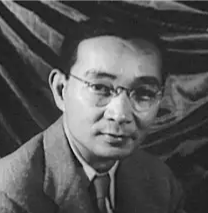
Our task is not so much discovery as re-discovery. What one needs is not so much thinking as remembering. Sometimes it suffices to sit quietly and listen well, when venerable men have thought before us. Constant forgettings of truths once perceived are the very charm of the human mind; the history of human thought is nothing more than the story of these forgettings and rememberings and forgettings again.
▼
Source
source
On the Wisdom of America (1950), p. xiv
3 months 1 week ago
Whoever shall find the interpretation of these words shall not taste of death. (1) I have not a devil; but I honour my Father, and ye do dishonour me. And I seek not mine own glory: there is one that seeketh and judgeth. Verily, verily, I say unto you, If a man keep my saying, he shall never see death.
▼
Source
source
(John 8:49-51)

5 months 1 week ago
If you reject absolutely any single sensation without stopping to discriminate with respect to that which awaits confirmation between matter of opinion and that which is already present, whether in sensation or in feelings or in any immediate perception of the mind, you will throw into confusion even the rest of your sensations by your groundless belief and so you will be rejecting the standard of truth altogether. If in your ideas based upon opinion you hastily affirm as true all that awaits confirmation as well as that which does not, you will not escape error, as you will be maintaining complete ambiguity whenever it is a case of judging between right and wrong opinion.
3 months 2 days ago
The emptiness of Zen Buddhism... creates a neighborly nearness between things.
2 weeks 6 days ago
God, what is all this talk put out by the popes? Paradise is here, my good man. God, give me no other paradise!
▼
Source
source
Freedom and Death

3 months 2 weeks ago
In fact, this infinitesimally spread-out consciousness is a direct feeling of its contents as spread out. In an infinitesimal interval we directly perceive the temporal sequence of its beginning, middle, and end... Now upon this interval follows another, whose beginning is the middle of the former, and whose middle is the end of the former. Here we have an immediate perception of the temporal sequence of its beginning, middle and end, or say, of the second, third, and fourth instants.

1 month 1 week ago
We are no longer instinctively driven to apprehend, and lay to heart, what is Good and Lovely, but rather to inquire, as onlookers, how it is produced, whence it comes, whither it goes. Our favourite Philosophers have no love and no hatred; they stand among us not to do, nor to create anything, but as a sort of Logic mills, to grind out the true causes and effects of all that is done and created.
1 month 1 week ago
There have been other Priests perhaps equally notable, in calmer times, for doing faithfully the office of a Leader of Worship; bringing down, by faithful heroism in that kind, a light from Heaven into the daily life of their people; leading them forward, as under God's guidance, in the way wherein they were to go. But when this same way was a rough one, of battle, confusion and danger, the spiritual Captain, who led through that, becomes, especially to us who live under the fruit of his leading, more notable than any other.

3 months 6 days ago
For what is specific in the Catholic religion is immortalization and not justification, in the Protestant sense. Rather is this latter ethical. It is from Kant, in spite of what orthodox Protestants may think of him, that Protestantism derived its penultimate conclusions - namely, that religion rests upon morality, and not morality upon religion, as in Catholicism.

5 months 2 weeks ago
When one merely states that one has many subscribers and keeps on saying it, then one gets many; just as when one sheep goes to water, the next one also goes, and when it is continually said of a large flock of sheep that they go hither and yon to water, then the rest must also go, so people believe that it must be the demand of the times, that for the sake of use and custom, they must also subscribe.
3 months 2 weeks ago
That is a long word: forever!
▼
Source
source
Act I.
4 months 2 weeks ago
The love of power is a part of human nature, but power-philosophies are, in a certain precise sense, insane. The existence of the external world, both that of matter and of other human beings, is a datum, which may be humiliating to a certain kind of pride, but can only be denied by a madman. Men who allow their love of power to give them a distorted view of the world are to be found in every asylum: one man will think he is Governor of the Bank of England, another will think he is the King, and yet another will think he is God. Highly similar delusions, if expressed by educated men in obscure language, lead to professorships in philosophy; and if expressed by emotional men in eloquent language, lead to dictatorships. Certified lunatics are shut up because of the proneness to violence when their pretensions are questioned; the uncertified variety are given control of powerful armies, and can inflict death and disaster upon all sane men within their reach.
▼
Source
source
Ch. 16: Power philosophies
3 months 2 weeks ago
Man is a sun and his senses are the planets.
3 months 2 weeks ago
Self-pity is not as sterile as we suppose. Once we feel its mere onset, we assume a thinker's attitude, and come to think of it, we come to think!
3 months 2 weeks ago
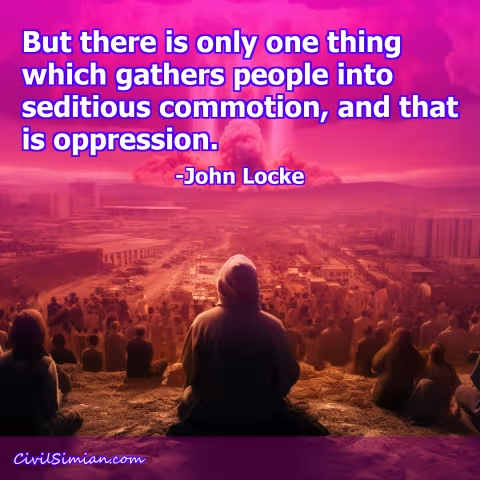
The deep critical thinker has become the misfit of the world. This is not a coincidence. To maintain order and control you must isolate the intellectual, the sage, the philosopher, the savant before their ideas awaken people.


4 months 2 weeks ago
For a truly religious man nothing is tragic.
▼
Source
source
Conversation of 1930
2 months 2 weeks ago
Gutenberg made all history available as classified data: the transportable book brought the world of the dead into the space of the gentlemen's library; the telegraph brought the entire world of the living to the workman's breakfast table.
▼
Source
source
(p. 15)
3 months 2 weeks ago
Unless man have a natural bent in accordance with nature's, he has no chance of understanding nature at all.
▼
Source
source
IV

4 months 2 weeks ago
Good tests kill flawed theories; we remain alive to guess again.
▼
Source
source
As quoted in My Universe : A Transcendent Reality (2011) by Alex Vary, Part II

2 months 2 weeks ago
Not only does the action of Governments not deter men from crimes; on the contrary, it increases crime by always disturbing and lowering the moral standard of society. Nor can this be otherwise, since always and everywhere a Government, by its very nature, must put in the place of the highest, eternal, religious law (not written in books but in the hearts of men, and binding on every one) its own unjust, man-made laws, the object of which is neither justice nor the common good of all but various considerations of home and foreign expediency.
▼
Source
source
The Meaning of the Russian Revolution (1906), a work about the 1905 Russian Revolution.
3 months 2 weeks ago
The life of the wealthy is one long Sunday.
3 months 2 weeks ago
I tell you again that the recollection of the manner in which I saw the Queen of France in the year 1774 and the contrast between that brilliancy, Splendour, and beauty, with the prostrate Homage of a Nation to her, compared with the abominable Scene of 1789 which I was describing did draw Tears from me and wetted my Paper. These Tears came again into my Eyes almost as often as I lookd at the description. They may again. You do not believe this fact, or that these are my real feelings, but that the whole is affected, or as you express it, 'downright Foppery'. My friend, I tell you it is truth-and that it is true, and will be true, when you and I are no more, and will exist as long as men-with their Natural feelings exist.
▼
Source
source
Letter to Philip Francis (20 February 1790), quoted in Alfred Cobban and Robert A. Smith (eds.), The Correspondence of Edmund Burke, Volume VI: July 1789-December 1791 (1967), p. 91
3 months 6 days ago
And above all, we must feel and act as if an endless continuation of our earthly life awaited us after death; and if it be that nothingness is the fate that awaits us we must not, in the words of Obermann, so act that it shall be a just fate.
1 month 2 weeks ago
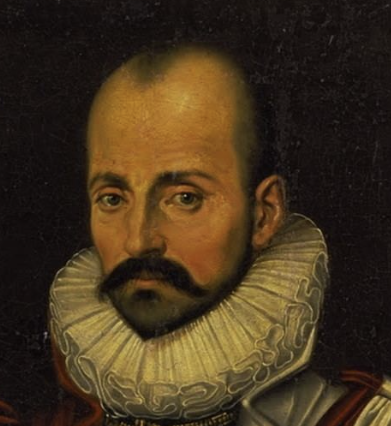
Do not imagine that there is any bird more easily caught by decoy, nor any fish sooner fixed on the hook by wormy bait, than are all these poor fools neatly tricked into servitude by the slightest feather passed, so to speak, before their mouths. Truly it is a marvelous thing that they let themselves be caught so quickly at the slightest tickling of their fancy. Plays, farces, spectacles, gladiators, strange beasts, medals, pictures, and other such opiates, these were for ancient peoples the bait toward slavery, the price of their liberty, the instruments of tyranny. By these practices and enticements the ancient dictators so successfully lulled their subjects under the yoke, that the stupefied peoples, fascinated by the pastimes and vain pleasures flashed before their eyes, learned subservience as naïvely, but not so creditably, as little children learn to read by looking at bright picture books.
▼
Source
source
Part 2

5 months 3 days ago
So clearly will truths kindle light for truths.
▼
Source
source
Book I, line 1117 (tr. W. H. D. Rouse and M. F. Smith)
CivilSimian.com created by AxiomaticPanic, CivilSimian, Kalokagathia