

4 months 1 week ago
How can one be late to the end of history? A question for today. It is serious because it obliges one to reflect again, as we have been doing since Hegel, on what happens and deserves the name of event, after history; it obliges one to wonder if the end of history is but the end of a certain concept of history.
▼
Source
source
Injunctions of Marx
4 months 3 weeks ago
Though the managing ourselves well in this part of our behavior has the name good-breeding, as if a peculiar effect of education; yet... young children should not be much perplexed about it... Teach them humility, and to be good-natur'd, if you can, and this sort of manners will not be wanting; civility being in truth nothing but a care not to shew any slighting or contempt of any one in conversation.
▼
Source
source
Sec. 145
4 months 4 weeks ago
The human understanding is unquiet; it cannot stop or rest, and still presses onward, but in vain. Therefore it is that we cannot conceive of any end or limit to the world, but always as of necessity it occurs to us that there is something beyond... But he is no less an unskilled and shallow philosopher who seeks causes of that which is most general, than he who in things subordinate and subaltern omits to do so.
▼
Source
source
Aphorism 48

1 month 3 weeks ago
Tyranny offers relief from the burden of sanity and a licence to enact forbidden impulses of hatred and violence. By acting on these impulses and releasing them in their subjects tyrants give people a kind of happiness, which as individuals they may be incapable of achieving.
▼
Source
source
An Old Chaos: What a Tyrant Can Do For You (p. 57)

3 months 1 day ago
No revolution can ever succeed as a factor of liberation unless the MEANS used to further it be identical in spirit and tendency with the PURPOSES to be achieved. Revolution is the negation of the existing, a violent protest against man's inhumanity to man with all the thousand and one slaveries it involves. It is the destroyer of dominant values upon which a complex system of injustice, oppression, and wrong has been built up by ignorance and brutality. It is the herald of NEW VALUES, ushering in a transformation of the basic relations of man to man, and of man to society.
2 months 4 days ago
The improver of natural knowledge absolutely refuses to acknowledge authority, as such. For him, scepticism is the highest of duties; blind faith the one unpardonable sin. And it cannot be otherwise, for every great advance in natural knowledge has involved the absolute rejection of authority, the cherishing of the keenest scepticism, the annihilation of the spirit of blind faith; and the most ardent votary of science holds his firmest convictions, not because the men he most venerates hold them; not because their verity is testified by portents and wonders; but because his experience teaches him that whenever he chooses to bring these convictions into contact with their primary source, Nature - whenever he thinks fit to test them by appealing to experiment and to observation - Nature will confirm them. The man of science has learned to believe in justification, not by faith, but by verification. On the advisableness of improving natural knowledge
▼
Source
source
1866
2 months 1 week ago
Conservatives believe that our identities and values are formed through our relations with other people, and not through our relation with the state. The state is not an end but a means. Civil society is the end, and the state is the means to protect it. The social world emerges through free association, rooted in friendship and community life. And the customs and institutions that we cherish have grown from below, by the 'invisible hand' of co-operation. They have rarely been imposed from above by the work of politics, the role of which, for a conservative, is to reconcile our many aims, and not to dictate or control them.
▼
Source
source
"Stand up for the real meaning of freedom," The Spectator
3 months 1 day ago
Just as modern mass production requires the standardization of commodities, so the social process requires standardization of man, and this standardization is called equality.
▼
Source
source
Ch. 2

3 months 2 weeks ago
The person who grieves, suffers his passion to grow upon him; he indulges it, he loves it; but this never happens in the case of actual pain, which no man ever willingly endured for any considerable time.
▼
Source
source
Part I Section V
3 months 2 weeks ago
What will be the influence of communist society on the family? It will transform the relations between the sexes into a purely private matter which concerns only the persons involved and into which society has no occasion to intervene. It can do this since it does away with private property and educates children on a communal basis, and in this way removes the two bases of traditional marriage - the dependence rooted in private property, of the women on the man, and of the children on the parents.
4 months 2 weeks ago
Everyone is the other, and no one is himself. The they, which supplies the answer to the who of everyday Da-sein, is the nobody to whom every Da-sein has always already surrendered itself, in its being-among-one-another.
▼
Source
source
Stambaugh translation

1 month 4 days ago
1) Preserve Life
2) State of war (opportunism)
3) Relativism
4) Confusion
Civilization, goodness, justice, fairness all contained inside the first option. Under # 1 (Universal Humanism):
1) Survive.
2) Don't prevent another from surviving.
3) Help the less fortunate.
4 months 3 weeks ago
Long discourses, and philosophical readings, at best, amaze and confound, but do not instruct children. When I say, therefore, that they must be treated as rational creatures, I mean that you must make them sensible, by the mildness of your carriage, and in the composure even in the correction of them, that what you do is reasonable in you, and useful and necessary for them; and that it is not out of caprichio, passion or fancy, that you command or forbid them any thing.
▼
Source
source
Sec. 81
2 months 4 days ago
Only two suppositions seem to be open to us - Either each species of crocodile has been specially created, or it has arisen out of some pre-existing form by the operation of natural causes. Choose your hypothesis; I have chosen mine. I can find no warranty for believing in the distinct creation of a score of successive species of crocodiles in the course of countless ages of time.
3 months 5 days ago
No tyranny is more cruel than the one practiced in the shadow of the laws and under color of justice - when, so to speak, one proceeds to drown the unfortunate on the very plank by which they had saved themselves.
▼
Source
source
See Chap. XIV of Considérations sur les causes de la grandeur des Romains et de leur décadence. Considerations on the Causes of the Greatness of the Romans and their Decline (1734), p. 89.

3 months 1 week ago
The apparatus defeats its own purpose if its purpose is to create a humane existence on the basis of a humanized nature.
▼
Source
source
pp. 145-146
2 months 3 weeks ago
Human beings, viewed as behaving systems, are quite simple. The apparent complexity of our behavior over time is largely a reflection of the complexity of the environment in which we find ourselves.
▼
Source
source
p. 53.

2 months 2 weeks ago
The telegraph press mosaic is acoustic space as much as an electric circus.

3 months 1 week ago
They that be whole need not a physician, but they that are sick. But go ye and learn what that meaneth, I will have mercy, and not sacrifice: for I am not come to call the righteous, but sinners to repentance.
▼
Source
source
9:12-13 (KJV)
4 weeks ago
We ought to acquiesce in the reasoning of the Egyptian priests, who raise altars to the Sun conjointly with Jupiter; nay, rather we should assent to Apollo himself (long before them), who sits on the same throne with Jove, and whose words are,

1 month 4 days ago
Prove your words by your deeds.
1 month 4 days ago
Two elements must therefore be rooted out once for all-the fear of future suffering, and the recollection of past suffering; since the latter no longer concerns me, and the former concerns me not yet.
2 weeks 2 days ago
Providence has given the French nation precisely two instruments, two arms, so to speak, with which it stirs up the world - the French language and the spirit of proselytism that forms the essence of the nation's character.
▼
Source
source
Chapter II, p. 20

3 months 2 days ago
What is so remarkable about Crowley the 'magician' is that he remains Crowley the scientist, and always applies the same probing intellectual curiosity to every field he surveys. This is ultimately the most impressive quality about his mind, and the one that might -- if he had concentrated on developing it to the full -- have brought him the fame that he craved. Crowley's tragedy was that he never concentrated long enough to develop anything to the full.
▼
Source
source
p. 150
3 months 2 weeks ago
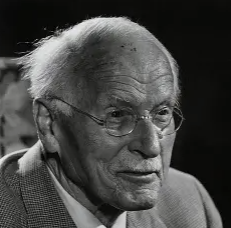
The healthy man does not torture others-generally it is the tortured who turn into torturers.
▼
Source
source
In Du, May 1941
3 months 2 weeks ago
The unconscious is not just evil by nature, it is also the source of the highest good: not only dark but also light, not only bestial, semihuman, and demonic but superhuman, spiritual, and, in the classical sense of the word, "divine."
▼
Source
source
The Practice of Psychotherapy, p. 364
5 months 2 weeks ago
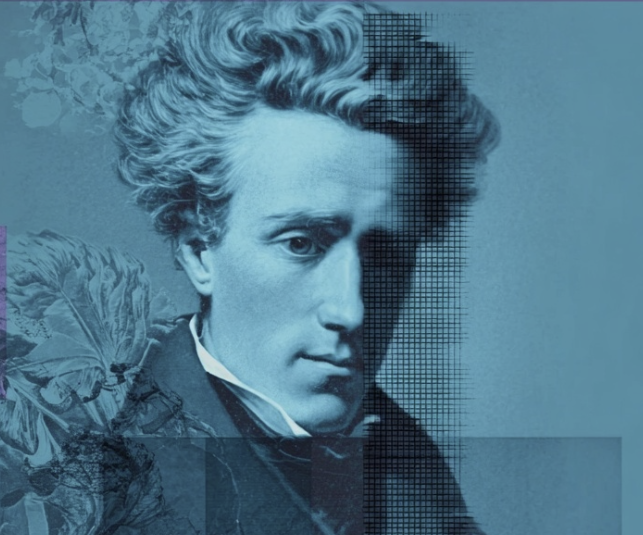
For whoever has what he has from the God himself clearly has it at first hand; and he who does not have it from the God himself is not a disciple. Let us assume that it is otherwise, that the contemporary generation of disciples had received the condition from the God, and that the subsequent generations were to receive it from these contemporaries, what would follow?
3 months 3 weeks ago
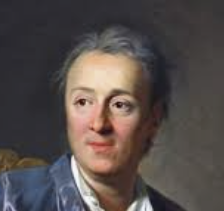
Disturbances in society are never more fearful than when those who are stirring up the trouble can use the pretext of religion to mask their true designs.

4 months 1 week ago
Nihilism is not overcome by arguments or analyses; it is tamed by love and care. Any disease of the soul must be conquered by a turning of one's soul.
▼
Source
source
(p19)

4 months 2 weeks ago
Look for yourself, and you will find in the long run only hatred, loneliness, despair, rage, ruin, and decay. But look for Christ and you will find Him, and with Him everything else thrown in.
▼
Source
source
Book IV, Chapter 10, "The New Men"
4 months 2 weeks ago
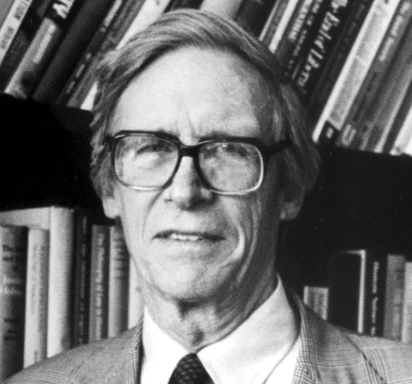
Properly understood, then, the desire to act justly derives in part from the desire to express most fully what we are or can be, namely free and equal rational beings with the liberty to choose.
▼
Source
source
Chapter IV, Section 40, p. 256
2 months 4 weeks ago
You believe that I run after the strange because I do not know the beautiful; no, it is because you do not know the beautiful that I seek the strange.
▼
Source
source
F160
5 months 2 weeks ago
The tyrant has arisen, and the king and oligarchy and aristocracy and democracy, because men are not contented with that one perfect ruler, and do not believe that there could ever be any one worthy of such power or willing and able by ruling with virtue and knowledge to dispense justice and equity rightly to all, but that he will harm and kill and injure any one of us whom he chooses on any occasion, since they admit that if such a man as we describe should really arise, he would be welcomed and would continue to dwell among them, directing to their weal as sole ruler a perfectly right form of government. But, as the case now stands, since, as we claim, no king is produced in our states who is, like the ruler of the bees in their hives, by birth pre-eminently fitted from the beginning in body and mind, we are obliged, as it seems, to follow in the track of the perfect and true form of government by coming together and making written laws.
2 weeks 2 days ago
If you wish to extinguish that enthusiasm, which inspires great thoughts, and impels to noble enterprises;-if you wish to render men's hearts cold, and unfeeling; and to substitute egotism in the room of generous, and ardent, patriotism,-if you wish to do this, only take away from the people their faith, and make them philosophers.
▼
Source
source
p. 61
4 months 2 weeks ago
The individual, so far as he suffers from his wrongness and criticizes it, is to that extent consciously beyond it, and in at least possible touch with something higher, if anything higher exist. Along with the wrong part there is thus a better part of him, even though it may be but a most helpless germ. With which part he should identify his real being is by no means obvious at this stage; but when stage 2 (the stage of solution or salvation) arrives, the man identifies his real being with the germinal higher part of himself; and does so in the following way. He becomes conscious that this higher part is coterminous and continuous with a more of the same quality, which is operative in the universe outside of him, and which he can keep in working touch with, and in a fashion get on board of and save himself when all his lower being has gone to pieces in the wreck.
▼
Source
source
Lecture XX, "Conclusions"

4 months 2 weeks ago
This inner revolution is realistic because it maintains itself deliberately within the framework of existing institutions; the oppressed reckon with the real situation.
▼
Source
source
p. 66
1 month 3 weeks ago
The belief in unity that has fuelled so many utopian dreams is an effort to reconcile the irreconcilable that ends in repression. Berlin suggests we renounce this venerable faith, and learn how to live with intractable conflict.
▼
Source
source
'Isaiah Berlin: The Value of Decency' (p.106-7)

5 months 3 weeks ago
I now myself live, in every detail, striving for wisdom, while I formerly merely worshipped and idolized the wise.
4 weeks ago
If the immediate creator of the universe be he who is proclaimed by Moses, then we hold nobler beliefs concerning him, inasmuch as we consider him to be the master of all things in general, but that there are besides national gods who are subordinate to him and are like viceroys of a king, each administering separately his own province; and, moreover, we do not make him the sectional rival of the gods whose station is subordinate to his. But if Moses first pays honour to a sectional god, and then makes the lordship of the whole universe contrast with his power, then it is better to believe as we do, and to recognise the God of the All, though not without apprehending also the God of Moses; this is better, I say, than to honour one who has been assigned the lordship over a very small portion, instead of the creator of all things.
3 months 1 day ago
If the individual realizes his self by spontaneous activity and thus relates himself to the world, he ceases to be an isolated atom; he and the world become part of one structuralized whole; he has his rightful place, and thereby his doubt concerning himself and the meaning of life disappears. This doubt sprang from his separateness and from the thwarting of life; when he can live, neither compulsively nor automatically but spontaneously, the doubt disappears. He is aware of himself as an active and creative individual and recognizes that there is only one meaning of life: the act of living itself.
▼
Source
source
Ch. 7, p. 262-3
4 months 1 week ago
This legible lesson, this ritual recording, must be repeated as often as possible; the punishments must be a school rather than a festival; an ever-open book rather than a ceremony. The duration that makes the punishment effective for the guilty is also useful for the spectators. They must be able to consult at each moment the permanent lexicon of crime and punishment. A secret punishment is a punishment half wasted. Children should be allowed to come to the places where the penalty is being carried out; there they will attend their classes in civics. And grown men will periodically relearn the laws. Let us conceive of places of punishment as a Garden of the Laws that families would visit on Sundays.
▼
Source
source
Chapter Three, The Gentle Way in Punishment
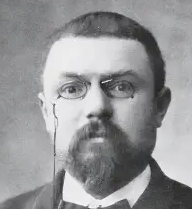
1 month 1 week ago
Thought must never submit, neither to a dogma, nor to a party, nor to a passion, nor to an interest, nor to a preconceived idea, nor to whatever it may be, save to the facts themselves, because, for thought, submission would mean ceasing to be.
▼
Source
source
Speech, University of Brussels (19 November 1909), during the festival for the 75th anniversary of the university's foundation; published in Œuvres de Henri Poincaré (1956), p. 152
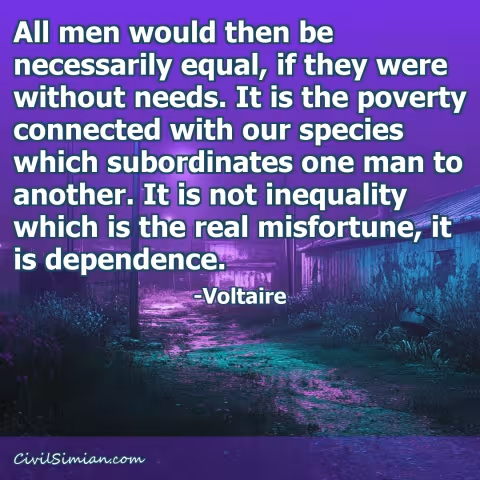

4 months 3 weeks ago
I remembered the way out suggested by a great princess when told that the peasants had no bread: "Well, let them eat cake".
▼
Source
source
This passage contains a statement Qu'ils mangent de la brioche that has usually come to be attributed to Marie Antoinette; this was written in 1766, when Marie Antoinette was 10
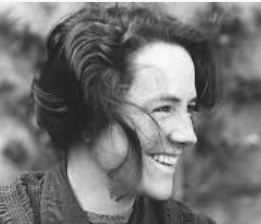
2 months 1 day ago
Life itself is always pulling you away from the understanding of life.

4 months 3 weeks ago
Prejudice is an opinion without judgement.
▼
Source
source
"Prejudices", 1764

1 month 1 week ago
Flimsy, desultory readers, who fly from foolish book to foolish book, and get good of none, and mischief of all-are not these as foolish, unhealthy eaters, who mistake their superficial false desire after spiceries and confectioneries for their real appetite, of which even they are not destitute, though it lies far deeper, far quieter, after solid nutritive food?
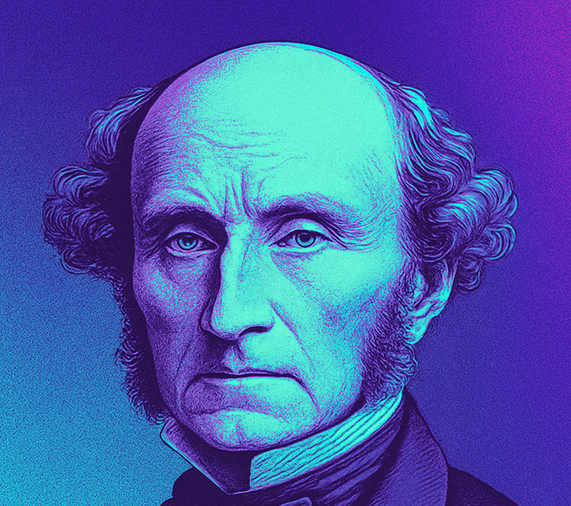
4 months 2 weeks ago
In this frame of mind it occurred to me to put the question directly to myself: "Suppose that all your objects in life were realized; that all the changes in institutions and opinions which you are looking forward to, could be completely effected at this very instant: would this be a great joy and happiness to you?" And an irrepressible self-consciousness distinctly answered, "No!" At this my heart sank within me: the whole foundation on which my life was constructed fell down. All my happiness was to have been found in the continual pursuit of this end. The end had ceased to charm, and how could there ever again be any interest in the means? I seemed to have nothing left to live for.
▼
Source
source
(pp. 133-134)

3 months 2 weeks ago
I react like everyone else, even like those I most despise; but I make up for it by deploring every action I commit, good or bad.
1 month 4 days ago
Some of the wisest of men have in consequence of this called anger a short madness: for it is equally devoid of self control, regardless of decorum, forgetful of kinship, obstinately engrossed in whatever it begins to do, deaf to reason and advice, excited by trifling causes, awkward at perceiving what is true and just, and very like a falling rock which breaks itself to pieces upon the very thing which it crushes.
CivilSimian.com created by AxiomaticPanic, CivilSimian, Kalokagathia