


4 months 6 days ago
To live each day as though one's last, never flustered, never apathetic, never attitudinizing - here is perfection of character.
▼
Source
source
VII, 69
8 months 1 week ago
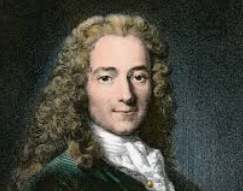
The adjective is the enemy of the substantive.
▼
Source
source
Variants: The adjective is the enemy of the noun. Quote attributed in Arthur Schopenhauer (translated by Mrs Rudolf Dircks), Essays of Schopenhauer (2004), Kessinger Publishing, p. 31

8 months 1 week ago
We may define "faith" as a firm belief in something for which there is no evidence. Where there is evidence, no one speaks of "faith". We do not speak of faith that two and two are four or that the earth is round. We only speak of faith when we wish to substitute emotion for evidence. The substitution of emotion for evidence is apt to lead to strife, since different groups substitute different emotions.
▼
Source
source
p. 215
7 months 1 week ago
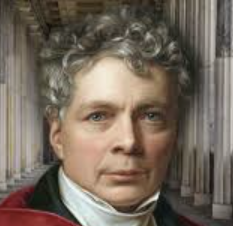
If the State, modeled after the universe, is split into two spheres or classes of beings - wherein the free represent the ideas and the unfree the concrete and sensate things - then the ultimate and uppermost order remains unrealized by both. By using sensate things as tools or organs, the ideas obtain a direct relationship to the apparitions and enter into them as souls. God, however, as identity of the highest order, remains above all reality and eternally has merely an indirect relationship. If then in the higher moral order the State represents a second nature, then the divine can never have anything other than an indirect relationship to it, never can it bear any real relationship to it, and religion, if it seeks to preserve itself in unscathed pure ideality, can therefore never exist - even in the most perfect State - other than esoterically in the form of mystery cults.
▼
Source
source
P. 51
7 months 5 days ago
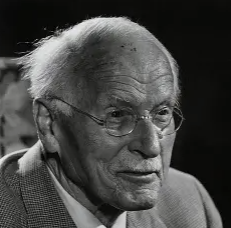
Aion is a child at play, gambling; a child's is the kingship. Telesphorus traverses the dark places of the world, like a star flashing from the deep, leading the way to the gates of the sun and the land of dreams.
▼
Source
source
Combining fragments of Heraclitus and Homer
5 months 5 days ago
The self-evident truth which makes men invincible is that inalienably they are inviolate persons.
▼
Source
source
Ch. XVII: "On This Rock", §2, p. 375

8 months 2 weeks ago
I think, therefore I am.
6 months 2 weeks ago
To receive applause for works which do not demand all our powers hinders our advance towards a perfecting of our spirit. It usually means that thereafter we stand still.
▼
Source
source
K 42

8 months 2 weeks ago
Superstition, idolatry, and hypocrisy have ample wages, but truth goes a-begging.
▼
Source
source
53

7 months 2 weeks ago
Thus is man that great and true Amphibium, whose nature is disposed to live not only like other creatures in diverse elements, but in divided and distinguished worlds.
▼
Source
source
Section 34
9 months 1 week ago
An authorship that began with Either/Or and advanced step by step seeks here its decisive place of rest, at the foot of the altar, where the author, personally most aware of his own imperfections and guilt, certainly does not call himself a truth-witness but only a singular kind of poet and thinker who, without authority, has had nothing new to bring but “has wanted once again to read through, if possible in a more inward way, the original text handed down from the fathers.

7 months 4 weeks ago
One thing underpins, makes consistent, and gives meaning to all our other activities on behalf of animals. This one thing is that we take responsibility for our own lives, and make them as free of cruelty as we can. The first step is that we cease to eat animals. Many people who are opposed to cruelty to animals draw the line at becoming a vegetarian. It was of such people that Oliver Goldsmith, the eighteenth-century humanitarian essayist, wrote: "They pity, and they eat the objects of their compassion."
▼
Source
source
Ch. 4: Becoming a Vegetarian

7 months 5 days ago
Skepticism is the sadism of embittered souls.
4 months 2 weeks ago
The wise man who has charge of governing the empire should know the cause of disorder before he can put it in order. Unless he knows its cause, he cannot regulate it.
▼
Source
source
Book 4; Universal Love I
7 months 1 week ago
Where there is politics or economics, there is no morality.
▼
Source
source
"Selected Ideas (1799-1800)", Dialogue on Poetry and Literary Aphorisms, Ernst Behler and Roman Struc, trans. (1968) #101
7 months 3 weeks ago
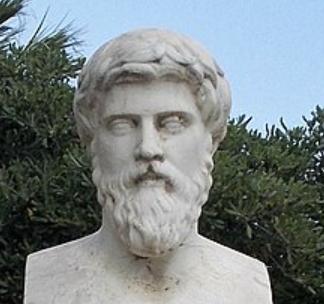
To one commending an orator for his skill in amplifying petty matters, Agesilaus said, "I do not think that shoemaker a good workman that makes a great shoe for a little foot."
▼
Source
source
Of Agesilaus the Great

8 months 1 week ago
It's so much easier to pray for a bore than to go and see one.

6 months 1 week ago
Radical changes of identity, happening suddenly and in very brief intervals of time, have proved more deadly and destructive of human values than wars fought with hardware weapons.
▼
Source
source
p. 97
9 months 1 week ago
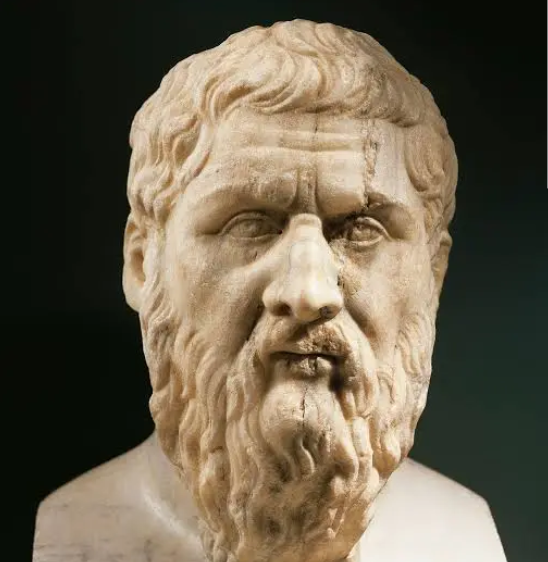
Parmenides: I was pleased with you, Socrates, because you would not discuss the doubtful question in terms of visible objects or in relation to them, but only with reference to what we conceive most entirely by the intellect and may call ideas… But if you wish to get better training, you must do something more than that; you must consider not only what happens if a particular hypothesis is true, but also what happens if it is not true.
4 months 6 days ago
He who lives in harmony with himself lives in harmony with the universe.
▼
Source
source
Attributed in The Life You Were Born to Live : Finding Your Life Purpose (1995) by Dan Millman, Pt. 2, Ch. 2 : Cooperation and Balance

6 months 3 weeks ago
To wish to escape from solitude is cowardice. Friendship is not to be sought, not to be dreamed, not to be desired; it is to be exercised (it is a virtue).
▼
Source
source
p. 274

7 months 1 day ago
Thou shalt do no murder, Thou shalt not commit adultery, Thou shalt not steal, Thou shalt not bear false witness, Honour thy father and thy mother: and, Thou shalt love thy neighbour as thyself.
▼
Source
source
19:18-19 (KJV)
7 months 2 weeks ago
We indeed, who are beings of finite powers, are forced to make use of instruments. And the use of an instrument sheweth the agent to be limited by rules of another's prescription, and that he cannot obtain his end but in such a way, and by such conditions. Whence it seems a clear consequence, that the supreme unlimited agent useth no tool or instrument at all. The will of an Omnipotent Spirit is no sooner exerted than executed, without the application of means; which, if they are employed by inferior agents, it is not upon account of any real efficacy that is in them, or necessary aptitude to produce any effect, but merely in compliance with the laws of nature, or those conditions prescribed to them by the First Cause, who is Himself above all limitation or prescription whatsoever.
▼
Source
source
Philonous to Hylas. The Second Dialogue
8 months 1 week ago
"We may ignore, but we can nowhere evade, the presence of God. The world is crowded with Him. He walks everywhere incognito."
8 months 4 weeks ago
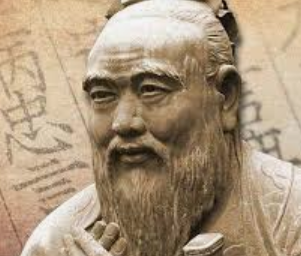
The cautious seldom err.

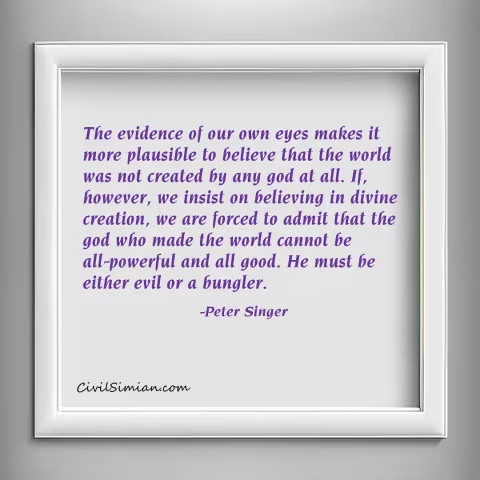

5 months 4 days ago
The liberal world order that emerged, that... has these pragmatic and... moral dimensions has been severely challenged in the last few years, and the sources of this challenge are numerous. One is the rise of overtly authoritarian states like China and Russia. They have consolidated their rule. They seem to be stable internally, and they are increasingly seeking to project their power and influence, their model... across international borders.
▼
Source
source
19:23

6 months 1 week ago
The revolutionaries say: "The government organization is bad in this and that respect; it must be destroyed and replaced by this and that." But a Christian says: "I know nothing about the governmental organization, or in how far it is good or bad, and for the same reason I do not want to support it."
▼
Source
source
Chapter IX, The Acceptance of the Christian Conception of Life will Emancipate Men from the Miseries of our Pagan Life
4 months 4 weeks ago
Wisdom, if it were young, would cherish love, nursing it with devotion, deepening it with sacrifice, vitalizing with parentage, making all things subordinate to it till the end. Even though it consumes us in its service and overwhelms us with tragedy, even though it breaks us down with separations, let it be first. How can it matter what price we pay for love?
▼
Source
source
Ch. 2 : On Youth
7 months ago
This grave dissociation of past and present is the generic fact of our time and the cause of the suspicion, more or less vague, which gives rise to the confusion characteristic of our present-day existence. We feel that we actual men have suddenly been left alone on the earth; that the dead did not die in appearance only but effectively; that they can no longer help us. Any remains of the traditional spirit have evaporated. Models, norms, standards are no use to us. We have to solve our problems without any active collaboration of the past, in full actuality, be they problems of art, science, or politics. The European stands alone, without any living ghosts by his side; like Peter Schlehmil he has lost his shadow. This is what always happens when midday comes.
▼
Source
source
"The Dehumanisation of Art"; Ortega y Gasset later used this passage in The Revolt of the Masses (1929), quoting it in Ch. III: The Height Of The Times
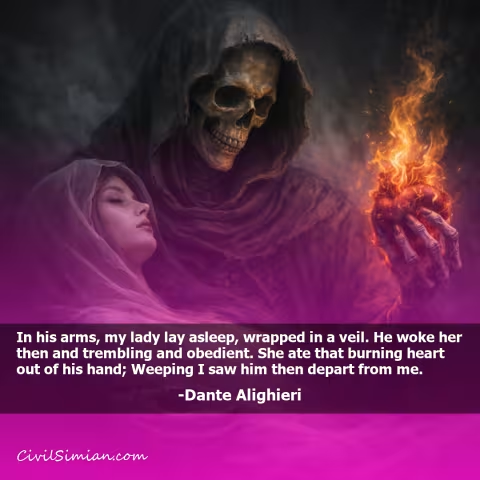
8 months 2 weeks ago
God the Almighty has made our rulers mad; they actually think they can do-and order their subjects to do-whatever they please. And the subjects make the mistake of believing that they, in turn, are bound to obey their rulers in everything.
▼
Source
source
p. 83

7 months 1 week ago
The concessions of the weak are the concessions of fear.

5 months 5 days ago
The regular rhythms of factory production and its clear divisions of work time and nonwork time tend to decline in the realm of immaterial labor. Think how at the high end of labor market companies like Microsoft try to make the office more like home, offering free meals and exercise programs to keep employees in the office as many of their waking hours as possible. At the low end of the labor market workers have to juggle several job to make ends meet. Such practices always existed, but today, with the passage from Fordism to post-Fordism, the increased flexibility and mobility imposed on workers, and the decline of the stable, long-term employment typical of factory work, this tends to become the norm. At both the high end and low ends or labor market the new paradigm undermines the division between work time and the time of life.
▼
Source
source
145
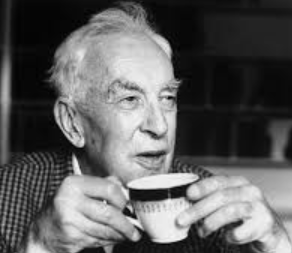
5 months 3 weeks ago
I cannot think of any circumstances in which advertising would not be an evil.
▼
Source
source
In David Ogilvy, Confessions of an Advertising Man (New York: Atheneum, 1963) ch. 11
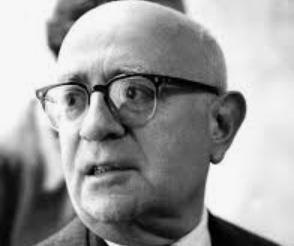
6 months 3 weeks ago
The jargon makes it seem that ... the pure attention of the expression to the subject matter would be a fall into sin.
▼
Source
source
p. 9
8 months 1 week ago
You are never too old to set another goal, or to dream a new dream. Unknown, but also attributed to Les Brown, a motivational speaker. Commonly attributed to C.S. Lewis, but never with a primary source listed.
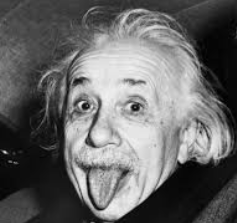
3 months 4 weeks ago
As a child, I received instruction both in the Bible and in the Talmud. I am a Jew, but I am enthralled by the luminous figure of the Nazarene.

7 months 2 weeks ago
Nature is none other than God in things... Animals and plants are living effects of Nature; Whence all of God is in all things... Think thus, of the sun in the crocus, in the narcissus, in the heliotrope, in the rooster, in the lion.
▼
Source
source
As quoted in Elements of Pantheism (2004) by Paul A. Harrison
7 months 5 days ago
Everything exists; nothing exists. Either formula affords a like serenity. The man of anxiety, to his misfortune, remains between them, trembling and perplexed, forever at the mercy of a nuance, incapable of gaining a foothold in the security of being or in the absence of being.
7 months 1 week ago
Men are qualified for civil liberty in exact proportion to their disposition to put moral chains upon their own appetites, - in proportion as their love to justice is above their rapacity, - in proportion as their soundness and sobriety of understanding is above their vanity and presumption, - in proportion as they are more disposed to listen to the counsels of the wise and good, in preference to the flattery of knaves. Society cannot exist, unless a controlling power upon will and appetite be placed somewhere; and the less of it there is within, the more there must be without. It is ordained in the eternal constitution of things, that men of intemperate minds cannot be free. Their passions forge their fetters.

8 months 1 week ago
He was free, free in every way, free to behave like a fool or a machine, free to accept, free to refuse, free to equivocate; to marry, to give up the game, to drag this death weight about with him for years to come. He could do what he liked, no one had the right to advise him, there would be for him no Good or Evil unless he thought them into being.
▼
Source
source
L'âge de raison (The Age of Reason)
7 months 1 week ago
The arrogance of age must submit to be taught by youth.
▼
Source
source
Letter to Frances Burney
7 months 1 day ago
Behold, a sower went forth to sow; And when he sowed, some seeds fell by the way side, and the fowls came and devoured them up: Some fell upon stony places, where they had not much earth: and forthwith they sprung up, because they had no deepness of earth: And when the sun was up, they were scorched; and because they had no root, they withered away. And some fell among thorns; and the thorns sprung up, and choked them: But other fell into good ground, and brought forth fruit, some an hundredfold, some sixtyfold, some thirtyfold. Who hath ears to hear, let him hear.
▼
Source
source
13:3-9 (KJV)


8 months 1 week ago
Our age is retrospective. It builds the sepulchres of the fathers. It writes biographies, histories, and criticism. The foregoing generation beheld God and nature face to face; we, through their eyes. Why should not we also enjoy an original relation to the universe. Why should not we have a poetry and philosophy of insight and not of tradition, and a religion by revelation to us, and not the history of theirs?
▼
Source
source
Introduction
8 months 1 week ago
I observe that a very large portion of the human race does not believe in God and suffers no visible punishment in consequence. And if there were a God, I think it very unlikely that he would have such an uneasy vanity as to be offended by those who doubt his existence.
▼
Source
source
Bertrand Russell's Best: Silhouettes in Satire (1958), "On Religion".

8 months 1 week ago
Reading is merely a surrogate for thinking for yourself; it means letting someone else direct your thoughts. Many books, moreover, serve merely to show how many ways there are of being wrong, and how far astray you yourself would go if you followed their guidance. You should read only when your own thoughts dry up, which will of course happen frequently enough even to the best heads; but to banish your own thoughts so as to take up a book is a sin against the holy ghost; it is like deserting untrammeled nature to look at a herbarium or engravings of landscapes.
▼
Source
source
Vol. 2, Ch. 22, § 261
6 months 2 days ago
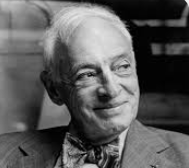
In the greatest confusion there is still an open channel to the soul. It may be difficult to find because by midlife it is overgrown, and some of the wildest thickets that surround it grow out of what we describe as our education. But the channel is always there, and it is our business to keep it open, to have access to the deepest part of ourselves.
▼
Source
source
Foreword to The Closing of the American Mind by Allan Bloom
CivilSimian.com created by AxiomaticPanic, CivilSimian, Kalokagathia