

1 week 3 days ago
Faith is nothing else than reason grown courageous - reason raised to its highest power, expanded to its widest vision.
▼
Source
source
"Religious Perplexities" (1922), his Hibbert Lecture.

1 week 6 days ago
From the nature of things, every society must at all times possess within itself the sovereign powers of legislation. The feelings of human nature revolt against the supposition of a state so situated as that it may not in any emergency provide against dangers which perhaps threaten immediate ruin. While those bodies are in existence to whom the people have delegated the powers of legislation, they alone possess and may exercise those powers; but when they are dissolved by the lopping off one or more of their branches, the power reverts to the people, who may exercise it to unlimited extent, either assembling together in person, sending deputies, or in any other way they may think proper.
3 months 4 days ago
The artist in realizing his own individuality reveals potentialities hitherto unrealized. The revelation is the inspiration of other individuals to make the potentialities real, for it is not sheer revolt against things as they are which stirs human endeavor to its depth, but vision of what might be and is not. Subordination of the artists to any special cause no matter how worthy does violence not only to the artist but to the living source of a new and better future.
1 month 5 days ago
The spirits that I summoned up, I now can't rid myself of.
▼
Source
source
Der Zauberlehrling (The Sorcerer's Apprentice)

4 months 1 week ago
The same law that shapes the earth-star shapes the snow-star. As surely as the petals of a flower are fixed, each of these countless snow-stars comes whirling to earth...these glorious spangles, the sweeping of heaven's floor.
▼
Source
source
January 5, 1856

3 months 1 week ago
Paper, they say, does not blush, but I assure you it's not true and that it's blushing just as I am now, all over.
3 weeks 1 day ago
So long as you are a slave to the opinions of the many you have not yet approached freedom or tasted its nectar...But I do not mean by this that we ought to be shameless before all men and to do what we ought not; but all that we refrain from and all that we do, let us not do or refrain from merely because it seems to the multitude somehow honorable or base, but because it is forbidden by reason and the god within us.
▼
Source
source
Oration to the Uneducated Cynics

4 months 1 week ago
In the old dramas it was love that had to be sacrificed to painful duty. In the modern instance the sacrifice is at the shrine of what William James called "the Bitch Goddess, Success." Love is to be abandoned for the stern pursuit of newspaper notoriety and dollars.
▼
Source
source
"Silence is Golden," p. 61

3 months 3 weeks ago
Holding fast to these things, you will know the worlds of gods and mortals which permeates and governs everything. And you will know, as is right, nature similar in all respects, so that you will neither entertain unreasonable hopes nor be neglectful of anything.
▼
Source
source
As quoted in Divine Harmony: The Life and Teachings of Pythagoras by John Strohmeier and Peter Westbrook.

5 months 1 week ago
It is not necessary to ask whether soul and body are one, just as it is not necessary to ask whether the wax and its shape are one, nor generally whether the matter of each thing and that of which it is the matter are one. For even if one and being are spoken of in several ways, what is properly so spoken of is the actuality.

3 months ago
All of this that is happening to me, and happening to others about me, is it reality or is it fiction? May not all of it perhaps be a dream of God, or of whomever it may be, which will vanish as soon as He wakes? And therefore when we pray to Him, and cause canticles and hymns to rise to Him, is it not that we may lull Him to sleep, rocking the cradle of His dreams? Is not the whole liturgy, of all religions, only a way perhaps of soothing God in His dreams, so that He shall not wake and cease to dream us?
▼
Source
source
Niebla [Mist]

4 months 1 week ago
It is our interest and our task to make the revolution permanent until all the more or less propertied classes have been driven from their ruling positions, until the proletariat has conquered state power and until the association of the proletarians has progressed sufficiently far - not only in one country but in all the leading countries of the world - that competition between the proletarians of these countries ceases and at least the decisive forces of production are concentrated in the hands of the workers. Our concern cannot simply be to modify private property, but to abolish it, not to hush up class antagonisms but to abolish classes, not to improve the existing society but to found a new one.
▼
Source
source
Address of the Central Committee to the Communist League in London, March 1850

2 months 1 week ago
And therefore just as a brigand caught in broad daylight in the act cannot persuade us that he did not lift his knife in order to rob his victim of his purse, and had no thought of killing him, we too, it would seem, cannot persuade ourselves or others that the soldiers and policemen around us are not to guard us, but only for defense against foreign foes, and to regulate traffic and fetes and reviews; we cannot persuade ourselves and others that we do not know that the men do not like dying of hunger, bereft of the right to gain their subsistence from the earth on which they live; that they do not like working underground, in the water, or in the stifling heat, for ten to fourteen hours a day, at night in factories to manufacture objects for our pleasure. One would imagine it impossible to deny what is so obvious. Yet it is denied.
▼
Source
source
Chapter XII, Conclusion-Repent Ye, for the Kingdom of Heaven is at Hand
3 months 4 days ago
The mystery is that the world is at it is -- a mystery that is the source of all joy and all sorrow, of all hope and fear, and the source of development both creative and degenerative. The contingency of all into which time enters is the source of pathos, comedy, and tragedy.

3 months 5 days ago
Master, we saw one casting out devils in thy name, and he followeth not us: and we forbad him, because he followeth not us. But Jesus said, Forbid him not: for there is no man which shall do a miracle in my name, that can lightly speak evil of me. For he that is not against us is on our part.
▼
Source
source
Mark 9:38-40 (KJV)

2 months 4 weeks ago
Any madness in us gains from being expressed, because in this way one gives a human form to what separates us from humanity.
▼
Source
source
p. 76
1 week 5 days ago
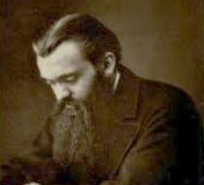
A little reflection will show us that every belief, even the simplest and most fundamental, goes beyond experience when regarded as a guide to our actions. ... Even the fundamental "I am," which cannot be doubted, is no guide to action until it takes to itself "I shall be," which goes beyond experience. The question is not, therefore, "May we believe what goes beyond experience?" for this is involved in the very nature of belief; but "How far and in what manner may we add to our experience in forming our beliefs?"

4 months 3 days ago
Commit no lustfulness, so that harm and regret may not reach thee from thine own actions.

4 months 1 week ago
And when his hours are numbered, and the world Is all his own, retiring, as he were not, Leaves, when the sun appears, astonished Art To mimic in slow structures, stone by stone Built in an age, the mad wind's night-work, The frolic architecture of the snow.
▼
Source
source
The Snow-Storm
4 months 1 week ago
There is a kind of latent omniscience not only in every man but in every particle.
▼
Source
source
p. 263
1 week 6 days ago
It is in our lives, and not from our words, that our religion must be read. By the same test the world must judge me. But this does not satisfy the priesthood. They must have a positive, a declared assent to all their interested absurdities. My opinion is that there would never have been an infidel, if there had never been a priest.
▼
Source
source
Letter to Mrs. Harrison Smith

4 months 1 week ago
Yes, I am so free. And what a superb absence is my soul.
▼
Source
source
Orestes, Act 1
4 months 1 week ago
The tool, as we have seen, is not exterminated by the machine.
▼
Source
source
Vol. I, Ch. 15, Section 2, pg. 422.
1 week 5 days ago
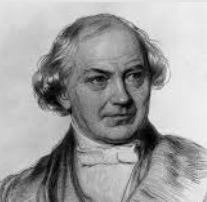
Truths obtained by Induction are made compact and permanent by being expressed in 'Technical Terms'.

5 months 1 week ago
If one thing goes without saying, almost anything can.
3 months 5 days ago
Beware of false prophets, which come to you in sheep's clothing, but inwardly they are ravening wolves.
▼
Source
source
Matthew 7:15 (KJV)

3 months 1 week ago
From the cradle to the grave, each individual pays for the sin of not being God. That's why life is an uninterrupted religious crisis, superficial for believers, shattering for doubters.
2 months 1 day ago
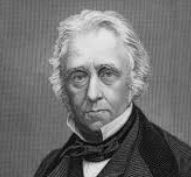
From the poetry of Lord Byron they drew a system of ethics, compounded of misanthropy and voluptuousness, a system in which the two great commandments were, to hate your neighbour, and to love your neighbour's wife.
▼
Source
source
p. 351
1 week 6 days ago
Note that Unitarianism rejects concepts such as Hell, the Trinity, Original Sin, the infallability of the Bible, as well as claims that any one religion has a monopoly on theological truth and the Holy Spirit. At the same time, it accepts the notion that reason, rational thought, science, and philosophy can coexist with faith in God.
▼
Source
source
Thomas Jefferson, letter to Benjamin Waterhouse (26 June 1822), published in The Works of Thomas Jefferson in Twelve Volumes, Federal Edition, Paul Leicester Ford, ed., New York: G. P. Putnam's Sons, 1904, Vol. 12, pp. 241-243.
1 week 5 days ago
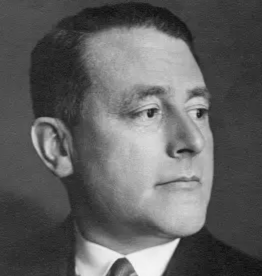
Every religious, moral, economic, ethical, or other antithesis transforms into a political one if it is sufficiently strong to group human beings effectively according to friend and enemy. The political does not reside in the battle itself, which. possesses its own technical, psychological, and military laws, but in the mode of behavior which is determined by this possibility, by clearly evaluating the concrete situation and thereby being able to distinguish correctly the real friend and the real enemy.

4 months 1 week ago
It is hard to have patience with people who say 'There is no death' or 'Death doesn't matter.' There is death. And whatever is matters. And whatever happens has consequences, and it and they are irrevocable and irreversible. You might as well say that birth doesn't matter.
4 months 1 week ago
What is important is that sex was not only a question of sensation and pleasure, of law and interdiction, but also of the true and the false.
▼
Source
source
Vol. I, p. 76
3 months 1 week ago
When we know what words are worth, the amazing thing is that we try to say anything at all, and that we manage to do so. This requires, it is true, a supernatural nerve.
3 months 5 days ago
But if one Subject giveth Counsell to another, to do anything contrary to the Lawes, whether that Counsell proceed from evil intention, or from ignorance onely, it is punishable by the Common-wealth; because ignorance of the Law, is no good excuse, where every man is bound to take notice of the Lawes to which he is subject.
▼
Source
source
The Second Part, Chapter 25, p. 132

3 months 3 weeks ago
That which exercises reason is more excellent than that which does not exercise reason; there is nothing more excellent than the universe, therefore the universe exercises reason.
▼
Source
source
As quoted in De Natura Deorum by Cicero, ii. 8.; iii. 9.

2 months 1 week ago
The cruelest lies are often told in silence. A man may have sat in a room for hours and not opened his teeth, and yet come out of that room a disloyal friend or a vile calumniator. And how many loves have perished because, from pride, or spite, or diffidence, or that unmanly shame which withholds a man from daring to betray emotion, a lover, at the critical point of the relation, has but hung his head and held his tongue?
▼
Source
source
Truth of Intercourse.

2 months 3 weeks ago
The deliberate aim at Peace very easily passes into its bastard substitute, Anesthesia.
▼
Source
source
p. 284.


4 months 2 weeks ago
Lands for the purposes of pleasure and magnificence, parks, gardens, public walks, &c. possessions which are every where considered as causes of expence, not as sources of revenue, seem to be the only lands which, in a great and civilized monarchy, ought to belong the crown.
▼
Source
source
Chapter II, Part I, p. 891.
3 weeks 2 days ago
It is very difficult to understand proletarian violence as long as we try to think in terms of the ideas disseminated by bourgeois philosophy; according to this philosophy, violence is a relic of barbarism which is bound to disappear under the progress of enlightenment.
▼
Source
source
p. 65

5 months 3 days ago
Only after Winter comes do we know that the pine and the cypress are the last to fade.
3 months 2 weeks ago
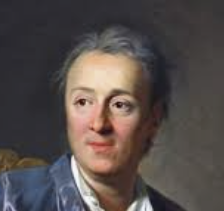
Man was born to live with his fellow human beings. Separate him, isolate him, his character will go bad, a thousand ridiculous affects will invade his heart, extravagant thoughts will germinate in his brain, like thorns in an uncultivated land.
▼
Source
source
The character Suzanne Simon, in La Religieuse [The Nun]

5 months 1 week ago
The opposite of an idealist is too often a man without love.

4 months 1 week ago
The world is all that is the case.
▼
Source
source
(1) Original German: Die Welt ist alles, was der Fall ist.
2 months 2 weeks ago
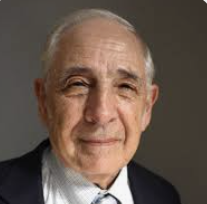
The assertion fallacy ... is the fallacy of confusing the conditions for the performance of the speech act of assertion with the analysis of the meaning of particular words occurring in certain assertions.
▼
Source
source
P. 141.
4 months 1 week ago
Success treads on every right step. For the instinct is sure, that prompts him to tell his brother what he thinks. He then learns, that in going down into the secrets of his own mind, he has descended into the secrets of all minds. He learns that he who has mastered any law in his private thoughts, is master to that extent of all men whose language he speaks, and of all into whose language his own can be translated.
▼
Source
source
par. 35

4 months 2 weeks ago
The ordinary surroundings of life which are esteemed by men (as their actions testify) to be the highest good, may be classed under the three heads - Riches, Fame, and the Pleasures of Sense: with these three the mind is so absorbed that it has little power to reflect on any different good. I, 3 Variant translation: The things which ... are esteemed as the greatest good of all ... can be reduced to these three headings, to wit : Riches, Fame, and Pleasure. With these three the mind is so engrossed that it cannot scarcely think of any other good.
4 months 1 week ago
All those movements which took place in the fifteenth and sixteenth centuries and which had the Reformation as their main expression and result should be analyzed as a great crisis of the Western experience of subjectivity and a revolt against the kind of religious and moral power which gave form, during the Middle Ages, to this subjectivity. The need to take a direct part in spiritual life, in the work of salvation, in the truth which lies in the Book-all that was a struggle for a new subjectivity.
▼
Source
source
p. 782
4 months 2 weeks ago
If I had as clear an idea of ghosts, as I have of a triangle or a circle, I should not in the least hesitate to affirm that they had been created by God; but as the idea I possess of them is just like the ideas, which my imagination forms of harpies, gryphons, hydras, &c., I cannot consider them as anything but dreams, which differ from God as totally as that which is not differs from that which is.
▼
Source
source
Letter to Hugo Boxel (October 1674) The Chief Works of Benedict de Spinoza (1891) Tr. R. H. M. Elwes, Vol. 2, Letter 58 (54).
3 months 1 week ago
I am sorry I can say nothing more consoling to you, for love in action is a harsh and dreadful thing compared with love in dreams. Love in dreams is greedy for immediate action, rapidly performed and in the sight of all. Men will even give their lives if only the ordeal does not last long but is soon over, with all looking on and applauding as though on the stage. But active love is labour and fortitude, and for some people too, perhaps, a complete science. But I predict that just when you see with horror that in spite of all your efforts you are getting farther from your goal instead ofnearer to it - at that very moment I predict that you will reach it and behold clearly the miraculous power of the Lord who has been all the time loving and mysteriously guiding you.
CivilSimian.com created by AxiomaticPanic, CivilSimian, Kalokagathia