


3 months 1 week ago
The Whigs of this day have before them, in this Appeal, their constitutional ancestors: They have the doctors of the modern school. They will choose for themselves. The author of the Reflections has chosen for himself. If a new order is coming on, and all the political opinions must pass away as dreams, which our ancestors have worshipped as revelations, I say for him, that he would rather be the last (as certainly he is the least) of that race of men, than the first and greatest of those who have coined to themselves Whig principles from a French die, unknown to the impress of our fathers in the constitution.
▼
Source
source
p. 476
1 week 2 days ago
How can the Universe tell its own story save by making use of human speech; how convey its meanings to finite minds save by employing a thinker to declare them? So long as the story remains unspoken, unwritten, can we say it exists at all? Does not the significance of things become a story by the very process which ends in the movement of an intelligently guided pen over a sheet of paper, in the reading of printed types, in the utterance of recognised vocables; and until this process has been accomplished is not the "meaning" a mere promise or unrealized potency? Can we learn the history of the world, and of human life, otherwise than by reading, or hearing it spoken? How, then, can we receive it without the intermediation of a writer, a speaker?


1 month 3 days ago
"By what method or methods can the able men from every rank of life be gathered, as diamond-grains from the general mass of sand: the able men, not the sham-able;-and set to do the work of governing, contriving, administering and guiding for us!" It is the question of questions. All that Democracy ever meant lies there: the attainment of a truer and truer Aristocracy, or Government again by the Best.
2 months 5 days ago
Orwell's essay speaks to us today. It tells us that patriotism is the sine qua non of survival, and that it arises spontaneously in the ordinary human heart. It does not depend upon any grand narrative of triumph of the kind put about by the fascists and the communists, but grows from the habits of association that we British have been fortunate enough to inherit. We do not use grand and tainted honorifics like "la patrie" or "das Vaterland". We refer simply to this spot of earth, which belongs to us because we belong to it, have lived in it, loved it, defended it and established peace and prosperity within its borders.
▼
Source
source
'Brexit will give us back pride in our island roots', The Times (18 November 2017), p. 35

4 months 2 weeks ago
Secrets in manufactures are capable of being longer kept than secrets in trade.
▼
Source
source
Chapter VII, p. 72.
2 months 1 week ago
It is better to lose health like a spendthrift than to waste it like a miser. It is better to live and be done with it, than to die daily in the sick-room.
▼
Source
source
315
2 months 3 weeks ago
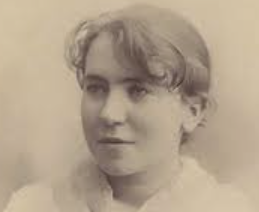
What would become of the rich, if not for the poor? What would become of these idle, parasitic ladies, who squander more in a week than their victims earn in a year, if not for the eighty million wage-workers? Equality, who ever heard of such a thing?
2 months 3 weeks ago
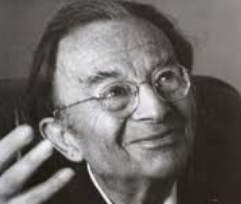
I believe that the man choosing progress can find a new unity through the full development of all his human forces, which are produced in three orientations. These can be presented separately or together: biophilia, love for humanity and nature, and independence and freedom.
2 months 2 weeks ago
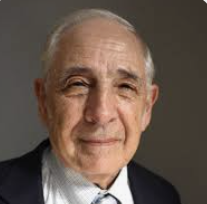
Just acquiring this amount of "education" will not, by itself, make you an educated person, even less will it give you what Oakeshott calls "judgment." But if the manner of instruction is adequate, the student should be able to acquire this much knowledge in a way that combines intellectual openness, critical scrutiny, and logical clarity. If so, learning will not stop when the student leaves the university.

4 months 1 week ago
A man fits out a ship at a great expense and sends it to the West Indies with a crew of men and boys, and after six months or a year, it comes back with a load of pine-apples; now, if no more gets accomplished than the speculator commonly aims at, if it simply turns out what is called a successful venture, I am less interested in this expedition than in some child's first excursions a-huckleberrying, in which it is introduced into a new world, experiences a new development, though it brings home only a gill of berries in its basket.
3 weeks 2 days ago
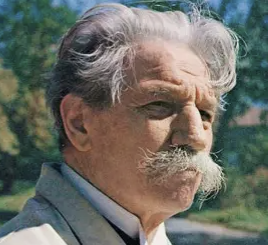
Awakening of Western thought will not be complete until that thought steps outside itself and comes to an understanding with the search for a world-view as this manifests itself in the thought of mankind as a whole. We have too long been occupied with the developing series of our own philosophical systems, and have taken no notice of the fact that there is a world-philosophy of which our Western philosophy is only a part. If, however, one conceives philosophy as being a struggle to reach a view of the world as a whole, and seeks out the elementary convictions which are to deepen it and give it a sure foundation, one cannot avoid setting our own thought face to face with that of the Hindus, and of the Chinese in the Far East. ... Our Western philosophy, if judged by its own latest pronouncements, is much naiver than we admit to ourselves, and we fail to perceive this only because we have acquired the art of expressing what is simple in a pedantic way.

4 months 1 week ago
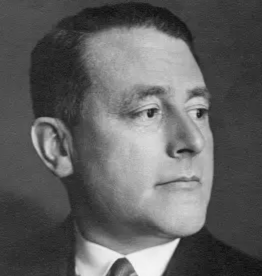
The worker becomes all the poorer the more wealth he produces, the more his production increases in power and range. The worker becomes an ever cheaper commodity the more commodities he creates. With the increasing value of the world of things proceeds in direct proportion the devaluation of the world of men. Labour produces not only commodities; it produces itself and the worker as a commodity - and does so in the proportion in which it produces commodities generally.
▼
Source
source
p. 71, The Marx-Engels Reader
1 week 4 days ago
Sovereign is he who decides on the exception.
▼
Source
source
p.5
2 months 3 weeks ago
I do not mean to deny the biologic, physiologic, or psychologic factors in creating crime; but there is hardly an advanced criminologist who will not concede that the social and economic influences are the most relentless, the most poisonous germs of crime.
1 week 5 days ago
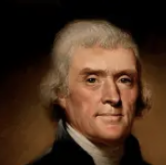
I am for freedom of religion, & against all maneuvres to bring about a legal ascendancy of one sect over another, for freedom of the press, and against all violations of the Constitution to silence by force and not by reason the complaints or criticisms, just or unjust, of our citizens against the conduct of their agents.
▼
Source
source
Letter to Elbridge Gerry (26 January 1799); published in The Writings of Thomas Jefferson, Memorial Edition 20 Vols., Washington, D.C., 1903-04, Volume 10, p. 78

2 months 1 week ago
The newspaper is a corporate symbolist poem, environmental and invisible, as poem.
2 months 3 weeks ago
The STATE IDEA, the authoritarian principle, has been proven bankrupt by the experience of the Russian Revolution. If I were to sum up my whole argument in one sentence I should say: The inherent tendency of the State is to concentrate, to narrow, and monopolize all social activities; the nature of revolution is, on the contrary, to grow, to broaden, and disseminate itself in ever-wider circles. In other words, the State is institutional and static; revolution is fluent, dynamic. These two tendencies are incompatible and mutually destructive. The State idea killed the Russian Revolution and it must have the same result in all other revolutions, unless the libertarian idea prevail.

4 months 1 week ago
When they have really learned to love their neighbours as themselves, they will be allowed to love themselves as their neighbours.
▼
Source
source
Letter XIV

2 months 3 weeks ago
One of the major problems of our society is that so many people are too intelligent to accept religion, but not intelligent or strong-minded enough to look for acceptable alternatives; in the same way, many people are strong-minded enough not to want to be 'organization men', but incapable of seeing beyond an act of protest. These situations produce a sense of being 'between two stools', lacking real motive; a sense of mental strain is produced that may find its outlet in violence, or in organised anti-social behaviour.
▼
Source
source
p. 224, Crimes of Freedom -- and their cure
1 month 3 days ago
Fire is the best of servents; but what a master!
▼
Source
source
Bk. II, ch. 9.
3 weeks ago
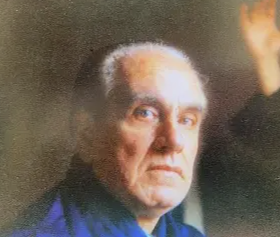
Warrior spirit is characterised by direct, clear and loyal relations, based on fidelity and honour and a sound instinct for the various dignities, which it can well distinguish: it opposes everything which is impersonal and trivial.
▼
Source
source
p. 117
1 month 2 weeks ago
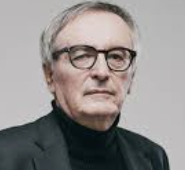
It is because human needs are contradictory that no human life can be perfect. That does not mean that human life is imperfect. It means that the idea of perfection has no meaning.
▼
Source
source
'Modus Vivendi' (p.29)

4 months 1 week ago
People nowadays think that scientists exist to instruct them, poets, musicians, etc. to give them pleasure. The idea that these have something to teach them - that does not occur to them.
▼
Source
source
p. 36e
1 month 3 weeks ago
We have been Godlike in our planned breeding of our domesticated plants and animals, but we have been rabbitlike in our unplanned breeding of ourselves.
▼
Source
source
Man and Hunger: The Perspectives of History, entered into the Congressional Record by Senator Ernest Gruening

3 weeks 6 days ago
It was a great deed to conquer Carthage, but a greater deed to conquer death.
3 months 1 week ago
The mind understands something only insofar as it absorbs it like a seed into itself, nurtures it, and lets it grow into blossom and fruit. Therefore scatter holy seeds into the soil of the spirit.
▼
Source
source
"Ideas," Lucinde and the Fragments, P. Firchow, trans. (1991), § 5
3 months 2 weeks ago
The most dangerous madmen are those created by religion, and ... people whose aim is to disrupt society always know how to make good use of them on occasion.

4 months 2 weeks ago
Use, do not abuse; as the wise man commands. I flee Epictetus and Petronius alike. Neither abstinence nor excess ever renders man happy.
▼
Source
source
"Cinquième discours: sur la nature de plaisir," Sept Discours en Vers sur l'Homme, 1738

3 months 1 week ago
The wrinkles of a nation are as visible as those of an individual.
3 weeks 2 days ago
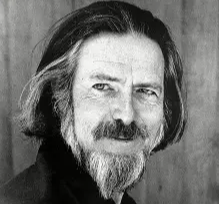
There is nothing wrong with meditating just to meditate, in the same way that you listen to music just for the music. If you go to concerts to "get culture" or to improve your mind, you will sit there as deaf as a doorpost.
▼
Source
source
p. 90
2 months 3 weeks ago
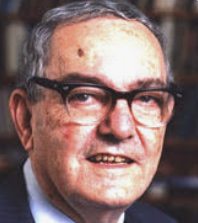
The principle of bounded rationality is the capacity of the human mind for formulating and solving complex problems is very small compared with the size of the problems whose solution is required for objectively rational behavior in the real world - or even for a reasonable approximation to such objective rationality.
▼
Source
source
p. 198.
3 months 2 weeks ago
Only a very bad theologian would confuse the certainty that follows revelation with the truths that are revealed. They are entirely different things.
▼
Source
source
Apology for the Abbé de Prades
3 months 4 days ago
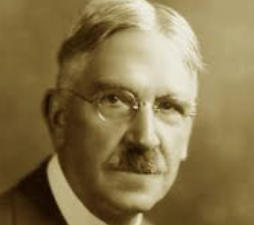
Naturalism is a word of many meetings in philosophy as well as in art. like most isms - classicism and romanticism, idealism and realism in art - it's has become an emotional term, a war cry of partisans.
▼
Source
source
p. 157
4 months 1 week ago
The World and Life are one. Physiological life is of course not "Life". And neither is psychological life. Life is the world. Ethics does not treat of the world. Ethics must be a condition of the world, like logic. Ethics and Aesthetics are one.
▼
Source
source
Journal entry (24 July 1916), p. 77e
4 months 2 weeks ago
The ancient Romans built their greatest masterpieces of architecture for wild beasts to fight in.
▼
Source
source
Letter addressed to "un premier commis" [name unknown] (20 June 1733), from Oeuvres Complètes de Voltaire: Correspondance [Garnier frères, Paris, 1880], vol. I, letter # 343 (p. 354)
5 months 1 week ago
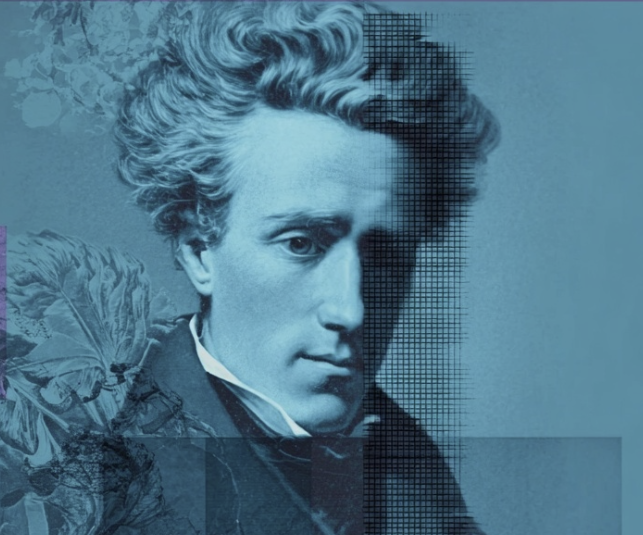
Married people pledge love for each other throughout eternity. Well, now, that is easy enough but does not mean very much, for if one is finished with time one is probably finished with eternity. If, instead of saying "throughout eternity," the couple would say, "until Easter, until next May Day," then what they say would make some sense, for then they would be saying something and also something they perhaps could carry out.
3 weeks 2 days ago
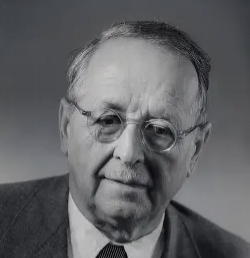
Cartan developed a general scheme of infinitesimal geometry in which Klein's notions were applied to the tangent plane and not to the n-dimensional manifold M itself. On the foundations of general infinitesimal geometry.
▼
Source
source
Bull. Amer. Math. Soc. 35 (1929) 716-725 doi:10.1090/S0002-9904-1929-04812-2 (quote on p. 716)
4 months 2 weeks ago
Compassion for animals is intimately connected with goodness of character, and it may be confidently asserted that he, who is cruel to living creatures, cannot be a good man. Moreover, this compassion manifestly flows from the same source whence arise the virtues of justice and loving-kindness towards men.
▼
Source
source
Part III, Ch. VIII, 7, p. 223
1 month 3 days ago
This poor amphibious Pope too gives loaves to the Poor; has in him more good latent than he is himself aware of. His poor Jesuits, in the late Italian Cholera, were, with a few German Doctors, the only creatures whom dastard terror had not driven mad: they descended fearless into all gulfs and bedlams; watched over the pillow of the dying, with help, with counsel and hope; shone as luminous fixed stars, when all else had gone out in chaotic night: honour to them!
3 months 1 week ago
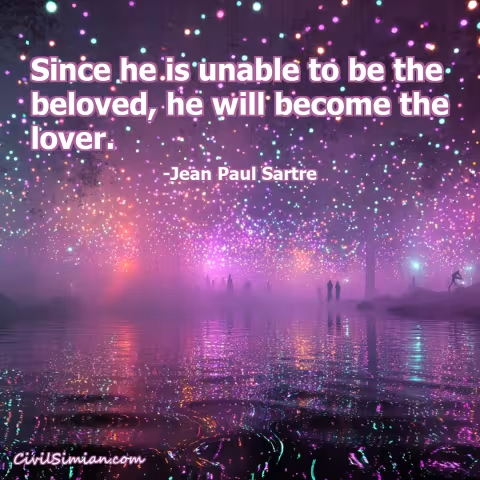
We always love . . . despite; and that "despite" covers an infinity.
4 months 4 weeks ago
People travel to wonder at the height of mountains, at the huge waves of the sea, at the long courses of rivers, at the vast compass of the ocean, at the circular motion of the stars; and they pass by themselves without wondering.
▼
Source
source
Variant: Men go abroad to admire the heights of mountains, the mighty billows of the sea, the broad tides of rivers, the compass of the ocean, and the circuits of the stars, and pass themselves by. X
3 months 2 weeks ago
Truth is the cry of all, but the game of the few.
▼
Source
source
Paragraph 368
4 months 2 weeks ago
We rarely hear, it has been said, of the combinations of masters, though frequently of those of the workman. But whoever imagines, upon this account, that masters rarely combine, is as ignorant of the world as of the subject.
▼
Source
source
Chapter VIII, p. 80.
3 months 1 week ago
Building worlds is not enough for the deeper urging mind; but a loving heart sates the striving spirit.
▼
Source
source
Fragment No. 91

4 months 1 week ago
Nature magically suits the man to his fortunes, by making these the fruit of his character.
▼
Source
source
Fate
3 weeks 2 days ago
Speaking as of today, I do not consider it intellectually respectable to be a partisan in matters of religion. I see religion as I see such other basic fascinations as art and science, in which there is room for many different approaches, styles, techniques, and opinions. Thus I am not formally a committed member of any creed or sect and hold no particular religious view or doctrine as absolute. I deplore missionary zeal, and consider excessive dedication to and advocacy of any particular religion, as either the best or the only true way, an almost irreligious arrogance. Yet my work and my life are fully concerned with religion, and the mystery of being is my supreme fascination, though, as a shameless mystic, I am more interested in religion as feeling and experience than as conception and theory.
▼
Source
source
p. 61

4 months 2 weeks ago
And why should man, added he, pretend to an exemption from the lot of all other animals? The whole earth, believe me, PHILO, is cursed and polluted. A perpetual war is kindled amongst all living creatures. Necessity, hunger, want, stimulate the strong and courageous: Fear, anxiety, terror, agitate the weak and infirm. The first entrance into life gives anguish to the new-born infant and to its wretched parent: Weakness, impotence, distress, attend each stage of that life: and it is at last finished in agony and horror.
▼
Source
source
Demea to Philo, Part X
CivilSimian.com created by AxiomaticPanic, CivilSimian, Kalokagathia