


4 months 2 weeks ago
It is sublime as night and a breathless ocean. It contains every religious sentiment, all the grand ethics, which visit in turn each noble poetic mind .... It is of no use to put away the book if I trust myself in the woods or in a boat upon the pond. Nature makes a Brahmin of me presently: eternal compensation, unfathomable power, unbroken silence .... This is her creed. Peace, she saith to me, and purity and absolute abandonment - these panaceas expiate all sin and bring you to the beatitude of the Eight Gods.
▼
Source
source
Quoted in Nani Ardeshir Palkhivala, India's Priceless Heritage, 1st ed. (Bombay: Bharatiya Vidya Bhavan, 1980) pp. 9-24

2 months 1 week ago
For tribal man, space was the uncontrollable mystery. For technological man it is time that occupies the same role.
▼
Source
source
p. 85; "Magic that Changes Mood")

1 month 5 days ago
Much has been said of Mahomet's propagating his Religion by the sword. It is no doubt far nobler what we have to boast of the Christian Religion, that it propagated itself peaceably in the way of preaching and conviction. Yet withal, if we take this for an argument of the truth or falsehood of a religion, there is a radical mistake in it. The sword indeed: but where will you get your sword! Every new opinion, at its starting, is precisely in a minority of one. In one man's head alone, there it dwells as yet. One man alone of the whole world believes it; there is one man against all men. That he take a sword, and try to propagate with that, will do little for him. You must first get your sword! On the whole, a thing will propagate itself as it can. We do not find, of the Christian Religion either, that it always disdained the sword, when once it had got one.

4 months 2 weeks ago
Morality is not properly the doctrine of how we may make ourselves happy, but how we may make ourselves worthy of happiness.
2 months 1 week ago
Electric technology is directly related to our central nervous systems, so it is ridiculous to talk of "what the public wants" played over its own nerves.
▼
Source
source
(p. 68)
1 month 5 days ago
There is an irrepressible tendency in every man to develop himself according to the magnitude which Nature has made him of; to speak out, to act out, what nature has laid in him. This is proper, fit, inevitable; nay it is a duty, and even the summary of duties for a man. The meaning of life here on earth might be defined as consisting in this: To unfold your self, to work what thing you have the faculty for.

4 months 2 weeks ago
Setting the mind to remember... involves a continual minimal irradiation of excitement into paths which lead thereto... the continued presence of the thing in the 'fringe' of our consciousness. Letting the thing go involves withdrawal of the irradiation, unconsciousness of the thing, and... obliteration of the paths.
▼
Source
source
Ch. 16

3 months 1 week ago
Only optimists commit suicide, the optimists who can no longer be . . . optimists. The others, having no reason to live, why should they have any to die?

5 months 4 days ago
When the Great Dao (Tao, perfect order) prevails, the world is like a Commonwealth State shared by all, not a dictatorship.
1 week 3 days ago
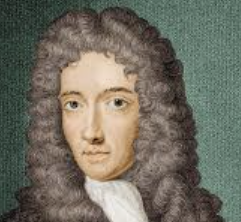
And truly... if men could be persuaded to mind more the advancement of natural philosophy than that of their own reputations, it were not, methinks, very uneasy to make them sensible, that one of the considerablest services, that they could do mankind, were to set themselves diligently and industriously to make experiments and collect observations, without being over-forward to establish principles and axioms, believing it uneasy to erect such theories, as are capable to explicate all the phænomena of nature, before they have been able to take notice of the tenth part of those phænomena, that are to be explicated.
1 week 6 days ago
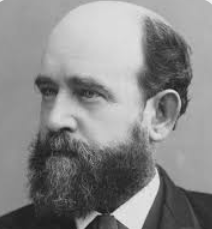
The aim of protection, in short, is to prevent the bringing into a country of things in themselves useful and valuable, in order to compel the making of such things. But what all mankind in the individual affairs of every-day life, regard as to be desired is not the making of things, but the possession of things.
▼
Source
source
Henry George, page 39,
3 weeks 2 days ago
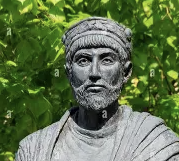
A very weighty argument is this - namely, that neither does the light which descends from thence, chiefly upon the world, mix itself with anything, nor admit of dirtiness or pollution, but remains entirely, and in all things that are, free from defilement, admixture, and suffering. Besides, we must pay attention to the other kinds of phenomena, both to the Intelligible, and yet more to the Sensible - whatever are connected with matter, or will manifest themselves in relation to our subject.

2 months 2 weeks ago
Go - take the mother's soul, and learn three truths: Learn What dwells in man, What is not given to man, and What men live by. When thou hast learnt these things, thou shalt return to heaven.
▼
Source
source
Ch. IV

1 week 5 days ago
The return to order will not be painful, because it will be natural and because it will be favoured by a secret force whose action is wholly creative. We will see precisely the opposite of what we have seen. Instead of these violent commotions, painful divisions, and perpetual and desperate oscillations, a certain stability, and indefinable peace, a universal well-being will announce the presence of sovereignty. There will be no shocks, no violence, no punishment even, except those which the true nation will approve. Even crime and usurpation will be treated with a measured severity, with a calm justice that belongs to legitimate power only. The king will bind up the wounds of the state with a gentle and paternal hand. In conclusion, this is the great truth with which the French cannot be too greatly impressed: the restoration of the monarchy, what they call the counter-revolution, will be not a contrary revolution, but the contrary of revolution.
▼
Source
source
Chapter X, p. 105
4 months 2 weeks ago
Every artist was first an amateur.
▼
Source
source
Progress of Culture

3 months ago
Rome is the Great Beast of atheism and materialism, adoring nothing but itself. Israel is the Great Beast of religion. Neither one nor the other is likable. The Great Beast is always repulsive.
▼
Source
source
p. 123
2 weeks ago
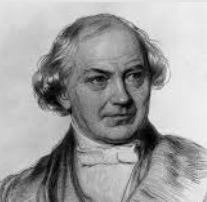
When common words are appropriated as technical terms, their meaning may be modified, and must be rigorously fixed.

5 months 4 days ago
A true friend will partake of the wants and sorrows of his friend, as if they were his own; if he be in want, he will relieve him; if he be in prison, he will visit him; if he be sick, he will come to him; nay-situations may occur, in which he would not scruple to die for him. It cannot then be doubted, that friendship is one of the most useful means of procuring a secure, tranquil, and happy life.
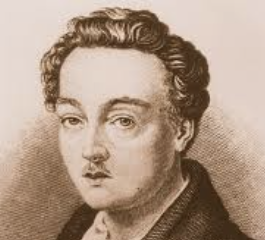
3 months 2 weeks ago
Peace to the shacks! War on the palaces!

4 months 3 weeks ago
Nothing prints more lively in our minds than something we wish to forget.
▼
Source
source
Book II, Ch. 12

4 months 3 weeks ago
Some books are to be tasted, others to be swallowed, and some few to be chewed and digested; that is, some books are to be read only in parts; others to be read, but not curiously; and some few to be read wholly, and with diligence and attention.
▼
Source
source
Of Studies

3 months 2 weeks ago
The regime which is destroyed by a revolution is almost always an improvement on its immediate predecessor, and experience teaches that the most critical moment for bad governments is the one which witnesses their first steps toward reform.
▼
Source
source
p. 214
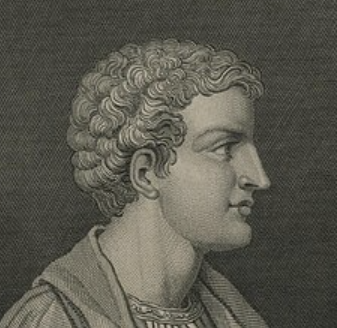
4 months 4 days ago
My cares and my inquiries are for decency and truth, and in this I am wholly occupied.
▼
Source
source
Book I, epistle i, line 11
3 months 1 week ago
The Bible is literature, not dogma.
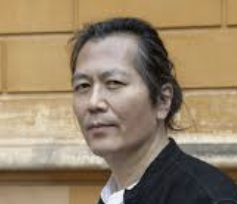
2 months 3 weeks ago
Following Foucault, we may define the art of life as a practice of suicide, of giving oneself to death, of depsychologizing oneself, of playing.
3 months 5 days ago
To its very core, the mind of ressentiment man is filled with envy, the impulse to detract, malice, and secret vindictiveness. These affects have become fixed attitudes, detached from all determinate objects. Independently of his will, this man's attention will be instinctively drawn by all events which can set these affects in motion. The ressentiment attitude even plays a role in the formation of perceptions, expectations, and memories. It automatically selects those aspects of experience which can justify the factual application of this pattern of feeling.
▼
Source
source
L. Coser, trans. (1973), p. 74

4 months 2 weeks ago
Belief in God and a future life makes it possible to go through life with less of stoic courage than is needed by skeptics. A great many young people lose faith in these dogmas at an age at which despair is easy, and thus have to face a much more intense unhappiness than that which falls to the lot of those who have never had a religious upbringing. Christianity offers reasons for not fearing death or the universe, and in so doing it fails to teach adequately the virtue of courage. The craving for religious faith being largely an outcome of fear, the advocates of faith tend to think that certain kinds of fear are not to be deprecated. In this, to my mind, they are gravely mistaken. To allow oneself to entertain pleasant beliefs as a means of avoiding fear is not to live in the best way. In so far as religion makes its appeal to fear, it is lowering to human dignity.
▼
Source
source
p. 107
3 months 2 weeks ago
I cannot help fearing that men may reach a point where they look on every new theory as a danger, every innovation as a toilsome trouble, every social advance as a first step toward revolution, and that they may absolutely refuse to move at all.
▼
Source
source
Book Three, Chapter XXI.
3 months 1 week ago
If someone incessantly drops the word "life," you know he's a sick man.



5 months 2 weeks ago
Every tradition grows ever more venerable — the more remote its origin, the more confused that origin is. The reverence due to it increases from generation to generation. The tradition finally becomes holy and inspires awe.
2 weeks 1 day ago
I put my body through its paces like a war horse; I keep it lean, sturdy, prepared. I harden it and I pity it. I have no other steed. I keep my brain wide awake, lucid, unmerciful. I unleash it to battle relentlessly so that, all light, it may devour the darkness of the flesh. I have no other workshop where I may transform darkness into light. I keep my heart flaming, courageous, restless. I feel in my heart all commotions and all contradictions, the joys and sorrows of life. But I struggle to subdue them to a rhythm superior to that of the mind, harsher than that of my heart - to the ascending rhythm of the Universe.
1 month 5 days ago
What I called the perplexed jungle of Paganism sprang, we may say, out of many roots: every admiration, adoration of a star or natural object, was a root or fibre of a root; but Hero-worship is the deepest root of all; the tap-root, from which in a great degree all the rest were nourished and grown.
1 month 5 days ago
Consider the great elements of human enjoyment, the attainments and possessions that exalt man's life to its present height, and see what part of these he owes to institutions, to Mechanism of any kind; and what to the instinctive, unbounded force, which Nature herself lent him.
3 months 1 week ago
Awareness of time: assault on time . . .
2 months 3 weeks ago
God is nothingness: He is 'beyond all speech.'
3 months 1 week ago
My mission is to suffer for all those who suffer without knowing it. I must pay for them, expiate their unconsciousness, their luck to be ignorant of how unhappy they are.
2 months 2 weeks ago
The recognition that love represents the highest morality was nowhere denied or contradicted, but this truth was so interwoven everywhere with all kinds of falsehoods which distorted it, that finally nothing of it remained but words. It was taught that this highest morality was only applicable to private life - for home use, as it were - but that in public life all forms of violence - such as imprisonment, executions, and wars - might be used for the protection of the majority against a minority of evildoers, though such means were diametrically opposed to any vestige of love.
▼
Source
source
III
5 months 4 days ago
Continence is a branch of temperance, which prevents the diseases, infamy, remorse, and punishment, to which those are exposed, who indulge themselves in unlawful amours.

3 months 1 day ago
We men do nothing but lie and make ourselves important. Speech was invented for the purpose of magnifying all of our sensations and impressions - perhaps so that we could believe in them.
▼
Source
source
Niebla [Mist]

4 months 1 week ago
I believe that the advance of science depends upon the free competition of thought, and thus upon freedom, and that it must come to an end if freedom is destroyed (though it may well continue for some time in some fields, especially in technology).
▼
Source
source
Ch. 10 "Corroboration, or How a Theory Stands up to Tests", section 85: The Path of Science, p. 279, note 2.
3 months 1 week ago
From the cradle to the grave, each individual pays for the sin of not being God. That's why life is an uninterrupted religious crisis, superficial for believers, shattering for doubters.

4 months 2 weeks ago
Dreams are the touchstones of our characters.

3 months 1 week ago
Master, we saw one casting out devils in thy name; and we forbad him, because he followeth not with us. And Jesus said unto him, Forbid him not: for he that is not against us is for us.
▼
Source
source
Luke 9:49-50 (KJV)
3 months 1 week ago
Because the peculiarity of man is that his machinery for reaction on external things has involved an imaginative transcript of these things, which is preserved and suspended in his fancy; and the interest and beauty of this inward landscape, rather than any fortunes that may await his body in the outer world, constitute his proper happiness. By their mind, its scope, quality, and temper, we estimate men, for by the mind only do we exist as men, and are more than so many storage-batteries for material energy. Let us therefore be frankly human. Let us be content to live in the mind.
▼
Source
source
p. 64
1 month 5 days ago
The Age that admires talk so much can have little discernment for inarticulate work, or for anything that is deep and genuine. Nobody, or hardly anybody, having in himself an earnest sense for truth, how can anybody recognize an inarticulate Veracity, or Nature-fact of any kind; a Human Doer especially, who is the most complex, profound, and inarticulate of all Nature's Facts? Nobody can recognize him: till once he is patented, get some public stamp of authenticity, and has been articulately proclaimed, and asserted to be a Doer. To the worshipper of talk, such a one is a sealed book. An excellent human soul, direct from Heaven,-how shall any excellence of man become recognizable to this unfortunate? Not except by announcing and placarding itself as excellent,-which, I reckon, it above other things will probably be in no great haste to do.

2 weeks ago
Whensoever hostile aggressions...require a resort to war, we must meet our duty and convince the world that we are just friends and brave enemies.
▼
Source
source
Letter to Andrew Jackson

4 months 1 week ago
All human activities are equivalent ... and ... all are on principle doomed to failure.
▼
Source
source
Conclusion, II

CivilSimian.com created by AxiomaticPanic, CivilSimian, Kalokagathia