

2 months 3 weeks ago
The transition from philosophy to the domain of state and society had been an intrinsic part of Hegel's system.
▼
Source
source
P. 251

5 months 1 day ago
If the world were clear, art would not exist.

4 months 4 days ago
It would seem that common sense and reason ought to find a way to reach agreement in every conflict of honest interests. I myself think it our bounden duty to believe in such international rationality as possible. But, as things stand, I see how desperately hard it is to bring the peace-party and the war-party together, and I believe that the difficulty is due to certain deficiencies in the program of pacifism which set the military imagination strongly, and to a certain extent justifiably, against it. In the whole discussion both sides are on imaginative and sentimental ground. It is but one utopia against another, and everything one says must be abstract and hypothetical.
3 months 3 weeks ago
We are but dust and shadow.
▼
Source
source
Book IV, ode vii, line 16

3 weeks 4 days ago
"Do the Duty which lies nearest thee," which thou knowest to be a Duty! Thy second Duty will already have become clearer.
▼
Source
source
Bk. II, ch. 9.

3 months 3 weeks ago
Truth is great and its effectiveness endures.
▼
Source
source
Maxim no. 5. Cf. 1 Esdras 4:41
2 months 3 weeks ago
The vicious circle of dread of war which leads the nations to arm themselves for self-protection, with the result that bloated armaments ultimately lead to the war which they were intended to avert, can be broken in either of two conceivable ways. There might arise a unique world power, brought into being by the unification of all those now in possession of weapons, and equipped with the capacity to forbid the lesser and unarmed nations to make war. On the other hand, it may arise by the working of a fate to us still inscrutable which, out of ruin, will disclose a way towards the development of a new human being. To will the discovery of this way would be blind impotence, but those who do not wish to deceive themselves will be prepared for the possibility.
2 months 2 weeks ago
Our institutions and conditions rest upon deep-seated ideas. To change those conditions and at the same time leave the underlying ideas and values intact means only a superficial transformation, one that cannot be permanent or bring real betterment. It is a change of form only, not of substance, as so tragically proven by Russia.

3 months ago
To try curing someone of a "vice," of what is the deepest thing he has, is to attack his very being, and this is indeed how he himself understands it, since he will never forgive you for wanting him to destroy himself in your way and not his.
3 months 3 weeks ago
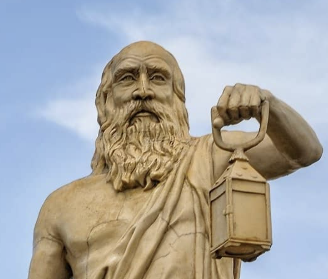
When some one reminded him that the people of Sinope had sentenced him to exile, he said, "And I sentenced them to stay at home."
▼
Source
source
Diogenes Laërtius, vi. 49
2 months 3 weeks ago
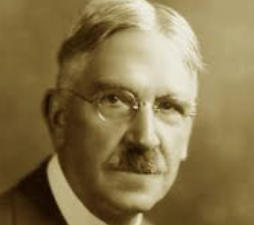
So we are always esthetically disappointed when the sensuous qualities and the intellectual properties of an object do not coalesce.
▼
Source
source
p. 7
3 months 1 week ago
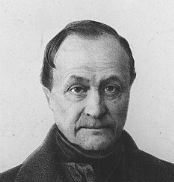
Social positivism only accepts duties, for all and towards all. Its constant social viewpoint cannot include any notion of rights, for such notion always rests on individuality. We are born under a load of obligations of every kind, to our predecessors, to our successors, to our contemporaries. These obligations then increase or accumulate, for it is some time before we can return any service. ... Any human right is therefore as absurd as immoral. Since there are no divine rights anymore, this concept must therefore disappear completely as related only to the preliminary regime and totally inconsistent with the final state where there are only duties based on functions.
▼
Source
source
Le Catéchisme positiviste

4 months 3 days ago
If you are tired of the real landscape, look at it in a mirror. By putting bread, gold, horse, apple, or the very roads into a myth, we do not retreat from reality: we rediscover it. As long as the story lingers in our mind, the real things are more themselves. This book applies the treatment not only to bread or apple but to good and evil, to our endless perils, our anguish, and our joys. By dipping them in myth we see them more clearly.
Just now
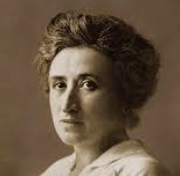
One Step Forward, Two Steps Backward, written by Lenin, an outstanding member of the Iskra group, is a methodical exposition of the ideas of the ultra-centralist tendency in the Russian movement. The viewpoint presented with incomparable vigor and logic in this book, is that of pitiless centralism.

3 months 3 weeks ago
Of practical wisdom these are the three fruits: to deliberate well, to speak to the point, to do what is right.

4 months 5 days ago
It seems that sin is geographical. From this conclusion, it is only a small step to the further conclusion that the notion of "sin" is illusory, and that the cruelty habitually practised in punishing it is unnecessary.
▼
Source
source
A Fresh Look at Empiricism: 1927-42 (1996), p. 283

3 months 4 weeks ago
Anytime two human beings find genuine pleasure, joy, and love, the stars smile and the universe is enriched. Yet as long as that pleasure, joy, and love is still predicated on myths of black sexuality, the more fundamental challenge of humane interaction remains unmet.
▼
Source
source
(p85)

3 months 5 days ago
The writers against religion, whilst they oppose every system, are wisely careful never to set up any of their own.
▼
Source
source
Preface
4 days ago
In the Ancient Period of Science, Technical Terms were formed in three different ways:-by appropriating common words and fixing their meaning;-by constructing terms containing a description;-by constructing terms containing reference to a theory.
3 months 2 days ago
The ideal of Morality has no more dangerous rival than the ideal of highest Strength, of most powerful life; which also has been named (very falsely as it was there meant) the ideal of poetic greatness. It is the maximum of the savage; and has, in these times, gained, precisely among the greatest weaklings, very many proselytes. By this ideal, man becomes a Beast-Spirit, a Mixture; whose brutal wit has, for weaklings, a brutal power of attraction.

2 months 3 weeks ago
Elias truly shall first come, and restore all things. But I say unto you, That Elias is come already, and they knew him not, but have done unto him whatsoever they listed. Likewise shall also the Son of man suffer of them.
▼
Source
source
17:11-12 (KJV)

2 months 3 weeks ago
From whatever side the matter is regarded, it is always found that reason confronts our longing for personal immortality and contradicts it. And the truth is, in all strictness, that reason is the enemy of life.
2 months 2 weeks ago
Thinking men and women the world over are beginning to realize that patriotism is too narrow and limited a conception to meet the necessities of our time.
4 months 3 weeks ago
Ten thousand do not turn the scale against a single man of worth.

4 months 5 days ago
A bureaucracy always tends to become a pedantocracy.
▼
Source
source
Ch. VI: Of the Infirmities and Dangers to Which Representative Government Is Liable (p. 234)
5 months 2 days ago
The fall of Empire, gentlemen, is a massive thing, however, and not easily fought. It is dictated by a rising bureaucracy, a receding initiative, a freezing of caste, a damming of curiosity, a hundred other factors. It has been going on, as I have said, for centuries, and it is too majestic and massive a movement to stop.
2 months 2 weeks ago
By narcissism is meant ceasing to have an authentic interest in the outside world but instead an intense attachment to oneself, to one's own group, clan, religion, nation, race, etc. - with consequent serious distortions of rational judgment. In general, the need for narcissistic satisfaction derives from the necessity to compensate for material and cultural poverty.

2 months 2 days ago
It's misleading to suppose there's any basic difference between education & entertainment. This distinction merely relieves people of the responsibility of looking into the matter.
▼
Source
source
(1957) from "Classroom Without Walls", Explorations Vol. 7, 1957; reprinted in Explorations in Communication ed. E. Carpenter & M. McLuhan, (Boston: Beacon, 1960); and again in McLuhan: Hot and Cool ed. G. E. Stearn (NY: Dial, 1967).

4 months 4 days ago
The stars awaken a certain reverence, because though always present, they are inaccessible; but all natural objects make a kindred impression, when the mind is open to their influence. Nature never wears a mean appearance. Neither does the wisest man extort her secret, and lose his curiosity by finding out all her perfection. Nature never became a toy to a wise spirit. The flowers, the animals, the mountains, reflected the wisdom of his best hour, as much as they had delighted the simplicity of his childhood.
▼
Source
source
Nature

4 months 3 weeks ago
In archery we have something like the way of the superior man. When the archer misses the center of the target, he turns round and seeks for the cause of his failure in himself.
3 weeks 4 days ago
Probably some ninety-nine out of every hundred of our gifted souls, who have to seek a career for themselves, go this beaver road. Whereby the first half-result, national wealth namely, is plentifully realized; and only the second half, or wisdom to guide it, is dreadfully behindhand.
3 months 4 weeks ago
In its most general form, confinement was explained, or at least justified, by a will to avoid scandal. It thereby signalled an important change in the consciousness of evil. The Renaissance had let unreason in all its forms come out into the light of day, as public exposure gave evil the chance to redeem itself and to serve as an exemplum.
▼
Source
source
Part One: 5. The Insane
5 months 2 days ago
It is difficult to set forth any of the greater ideas, except by the use of examples; for it would seem that each of us knows everything that he knows as if in a dream and then again, when he is as it were awake, knows nothing of it all.

4 months 1 week ago
If a woman becomes weary and at last dead from bearing, that matters not; let her only die from bearing, she is there to do it.
▼
Source
source
Sermon Von dem ehelichen Stande (1519), p. 41 - as quoted in The Ethic of Freethought: A Selection of Essays and Lectures (1888) by Karl Pearson


4 months 6 days ago
A witty saying proves nothing.
▼
Source
source
Le dîner du comte de Boulainvilliers (1767): Deuxième Entretien
4 months 2 weeks ago
Beauty is indeed a good gift of God; but that the good may not think it a great good, God dispenses it even to the wicked.
▼
Source
source
XV, 22

4 months ago
Philosophers often behave like little children who scribble some marks on a piece of paper at random and then ask the grown-up "What's that?" - It happened like this: the grown-up had drawn pictures for the child several times and said "this is a man," "this is a house," etc. And then the child makes some marks too and asks: what's this then?
▼
Source
source
p. 17e

2 months 2 weeks ago
He was a man born into a world dominated by scientific materialism. His objection to this materialism was not merely intellectual, or even egotistical (the feeling 'If the world is wholly material, then I can't be very important'). It was the feeling that man is cut off from his inner powers by this superficial attitude.
▼
Source
source
p. 166
5 days ago
It is as though we had buried Someone we thought dead, and now hear him calling in the night: Help me! Heaving and panting, he raises the gravestone of our soul and body higher and still higher, breathing more freely at every moment. Every word, every deed, every thought is the heavy gravestone he is forever trying to lift. And my own body and all the visible world, all heaven and earth, are the gravestone which God is struggling to heave upward.
2 months 3 weeks ago
One of those leaders of what they call the social revolution has said that religion is the opiate of the people. Opium...opium...opium, yes. Let us give them opium so that they can sleep and dream.
5 months 2 days ago
I accept nothing on authority. A hypothesis must be backed by reason, or else it is worthless.
3 months 1 week ago
We are constantly railing against the passions; we ascribe to them all of man's afflictions, and we forget that they are also the source of all his pleasures ... But what provokes me is that only their adverse side is considered ... and yet only passions, and great passions, can raise the soul to great things. Without them there is no sublimity, either in morals or in creativity. Art returns to infancy, and virtue becomes small-minded.
▼
Source
source
As translated in Diderot (1977) by Otis Fellows, p. 39

4 months 1 week ago
We are born to inquire after truth; it belongs to a greater power to possess it. It is not, as Democritus said, hid in the bottom of the deeps, but rather elevated to an infinite height in the divine knowledge.
▼
Source
source
Book III, Ch. 8. Of the Art of Conversation
2 months 2 weeks ago
Sex also concentrates the mind wonderfully, and that is why civilised man is so obsessed by it. It enables him to "savour every fraction of an inch," not merely of the act of sexual intercourse, but of living itself. But that, of course, only underlines the basic problem: after coitus, "man becomes sad," because he quickly returns to his unconcentrated and defocused state. In sexual excitement, it is the spirit itself that becomes erect, and becomes capable of penetrating the meaning of life. Normal consciousness is limp and flaccid; its attitude towards reality is defensive. This is what Sartre called contingency, that feeling of being at the mercy of chance.
▼
Source
source
pp. 45-46

4 months 5 days ago
Essentially, this war...is a great race-conflict, a conflict of Teuton and Slav, in which certain other nations, England, France and Belgium, have been led into cooperation with the Slav. ... The conflict of Germany and Russia has been produced not by this or that diplomatic incident, but by primitive passions expressing themselves in the temper of the two races.
▼
Source
source
War: The Offspring of Fear (1914), quoted in Ray Monk, Bertrand Russell: The Spirit of Solitude, 1872-1921 (1996), p. 373
3 months ago
It is no longer a question anywhere of inventing interconnections from out of our brains, but of discovering them in the facts.
▼
Source
source
Ludwig Feuerbach and the End of Classical German Philosophy
4 months 2 weeks ago
For what is a child? Ignorance. What is a child? Want of instruction. For where a child has knowledge, he is no worse than we are.
▼
Source
source
Book II, ch. 1, 16
3 weeks 4 days ago
For the whole Past, as I keep repeating, is the possession of the Present; the Past had always something true, and is a precious possession. In a different time, in a different place, it is always some other side of our common Human Nature that has been developing itself. The actual True is the sum of all these; not any one of them by itself constitutes what of Human Nature is hitherto developed. Better to know them all than misknow them. "To which of these Three Religions do you specially adhere?" inquires Meister of his Teacher. "To all the Three!" answers the other: "To all the Three; for they by their union first constitute the True Religion."
CivilSimian.com created by AxiomaticPanic, CivilSimian, Kalokagathia