


3 months 2 weeks ago
A man full of warm, speculative benevolence may wish his society otherwise constituted than he finds it, but a good patriot and a true politician always considers how he shall make the most of the existing materials of his country. A disposition to preserve and an ability to improve, taken together, would be my standard of a statesman. Everything else is vulgar in the conception, perilous in the execution.
2 months 4 weeks ago
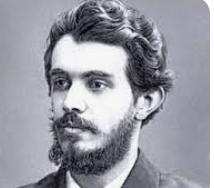
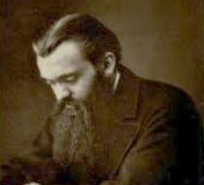
Surprisingly, Berdyaev was able to write, lecture and publish for five years after the October Revolution of 1917. He was once detained and interviewed by the fearsome head of the Cheka, Felix Dzerzhinsky. Although he was released, the Bolsheviks gradually realized that Berdyaev was unassimilable to their cause and gave him a choice, along with a group of other intellectuals, of exile or execution. Reluctantly, Berdyaev chose exile to Berlin. He was never again to return to Russia.
▼
Source
source
Richard Schain, in In Love with Eternity : Philosophical Essays and Fragments (2005), Ch. 7 : Nikolai Alexandrovich Berdyaev - A Champion of the Spirit, p. 44

5 months 2 weeks ago
Magister Adler was deeply moved by something higher, but now when he wants to express his thoughts in words, wants to communicate, he confuses the subjective with the objective, his altered subjective state with an external event, the dawning of a light upon him with the coming into existence of something new outside him, the falling of the veil from his eyes with his having had a revelation. Subjectively his emotion is carried to the extreme; he wants to select the most powerful expression to describe it and by means of a mental deception grasps the objective qualification: having had a revelation.
3 months 4 days ago
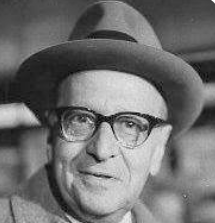
Logical empiricism holds the view, notwithstanding some its assertions, that the forms of knowledge and consequently the relations of man to nature and to other men never change. According to rationalism, too, all subjective and objective potentialities are rooted in insights which the individual already possesses, but rationality uses existing objects as well as the active inner striving and ideas of man to construct standards for the future. In this regard, it is not so closely associated with the present order as is empiricism.
▼
Source
source
p. 148.
3 weeks 1 day ago
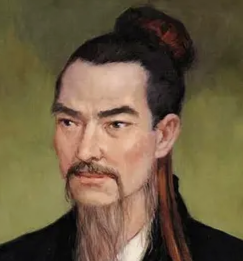
The purpose of the magnanimous is to be found in procuring benefits for the world and eliminating its calamities. ... Mutual attacks among states, mutual usurpation among houses, mutual injuries among individuals; the lack of grace and loyalty between ruler and ruled, the lack of affection and filial piety between father and son, the lack of harmony between elder and younger brothers - these are the major calamities in the world.
▼
Source
source
Book 4; Universal Love II

3 months 2 weeks ago
We attest that He is the Willer of all things that are, the ruler of all originated phenomena; there does not come into the visible or invisible world anything meager or plenteous, small or great, good or evil, or any advantage or disadvantage, belief or unbelief, knowledge or ignorance, success or failure, increase or decrease, obedience or disobedience, except by His will. What He wills is, and what He does not, will not; there is not a glance of the eye, nor a stray thought of the heart that is not subject to His will. He is the Creator, the Restorer, the Doer of whatsoever He wills. There is none that rescinds His command, none that supplements His decrees, none that dissuades a servant from disobeying Him, except by His help and mercy, and none has power to obey Him except by His will.
▼
Source
source
Ihyaa 'Ulum al-Deen. Beirut: Dar Ibn Hazm (2005), p. 107.

4 months 3 weeks ago
They who have compared our lives to a dream were, perhaps, more in the right than they were aware of. When we dream, the soul lives, works, and exercises all its faculties, neither more nor less than when awake; but more largely and obscurely, yet not so much, neither, that the difference should be as great as betwixt night and the meridian brightness of the sun, but as betwixt night and shade; there she sleeps, here she slumbers; but, whether more or less, 'tis still dark, and Cimmerian darkness. We wake sleeping, and sleep waking.
▼
Source
source
tr. Cotton, rev. W. Carew Hazlitt, 1877
1 week 5 days ago
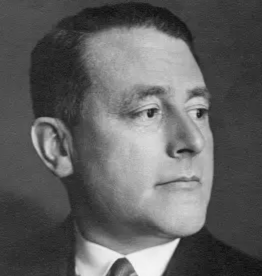
The inevitable lack of objectivity in political decisions, which is only the reflex to suppress the politically inherent friend-enemy antithesis, manifests itself in the regrettable forms and aspects of the scramble for office and the politics of patronage. The demand for depoliticalization which arises in this context means only the rejection of party politics, etc. The equation politics = party politics is possible whenever antagonisms among domestic political parties succeed in weakening the all-embracing political unit, the state.
3 months 6 days ago
The present stage redefines the possibilities of man and nature in accordance with the new means available for their realization.
▼
Source
source
p. 65
4 months 2 weeks ago
Government has no other end than the preservation of property.
▼
Source
source
Second Treatise of Government, Ch. VII. sec. 94
4 months 2 weeks ago
Let them have what instructions you will, and ever so learned lectures of breeding daily inculcated into them, that which will most influence their carriage will be the company they converse with, and the fashion of those about them.
▼
Source
source
Sec. 67

4 months 1 week ago
The live dead-man is dead as a producer and alive insofar as he consumes.
▼
Source
source
p. 139
4 months 3 weeks ago
Even opinion is of force enough to make itself to be espoused at the expense of life.
▼
Source
source
Book I, Ch. 40. Of Good and Evil, tr. Cotton, rev. W. Hazlitt, 1842
2 months 2 weeks ago
The student should have enough knowledge of his or her cultural tradition to know how it got to be the way it is. This involves both political and social history, on the one hand, as well as the mastery of some of the great philosophical and literary texts of the culture on the other. It involves reading not only texts that are of great value, like those of Plato, but many less valuable that have been influential, such as the works of Marx. For the United States, the dominant tradition is, and for the foreseeable future, will remain the European tradition. The United States is, after all, a product of the European Enlightenment. However, you do not understand your own tradition if you do not see it in relation to others. Works from other cultural traditions need to be studied as well.
2 months 2 days ago
Let us remember that the government and the society act and react on each other. Sometimes the government is in advance of the society, and hurries the society forward. So urged, the society gains on the government, comes up with the government, outstrips the government, and begins to insist that the government shall make more speed. If the government is wise, it will yield to that just and natural demand. The great cause of revolutions is this, that, while nations move onward, constitutions stand still. The peculiar happiness of England is that here, through many generations, the constitution has moved onward with the nation.
▼
Source
source
Speech in the House of Commons on the Reform Bill (5 July 1831), quoted in Speeches of the Right Honourable T. B. Macaulay, M.P. (1854), p. 25

4 months 2 weeks ago
Days of absence,
sad and dreary,
Clothed in sorrow's dark array,
Days of absence, I am weary: She I love is far away.
▼
Source
source
Day of Absence, reported in Bartlett's Familiar Quotations, 10th ed. (1919).

4 months 2 weeks ago
In place of the bourgeois society, with its classes and class antagonisms, shall we have an association, in which the free development of each is the condition for the free development of all.
▼
Source
source
Section 2, paragraph 72 (last paragraph).

5 months 1 week ago
The dullness of fact is the mother of fiction.
2 months 4 weeks ago
A philosopher of imposing stature doesn't think in a vacuum. Even his most abstract ideas are, to some extent, conditioned by what is or is not known in the time when he lives.
▼
Source
source
Ch. 29, June 10, 1943.

4 months 2 weeks ago
We feel and know that we are eternal.
▼
Source
source
Part V, Prop. XXIII, Scholium

4 months 2 weeks ago
I am very fond of truth, but not at all of martyrdom.
▼
Source
source
Letter to Jean le Rond d'Alembert, 8 February 1776

3 months 1 week ago
Try to be free: you will die of hunger.
4 weeks ago
A comfortable house is a great source of happiness. It ranks immediately after health and a good conscience.
▼
Source
source
Vol. II, letter to Lord Murray (29 September 1843), p. 501
3 weeks 2 days ago
Science is the knowledge of many, orderly and methodically digested and arranged, so as to become attainable by one.
3 months 1 week ago
Existence would be a quite impracticable enterprise if we stopped granting importance to what has none.

1 week 3 days ago
What if someone despises me? Let me see to it. But I will see to it that I won't be found doing or saying anything contemptible. What if someone hates me? Let me see to that. But I will see to it that I'm kind and good-natured to all, and prepared to show even the hater where they went wrong. Not in a critical way, or to show off my patience, but genuinely and usefully.
▼
Source
source
XI. 13:179
4 months 3 days ago
The investigation of the meaning of words is the beginning of education.
▼
Source
source
Arrian, Discourses of Epictetus, i. 17

1 week 6 days ago
Anybody interested in solving, rather than profiting from, the problems of food production and distribution will see that in the long run the safest food supply is a local food supply, not a supply that is dependent on a global economy. Nations and regions within nations must be left free - and should be encouraged - to develop the local food economies that best suit local needs and local conditions.
▼
Source
source
"A Bad Big Idea"

4 months 3 weeks ago
There is no need for you to develop an armed insurrection. Christ himself has already begun an insurrection with his mouth.
▼
Source
source
pp. 67-68

4 weeks ago
Who profits by a sin has done the sin.
4 months 3 weeks ago
His Mohammed, as has been said, commands that ruling is to be done by the sword, and in his Koran the sword is the commonest and noblest work. Thus the Turk is, in truth, nothing but a murderer or highwayman, as his deeds show before men's eyes.
▼
Source
source
On War against the Turk

4 months 1 week ago
There is no power relation without the correlative constitution of a field of knowledge, nor any knowledge that does not presuppose and constitute at the same time power relations.
4 months 2 weeks ago
All the better; they do not force me to do anything that I would not have done of my own accord if I did not dread scandal. But since they want it that way, I enter gladly on the path that is opened to me, with the consolation that my departure will be more innocent than was the exodus of the early Hebrews from Egypt.
▼
Source
source
Statement after his excommunication from Jewish society, attributed by Lucas, in The Oldest Biography of Spinoza (1970) by A. Wolf; also in Spinoza: A Life (1999) by Steven Nadler

2 months 1 week ago
In the spiritual realm nothing is indifferent: what is not useful is harmful.
▼
Source
source
VII

1 week 6 days ago
The goodness and greatness of a man do not justify us in accepting a belief upon the warrant of his authority, unless there are reasonable grounds for supposing that he knew the truth of what he was saying. And there can be no grounds for supposing that a man knows that which we, without ceasing to be men, could not be supposed to verify.
3 months 1 week ago
There was a time when time did not yet exist. ... The rejection of birth is nothing but the nostalgia for this time before time.
1 month 1 week ago
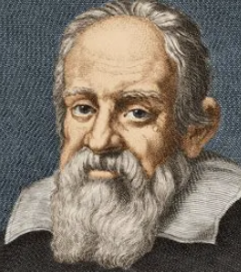
We seek not what God could have done but what He has done.... God could have caused birds to fly with bones of solid gold, with veins full of quicksilver, with flesh heavier than lead and very small and heavy wings, so as to better show His power ... but He wanted to make their bones, flesh and feathers very light ... to teach us that He likes simplicity and ease.
▼
Source
source
Notes in a copy of Jean-Baptiste Morin's "Famous and ancient problems of the earth's motion or rest, yet to be solved" (published 1631).

3 months 2 weeks ago
I gave up caring about anything, and all the problems disappeared. And it was after that that I found out the truth. I learnt the truth last November - on the third of November, to be precise - and I remember every instant since.

1 month 4 days ago
It is no longer the moral, religious, spiritual condition of the people that is our concern, but their physical, practical, economical condition, as regulated by public laws.

3 months 6 days ago
Judge not, and ye shall not be judged: condemn not, and ye shall not be condemned: forgive, and ye shall be forgiven: Give, and it shall be given unto you; good measure, pressed down, and shaken together, and running over, shall men give into your bosom. For with the same measure that ye mete withal it shall be measured to you again.
▼
Source
source
(Luke 6:37-38) (KJV)

2 months 3 weeks ago
It repudiates, as something vile and sinful, our deepest feelings; but being absolutely ignorant as to the real functions of human emotions, Puritanism is itself the creator of the most unspeakable vices.
3 months 6 days ago
Ideas, aspirations, and objectives that, by their content, transcend the established universe of discourse and action are either repelled or reduced to terms of this universe.
▼
Source
source
p. 12
3 weeks 3 days ago
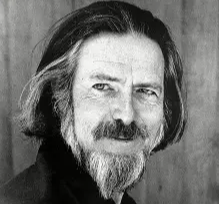
Psychotherapists ... are dealing with people whose distress arises from what may be termed maya, to use the Hindu-Buddhist word whose exact meaning is not merely 'illusion' but the entire world-conception of a culture, considered as illusion in the strict etymological sense of a play (Latin, ludere). The aim of a way of liberation is not the destruction of maya but seeing it for what it is, or seeing through it. Play is not to be taken seriously, or, in other words, ideas of the world and of oneself which are social conventions and institutions are not to be confused with reality.
▼
Source
source
p. 9
5 months 3 days ago
To give one's self earnestly to the duties due to men, and, while respecting spiritual beings, to keep aloof from them, may be called wisdom.

4 months 1 week ago
We are spinning our own fates, good or evil, and never to be undone. Every smallest stroke of virtue or of vice leaves its never so little scar. ...Nothing we ever do is, in strict scientific literalness, wiped out.
▼
Source
source
Ch. 4
3 months 1 week ago
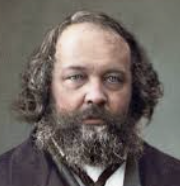
All religions, with their gods, their demigods, and their prophets, their messiahs and their saints, were created by the credulous fancy of men who had not attained the full development and full possession of their faculties. Consequently, the religious heaven is nothing but a mirage in which man, exalted by ignorance and faith, discovers his own image, but enlarged and reversed - that is, divinized. The history of religion, of the birth, grandeur, and decline of the gods who have succeeded one another in human belief, is nothing, therefore, but the development of the collective intelligence and conscience of mankind.
4 months 1 week ago
Setting the mind to remember... involves a continual minimal irradiation of excitement into paths which lead thereto... the continued presence of the thing in the 'fringe' of our consciousness. Letting the thing go involves withdrawal of the irradiation, unconsciousness of the thing, and... obliteration of the paths.
▼
Source
source
Ch. 16

2 months 1 week ago
Literate man, civilized man, tends to restrict and to separate functions, whereas tribal man has freely extended the form of his body to include the universe.
▼
Source
source
(p. 117)
3 weeks 3 days ago
There is no formula for generating the authentic warmth of love. It cannot be copied. You cannot talk yourself into it or rouse it by straining at the emotions or by dedicating yourself solemnly to the service of mankind. Everyone has love, but it can only come out when he is convinced of the impossibility and the frustration of trying to love himself. This conviction will not come through condemnations, through hating oneself, through calling self love bad names in the universe. It comes only in the awareness that one has no self to love.
CivilSimian.com created by AxiomaticPanic, CivilSimian, Kalokagathia