Self torture...sounds good....


Egoism you say? There is nothing more universal than the individual, for what is the property of each is the property of all. Each man is worth more than the whole of humanity, nor will it do to sacrifice each to all save in so far as all sacrifice themselves to each. That which we call egoism is the principle of psychic gravity, the necessary postulate. "Love thy neighbor as thyself," we are told, the presupposition being that each man loves himself; and it is not said "Love thyself." And nevertheless, we do not know how to love ourselves.
It will hardly be disputed, I suppose, that the department of literature in which the Eastern writers stand highest is poetry. And I certainly never met with any orientalist who ventured to maintain that the Arabic and Sanscrit poetry could be compared to that of the great European nations. But when we pass from works of imagination to works in which facts are recorded and general principles investigated, the superiority of the Europeans becomes absolutely immeasurable. It is, I believe, no exaggeration to say that all the historical information which has been collected from all the books written in the Sanscrit language is less valuable than what may be found in the most paltry abridgments used at preparatory schools in England. In every branch of physical or moral philosophy, the relative position of the two nations is nearly the same.
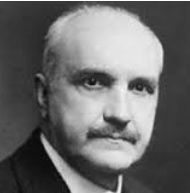
I was still "at the church door". Yet in belief, in the clarification of my philosophy, I had taken an important step. I no longer wavered between alternative views of the world, to be put on or taken off like alternative plays at the theatre. I now saw that there was only one possible play, the actual history of nature and of mankind, although there might well be ghosts among the characters and soliloquies among the speeches. Religions, all religions, and idealistic philosophies, all idealistic philosophies, were the soliloquies and the ghosts. They might be eloquent and profound. Like Hamlet's soliloquy they might be excellent reflective criticisms of the play as a whole. Nevertheless they were only parts of it, and their value as criticisms lay entirely in their fidelity to the facts, and to the sentiments which those facts aroused in the critic.
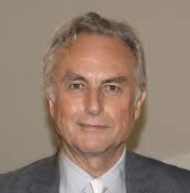
Think about the two qualities that a virus, or any sort of parasitic replicator, demands of a friendly medium, the two qualities that make cellular machinery so friendly towards parasitic DNA, and that make computers so friendly towards computer viruses. These qualities are, firstly, a readiness to replicate information accurately, perhaps with some mistakes that are subsequently reproduced accurately; and, secondly, a readiness to obey instructions encoded in the information so replicated.

The doctrine that there is as much science in a subject as... mathematics in it, or as much... measurement or 'precision' in it, rests upon... misunderstanding.
The Catholic solution of our problem, of our unique vital problem, the problem of the immortality and eternal salvation of the soul, satisfies the will, and therefore satisfies life; but the attempt to rationalize it by means of a dogmatic theology fails to satisfy the reason. And reason has its exigencies as imperious as those of life. It is no use seeking to force ourselves to consider as super-rational what clearly appears to us to be contra-rational... Infallibility, a notion of Hellenic origin, is in its essence a rationalistic category.
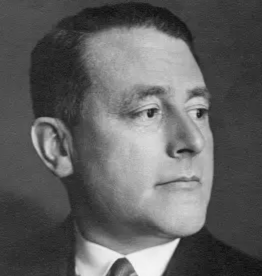
War as the most extreme political means discloses the possibility which underlies every political idea, namely, the distinction of friend and enemy.
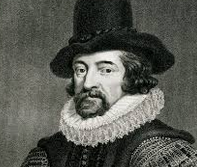
Jews hate the name of Christ and have a secret and innate rancor against the people among whom they live.
Violence, less and less embarrassed by the limits imposed by centuries of lawfulness, is brazenly and victoriously striding across the whole world, unconcerned that its infertility has been demonstrated and proved many times in history. What is more, it is not simply crude power that triumphs abroad, but its exultant justification. The world is being inundated by the brazen conviction that power can do anything, justice nothing.
For it is not death or pain that is to be feared, but the fear of pain or death.
Woman is degraded and made to believe that nature destined her exclusively to menial domestic labors, which in the combined order will be so abridged as to be performed without oppression to either sex.

The charlatan takes very different shapes according to circumstances; but at bottom he is a man who cares nothing about knowledge for its own sake, and only strives to gain the semblance of it that he may use it for his own personal ends, which are always selfish and material.
Nothing less will content me, than whole America.
The fear of death is more to be dreaded than death itself.
The individual selectionist would admit that groups do indeed die out, and that whether or not a group goes extinct may be influenced by the behaviour of the individuals in that group. He might even admit that if only the individuals in a group had the gift of foresight they could see that in the long run their own best interests lay in restraining their selfish greed, to prevent the destruction of the whole group. How many times must this have been said in recent years to the working people of Britain? But group extinction is a slow process compared with the rapid cut and thrust of individual competition. Even while the group is going slowly and inexorably downhill, selfish individuals prosper in the short term at the expense of altruists. The citizens of Britain may or may not be blessed with foresight, but evolution is blind to the future.
Without the interplay of human against human, the chief interest in life is gone; most of the intellectual values are gone; most of the reason for living is gone.

I come into the presence of still water. And I feel above me the day-blind stars waiting with their light. For a time I rest in the grace of the world, and am free.
Truth is so great a perfection, that if God would render himself visible to men, he would choose light for his body and truth for his soul.
Now what has been said about the Jews is also to be understood about Cahorsins, and anyone else depending upon the depravity of usury.
Relativity theory forced the abandonment, in principle, of absolute space and absolute time.
Everywhere we seek the Absolute, and always we find only things.

Poetry must be new as foam, and as old as the rock.
There is absolute truth in anarchism and it is to be seen in its attitude to the sovereignty of the state and to every form of state absolutism. ... The religious truth of anarchism consists in this, that power over man is bound up with sin and evil, that a state of perfection is a state where there is no power of man over man, that is to say, anarchy. The Kingdom of God is freedom and the absence of such power... the Kingdom of God is anarchy.
The man who holds the divine theory of life recognizes life not in his own individuality, and not in societies of individualities (in the family, the clan, the nation, the tribe, or the government), but in the eternal undying source of life-in God; and to fulfill the will of God he is ready to sacrifice his individual and family and social welfare. The motor power of his life is love. And his religion is the worship in deed and in truth of the principle of the whole-God.
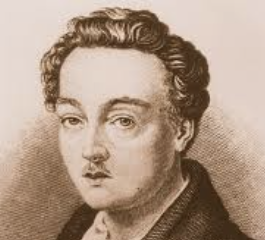
People like us are unhappy in this world and in the next, I guess if we made it to heaven, we'd have to help make it thunder.
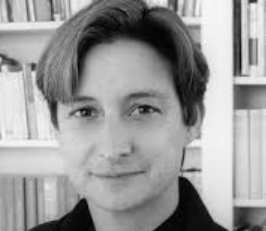
Nonviolence is not an absolute principle, but an open-ended struggle with violence and its countervailing forces.

None of the things they learn, should ever be made a burthen to them, or impos's on them as a task. Whatever is so proposed, presently becomes irksome; the mind takes an aversion to it, though before it were a thing of delight or indifferency. Let a child but be ordered to whip his top at a certain time every day, whether he has or has not a mind to it; let this be but requir'd of him as a duty, wherein he must spend so many hours morning and afternoon, and see whether he will not soon be weary of any play at this rate. Is it not so with grown men?
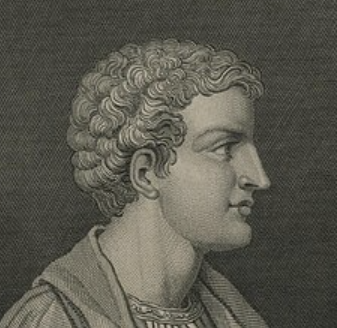
Let's put a limit to the scramble for money. ... Having got what you wanted, you ought to begin to bring that struggle to an end.

Logic takes care of itself; all we have to do is to look and see how it does it.

Of the eternal incorporeal substance nothing is changed, is formed or deformed, but there always remains only that thing which cannot be a subject of dissolution, since it is not possible that it be a subject of composition, and therefore, either of itself or by accident, it cannot be said to die.
The truth is sum, ergo cogito - I am, therefore I think, although not everything that is thinks. Is not consciousness of thinking above all consciousness of being? Is pure thought possible, without consciousness of self, without personality? Can there exist pure knowledge without feeling, without that species of materiality which feelings lends to it? Do we not perhaps feel thought, and do we not feel ourselves in the act of knowing and willing? Could not the man in the stove [Descartes] have said: "I feel, therefore I am"? or "I will, therefore I am"? And to feel oneself, is it not perhaps to feel oneself imperishable?

Nature has had regard in everything no less to the end than to the beginning and the continuance, just like a man who throws up a ball. What good is it then for the ball to be thrown up, or harm for it to come down... what good is it to the bubble while it holds together, or what harm when it is burst?
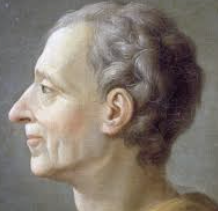
Oh, how empty is praise when it reflects back to its origin!
We, who are dying, are doing better, than they, who will live. For Crete doesn't need householders, she needs madmen like us. These madmen make Crete immortal.
The line that connects the bombing of civilian populations to the mountain removed by strip mining ... to the tortured prisoner seems to run pretty straight. We're living, it seems, in the culmination of a long warfare - warfare against human beings, other creatures and the Earth itself.
It is important to understand what I mean by semiosis. All dynamic action, or action of brute force, physical or psychical, either takes place between two subjects, - whether they react equally upon each other, or one is agent and the other patient, entirely or partially, - or at any rate is a resultant of such actions between pairs. But by "semiosis" I mean, on the contrary, an action, or influence, which is, or involves, a cooperation of three subjects, such as a sign, its object, and its interpretant, this tri-relative influence not being in any way resolvable into actions between pairs.

Yes, to seek power that's vain and never grantedand for it to suffer hardship and endless pain:this is to heave and strain to push uphilla boulder, that still from the very top rolls backand bounds and bounces down to the bare, broad field.
I discovered that what's really important for a creator isn't what we vaguely define as inspiration or even what it is we want to say, recall, regret, or rebel against. No, what's important is the way we say it. Art is all about craftsmanship. Others can interpret craftsmanship as style if they wish. Style is what unites memory or recollection, ideology, sentiment, nostalgia, presentiment, to the way we express all that. It's not what we say but how we say it that matters.
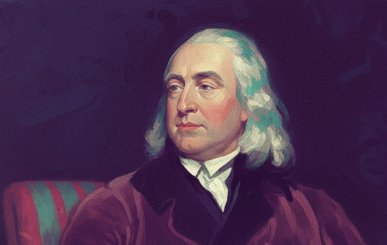
In looking over the catalogue of human actions (says a partizan of this principle) in order to determine which of them are to be marked with the seal of disapprobation, you need but to take counsel of your own feelings: whatever you find in yourself a propensity to condemn, is wrong for that very reason. For the same reason it is also meet for punishment: in what proportion it is adverse to utility, or whether it be adverse to utility at all, is a matter that makes no difference. In that same proportion also is it meet for punishment: if you hate much, punish much: if you hate little, punish little: punish as you hate. If you hate not at all, punish not at all: the fine feelings of the soul are not to be overborne and tyrannized by the harsh and rugged dictates of political utility.

Our English careers to born genius are twofold. There is the silent or unlearned career of the Industrialisms, which are very many among us; and there is the articulate or learned career of the three professions, Medicine, Law (under which we may include Politics), and the Church. Your born genius, therefore, will first have to ask himself, Whether he can hold his tongue or cannot? True, all human talent, especially all deep talent, is a talent to do, and is intrinsically of silent nature; inaudible, like the Sphere Harmonies and Eternal Melodies, of which it is an incarnated fraction.
The Dantean conceptions of Inferno were childish and unworthy of the Divine imagination: fire and torture. Boredom is much more subtle. The inner torture of a mind unable to escape itself in any way, condemned to fester in its own exuding mental pus for all time, is much more fitting. Oh, yes, my friend, we have been judged, and condemned, too, and this is not Heaven, but hell.
When people were committed to the idea that in the field of religion only one plan must be adopted, bloody wars resulted. With the acknowledgment of the principle of religious freedom these wars ceased. The market economy safeguards peaceful economic co-operation because it does not use force upon the economic plans of the citizens. If one master plan is to be substituted for the plans of each citizen, endless fighting must emerge. Those who disagree with the dictator's plan have no other means to carry on than to defeat the despot by force of arms.
I define a Sign as anything which is so determined by something else, called its Object, and so determines an effect upon a person, which effect I call its Interpretant, that the latter is thereby mediately determined by the former.
The unhappiness of our life; patch up our false way of life as we will, propping it up by the aid of the sciences and arts - that life becomes feebler, sicklier, and more tormenting every year; every year the number of suicides and the avoidance of motherhood increases; every year the people of that class become feebler; every year we feel the increasing gloom of our lives. Evidently salvation is not to be found by increasing the comforts and pleasures of life, medical treatments, artificial teeth and hair, breathing exercises, massage, and so forth;...It is impossible to remedy this by any amusements, comforts, or powders - it can only be remedied by a change of life.
Stars and blossoming fruit-trees: utter permanence and extreme fragility give an equal sense of eternity.
It was not delight, not wonder that arose among us, it was the peace of heaven. A thousand times have I said it to her and to myself: the most beautiful is also the most sacred. And such was everything in her. Like her singing, even so was her life.
By liberty, then, we can only mean a power of acting or not acting, according to the determinations of the will.
CivilSimian.com created by AxiomaticPanic, CivilSimian, Kalokagathia