


7 months 5 days ago
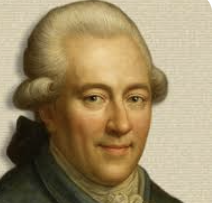
If you press me to say why I loved him, I can say no more than it was because he was he, and I was I. Variants: If a man urge me to tell wherefore I loved him, I feel it cannot be expressed but by answering: Because it was he, because it was myself. If a man should importune me to give a reason why I loved him, I find it could no otherwise be expressed, than by making answer: because it was he, because it was I.
▼
Source
source
Ch. 28
5 months 1 week ago
Be wary of passing the judgment: obscure. To find something obscure poses no difficulty: elephants and poodles find many things obscure.
▼
Source
source
E 36

3 months 3 weeks ago
Never has any one been less a priest than Jesus, never a greater enemy of forms, which stifle religion under the pretext of protecting it. By this we are all his disciples and his successors; by this he has laid the eternal foundation-stone of true religion; and if religion is essential to humanity, he has by this deserved the Divine rank the world has accorded him.
▼
Source
source
Ch. 5.
3 months 1 week ago
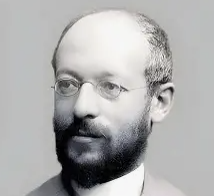
Man's position in the world is defined by the fact that in every dimension of his being and behavior he finds himself at every moment between two boundaries. This condition appears as the formal structure of our existence, filled always with different contents in life's diverse provinces, activities, and destinies. We feel that the content and value of every hour stands between a higher and a lower; every thought between a wiser and a more foolish; every possession between a more extended and a more limited; every deed between a greater and a lesser measure of meaning, adequacy, and morality.
▼
Source
source
p. 1. Opening line of first essay "Life as Transcendence"

6 months 3 weeks ago
I have at last come to the end of the Faerie Queene: and though I say "at last", I almost wish he had lived to write six books more as he had hoped to do - so much have I enjoyed it.
▼
Source
source
On Edmund Spenser's long poem in a letter to Arthur Greeves (7 March 1916), published in The Collected Letters of C.S. Lewis
7 months ago
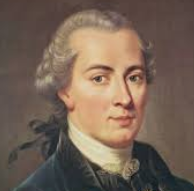
Moral Teleology supplies the deficiency in physical Teleology, and first establishes a Theology; because the latter, if it did not borrow from the former without being observed, but were to proceed consistently, could only found a Demonology, which is incapable of any definite concept.
▼
Source
source
Immanuel Kant, Kant's Critique of Judgment (1892) Tr. J.H. Bernard

4 months 1 week ago
Many conflicts within Third World countries are related to the practice of exploiting resources faster than nature can renew them or diverting them away from where people need them. Dams in every society have become major sources of conflict. As water scarcity grows, neighbors, families turn against each other.
5 months 2 weeks ago
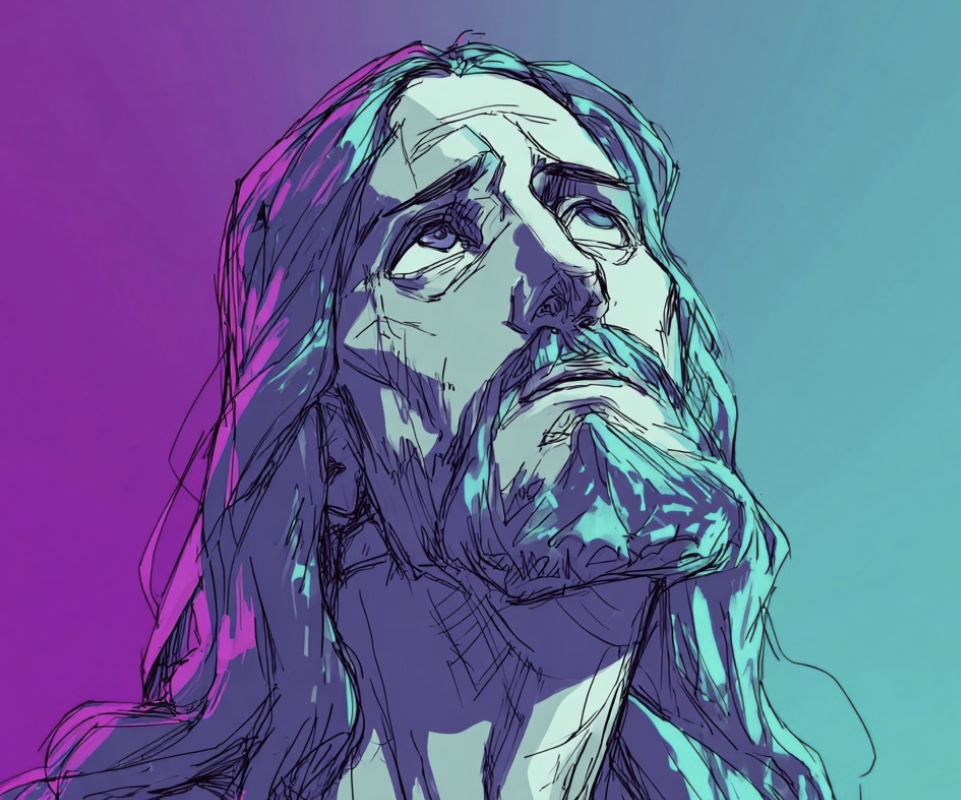
With men this is impossible; but with God all things are possible.
▼
Source
source
19:26 (KJV)

3 months 2 weeks ago
Grave talk and grave humor with the doers of the craft. Building, walling, is an operation that beyond most other manual ones requires incessant consideration - even new invention. I have heard good judges say that he excelled in it all persons they had seen.
5 months 2 weeks ago
It is not politics that can bring true liberty to the soul; that must be achieved, if at all, by philosophy;
▼
Source
source
"The Irony of Liberalism"
3 months 3 weeks ago
The sun, with all those planets revolving around it and dependent on it, can still ripen a bunch of grapes as if it had nothing else in the universe to do.
▼
Source
source
Loose paraphrase of Salviati on Day 3
5 months ago
This world wants to be childish in order to make us believe that the adults are elsewhere, in the "real" world, and to conceal the fact that true childishness is everywhere-that it is that of the adults themselves who come here to act the child in order to foster illusions as to their real childishness.
▼
Source
source
"The Precession of Simulacra," p. 13
6 months 2 days ago
Social positivism only accepts duties, for all and towards all. Its constant social viewpoint cannot include any notion of rights, for such notion always rests on individuality. We are born under a load of obligations of every kind, to our predecessors, to our successors, to our contemporaries. These obligations then increase or accumulate, for it is some time before we can return any service. ... Any human right is therefore as absurd as immoral. Since there are no divine rights anymore, this concept must therefore disappear completely as related only to the preliminary regime and totally inconsistent with the final state where there are only duties based on functions.
▼
Source
source
Le Catéchisme positiviste

5 months 2 weeks ago
Hegel's theological discussion repeatedly asks what the true relation is between the individual man and a state that no longer satisfies his capacities but exists rather as an 'estranged' institution from which the active political interest of the citizens has disappeared. Hegel defined this state with almost the same categories as those of eighteenth century liberalism: the state rests on the consent of the individuals, it circumscribes their rights and duties and protects its members from those internal and external dangers that might threaten the perpetuation of the whole.
▼
Source
source
P. 32

6 months 3 weeks ago
A confession has to be part of your new life.
▼
Source
source
p. 18e
5 months 2 weeks ago
It is not meet to take the children's bread, and to cast it to dogs.
▼
Source
source
15:26 (KJV)
7 months 2 weeks ago
We may treat of the Soul as in the body whether it be set above it or actually within it since the association of the two constitutes the one thing called the living organism, the Animate. Now from this relation, from the Soul using the body as an instrument, it does not follow that the Soul must share the body's experiences: a man does not himself feel all the experiences of the tools with which he is working.
7 months 3 weeks ago
Writing is an addiction more powerful than alcohol, than nicotine, than crack. I could not conceive of not writing.
2 months 4 weeks ago
Who holds a sword is tempted, who has youth must play,he who does not fear death on earth does not fear God.
▼
Source
source
Odysseus, Book VIII, line 560

6 months 4 weeks ago
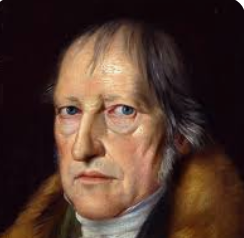
The essence of the modern state is the union of the universal with the full freedom of the particular, and with the welfare of individuals.
▼
Source
source
Sect. 260

5 months 2 weeks ago
Love is a contradiction if there is no God.

5 months 1 week ago
No revolution can ever succeed as a factor of liberation unless the MEANS used to further it be identical in spirit and tendency with the PURPOSES to be achieved. Revolution is the negation of the existing, a violent protest against man's inhumanity to man with all the thousand and one slaveries it involves. It is the destroyer of dominant values upon which a complex system of injustice, oppression, and wrong has been built up by ignorance and brutality. It is the herald of NEW VALUES, ushering in a transformation of the basic relations of man to man, and of man to society.

6 months 3 weeks ago
When a philosopher addresses himself to... a tyrant, and tells him... tyranny is incompatible with justice, then the philosopher speaks... and believes he is speaking the truth, and... takes a risk...
▼
Source
source
[T]hat was Plato's situation with Dionysius in Syracuse... reference... Plato's Seventh Letter, and... The Life of Dion by Plutarch. Ref: 1) Ludwig Edelstein, Plato's seventh letter (1966) 2) Plutarch, Life of Dion
6 months 3 weeks ago
I have known only one person in my life who claimed to have seen a ghost. It was a woman; and the interesting thing is that she disbelieved in the immortality of the soul before seeing the ghost and still disbelieves after having seen it. She thinks it was a hallucination. In other words, seeing is not believing. This is the first thing to get clear in talking about miracles.
▼
Source
source
"Miracles" (1942), p. 25
4 months 1 week ago
I believe most people are aware of periods in their lives when they seem to be "in grace" and other periods when they feel "out of grace," even though they may use different words to describe these states. In the first happy condition, one seems to carry all one's tasks before one lightly, as if borne along on a great tide; and in the opposite state one can hardly tie a shoe-string. It is true that a large part of life consists in learning a technique of tying the shoe-string, whether one is in grace or not. But there are techniques of living too; there are even techniques in the search for grace.

3 months 1 week ago
It would be some consolation for the feebleness of ourselves and our works, if all things should perish as slowly as they come into being; but as it is, increases are of sluggish growth, but the way to ruin is rapid.
▼
Source
source
Letters to Lucilius, letter 91, page 294.
3 months 2 weeks ago
Blessed is he who has found his work; let him ask no other blessedness.
▼
Source
source
Bk. III, ch. 11.
6 months 3 weeks ago
Why in the world shouldn't they have regarded with awe and reverence that act by which the human race is perpetuated. Not every religion has to have St. Augustine's attitude to sex. Why even in our culture marriages are celebrated in a church, everyone present knows what is going to happen that night, but that doesn't prevent it being a religious ceremony.
▼
Source
source
Intentionality, and Romanticism (1997) by Richard Thomas Eldridge, p. 130
3 months 2 weeks ago
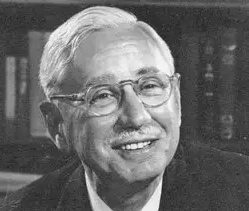
India was the motherland of our race, and Sanskrit the mother of Europe's languages: she was the mother of our philosophy; mother, through the Arabs, of much of our mathematics; mother, through the Buddha, of the ideals embodied in Christianity; mother, through the village community, of self-government and democracy. Mother India is in many ways the mother of us all.
5 months 2 weeks ago
Sociology does not 'negate' philosophy, in the sense of taking over the hidden content of philosophy and carrying it into social theory and practice, but sets itself up as a realm apart from philosophy, with a province and truth of its own. Comte is rightly held to be the inaugurator of this separation between philosophy and sociology.
▼
Source
source
P. 375

6 months 4 weeks ago
I do wish I believed in the life eternal, for it makes me quite miserable to think man is merely a kind of machine endowed, unhappily for himself, with consciousness.
▼
Source
source
Greek Exercises (1888); at the age of fifteen, Russell used to write down his reflections in this book, for fear that his people should find out what he was thinking.
5 months 1 week ago
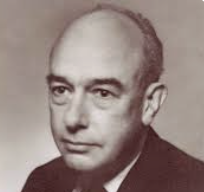
Necessity resides in the way we talk about things, not in the things we talk about.
▼
Source
source
Ways of Paradox and Other Essays (1976), p. 174
3 months 2 weeks ago
I take the liberty of asserting that there is one valid reason, and only one, for either punishing a man or rewarding him in this world; one reason, which ancient piety could well define: That you may do the will and commandment of God with regard to him; that you may do justice to him. This is your one true aim in respect of him; aim thitherward, with all your heart and all your strength and all your soul, thitherward, and not elsewhither at all! This aim is true, and will carry you to all earthly heights and benefits, and beyond the stars and Heavens. All other aims are purblind, illegitimate, untrue; and will never carry you beyond the shop-counter, nay very soon will prove themselves incapable of maintaining you even there. Find out what the Law of God is with regard to a man; make that your human law, or I say it will be ill with you, and not well!

2 months 3 weeks ago
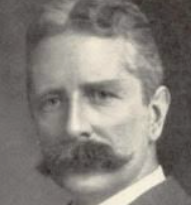
Our intellectual development in the field of science has outstripped our human development in the field of character.
▼
Source
source
BBC Radio National Lecture (1938), quoted in Unitarian Universalist Biographical Dictionary.

4 months 3 weeks ago
We know very well that we are only allowed to go on eating our dinner, to finish seeing the new play, or to enjoy to the end the ball, the Christmas fete, the promenade, the races or, the hunt, thanks to the policeman's revolver or the soldier's rifle, which will shoot down the famished outcast who has been robbed of his share, and who looks round the corner with covetous eyes at our pleasures, ready to interrupt them instantly, were not policeman and soldier there prepared to run up at our first call for help.
▼
Source
source
Chapter XII, Conclusion-Repent Ye, for the Kingdom of Heaven is at Hand
5 months 3 weeks ago
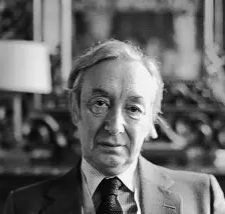
The principles of logic and mathematics are true simply because we never allow them to be anything else. And the reason for this is that we cannot abandon them without contradicting ourselves, without sinning against the rules which govern the use of language, and so making our utterances self-stultifying. In other words, the truths of logic and mathematics are analytic propositions or tautologies.
▼
Source
source
p. 77.

6 months 3 weeks ago
Since he is unable to be the beloved, he will become the lover.
▼
Source
source
p. 90
6 months 1 week ago
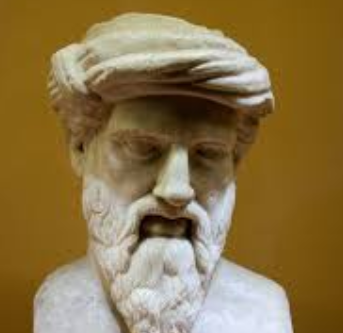
Hear gladly!
6 months 4 weeks ago
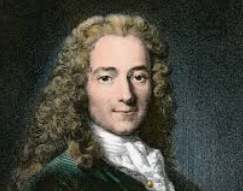
Let the punishments of criminals be useful. A hanged man is good for nothing; a man condemned to public works still serves the country, and is a living lesson.
▼
Source
source
"Civil and Ecclesiastical Laws," Dictionnaire philosophique (1785-1789)
5 months 3 weeks ago
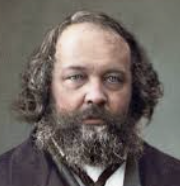
Here then is what we understand by these words: "the equalization of the classes." It would perhaps have been better to say suppression of the classes, the unification of society by the abolition of economic and social inequality. But we have also demanded the equalization of the individuals, and it is there especially that we attract all the thunderbolts of outraged eloquence from our adversaries. One has made use of that part of our proposition to prove in a conclusive manner that we are nothing but communists.

4 months 4 weeks ago
When the world presents as a force field of violence, the task of nonviolence is to find ways of living and acting in that world such that violence is checked or ameliorated, or its direction turned, precisely at moments when it seems to saturate that world and offer no way out.
▼
Source
source
p. 10
7 months 2 weeks ago
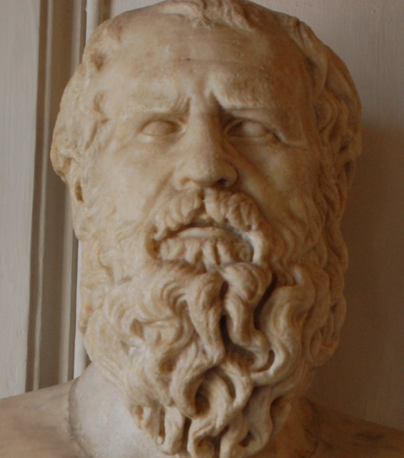
The many are mean; only the few are noble.
3 months 5 days ago
A man may own a thousand acres of land, and yet he still sleeps upon a bed of five feet.
▼
Source
source
p. 38 (Chinese saying)

5 months 1 week ago
The everyday world demands our attention, and prevents us from sinking into ourselves. As a romantic, I have always resented this: I like to sink into myself. The problems and anxieties of living make it difficult. Well, now I had an anxiety that referred to something inside of me, and it reminded me that my inner world was just as real and important as the world around me.
▼
Source
source
p. 39

5 months 3 weeks ago
Nothing is a better proof of how far humanity has regressed than the impossibility of finding a single nation, a single tribe, among whom birth still provokes mourning and lamentations.
2 months 4 weeks ago
Amidst our greatest happiness someone within us cries out: "I am in pain! I want to escape your happiness! I am stifling!" Amidst our deepest despair someone within us cries out: "I do not despair! I fight on! I grasp at your head, I unsheathe myself from your body, I detach myself from the earth, I cannot be contained in brains, in names, in deeds!"
CivilSimian.com created by AxiomaticPanic, CivilSimian, Kalokagathia