


3 months 2 weeks ago
We replace God as best we can; for every god is good, provided he perpetuates in eternity our desire for a crucial solitude. . . .
3 months 3 weeks ago
The wisest among us is very lucky never to have met the woman, be she beautiful or ugly, intelligent or stupid, who could drive him crazy enough to be fit to be put into an asylum.
▼
Source
source
Ceci n'est pas un conte [This Is No Tale] (1796),

5 months 1 week ago
To wisdom belongs the intellectual apprehension of things eternal; to knowledge, the rational apprehension of things temporal.
▼
Source
source
As quoted in The Anchor Book of Latin Quotations: with English translations (1990) by Norbert Guterman, p. 375
1 month 2 weeks ago
Logic teaches us that on such and such a road we are sure of not meeting an obstacle; it does not tell us which is the road that leads to the desired end. For this, it is necessary to see the end from afar, and the faculty which teaches us to see is intuition. Without it, the geometrician would be like a writer well up in grammar but destitute of ideas.
▼
Source
source
Part II. Ch. 2 : Mathematical Definitions and Education, p. 130

4 months 3 weeks ago
Need and struggle are what excite and inspire us; our hour of triumph is what brings the void. Not the Jews of the captivity, but those of the days of Solomon's glory are those from whom the pessimistic utterances in our Bible come.
▼
Source
source
"Is Life Worth Living?"

4 months 2 weeks ago
The soul is the prison of the body.
▼
Source
source
Discipline and Punish (1977) as translated by Alan Sheridan, p. 30

5 months 3 weeks ago
Married people pledge love for each other throughout eternity. Well, now, that is easy enough but does not mean very much, for if one is finished with time one is probably finished with eternity. If, instead of saying "throughout eternity," the couple would say, "until Easter, until next May Day," then what they say would make some sense, for then they would be saying something and also something they perhaps could carry out.

2 months 3 weeks ago
A real work of art destroys, in the consciousness of the receiver, the separation between himself and the artist.

1 month 2 weeks ago
Not the external and physical alone is now managed by machinery, but the internal and spiritual also. Here too nothing follows its spontaneous course, nothing is left to be accomplished by old natural methods. Everything has its cunningly devised implements, its preestablished apparatus; it is not done by hand, but by machinery.

4 months 3 weeks ago
As soon as the land of any country has all become private property, the landlords, like all other men, love to reap where they never sowed, and demand a rent even for its natural produce.
▼
Source
source
Chapter VI, p. 60.
3 months 1 week ago
In the life of the mass-order, the culture of the generality tends to conform to the demands of the average human being. Spirituality decays through being diffused among the masses when knowledge is impoverished in every possible way by rationalisation until it becomes accessible to the crude understanding of all.

4 months 3 weeks ago
It is sometimes said, common sense is very rare.
▼
Source
source
Philosophical Dictionary ('Sens Commun') (1767). Compare Juvenal, Satires, viii:73: Original Latin: rarus enim ferme sensus communis in illa fortuna.
3 months 2 weeks ago
Even when he turns from religion, man remains subject to it; depleting himself to create false gods, he then feverishly adopts them; his need for fiction, for mythology triumphs over evidence and absurdity alike.

2 months 2 weeks ago
Mutation may be random, but selection definitely is not.
▼
Source
source
Chapter 3, "The Message from the Mountain" (p. 82)

4 months 3 weeks ago
To teach him betimes to love and be good-natur'd to others, is to lay early the true foundation of an honest man; all injustice generally springing from too great love of ourselves and too little of others.
▼
Source
source
Sec. 139

5 months 2 days ago
The human understanding is of its own nature prone to suppose the existence of more order and regularity in the world than it finds. And though there be many things in nature which are singular and unmatched, yet it devises for them parallels and conjugates and relatives which do not exist. Hence the fiction that all celestial bodies move in perfect circles, spirals and dragons being (except in name) utterly rejected.
▼
Source
source
Aphorism 45
4 months 1 week ago
Animal Liberation is Human Liberation too.
▼
Source
source
Preface

4 months 3 weeks ago
Truth springs from argument amongst friends.

3 weeks 2 days ago
I never will, by any word or act, bow to the shrine of intolerance, or admit a right of inquiry into the religious opinions of others.
▼
Source
source
Letter to Edward Dowse

5 months 2 days ago
This type of man who is devoted to the study of wisdom is always most unlucky in everything, and particularly when it comes to procreating children; I imagine this is because Nature wants to ensure that the evils of wisdom shall not spread further throughout mankind.

3 months 6 days ago
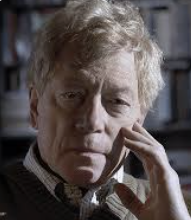
Sovereignty, the freedom unto death, is threatening to a society that is organized around work and production.
2 months 2 weeks ago
Conservatism is itself a modernism, and in this lies the secret of its success.
▼
Source
source
"Eliot and Conservatism" (p. 194)

4 months 2 weeks ago
I cannot get from the nature of the proposition to the individual logical operations!!! That is, I cannot bring out how far the proposition is the picture of the situation. I am almost inclined to give up all my efforts.
▼
Source
source
Journal entries (12 March 1915 and 15 March 1915) p. 41
4 months 3 weeks ago
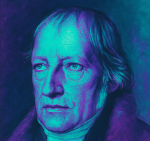
To be independent of public opinion is the first formal condition of achieving anything great or rational whether in life or in science. Great achievement is assured, however, of subsequent recognition and grateful acceptance by public opinion, which in due course will make it one of its own prejudices.
▼
Source
source
Sect. 318, as translated by T. M. Knox,, 1952

5 months ago
The heathen really make their self-invented notions and dreams of God and idol. Ultimately, they put their trust in that which is nothing. So it is with all idolatry. For it happens not merely by erecting an image and worshipping it, but rather it happens in the heart. For the heart seeks help and consolation from creatures, saints, or devils. It neither cares for God, nor looks to Him for anything better than to believe that He is willing to help.
▼
Source
source
"On Infant Baptism," Large Catechism

3 months 3 weeks ago
Nothing in the world is harder than speaking the truth and nothing easier than flattery. If there's the hundredth part of a false note in speaking the truth, it leads to a discord, and that leads to trouble. But if all, to the last note, is false in flattery, it is just as agreeable, and is heard not without satisfaction. It may be a coarse satisfaction, but still a satisfaction. And however coarse the flattery, at least half will be sure to seem true. That's so for all stages of development and classes of society.

2 months 3 weeks ago
Indeed it may be only by risking the incoherence of identity that connection is possible.
▼
Source
source
Bodies That Matter: On the Discursive Limits of "Sex"
1 month 2 weeks ago
Paris, which for sixty years past has been the City of Insurrections. The French People had plumed themselves on being, whatever else they were not, at least the chosen "soldiers of liberty," who took the lead of all creatures in that pursuit, at least; and had become, as their orators, editors and litterateurs diligently taught them, a People whose bayonets were sacred, a kind of Messiah People, saving a blind world in its own despite, and earning for themselves a terrestrial and even celestial glory very considerable indeed.

5 months 1 week ago
By extensively studying all learning, and keeping himself under the restraint of the rules of propriety, one may thus likewise not err from what is right.

5 months 1 week ago
Practice yourself, for heaven's sake, in little things; and thence proceed to greater.
▼
Source
source
Book I, ch. 18, 18.
3 months 1 week ago
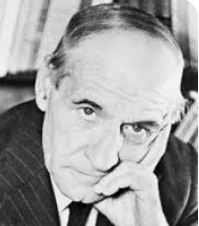
Torn in this way from its normal connection with contemplation, with being within one's self, pure action permits and produces only a chain of stupidities which we might better call "stupidity unchained." So we see today that an absurd attitude justifies the appearance of an opposing attitude no more reasonable; at least, reasonable enough, and so on indefinitely. Such is the extreme to which political affairs in the West have come!
▼
Source
source
p. 34
3 months 2 weeks ago
Except for music, everything is a lie, even solitude, even ecstasy. Music, in fact, is the one and the other, only better.
1 month 2 weeks ago
To the wild deep-hearted man all was yet new, not veiled under names or formulas; it stood naked, flashing in on him there, beautiful, awful, unspeakable. Nature was to this man, what to the Thinker and Prophet it forever is, preternatural. This green flowery rock-built earth, the trees, the mountains, rivers, many-sounding seas;-that great deep sea of azure that swims overhead; the winds sweeping through it; the black cloud fashioning itself together, now pouring out fire, now hail and rain.
4 months 2 weeks ago
The aspects of things that are most important for us are hidden because of their simplicity and familiarity. (One is unable to notice something - because it is always before one's eyes.) The real foundations of his enquiry do not strike a man at all. Unless that fact has at some time struck him. - And this means: we fail to be struck by what, once seen, is most striking and most powerful.
▼
Source
source
§ 129
3 months 1 week ago
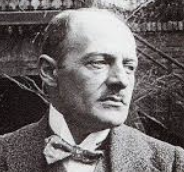
All the seemingly positive valuations and judgments of ressentiment are hidden devaluations and negations.
▼
Source
source
L. Coser, trans. (1973), p. 67

3 months 1 week ago
For the truth is that our doctrines are usually only the justification a posteriori of our conduct, or else they are our way of trying to explain that conduct to ourselves.
3 weeks 2 days ago
I congratulate you, my dear friend, on the law of your state for suspending the importation of slaves, and for the glory you have justly acquired by endeavoring to prevent it forever. This abomination must have an end, and there is a superior bench reserved in heaven for those who hasten it.
3 months 1 week ago
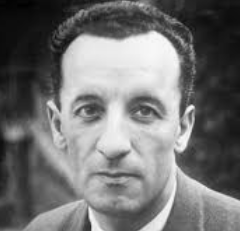
Machiavelli is the complete contrary of a machiavellian, since he describes the tricks of power and "gives the whole show away." The seducer and the politician, who live in the dialectic and have a feeling and instinct for it, try their best to keep it hidden.
▼
Source
source
p. 59

5 months 2 weeks ago
Nobody realizes that some people expend tremendous energy merely to be normal.

5 months 2 weeks ago
No one is so modest as not to believe himself a competent amateur sleuth.
2 months 2 weeks ago
Evolution is a fact. Beyond reasonable doubt, beyond serious doubt, beyond sane, informed, intelligent doubt, beyond doubt evolution is a fact. The evidence for evolution is at least as strong as the evidence for the Holocaust, even allowing for eye witnesses to the Holocaust. It is the plain truth that we are cousins of chimpanzees, somewhat more distant cousins of monkeys, more distant cousins still of aardvarks and manatees, yet more distant cousins of bananas and turnips... continue the list as long as desired.
▼
Source
source
The Greatest Show on Earth: The Evidence for Evolution (2009) (p. 8)

4 months 3 weeks ago
For an occurrence to become an adventure, it is necessary and sufficient for one to recount it.
3 weeks 1 day ago
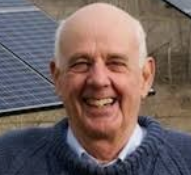
It is impossible to care for each other more or differently than we care for the earth. This last statement becomes obvious enough when it is considered that the earth is what we all have in common, that it is what we are made of and what we live from, and that we therefore cannot damage it without damaging those with whom we share it. But I believe it goes farther and deeper than that. There is an uncanny resemblance between our behavior toward each other and our behavior toward the earth. Between our relation to our own sexuality and our relation to the reproductivity of the earth, for instance, the resemblance is plain and strong. By some connection we do not recognize, the willingness to exploit one becomes the willingness to exploit the other.
▼
Source
source
The Unsettling of America (1977), Chapter Seven : The Body and the Earth
2 months 2 weeks ago
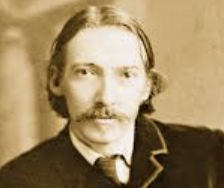
It is the worst of all quaint and of all cheap ways of life that they bring us at last to the pinch of some humiliation.
▼
Source
source
Episodes in the Story of a Mine.

4 months 3 weeks ago
There is room in the world, no doubt, and even in old countries, for a great increase of population, supposing the arts of life to go on improving, and capital to increase. But even if innocuous, I confess I see very little reason for desiring it. The density of population necessary to enable mankind to obtain, in the greatest degree, all the advantages both of co-operation and of social intercourse, has, in all the most populous countries, been attained. If the earth must lose that great portion of its pleasantness which it owes to things that the unlimited increase of wealth and population would extirpate from it, for the mere purpose of enabling it to support a larger but not a better or a happier population, I sincerely hope, for the sake of posterity, that they will be content to be stationary, long before necessity compels them to it..
▼
Source
source
Book IV, Chapter VI, §3, p. 516
1 month 2 weeks ago
He that has a secret should not only hide it, but hide that he has it to hide.
▼
Source
source
Pt. II, Bk. I, ch. 7.
4 months 3 weeks ago
Unbelievers (so called) as well as of believers, there are many species, including almost every variety of moral type. But the best among them, as no one who has had opportunities of really knowing them will hesitate to affirm (believers rarely have that opportunity), are more genuinely religious, in the best sense of the word religion, than those who exclusively arrogate to themselves the title.
▼
Source
source
(pp. 45-46)

3 months 2 weeks ago
Why trouble ye the woman? for she hath wrought a good work upon me. For ye have the poor always with you; but me ye have not always. For in that she hath poured this ointment on my body, she did it for my burial. Verily I say unto you, Wheresoever this gospel shall be preached in the whole world, there shall also this, that this woman hath done, be told for a memorial of her.
▼
Source
source
26:10-13 (KJV)
3 months 1 day ago
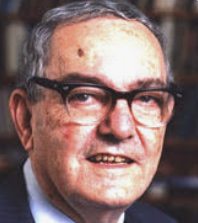
Most of the propositions that make up the body of administrative theory today share, unfortunately, this defect of proverbs. For almost every principle one can find an equally plausible and acceptable contradictory principle.
▼
Source
source
Simon, Herbert A. "The proverbs of administration." Public Administration Review 6.1 (1946): 53-67.
4 months 2 weeks ago
Does man think because he has found that thinking pays? Does he bring his children up because he has found it pays?
▼
Source
source
§ 467
CivilSimian.com created by AxiomaticPanic, CivilSimian, Kalokagathia