

1 month 1 week ago
Man is as young as the risks he takes.
▼
Source
source
Ch. 2 : On Youth
2 weeks 5 days ago
You may break your heart, but men will still go on as before.
▼
Source
source
VIII, 4
5 months 1 week ago
I will speak in a low voice, just so as to let the judges hear me. For men are not wanting who would be glad to excite that people against me and against every eminent man; and I will not assist them and enable them to do so more easily.
▼
Source
source
Cicero, The Orations of Marcus Tullius Cicero; Translation by C.D. Yonge., 1856.
1 month 3 days ago
To the question whether I am a pessimist or an optimist, I answer that my knowledge is pessimistic, but my willing and hoping are optimistic.
▼
Source
source
Epilogue, p. 242

3 months 2 days ago
Of all the inventions of man I doubt whether any was more easily accomplished than that of a Heaven.
▼
Source
source
L 34

5 months ago
And I myself, in Rome, heard it said openly in the streets, "If there is a hell, then Rome is built on it." That is, "After the devil himself, there is no worse folk than the pope and his followers."
▼
Source
source
Against the Roman Papacy, An Institution of the Devil

2 months 6 days ago
I do not allow myself to be overcome by hopelessness, no matter how tough the situation. I believe that if you just do your little bit without thinking of the bigness of what you stand against, if you turn to the enlargement of your own capacities, just that in itself creates new potential.

3 months 1 week ago
There are no whole truths; all truths are half-truths. It is trying to treat them as whole truths that plays the devil.
▼
Source
source
Prologue.

4 months 3 weeks ago
Instead of deciding once in three or six years which member of the ruling class was to misrepresent the people in Parliament, universal suffrage was to serve the people, constituted in Communes, as individual suffrage serves every other employer in the search for the workmen and managers in his business.
▼
Source
source
The Civil War in France : "The Third Address", May 1871

4 months 2 weeks ago
A hero looks death in the face, real death, not just the image of death. Behaving honourably in a crisis doesn't mean being able to act the part of a hero well, as in the theatre, it means being able to look death itself in the eye. For an actor may play lots of different roles, but at the end of it all he himself, the human being, is the one who has to die.
▼
Source
source
p. 50e
1 month 3 days ago
Don't let your hearts grow numb. Stay alert. It is your soul which matters.
2 months 5 days ago
I do not believe that civilizations have to die...Civilization is not an organism. It is a product of wills.
▼
Source
source
In "Prophet of Hope & Fear" [Review of A Study of History, Vols. 7-10] TIME (18 October 1954) p. 108

4 months 3 weeks ago
In this distribution of functions, the scholar is the delegated intellect. In the right state, he is, Man Thinking. In the degenerate state, when the victim of society, he tends to become a mere thinker, or, still worse, the parrot of other men's thinking.
▼
Source
source
pars. 7-8
4 months 3 weeks ago
A great deal of capital, which appears to-day in the United States without any certificate of birth, was yesterday, in England, the capitalised blood of children.
▼
Source
source
Vol. I, Ch. 31, pg. 829.

5 months 3 weeks ago
Death induces the sensual person to say: Let us eat and drink, because tomorrow we shall die – but this is sensuality's cowardly lust for life, that contemptible order of things where one lives in order to eat and drink instead of eating and drinking in order to live.

3 months 3 weeks ago
I think that democratic communities have a natural taste for freedom: left to themselves, they will seek it, cherish it, and view any privation of it with regret. But for equality, their passion is ardent, insatiable, incessant, invincible: they call for equality in freedom; and if they cannot obtain that, they still call for equality in slavery.
▼
Source
source
Book Two, Chapter I.
1 month 2 weeks ago
All laws are... deduced from experiment; but to enunciate them, a special language is needful... ordinary language is too poor...This... is one reason why the physicist can not do without mathematics; it furnishes him the only language he can speak. And a well-made language is no indifferent thing;...the analyst, who pursues a purely esthetic aim, helps create, just by that, a language more fit to satisfy the physicist....law springs from experiment, but not immediately. Experiment is individual, the law deduced from it is general; experiment is only approximate, the law is precise...In a word, to get the law from experiment, it is necessary to generalize... But how generalize? ...in this choice what shall guide us?It can only be analogy. ...What has taught us to know the true profound analogies, those the eyes do not see but reason divines?It is the mathematical spirit, which disdains matter to cling only to pure form.

3 months 2 weeks ago
The anarchists put the thing upside down. They declare that the proletarian revolution must begin by doing away with the political organisation of the state. But after its victory the sole organisation which the proletariat finds already in existence is precisely the state. This state may require very considerable alterations before it can fulfil its new functions. But to destroy it at such a moment would be to destroy the only organism by means of which the victorious proletariat can assert its newly-conquered power, hold down its capitalist adversaries and carry out that economic revolution of society without which the whole victory must end in a new defeat and in a mass slaughter of the workers similar to those after the Paris Commune.
▼
Source
source
Letter to Philipp Van Patten

1 month 1 week ago
Mucius might have accomplished something more successful in that camp, but never anything more brave.

2 months 2 weeks ago
Marx shared with economists then and since the inability to make his concepts include innovational processes. It is one thing to spot a new product but quite another to observe the invisible new environments generated by the action of the product on a variety of pre-existing social grounds.
▼
Source
source
(p. 63)
5 months 3 weeks ago
In the Church which was founded at Corinth, St. Paul had special difficulties of the kind I have mentioned. In that flourishing commercial city, which through its shipping and situation, maintained a vital connexion between East and West, numerous crowds of people flocked together from all quarters, different in speech and in culture. As they mingled with the inhabitants, they produced, by contacts and contrasts, new and ever new differences. Even in the Church this differentiation endeavoured to make itself felt in sects and parties; and a kind of pagan wisdom made a special attempt to force itself forward as a teacher of truth. In his first letter to this church, from which the text I read is taken, St. Paul strongly combats this tendency.
3 weeks 1 day ago
The monopoly of a single bank is certainly an evil. The multiplication of them was intended to cure it; but it multiplied an influence of the same character with the first, and completed the supplanting the precious metals by a paper circulation. Between such parties the less we meddle the better.
▼
Source
source
Letter to Albert Gallatin, 1802. ME 10:323
2 months 1 day ago
[H]uman nature as encoded in our DNA isn't immutable. Mankind's barbaric track-record to date is an unreliable guide to the future. If Homo sapiens' nastier alleles and their more sinister combinations can be silenced or edited out of the genome, and new improved code-sequences inserted instead, then the pessimists will be confounded. A major discontinuity in the development of life lies ahead. Providentially, we've learned that the DNA-driven world isn't written in God-given proprietary code it would be hubris to tamper with, but in bug-ridden open source amenable to improvement.
▼
Source
source
Utopian Pharmacology: Mental Health in the Third Millennium MDMA and Beyond, BLTC Research, last updated 2020

3 months 2 weeks ago
It is the most advanced industrial society which feels most directly threatened by the rebellion, because it is here that the social necessity of repression and alienation, of servitude and heteronomy is most transparently unnecessary, and unproductive in terms of human progress. Therefore the cruelty and violence mobilized in the struggle against the threat, therefore the monotonous regularity with which the people are made familiar with, and accustomed to inhuman attitudes and behavior-to wholesale killing as patriotic act.
2 weeks 6 days ago
If we do not return to the old maxims, if education is not restored into the hands of priests, and if science is not every where placed in the second rank, the evils which await us are incalculable: we shall become brutalized by science, and this is the lowest degree of brutality.
▼
Source
source
XXXIX, p. 112
5 months ago
As to why some are touched by the law and others not, so that some receive and others scorn the offer of grace...[this is the] hidden will of God, Who, according to His own counsel, ordains such persons as He wills to receive and partake of the mercy preached and offered.
▼
Source
source
p. 169

2 months 3 weeks ago
If one has no vanity in this life of ours, there is no sufficient reason for living.
▼
Source
source
Ch. 23. This is not, as it is often quoted, a stand-alone Tolstoy epigram, but part of the narration by the novella's jealousy-ridden protagonist Pozdnyshev.

4 months 3 weeks ago
The natural price, therefore, is, as it were, the central price, to which the prices of all commodities are continually gravitating.
▼
Source
source
Chapter VII, p. 69.

4 months 3 weeks ago
In former days, men sold themselves to the Devil to acquire magical powers. Nowadays they acquire those powers from science, and find themselves compelled to become devils. There is no hope for the world unless power can be tamed, and brought into the service, not of this or that group of fanatical tyrants, but of the whole human race, white and yellow and black, fascist and communist and democrat; for science has made it inevitable that all must live or all must die.
▼
Source
source
Ch. 2: Leaders and Followers
1 month 1 day ago
No, the enjoyment of an idle life doesn't cost any money. The capacity for true enjoyment of idleness is lost in the moneyed class and can be found only among people who have a supreme contempt for wealth. It must come from an inner richness of the soul in a man who loves the simple ways of life and who is somewhat impatient with the business of making money.
▼
Source
source
p. 155
4 months 3 weeks ago
For the prevision is allied Unto the thing so signified; Or say, the foresight that awaits Is the same Genius that creates.
▼
Source
source
Fate

3 months 1 week ago
A terrible thing is intelligence. It tends to death as memory tends to stability. The living, the absolutely unstable, the absolutely individual, is strictly unintelligible. Logic tends to reduce everything to identities and genera, to each representation having no more than one self-same content in whatever place, time or relation it may occur to us. And there is nothing that remains for two successive moments of its existence. My idea of God is different each time that I conceive it. Identity, which is death, is the goal of the intellect. The mind seeks what is dead, for what is living escapes it; it seeks to congeal the flowing stream in blocks of ice; it seeks to arrest it. In order to analyze a body it is necessary to extenuate or destroy it. In order to understand anything it is necessary to kill it, to lay it out rigid in the mind.

5 months 1 day ago
We are wont to call that human reasoning which we apply to Nature the anticipation of Nature (as being rash and premature) and that which is properly deduced from things the interpretation of Nature.

4 months 3 weeks ago
We reduce things to mere Nature in order that we may 'conquer' them.
4 months 3 weeks ago
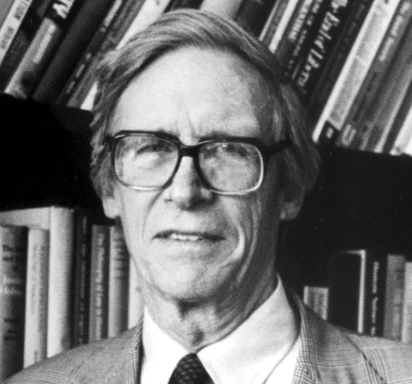
Indeed, it is tempting to suppose that it is self evident that things should be so arranged so as to lead to the most good.
▼
Source
source
Chapter I, Section 5, pg. 25
4 months 1 week ago
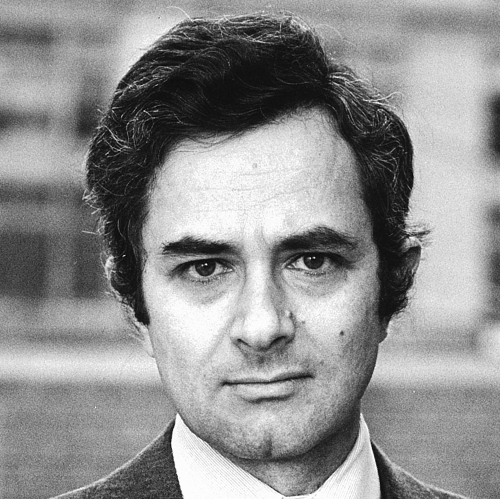
In speaking of the move from subjective to objective characterization, I wish to remain noncommittal about the existence of an endpoint, the completely objective intrinsic nature of the thing, which one might or might not be able to reach. It may be more accurate to think of objectivity as a direction in which the understanding can travel. And in understanding a phenomenon like lightning, it is legitimate to go as far away as one can from a strictly human viewpoint.But in the case of experience, on the other hand, the connexion with a particular point of view seems much closer. It is difficult to understand what could be meant by the objective character of an experience, apart from the particular point of view from which its subject apprehends it. After all, what would be left of what it was like to be a bat if one removed the viewpoint of the bat?
▼
Source
source
p. 173.
3 weeks 1 day ago
If a nation expects to be ignorant and free, in a state of civilization, it expects what never was and never will be. The functionaries of every government have propensities to command at will the liberty and property of their constituents. There is no safe deposit for these but with the people themselves; nor can they be safe with them without information. Where the press is free, and every man able to read, all is safe.
▼
Source
source
Letter to Colonel Charles Yancey (6 January 1816) ME 14:384

3 months 3 weeks ago
The Crown of Great Britain cannot, in my opinion, be too magnificent. Let us see some great public works set on foot; let it never be said, that the Commons of Great Britain failed in what they owe to the first Crown in the world. Looking up to royalty, I do say, it is the oldest and one of the best parts of our constitution. I wish it should look like royalty; that it should look like a King; like a King of Great Britain.
▼
Source
source
Speech in the House of Commons (28 February 1769)

4 months 3 weeks ago
France has done more for even English history than England has.
▼
Source
source
John Stuart Mill. Michelet.On the writing of English history. Complete Works Vol 20. Page 221.
5 months 1 week ago
It is better to conceal ignorance than to expose it.
4 months 3 weeks ago
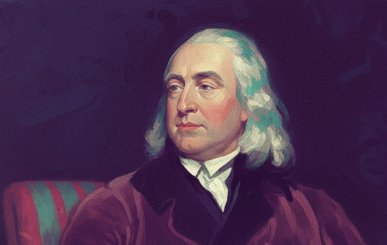
Judges of elegance and taste consider themselves as benefactors to the human race, whilst they are really only the interrupters of their pleasure ... There is no taste which deserves the epithet good, unless it be the taste for such employments which, to the pleasure actually produced by them, conjoin some contingent or future utility: there is no taste which deserves to be characterized as bad, unless it be a taste for some occupation which has mischievous tendency.
▼
Source
source
Théorie des peines et des récompenses (1811); translation by Richard Smith, The Rationale of Reward, J. & H. L. Hunt, London, 1825, Bk. 3, Ch. 1

5 months 1 week ago
The perfection of the effect demonstrates the perfection of the cause, for a greater power brings about a more perfect effect. But God is the most perfect agent. Therefore, things created by Him obtain perfection from Him. So, to detract from the perfection of creatures is to detract from the perfection of divine power.
▼
Source
source
III, 69, 15


3 months 2 weeks ago
History proves nothing because it contains everything.

4 months 3 weeks ago
There is no method of reasoning more common, and yet none more blameable, than, in philosophical disputes, to endeavour the refutation of any hypothesis, by a pretence of its dangerous consequences to religion and morality. When any opinion leads to absurdities, it is certainly false; but it is not certain that an opinion is false, because it is of dangerous consequence. Such topics, therefore, ought entirely to be forborne; as serving nothing to the discovery of truth, but only to make the person of an antagonist odious.
▼
Source
source
Of Liberty and Necessity, Part II

4 months 3 weeks ago
Man is always separated from what he is by all the breadth of the being which he is not. He makes himself known to himself from the other side of the world and he looks from the horizon toward himself to recover his inner being.
1 week 5 days ago
I am not an Atheist. I do not know if I can define myself as a Pantheist. The problem involved is too vast for our limited minds. May I not reply with a parable? The human mind, no matter how highly trained, cannot grasp the universe. We are in the position of a little child, entering a huge library whose walls are covered to the ceiling with books in many different tongues. The child knows that someone must have written those books. It does not know who or how. It does not understand the languages in which they are written. The child notes a definite plan in the arrangement of the books, a mysterious order, which it does not comprehend, but only dimly suspects. That, it seems to me, is the attitude of the human mind, even the greatest and most cultured, toward God. We see a universe marvelously arranged, obeying certain laws, but we understand the laws only dimly. Our limited minds cannot grasp the mysterious force that sways the constellations. I am fascinated by Spinoza's Pantheism. I admire even more his contributions to modern thought. Spinoza is the greatest of modern philosophers because he is the first philosopher who deals with the soul and the body as one, not as two separate things.
3 months 2 weeks ago
We are afraid of the enormity of the possible.
1 month 2 weeks ago
Art enlarges experience by admitting us to the inner life of others.
▼
Source
source
Ch. IV: "The Golden Rule and After", p. 110.
CivilSimian.com created by AxiomaticPanic, CivilSimian, Kalokagathia