


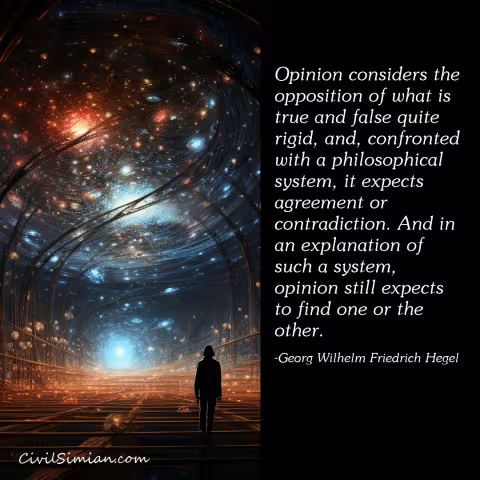

8 months 1 week ago
We attest that He is the Willer of all things that are, the ruler of all originated phenomena; there does not come into the visible or invisible world anything meager or plenteous, small or great, good or evil, or any advantage or disadvantage, belief or unbelief, knowledge or ignorance, success or failure, increase or decrease, obedience or disobedience, except by His will. What He wills is, and what He does not, will not; there is not a glance of the eye, nor a stray thought of the heart that is not subject to His will. He is the Creator, the Restorer, the Doer of whatsoever He wills. There is none that rescinds His command, none that supplements His decrees, none that dissuades a servant from disobeying Him, except by His help and mercy, and none has power to obey Him except by His will.
▼
Source
source
Ihyaa 'Ulum al-Deen. Beirut: Dar Ibn Hazm (2005), p. 107.

9 months 2 days ago
Our age is retrospective. It builds the sepulchres of the fathers. It writes biographies, histories, and criticism. The foregoing generation beheld God and nature face to face; we, through their eyes. Why should not we also enjoy an original relation to the universe. Why should not we have a poetry and philosophy of insight and not of tradition, and a religion by revelation to us, and not the history of theirs?
▼
Source
source
Introduction

9 months 3 days ago
People will tell us that without the consolations of religion they would be intolerably unhappy. So far as this is true, it is a coward's argument. Nobody but a coward would consciously choose to live in a fool's paradise. When a man suspects his wife of infidelity, he is not thought the better of for shutting his eyes to the evidence. And I cannot see why ignoring evidence should be contemptible in one case and admirable in the other.
▼
Source
source
"Is There a God?", 1952
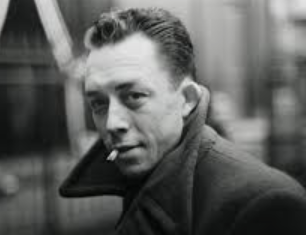
9 months 4 weeks ago
The words that reverberate for us at the confines of this long adventure of rebellion are not formulas for optimism, for which we have no possible use in the extremities of our unhappiness, but words of courage and intelligence which, on the shores of the eternal seas, even have the qualities of virtue.

7 months 3 weeks ago
Blessed is the lion which becomes man when consumed by man; and cursed is the man whom the lion consumes, and the lion becomes man. (7) This saying has been interpreted by some as referring to such anger as consumes a man…(rather than is consumed by him, through his reason and love), 'til that man is the lion of Anger. Other more mystical interpretations might also be found or devised that have merit.

5 months 4 weeks ago
The poor are thought to be dangerous, either morally dangerous because they are unproductive social parasites - thieves, prostitutes, drug addicts, and the like - or potentially dangerous because they are disorganized, unpredictable, and tendentially reactionary. In fact the term lumpenproletariat (or rad proletariat) has functioned for times to demonize the poor as a whole. ... The industrial reserve army is a constant threat hanging over the heads of the existing working class because, first of all, its misery serves as a terrifying example to workers of what could happen to them, and, second, the excess supply of labor it represents lowers the costs of labor and undermines workers' power against employers (by serving potentially as strike breakers, for example).
▼
Source
source
130

9 months 2 weeks ago
And yet it is hard to believe that anything in nature could stand revealed as solid matter.The lightning of heaven goes through the walls of houses,like shouts and speech; iron glows white in fire; red-hot rocks are shattered by savage steam; hard gold is softened and melted down by heat; chilly brass, defeated by heat, turns liquid; heat seeps through silver, so does piercing cold;by custom raising the cup, we feel them bothas water is poured in, drop by drop, above.
▼
Source
source
Book I, lines 487-496 (Frank O. Copley)
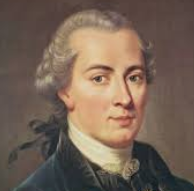
9 months 5 days ago
All natural capacities of a creature are destined to evolve completely to their natural end. First Thesis Variant translations: All natural capacities of a creature are destined sooner or later to be developed completely and in conformity with their end. All natural capacities of a creature are destined to develop themselves completely and to their purpose.
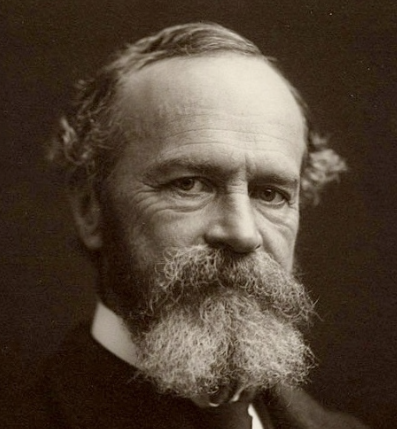
9 months 2 days ago
Romeo wants Juliet as the filings want the magnet; and if no obstacles intervene he moves towards her by as straight a line as they. But Romeo and Juliet, if a wall be built between them, do not remain idiotically pressing their faces against its opposite sides like the magnet and the filings with the card. Romeo soon finds a circuitous way, by scaling the wall or otherwise, of touching Juliet's lips directly. With the filings the path is fixed; whether it reaches the end depends on accidents. With the lover it is the end which is fixed, the path may be modified indefinitely.
▼
Source
source
Ch. 1 : The Scope of Psychology
9 months 2 weeks ago
Those of our pleasures which come most rarely give the greatest delight.
▼
Source
source
Fragment 33 (Oldfather translation)
5 months 3 days ago
How does the light of a star set out and plunge into black eternity in its immortal course? The star dies, but the light never dies; such also is the cry of freedom. Out of the transient encounter of contrary forces which constitute your existence, strive to create whatever immortal thing a mortal may create in this world - a Cry. And this Cry, abandoning to the earth the body which gave it birth, proceeds and labors eternally.

8 months 2 days ago
The ideal form for a poem, essay, or fiction, is that which the ideal writer would evolve spontaneously. One in whom the powers of expression fully responded to the state of feeling, would unconsciously use that variety in the mode of presenting his thoughts, which Art demands.
▼
Source
source
Pt. II, sec. 4, "The Ideal Writer"

7 months 2 weeks ago
The ideas of Freud were popularized by people who only imperfectly understood them, who were incapable of the great effort required to grasp them in their relationship to larger truths, and who therefore assigned to them a prominence out of all proportion to their true importance.
▼
Source
source
Ch. 28, June 3, 1943.


8 months 1 week ago
In countries where associations are free, secret societies are unknown. In America there are factions, but no conspiracies.
▼
Source
source
Chapter XII.
9 months 3 days ago
To fear love is to fear life, and those who fear life are already three parts dead.
7 months 4 weeks ago
That higher and "complete" man is begotten by the "unknown" father and born from Wisdom, and it is he who, in the figure of the puer aeternus-"vultu mutabilis albus et ater"-represents our totality, which transcends consciousness. It was this boy into whom Faust had to change, abandoning his inflated onesidedness which saw the devil only outside. Christ's "Except ye become as little children" is a prefiguration of this, for in them the opposites lie close together; but what is meant is the boy who is born from the maturity of the adult man, and not the unconscious child we would like to remain.
▼
Source
source
Answer to Job, R. Hull, trans. (1984), pp. 157-158

7 months 3 weeks ago
The free will, the actual motor of reason in society, necessarily creates wrong. The individual must clash with the social order that claims to represent his own will in its objective form. But the wrong and the 'avenging justice' that remedies it not only expresses a 'higher logical necessity,' but also prepare the transition to a higher social form of freedom, the transition from abstract right to morality. For, in committing a wrong, and in accepting punishment for his deed, the individual becomes conscious of the 'infinite subjectivity' of his freedom. He learns that he is free only as a private person.
▼
Source
source
P. 198
8 months 3 weeks ago
Complaints about the social irresponsibility of the intellectual typically concern the intellectual's tendency to marginalize herself, to move out from one community by interior identification of herself with some other community-for example, another country or historical period. ... It is not clear that those who thus marginalize themselves can be criticized for social irresponsibility. One cannot be irresponsible toward a community of which one does not think of oneself as a member. Otherwise runaway slaves and tunnelers under the Berlin Wall would be irresponsible.
▼
Source
source
"Postmodernist bourgeois liberalism," Objectivity, Relativism and Truth (Cambridge: 1991), p. 197
9 months 4 weeks ago
If there is a sin against life, it consists perhaps not so much in despairing of life as in hoping for another life and in eluding the implacable grandeur of this life.
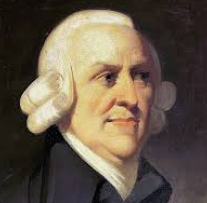
9 months 6 days ago
POLITICAL economy, considered as a branch of the science of a statesman or legislator, proposes two distinct objects: first, to provide a plentiful revenue or subsistence for the people, or more properly to enable them to provide such a revenue or subsistence for themselves; and secondly, to supply the state or commonwealth with a revenue sufficient for the public services. It proposes to enrich both the people and the sovereign.
▼
Source
source
Introduction, p. 459.
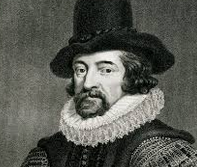
9 months 1 week ago
We are much beholden to Machiavel and others, that write what men do, and not what they ought to do.
▼
Source
source
Book II, xxi, 9

9 months 1 day ago
I am to talk about Apologetics. Apologetics means of course Defence. The first question is - what do you propose to defend? Christianity, of course...
▼
Source
source
"Christian Apologetics" (1945), p. 89
5 months 4 weeks ago
Philosophy is not the owl of Minerva that takes flight after history has been realized in order to celebrate its happy ending; rather, philosophy is subjective proposition, desire, and praxis that are applied to the event.
▼
Source
source
49
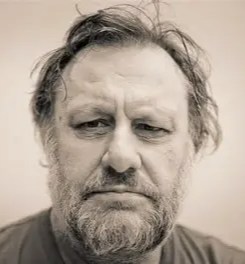
1 year 1 month ago
The general reference of the philosophical discussion is usually the triangle world: world-language-subject, the relation of the subject to the world of objects, mediated through language.

8 months 3 weeks ago
The painter is turning his eyes towards us only in so far as we happen to occupy the same position as his subject. We, the spectators, are an additional factor. Though greeted by that gaze, we are also dismissed by it, replaced by that which was always there before we were: the model itself. But, inversely, the painter's gaze, addressed to the void confronting him outside the picture, accepts as many models as there are spectators; in this precise but neutral place, the observer and the observed take part in a ceaseless exchange.
▼
Source
source
Las Menias
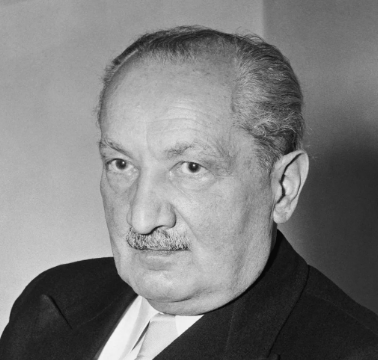
8 months 4 weeks ago
The human being is not the lord of beings, but the shepherd of Being.
▼
Source
source
Letter on Humanism
7 months 4 days ago
To subdue destruction is one of the most important affirmations of which we are capable in this world. It is the affirmation of this life, bound up with yours, and with the realm of the living: an affirmation caught up with a potential for destruction and its countervailing force.
▼
Source
source
p. 65
8 months 2 days ago
Time: That which man is always trying to kill, but which ends in killing him.
▼
Source
source
Definitions, as quoted in The Dictionary of Essential Quotations (1983) by Kevin Goldstein-Jackson, p. 154
9 months 3 days ago
I do not pretend to start with precise questions. I do not think you can start with anything precise. You have to achieve such precision as you can, as you go along.

8 months 3 weeks ago
It is your concern when your neighbor's wall is on fire.
▼
Source
source
Book I, epistle xviii, line 84
5 months 3 days ago
One power descends and wants to scatter, to come to a standstill, to die. The other power ascends and strives for freedom, for immortality. These two armies, the dark and the light, the armies of life and of death, collide eternally.
8 months 1 week ago
The first condition of unity is a subjective principle; and this principle in the Positive system is the subordination of the intellect to the heart: Without this the unity that we seek can never be placed on a permanent basis, whether individually or collectively. It is essential to have some influence sufficiently powerful to produce convergence amid the heterogeneous and often antagonistic tendencies of so complex an organism as ours.
▼
Source
source
p. 24
7 months 3 weeks ago
Freed from the sublimated form which was the very token of its irreconcilable dreams-a form which is the style, the language in which the story is told-sexuality turns into a vehicle for the bestsellers of oppression. ... This society turns everything it touches into a potential source of progress and of exploitation, of drudgery and satisfaction, of freedom and of oppression. Sexuality is no exception.
▼
Source
source
pp. 77-78
4 months 4 weeks ago
Nor is anything empty: For what is empty is nothing. What is nothing cannot be.Nor does it move; for it has nowhere to betake itself to, but is full. For if there were aught empty, it would betake itself to the empty. But, since there is naught empty, it has nowhere to betake itself to.
10 months ago
Courtiers don't take wagers against the king's skill.

7 months 3 weeks ago
For such Truth as opposeth no man's profit nor pleasure is to all men welcome.
▼
Source
source
Review and Conclusion, p. 396, (Last text line)
7 months 2 weeks ago
We cannot think first and act afterwards. From the moment of birth we are immersed in action, and can only fitfully guide it by taking thought.
▼
Source
source
Ch. 12: "Religion and Science", p. 261
5 months 2 weeks ago
He was a one-book man. Some men have only one book in them; others, a library.
▼
Source
source
Vol. I, ch. 11, p. 402
8 months 4 weeks ago
We ourselves are the entities to be analyzed.
▼
Source
source
Macquarrie & Robinson translation
5 months 3 weeks ago
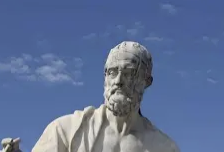
How highly should we honor the Macedonians, who for the greater part of their lives never cease from fighting with the barbarians for the sake of the security of Greece? For who is not aware that Greece would have constantly stood in the greater danger, had we not been fenced by the Macedonians and the honorable ambition of their kings?
▼
Source
source
Histories, IX, 35:2 (Loeb)

8 months 3 days ago
Custom reconciles us to every thing.
▼
Source
source
Part IV Section XVIII

9 months 3 days ago
Do not hire a man who does your work for money, but him who does it for love of it.
▼
Source
source
p. 486
7 months 4 days ago
If nonviolence is to make sense as an ethical and political position, it cannot simply repress aggression or do away with its reality; rather, nonviolence emerges as a meaningful concept precisely when destruction is most likely or seems most certain.
▼
Source
source
p. 39
7 months 4 weeks ago
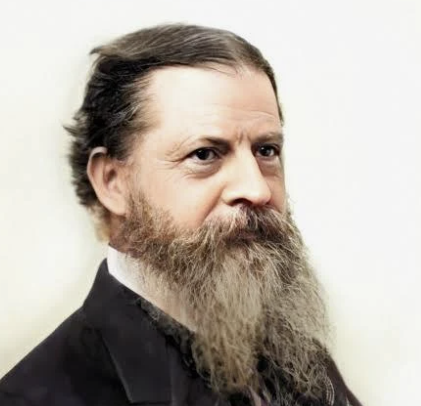
Let us not pretend to doubt in philosophy what we do not doubt in our hearts.
▼
Source
source
Vol. V, par. 265
7 months 3 weeks ago
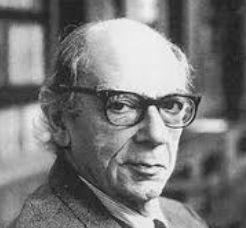
The fundamental sense of freedom is freedom from chains, from imprisonment, from enslavement by others. The rest is extension of this sense, or else metaphor.
CivilSimian.com created by AxiomaticPanic, CivilSimian, Kalokagathia