

4 months 2 weeks ago
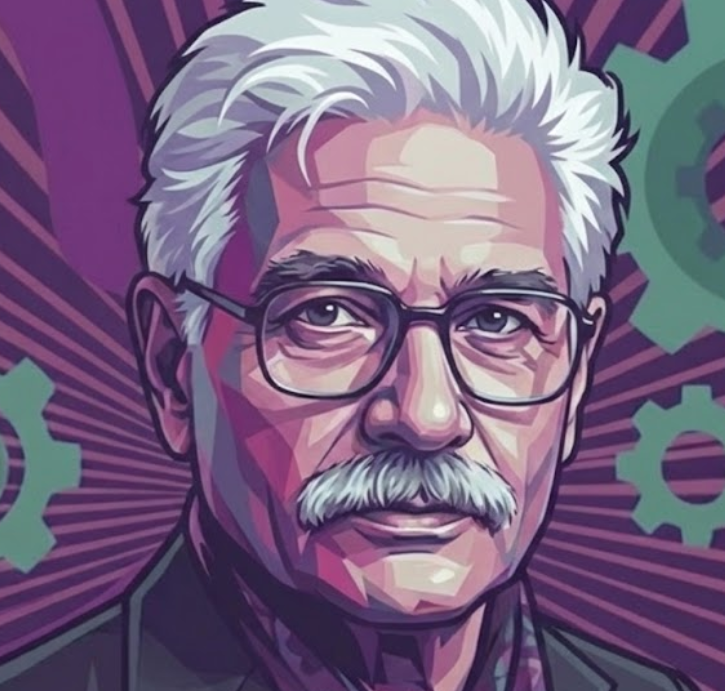
The dissimulation of the woven texture can in any case take centuries to undo its web: a web that envelops a web, undoing the web for centuries; reconstituting it too as an organism, indefinitely regenerating its own tissue behind the cutting trace, the decision of each reading. There is always a surprise in store for the anatomy or physiology of any criticism that might think it had mastered the game, surveyed all the threads at once, deluding itself, too, in wanting to look at the text without touching it, without laying a hand on the "object," without risking- which is the only chance of entering into the game, by getting a few fingers caught- the addition of some new thread.
▼
Source
source
Plato's Pharmacy
4 months 3 weeks ago
Amid the pressure of great events, a general principle gives no help.

4 months 3 weeks ago
If we must absolutely mention this state of affairs, I suggest that we call ourselves "absent", that is more proper.
▼
Source
source
Estelle, refusing to use the word "dead", Act 1, sc. 5


2 months 2 weeks ago
All a writer has to do to get a woman is to say he's a writer. It's an aphrodisiac.
▼
Source
source
As quoted in "Dailer's Choice" by Harriet Van Horne, in New York Magazine Vol. 10, No. 13 (28 March 1977), p. 80
4 months 3 weeks ago
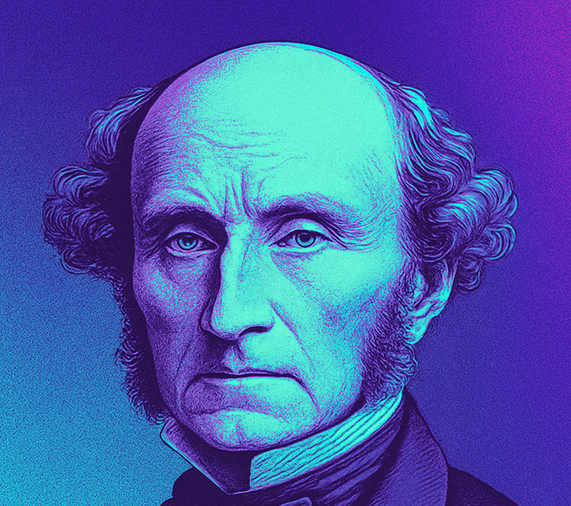
Though they may think the proof incomplete that the universe is a work of design, and though they assuredly disbelieve that it can have an Author and Governor who is absolute in power as well as perfect in goodness, they have that which constitutes the principal worth of all religions whatever, an ideal conception of a Perfect Being, to which they habitually refer as the guide of their conscience; and this ideal of Good is usually far nearer to perfection than the objective Deity of those, who think themselves obliged to find absolute goodness in the author of a world so crowded with suffering and so deformed by injustice as ours.
▼
Source
source
(p. 46)
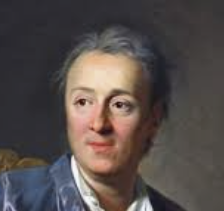
3 months 3 weeks ago
When one compares the talents one has with those of a Leibniz, one is tempted to throw away one's books and go die quietly in the dark of some forgotten corner.
▼
Source
source
Oeuvres complètes, vol. 7, p. 678
4 months 3 weeks ago
I frequently asked myself, if I could, or if I was bound to go on living, when life must be passed in this manner. I generally answered to myself, that I did not think I could possibly bear it beyond a year.
▼
Source
source
(p. 140)
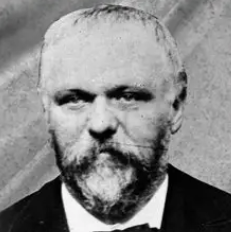
1 month 2 days ago
I have no reason to suppose that Lenin gained his ideas from my books; but if that were true, I should be not a little proud of having contribute to the intellectual development of a man who seems to me to be at once the greatest theoretician of socialism since Marx and a statesman whose genius recalls that of Peter the Great.
▼
Source
source
For Lenin, Soviet Russia, Official Organ of The Russian Soviet Government Bureau, Vol. II, New York: NY, January-June 1920 (April 10, 1920), p. 356

3 months 5 days ago
There is in Shaw, as in Gurdjieff and Nietzsche, a recognition of the immense effort of Will that is necessary to express even a little freedom, that places them beside Pascal and St. Augustine as religious thinkers. Their view is saved from pessimism only by its mystical recognition of the possibilities of pure Will, freed from the entanglements of automatism.
▼
Source
source
p. 292

4 months 3 weeks ago
Not from a vain or shallow thought His awful Jove young Phidias brought.
▼
Source
source
The Problem, st. 2
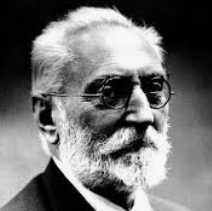
3 months 1 week ago
In books of psychology written from the spiritualist point of view, it is customary to begin the discussion of the existence of the soul as a simple substance, separable from the body, after this style: There is in me a principle which thinks, wills and feels... Now this implies a begging of the question. For it is far from being an immediate truth that there is in me such a principle; the immediate truth is that I think, will and feel. And I - the I that thinks, wills and feels - am immediately my living body with the states of consciousness which it sustains. It is my living body that thinks, wills and feels.
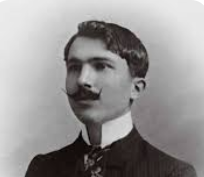
3 weeks 2 days ago
We, who are dying, are doing better, than they, who will live. For Crete doesn't need householders, she needs madmen like us. These madmen make Crete immortal.
▼
Source
source
Freedom and Death
3 weeks 2 days ago
A person needs a little madness, or else they never dare cut the rope and be free.
▼
Source
source
As quoted in Wisdom for the Soul : Five Millennia of Prescriptions for Spiritual Healing (2006) by Larry Chang, p. 412
3 months 1 week ago
The bastard form of mass culture is humiliated repetition: content, ideological schema, the blurring of contradictions-these are repeated, but the superficial forms are varied: always new books, new programs, new films, news items, but always the same meaning.
▼
Source
source
Modern, in The Pleasure of the Text
3 months 2 weeks ago
Modern man may assert that he can dispense with them, and he may bolster his opinion by insisting that there is no scientific evidence of their truth. But since we are dealing with invisible and unknowable things (for God is beyond human understanding, and there is no mean of proving immortality), why should we bother with evidence?
▼
Source
source
p. 75-76

4 months 3 weeks ago
In short, competition has to shoulder the responsibility of explaining all the meaningless ideas of the economists, whereas it should rather be the economists who explain competition.
▼
Source
source
Vol. III, Ch. L, Illusions Created by Competition, p. 866.

4 months 3 weeks ago
The Bhagavad-Gita is perhaps the most systematic scriptural statement of the Perennial Philosophy. To a world at war, a world that, because it lacks the intellectual and spiritual prerequisites to peace, can only hope to patch up some kind of precarious armed truce, it stands pointing, clearly and unmistakably, to the only road of escape from the self-imposed necessity of self-destruction.

4 months 3 weeks ago
It is remarkable that, notwithstanding the universal favor with which the New Testament is outwardly received, and even the bigotry with which it is defended, there is no hospitality shown to, there is no appreciation of, the order of truth with which it deals.

2 weeks 5 days ago
Let opinion be taken away, and no man will think himself wronged. If no man shall think himself wronged, then is there no more any such thing as wrong.
▼
Source
source
IV. 7, trans. Méric Casaubon

3 months 6 days ago
To counter the fixation on a rhetoric of victimhood, black folks must engage in a discourse of self-determination.
1 week 5 days ago
No man can visualize four dimensions, except mathematically ... I think in four dimensions, but only abstractly. The human mind can picture these dimensions no more than it can envisage electricity. Nevertheless, they are no less real than electro-magnetism, the force which controls our universe, within, and by which we have our being.

3 weeks 1 day ago
No one has a natural right to the trade of a money lender, but he who has the money to lend. Let those then among us who have a moneyed capital and who prefer employing it in loans rather than otherwise, set up banks and give cash or national bills for the notes they discount. Perhaps, to encourage them, a larger interest than is legal in the other cases might be allowed them, on the condition of their lending for short periods only.
▼
Source
source
ME 13:277

1 month 1 week ago
A loving heart is the beginning of all knowledge.
▼
Source
source
Article on Biography.
2 months 1 day ago
Today, empathetic intelligence entails sharing the sorrows of other sentient beings. In our posthuman future, will empathy consist entirely in sharing each other's joys?
▼
Source
source
"What Is Empathetic Superintelligence?" presentation, 29 Jan. 2011
2 months 1 day ago
Nietzsche would say my friends lacked ears.
▼
Source
source
Chapter 8, Performative Reflexivity, p. 133

5 months ago
Lying and guile need only to be revealed and recognized to be undone. When once lying is recognized as such, it needs no second stroke; it falls of itself and vanishes in shame.
▼
Source
source
p. 60
5 months ago
Our stubbornness is right, because we want to preserve the liberty which we have in Christ. Only by preserving our liberty shall we be able to retain the truth of the Gospel inviolate.
▼
Source
source
Chapter 2
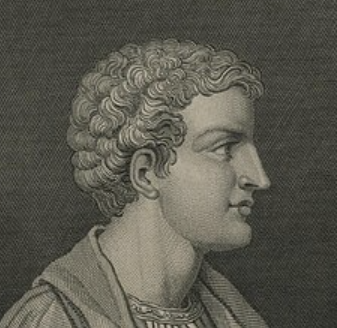
4 months 1 week ago
To have a great man for an intimate friend seems pleasant to those who have never tried it; those who have, fear it.
▼
Source
source
Book I, epistle xviii, line 86
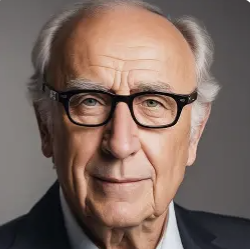
1 month 1 week ago
History, if viewed as a repository for more than anecdote or chronology, could produce a decisive transformation in the image of science by which we are now possessed.

4 months 2 weeks ago
Human beings have a physical need to tell themselves when at work: "Let's have done with it now," and it's having constantly to go on thinking in the face of this need when philosophizing that makes this work so strenuous.
▼
Source
source
p. 86e
3 months 1 week ago
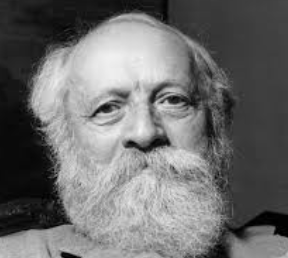
You do not attain to knowledge by remaining on the shore and watching the foaming waves, you must make the venture and cast yourself in, you must swim, alert and with all your force, even if a moment comes when you think you are losing consciousness; in this way, and in no other, do you reach anthropological insight.
▼
Source
source
p. 148

1 month 4 weeks ago
As the Genesis story teaches, knowledge cannot save us from ourselves. If we know more than before, it means only that we have greater scope to enact our fantasies. But - as the Genesis myth also teaches - there is no way we can rid ourselves of what we know. If we try to regain a state of innocence, the result can only be a worse madness. The message of Genesis is that in the most vital areas of human life there can be no progress, only an unending struggle with our own nature.
▼
Source
source
An Old Chaos: Humanism and Flying Saucers (pp. 79-80)

4 months 3 weeks ago
A religious creed differs from a scientific theory in claiming to embody eternal and absolutely certain truth, whereas science is always tentative, expecting that modification in its present theories will sooner or later be found necessary, and aware that its method is one which is logically incapable of arriving at a complete and final demonstration.
▼
Source
source
Religion and Science (1935), Ch. I: Ground of Conflict
3 months 1 week ago
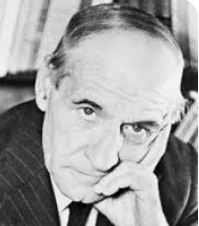
That science is incapable of solving in its own way those fundamental questions is no sufficient reason for slighting them.
▼
Source
source
p. 14

3 months 4 weeks ago
I understand Being in all and over all, as there is nothing without participation in Being, and there is no being without Essence. Thus nothing can be free of the Divine Presence.
▼
Source
source
As quoted in "Giordano Bruno" - Theosophy Vol. 26, No. 8

4 months 3 weeks ago
We must therefore glean up our experiments in this science from a cautious observation of human life, and take them as they appear in the common course of the world, by men's behaviour in company, in affairs, and in their pleasures. Where experiments of this kind are judiciously collected and compared, we may hope to establish on them a science, which will not be inferior in certainty, and will be much superior in utility to any other of human comprehension.
▼
Source
source
Introduction
3 months 3 weeks ago
How did they meet? By chance, like everybody ... Where did they come from? From the nearest place. Where were they going? Do we know where we are going?
▼
Source
source
Prologue
3 months 2 weeks ago
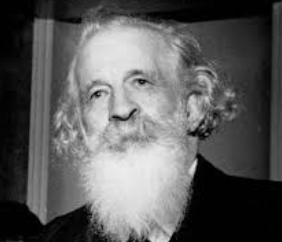
To live life well is to express life poorly; if one expresses life too well, one is living it no longer.
▼
Source
source
A Retrospective Glance at the Lifework of a Master of Books
3 months 2 weeks ago
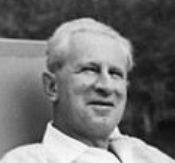
This mutual dependencies no longer the dialectical relationship between master and servant, which has been broken in the struggle for mutual recognition, but rather a vicious circle which encloses both the master and the servant. Do the technicians rule, or is their rule that of the others, who rely on the technicians as their planners and executors?
▼
Source
source
p. 33

2 months 2 weeks ago
Radio affects most intimately, person-to-person, offering a world of unspoken communication between writer-speaker and the listener. That is the immediate aspect of radio. A private experience. The subliminal depths of radio are charged with the resonating echoes of tribal horns and antique drums. This is inherent in the very nature of this medium, with its power to turn the psyche and society into a single echo chamber.
▼
Source
source
(p. 261)

2 months 1 week ago
Statues are not about history. We don't memorialize each piece of history. We memorialize things that we want to value and things that we want our children to walk by and say "This person embodied the values that I care about." Therefore, statues are about values not about history.

5 months 2 weeks ago
A nihilist is not one who believes in nothing, but one who does not believe in what exists.

3 months 2 weeks ago
Foxes have their dens and birds have their nests, but human beings have no place to lay down and rest.
4 months 3 weeks ago
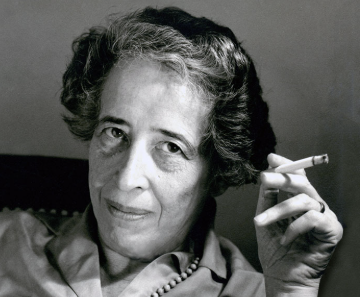
Kant stated defensively that he had "found it necessary to deny knowledge. . . to make room for faith," but he had not made room for faith; he had made room for thought, and he had not "denied knowledge" but separated knowledge from thinking.
▼
Source
source
p. 14

3 months 3 weeks ago
He who seeks freedom for anything but freedom's self is made to be a slave.
▼
Source
source
p. 204
4 months 1 week ago
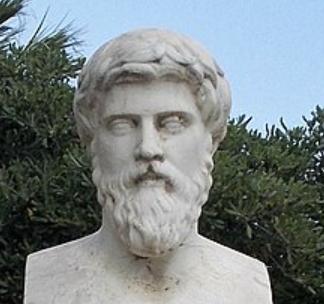
Phocion compared the speeches of Leosthenes to cypress-trees. "They are tall," said he, "and comely, but bear no fruit."
▼
Source
source
56 Phocion
1 month 4 weeks ago
The idea of politics as a conservation in which the collision of opinions is moderated and accommodated, in which what is sought is not truth but peace, has been almost entirely lost, and supplanted by a legalist paradigm in which all political claims and conflicts are modelled in the jargon of rights.
▼
Source
source
'Oakeshott as a Liberal' (p.80)
3 months 3 weeks ago
What most astonishes me in the United States, is not so much the marvelous grandeur of some undertakings, as the innumerable multitude of small ones.
▼
Source
source
Book Two, Chapter XIX.
CivilSimian.com created by AxiomaticPanic, CivilSimian, Kalokagathia