


2 months 2 weeks ago
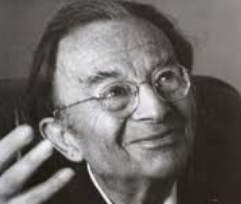
I believe that one can and must hope for a sane society that furthers man's capacity to love his fellow men, to work and create, to develop his reason and his objectivity of a sense of himself that is based on the experience of his productive energy. I believe that one can and must hope for the collective regaining of a mental health that is characterized by the capacity to love and to create...
4 months 4 days ago
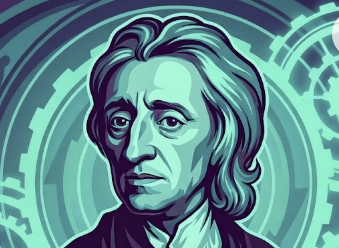
When by these steps he has got resolution enough not to be deterr'd from what he ought to do, by the apprehension of danger; when fear does not, in sudden or hazardous occurrences, decompose his mind, set his body a-trembling, and make him unfit for action, or run away from it, he has then the courage of a rational creature: and such an hardiness we should endeavour by custom and use to bring children to, as proper occasions come in our way.
▼
Source
source
Sec. 115
1 month 1 week ago
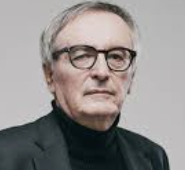
The evil of totalitarianism is not only that it fails to protect specific liberties but that it extinguishes the very possibility of freedom.
▼
Source
source
'Isaiah Berlin: The Value of Decency' (p.104)
4 months 2 days ago
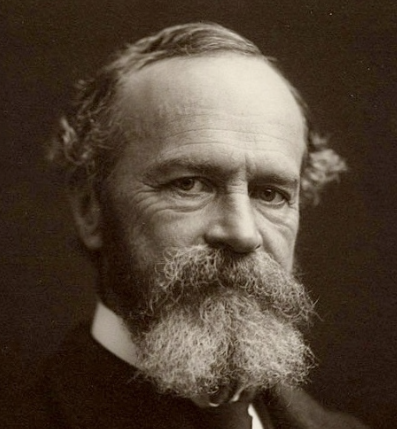
In its widest possible sense, however, a man's Self is the sum total of all that he can call his, not only his body and his psychic powers, but his clothes and his house, his wife and children, his ancestors and friends, his reputation and works, his lands and horses, and yacht and bank-account. All these things give him the same emotions. If they wax and prosper, he feels triumphant; if they dwindle and die away, he feels cast down.
▼
Source
source
Ch. 10

4 months 1 day ago
But when they have realized that it [society] rejects them forever, they themselves assume the ostracism of which they are victims so as not to leave the initiative to their oppressors.
▼
Source
source
p. 65-6
4 months 2 weeks ago
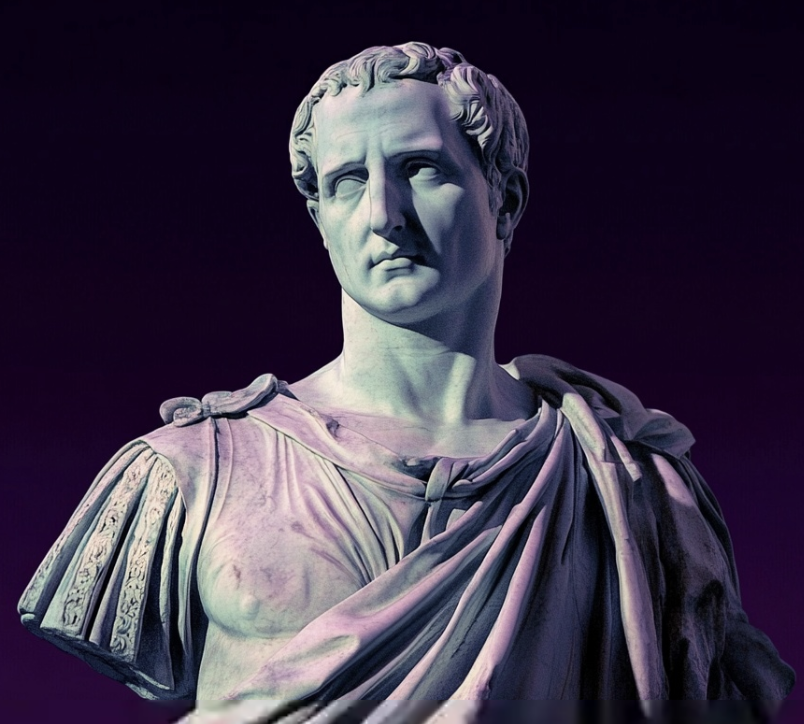
If you have a garden and a library, you have everything you need.
▼
Source
source
To Varro, in Ad Familiares IX, 4
2 days ago
If we can but prevent the government from wasting the labors of the people, under the pretense of taking care of them, they must become happy.
▼
Source
source
Letter to Thomas Cooper
2 days ago
It is hardly in human nature that a man should quite accurately gauge the limits of his own insight; but it is the duty of those who profit by his work to consider carefully where he may have been carried beyond it. If we must needs embalm his possible errors along with his solid achievements, and use his authority as an excuse for believing what he cannot have known, we make of his goodness an occasion to sin.
4 months 1 day ago
No matter how abstract our theories may sound or how consistent our arguments may appear, there are incidents and stories behind them which, at least for ourselves, contain as in a nutshell the full meaning of whatever we have to say.
▼
Source
source
Thinking Without a Banister: Essays in Understanding, 1953-1975

2 months 1 day ago
The man is making preparations for a year, and does not know that he will die before evening. And I remembered God's second saying, "Learn what is not given to man." 'What dwells in man" I already knew. Now I learnt what is not given him. It is not given to man to know his own needs.
▼
Source
source
Ch. XI

3 months 3 days ago
France had for some time been guilty of a continued series of hostile acts against this country, both external and internal: first, she directed her pursuits to universal empire, under the name of fraternity, in order to overturn the fabric of our laws and government.
▼
Source
source
Speech in the House of Commons (12 February 1793)
1 month 2 weeks ago
No being can be what he is unless he is putting his essence into action in his field.
▼
Source
source
Vol. 3

2 months 2 weeks ago
To be in touch with senses and emotions beyond conquest is to enter the realm of the mysterious.
▼
Source
source
Chapter 2, Altars of Sacrifice

4 months 1 week ago
There is the name and the thing: the name is a voice which denotes and signifies the thing; the name is no part of the thing, nor of the substance; 'tis a foreign piece joined to the thing, and outside it. God, who is all fulness in Himself and the height of all perfection, cannot augment or add anything to Himself within; but His name may be augmented and increased by the blessing and praise we attribute to His exterior works: which praise, seeing we cannot incorporate it in Him, forasmuch as He can have no accession of good, we attribute to His name, which is the part out of Him that is nearest to us. Thus is it that to God alone glory and honour appertain; and there is nothing so remote from reason as that we should go in quest of it for ourselves; for, being indigent and necessitous within, our essence being imperfect, and having continual need of amelioration, 'tis to that we ought to employ all our endeavour.
▼
Source
source
Ch. 16

4 months 6 days ago
It is not for its own sake that men desire money, but for the sake of what they can purchase with it.
▼
Source
source
Chapter I, p. 471.
8 months 1 week ago
It is also crucial to bear in mind the interconnection between the Decalogue... and its modern obverse, the celebrated 'human Rights'. As the experience of our post-political liberal-permissive society amply demonstrates, human Rights are ultimately, at their core, simply Rights to violate the Ten Commandments. 'The right to privacy' — the right to adultery, in secret, where no one sees me or has the right to probe my life. 'The right to pursue happiness and to possess private property' -- the right to steal (to exploit others). 'Freedom of the press and of the expression of opinion' -- the right to lie. 'The right of free citizens to possess weapons' -- the right to kill. And, ultimately, 'freedom of religious belief' — the right to worship false gods.

4 months 3 days ago
The Chinese are a great nation, incapable of permanent suppression by foreigners. They will not consent to adopt our vices in order to acquire military strength; but they are willing to adopt our virtues in order to advance in wisdom. I think they are the only people in the world who quite genuinely believe that wisdom is more precious than rubies. That is why the West regards them as uncivilized.
▼
Source
source
The Problem of China (1922), Ch. XIII: Higher education in China
1 week 4 days ago
I pray the Sovereign Sun himself to grant me ability to explain the nature of the station that he holds amongst those in whose middle he is placed! By the term "middle" we are to understand not what is so defined in the case of things contrary to each other, as "equi-distant from the extremes," as orange and dark brown in the case of colours; lukewarm, in that of hot and cold, and other things of the sort; but the power that collects and unites into one things dispersed, like the "Harmony" of Empedocles, from which he completely excludes all discord and contention.

4 months 2 days ago
Whenever the general disposition of the people is such, that each individual regards those only of his interests which are selfish, and does not dwell on, or concern himself for, his share of the general interest, in such a state of things, good government is impossible.
▼
Source
source
Ch. II: The Criterion of a Good Form of Government (p. 167)

3 months 2 days ago
And now once again I asked myself the question: do I love her? And once more I could not answer, that is to say, again, for the hundredth time, I answered that I hated her.
3 months 2 days ago
To theology, ... only what it holds sacred is true, whereas to philosophy, only what holds true is sacred.
▼
Source
source
Lecture II, R. Manheim, trans. (1967), p. 11
3 months 3 weeks ago
"What is a thing?" is historical, because every report of the past, that is of the preliminaries to the question about the thing, is concerned with something static. This kind of historical reporting is an explicit shutting down of history, whereas it is, after all, a happening. We question historically if we ask what is still happening even if it seems to be past. We ask what is still happening and whether we remain equal to this happening so that it can really develop.
▼
Source
source
p. 43
1 month 3 weeks ago
Take our politicians: they're a bunch of yo-yos. The presidency is now a cross between a popularity contest and a high school debate, with an encyclopedia of cliches.
▼
Source
source
As quoted in The Portable Curmudgeon (1987) by Jon Winokur, p. 219
3 months 2 weeks ago
Not only can logos be seen in absolutely all animals, but in many of them it has the groundwork for being perfected.
▼
Source
source
3, 2, 4

4 months 3 weeks ago
I do not open up the truth to one who is not eager to get knowledge, nor help out any one who is not anxious to explain himself. When I have presented one corner of a subject to any one, and he cannot from it learn the other three, I do not repeat my lesson.

3 weeks 2 days ago
If you are in a strait, a very good indication as to choice-perhaps the best you could get-is a book you have a great curiosity about. You are then in the readiest and best of all possible conditions to improve by that book.
1 month 2 weeks ago
Every oasis is an island that has water inside it but not round it.
▼
Source
source
Between Niger and Nile (London: Oxford UP, 1965) 20. Cyrenaïca's Green Mountain
4 months 2 weeks ago
Thus, in this universal catastrophe, the sufferings of Christians have tended to their moral improvement, because they viewed them with eyes of faith.
▼
Source
source
I, 9
2 months 1 week ago
Whereas economic man maximizes - selects the best alternative from among all those available to him, his cousin, administrative man, satisfices - looks for a course of action that is satisfactory or "good enough."
▼
Source
source
p. xxix.
4 months 3 days ago
All sources of energy upon which industry depends are wasted when they are employed; and industry is expending them at a continually increasing rate. Already coal has been largely replaced by oil, and oil is being used up so fast that East and West alike conceive it necessary to their own prosperity to destroy the industry of the other. And what is true of oil is equally true of other natural resources. Every day, many square miles of forest are turned into newspaper, but there is no known process by which newspaper can be turned into forest. You will say that this need not worry us, since newspapers will be replaced by radio, but radio requires electricity, electricity requires power, and power depends upon raw materials.
▼
Source
source
Part I: Man and Nature, Ch. 4: The Limits of Human Power, p. 30

3 months 2 weeks ago
It is told that those who first brought out the irrationals from concealment into the open perished in shipwreck, to a man. For the unutterable and the formless must needs be concealed. And those who uncovered and touched this image of life were instantaneously destroyed and shall remain forever exposed to the play of the eternal waves.
▼
Source
source
As quoted by Tobias Dantzig, Number: The Language of Science (1930) also see Proclus, scholium to Book X of Euclid's Elements, vol. V.
2 months 3 weeks ago
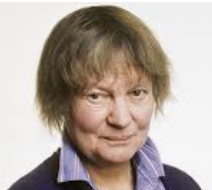
The sin of pride may be a small or a great thing in someone's life, and hurt vanity a passing pinprick or a self-destroying or even murderous obsession. Possibly, more people kill themselves and others out of hurt vanity than out of envy, jealousy, malice or desire for revenge.
▼
Source
source
The Philosopher's Pupil (1983) p. 76.
3 months 6 days ago
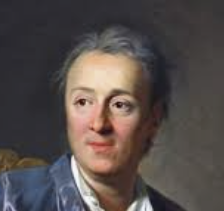
Pithy sentences are like sharp nails which force truth upon our memory.
▼
Source
source
As quoted in A Dictionary of Thoughts : Being a Cyclopedia of Laconic Quotations (1908) by Tryon Edwards, p. 338

2 months ago
Every technology contrived and "outered" by man has the power to numb human awareness during the period of its first interiorization.
▼
Source
source
(p. 174)

2 months 4 weeks ago
To get up in the morning, wash and then wait for some unforeseen variety of dread or depression. I would give the whole universe and all of Shakespeare for a grain of ataraxy.

2 months 2 weeks ago
And here, facing this supreme religious sacrifice, we reach the summit of the tragedy, the very heart of it - the sacrifice of our own individual consciousness upon the alter of the perfected Human Consciousness, of the Divine Consciousness. But is there really a tragedy? ...if we could succeed in understanding and feeling that we were going to enrich Christ, should we hesitate for a moment in surrendering ourselves to Him? Would the stream that flows into the sea, and feels in the freshness of its waters the bitterness of the salt of the ocean, wish to flow back to its source? would it wish to return to the cloud which drew it life from the sea? is it not joy to feel itself absorbed?
2 months ago
We have become like the most primitive Palaeolithic man, once more global wanderers, but information gatherers rather than food gatherers. From now on the source of food, wealth and life itself will be information.
1 month 4 weeks ago
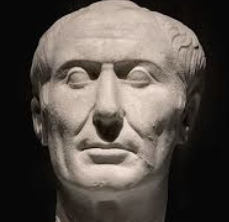
His own character is the arbiter of every one's fortune.
▼
Source
source
Maxim 283

2 months 3 weeks ago
Brother will betray brother to death, and a father his child. Children will even rise up against their parents and have them put to death.
▼
Source
source
10:21 (HCSB) Said to his disciples.
1 month 2 weeks ago
A life which does not go into action is a failure.
▼
Source
source
Vol. 10

2 months 2 weeks ago
The human soul has need of disciplined participation in a common task of public value, and it has need of personal initiative within this participation. The human soul has need of security and also of risk. The fear of violence or of hunger or of any other extreme evil is a sickness of the soul. The boredom produced by a complete absence of risk is also a sickness of the soul.

2 months 3 weeks ago
The liberating force of technology-the instrumentalization of things-turns into ... the instrumentalization of man.
▼
Source
source
p. 159
2 days ago
Whether the succeeding generation is to be more virtuous than their predecessors, I cannot say; but I am sure they will have more worldly wisdom, and enough, I hope, to know that honesty is the first chapter in the book of wisdom.
▼
Source
source
Letter to Nathaniel Macon
1 month 2 weeks ago
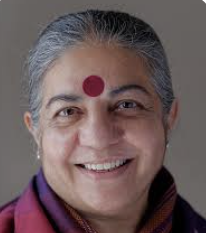
When Bill Gates pours money into Africa for feeding the poor in Africa and preventing famine, he's pushing the failed Green Revolution, he's pushing chemicals, pushing GMOs, pushing patterns.
▼
Source
source
On Bill Gate's philanthropic activities, from "Bill Gates is continuing the work of Monsanto, Vandana Shiva tells France24" France24
4 months 4 days ago
Though the managing ourselves well in this part of our behavior has the name good-breeding, as if a peculiar effect of education; yet... young children should not be much perplexed about it... Teach them humility, and to be good-natur'd, if you can, and this sort of manners will not be wanting; civility being in truth nothing but a care not to shew any slighting or contempt of any one in conversation.
▼
Source
source
Sec. 145

2 months 2 weeks ago
The vitality of thought is in adventure. Ideas won't keep. Something must be done about them. When the idea is new, its custodians have fervor, live for it, and, if need be, die for it.
▼
Source
source
p. 100; Ch. 12, April 28, 1938.
3 weeks 5 days ago
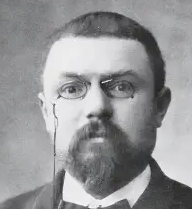
Does the harmony the human intelligence thinks it discovers in nature exist outside of this intelligence? No, beyond doubt, a reality completely independent of the mind which conceives it, sees or feels it, is an impossibility. A world as exterior as that, even if it existed, would for us be forever inaccessible.
CivilSimian.com created by AxiomaticPanic, CivilSimian, Kalokagathia