


3 months 1 week ago
From the power to transform him into a thing by killing him there proceeds another power, and much more prodigious, that which makes a thing of him while he still lives.
▼
Source
source
in The Simone Weil Reader, p. 155
2 months 1 week ago
So far from the posterior lobe, the posterior cornu, and the hippocampus minor, being structures peculiar to and characteristic of man, as they have been over and over again asserted to be, even after the publication of the clearest demonstration of the reverse, it is precisely these structures which are the most marked cerebral characters common to man with the apes. They are among the most distinctly Simian peculiarities which the human organism exhibits.
▼
Source
source
Ch.2, p. 119

4 months 2 weeks ago
The sins of the flesh are bad, but they are the least bad of all sins. All the worst pleasures are purely spiritual: the pleasure of putting other people in the wrong, of bossing and patronising and spoiling sport, and back-biting; the pleasures of power, of hatred. For there are two things inside me, competing with the human self which I must try to become. They are the Animal self, and the Diabolical self. The Diabolical self is the worse of the two. That is why a cold, self-righteous prig who goes regularly to church may be far nearer to hell than a prostitute. But, of course, it is better to be neither.
▼
Source
source
Book III, Chapter 5, "Sexual Morality"
3 weeks ago
We took the liberty to make some enquiries concerning the ground of their pretensions to make war upon nations who had done them no injury, and observed that we considered all mankind as our friends who had done us no wrong, nor had given us any provocation. The Ambassador [of Tripoli] answered us that it was founded on the Laws of their Prophet, that it was written in their Koran, that all nations who should not have acknowledged their authority were sinners, that it was their right and duty to make war upon them wherever they could be found, and to make slaves of all they could take as Prisoners, and that every Musselman who should be slain in battle was sure to go to Paradise.
▼
Source
source
Letter from the commissioners (John Adams, Thomas Jefferson) to John Jay, 28 March 1786, in Thomas Jefferson Travels: Selected Writings, 1784-1789, by Anthony Brandt, pp. 104-105
5 months 2 weeks ago
Zeus, the god of gods, who rules according to law, and is able to see into such things, perceiving that an honourable race was in a woeful plight, and wanting to inflict punishment on them, that they might be chastened and improve, collected all the gods into their most holy habitation, which, being placed in the centre of the world, beholds all created things.

3 months 3 weeks ago
Granted I am a babbler, a harmless vexatious babbler, like all of us. But what is to be done if the direct and sole vocation of every intelligent man is babble, that is, the intentional pouring of water through a sieve?
▼
Source
source
Part 1, Chapter 5



4 months 3 weeks ago
Hegel once observed that comedy is in act superior to tragedy and humourous reasoning superior to grandiloquent reasoning. Although Lincoln does not possess the grandiloquence of historical action, as an average man of the people he has its humour.

5 months 2 weeks ago
It is because you yourself fear the propaganda created, after all, only by the stupidity of your own bigots.
2 months 4 weeks ago
The physicist who states a law of nature with the aid of a mathematical formula is abstracting a real feature of a real material world, even if he has to speak of numbers, vectors, tensors, state-functions, or whatever to make the abstraction.
▼
Source
source
"What is Mathematical Truth?"
4 months 2 weeks ago
Kant was also quite aware that "the urgent need" of reason is both different from and "more than mere quest and desire for knowledge." Hence, the distinguishing of the two faculties, reason and intellect, coincides with a distinction between two altogether different mental activities, thinking and knowing.
▼
Source
source
p. 14

4 months 3 weeks ago
New truth is often uncomfortable, especially to the holders of power; nevertheless, amid the long record of cruelty and bigotry, it is the most important achievement of our intelligent but wayward species.
▼
Source
source
Religion and Science (1935), Ch. X: Conclusion
1 week 4 days ago
We Jews have been too adaptable. We have been too eager to sacrifice our idiosyncrasies for the sake of social conformity. ... Even in modern civilization, the Jew is most happy if he remains a Jew.
5 months 3 weeks ago
Those who assert that the mathematical sciences say nothing of the beautiful or the good are in error. For these sciences say and prove a great deal about them; if they do not expressly mention them, but prove attributes which are their results or definitions, it is not true that they tell us nothing about them. The chief forms of beauty are order and symmetry and definiteness, which the mathematical sciences demonstrate in a special degree.
3 weeks ago
The 'Logic of Induction' consists in stating the Facts and the Inference in such a manner, that the evidence of the Inference is manifest; just as the Logic of Deduction consists in stating the Premises and the Conclusion in such a manner that the Evidence of the Conclusion is manifest.

4 months 3 weeks ago
I am grateful for what I am & have. My thanksgiving is perpetual. It is surprising how contented one can be with nothing definite - only a sense of existence. Well, anything for variety. I am ready to try this for the next 1000 years, & exhaust it. How sweet to think of! My extremities well charred, and my intellectual part too, so that there is no danger of worm or rot for a long while. My breath is sweet to me. O how I laugh when I think of my vague indefinite riches. No run on my bank can drain it - for my wealth is not possession but enjoyment.
▼
Source
source
Letter to Harrison Gray Otis Blake (6-7 December 1856), as published in The Correspondence of Henry David Thoreau (1958)
1 week 4 days ago
Everyone who is seriously involved in the pursuit of science becomes convinced that some spirit is manifest in the laws of the universe, one that is vastly superior to that of man.
4 months 3 weeks ago
I am sorry to say that at the moment I am so busy as to be convinced that life has no meaning whatever... I do not see that we can judge what would be the result of the discovery of truth, since none has hitherto been discovered.
▼
Source
source
Letter to Will Durant, 20 June, 1931
1 month 2 days ago
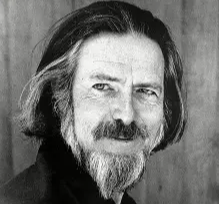
We accepted a definition of ourselves which confined the self to the source and to the limitations of conscious attention. This definition is miserably insufficient, for in fact we know how to grow brains and eyes, ears and fingers, hearts and bones, in just the same way that we know how to walk and breathe, talk and think-only we can't put it into words. Words are too slow and too clumsy for describing such things, and conscious attention is too narrow for keeping track of all their details.
▼
Source
source
p. 112

4 months 5 days ago
Again, Amyclas the Heracleotean, one of Plato's familiars, and Menæchmus, the disciple, indeed, of Eudoxus, but conversant with Plato, and his brother Dinostratus, rendered the whole of geometry as yet more perfect. But Theudius, the Magnian, appears to have excelled, as well in mathematical disciplines, as in the rest of philosophy. For he constructed elements egregiously, and rendered many particulars more universal. Besides, Cyzicinus the Athenian, flourished at the same period, and became illustrious in other mathematical disciplines, but especially in geometry. These, therefore, resorted by turns to the Academy, and employed themselves in proposing common questions.
▼
Source
source
Ch. IV.

4 months 3 days ago
He is worst of all, that is malicious against his friends.
3 months 4 days ago
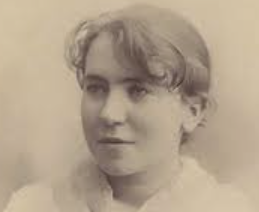
In conclusion, I wish to say that my attitude to the whole tragic question is not dictated by my Jewish antecedents. It is motivated by my abhorrence of injustice, and man's inhumanity to man. It is because of this that I have fought all my life for anarchism which alone will do away with the horrors of the capitalist régime and place all races and peoples, including the Jews, on a free and equal basis. Until then I consider it highly inconsistent for socialists and anarchists to discriminate in any shape or form against the Jews.
2 months ago
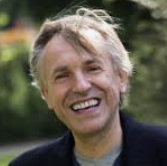
[B]oth natural selection and the historical record offer powerful reasons for doubting the trustworthiness of our naive moral intuitions. So the possibility that human civilisation might be founded upon some monstrous evil should be taken seriously - even if the possibility seems transparently absurd at the time.
▼
Source
source
The Antispeciesist Revolution, Institute for Ethics and Emerging Technologies, 26 Jul. 2013
4 months 3 weeks ago
In a logically perfect language, there will be one word and no more for every simple object, and everything that is not simple will be expressed by a combination of words, by a combination derived, of course, from the words for the simple things that enter in, one word for each simple component.
1 month 2 days ago
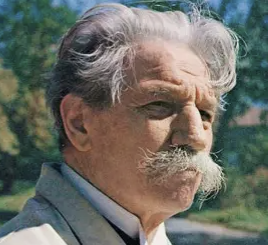
It is the fate of 'little faiths' of truth that they, true followers of Peter, whether they be Roman or the Protestant observance, cry out and sink in the sea of ideas, where the followers of Paul, believing in the Spirit, walk secure and undismayed.
▼
Source
source
p. 32
4 months 3 weeks ago
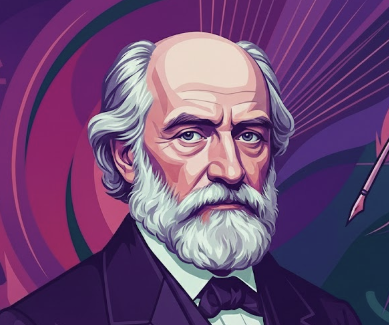
Suicide may also be regarded as an experiment - a question which man puts to Nature, trying to force her to answer. The question is this: What change will death produce in a man's existence and in his insight into the nature of things? It is a clumsy experiment to make; for it involves the destruction of the very consciousness which puts the question and awaits the answer.
▼
Source
source
Vol. 2, Ch. 13, § 160
5 months 2 weeks ago
I don't believe in an afterlife, so I don't have to spend my whole life fearing hell, or fearing heaven even more. For whatever the tortures of hell, I think the boredom of heaven would be even worse.

4 months 3 weeks ago
No congress, nor mob, nor guillotine, nor fire, nor all together, can avail, to cut out, burn, or destroy the offense of superiority in persons. The superiority in him is inferiority in me.
▼
Source
source
p. 65

2 months 2 weeks ago
The unformulated message of an assembly of news items from every quarter of the globe is that the world today is one city. All war is civil war. All suffering is our own.
▼
Source
source
p. 291
2 months 1 week ago
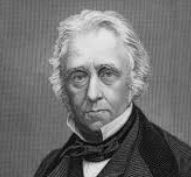
I have been deep in Plato, Aristotle, and Theocritus ever since I left home, and admiring more and more every day the powers of that mighty language which is incomparably the best vehicle both for reasoning and for imagery that mankind have ever discovered, and which is richer both in abstract philosophical terms and poetical expressions than the English, French, and Latin tongues put together.
▼
Source
source
Letter to Zachary Macaulay (19? August 1820), quoted in The Letters of Thomas Babington Macaulay, Volume I: 1807-February 1831, ed. Thomas Pinney (1974), p. 145
2 weeks 5 days ago
War is divine in itself, since it is a law of the world. War is divine through its consequences of a supernatural nature which are as much general as particular, consequences little known because little studied, but which are nevertheless incontestable. War is divine in the mysterious glory that surrounds it and in the no less inexplicable attraction that draws us to it. War is divine by the manner in which it breaks out.
▼
Source
source
Seventh Dialogue, p. 218
1 month 2 weeks ago
While the positivists were proclaiming the end "once and for all" of unverifiable metaphysical systems and speculative philosophy in general, new doctrines in flagrant contradiction to those ideals have sprung up one after the other. Positivists see no more in this development than evidence of human stupidity, not any reflection on themselves.
▼
Source
source
Chapter Eight, Logical Empiricism, p. 198
3 months 1 week ago
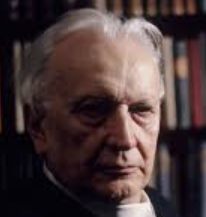
The masses are our masters; and for every one who looks facts in the face his existence has become dependent on them, so that the thought of them must control his doings, his cares, and his duties. Even an articulated mass always tends to become unspiritual and inhuman. It is life without existence, superstitions without faith. It may stamp all flat; it is disinclined to tolerate independence and greatness, but prone to constrain people to become as automatic as ants.
3 months 1 week ago
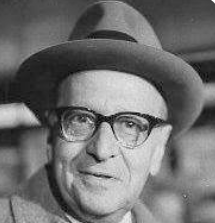
The French symbolists had a special term to express their love for things that had lost their objective significance, namely, 'spleen.' The conscious, challenging arbitrariness in the choice of objects, its 'absurdity' and 'perverseness,' as if by a silent gesture discloses the irrationality of utilitarian logic, which it then slaps in the face in order to demonstrate its inadequacy with regard to human experience. And while making it conscious, by this shock, of the fact that it forgets the subject, the gesture simultaneously expresses the subject's sorrow over his inability to achieve an objective order. Twentieth-century society is not troubled by such inconsistencies. For it, meaning can be achieved in only one way-service for a purpose.
▼
Source
source
p. 38.
3 months 2 weeks ago
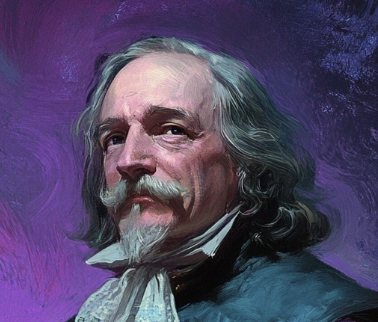
The source of every Crime, is some defect of the Understanding; or some error in Reasoning, or some sudden force of the Passions. Defect in the Understanding, is Ignorance; in Reasoning, Erroneous Opinion.
▼
Source
source
The Second Part, Chapter 27, p. 152
5 months 3 weeks ago
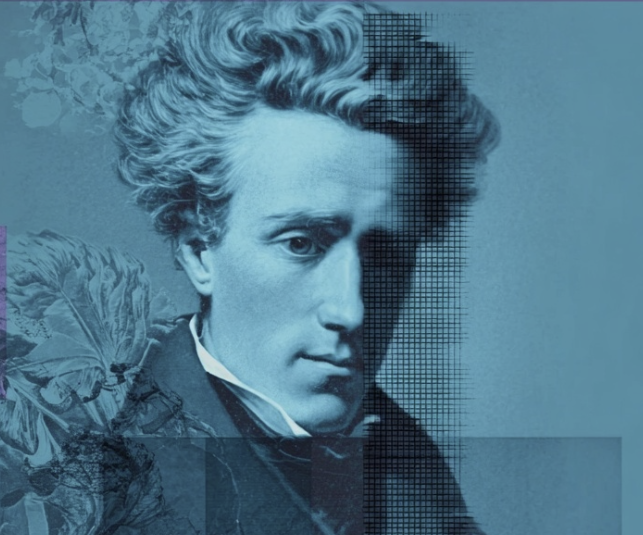
Man is a synthesis of psyche and body, but he is also a synthesis of the temporal and the eternal. In the former, the two factors are psyche and body, and spirit is the third, yet in such a way that one can speak of a synthesis only when the spirit is posited. The latter synthesis has only two factors, the temporal and the eternal. Where is the third factor? And if there is no third factor, there really is no synthesis, for a synthesis that is a contradiction cannot be completed as a synthesis without a third factor, because the fact that the synthesis is a contradiction asserts that it is not. What, then, is the temporal?
3 weeks 1 day ago
Who holds a sword is tempted, who has youth must play,he who does not fear death on earth does not fear God.
▼
Source
source
Odysseus, Book VIII, line 560
3 months 1 week ago
When we cannot obtain a thing, we comfort ourselves with the reassuring thought that it is not worth nearly as much as we believed.
▼
Source
source
L. Coser, trans. (1973), p. 73

3 months 2 weeks ago
The sun will be darkened, and the moon will not give its light; the stars will fall from the sky, and the heavenly bodies will be shaken. They will see the Son of Man coming on the clouds of the sky, with power and great glory... I tell you the truth, this generation will certainly not pass away until all these things have happened.
▼
Source
source
24:29-34 (NIV)
3 months 3 weeks ago
I suddenly dreamt that I picked up the revolver and aimed it straight at my heart - my heart, and not my head; and I had determined beforehand to fire at my head, at my right temple. After aiming at my chest I waited a second or two, and suddenly my candle, my table, and the wall in front of me began moving and heaving. I made haste to pull the trigger.

1 month 1 week ago
For love is ever the beginning of Knowledge, as fire is of light.
▼
Source
source
Carlyle, Essays, Death of Goethe. Quote reported in Hoyt's New Cyclopedia Of Practical Quotations (1922), p. 419-23.
2 months 4 days ago
The wave of the future is coming and there is no fighting it.
▼
Source
source
The Wave of the Future
4 months 3 weeks ago
Children should from the beginning be bred up in an abhorrence of killing or tormenting any living creature; and be taught not to spoil or destroy any thing, unless it be for the preservation or advantage of some other that is nobler.
▼
Source
source
Sec. 116

4 months 3 weeks ago
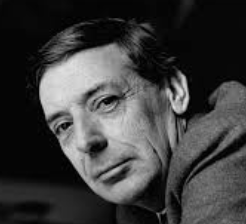
Fools have a habit of believing that everything written by a famous author is admirable. For my part I read only to please myself and like only what suits my taste.
3 months 5 days ago
Positivism ... implies the double falsehood that no interpretation is needed, and that it is not needed because the story which the positivist writer tells, such as it is, is obvious. The story he or she tells is usually a bad one, and its being obvious only means that it is familiar.
▼
Source
source
p. 12
2 months 1 week ago
I say that where the public morality is concerned it may be the duty of the State to interfere with the contracts of individuals... It must then, I think, be admitted that, where health is concerned, and where morality is concerned, the State is justified in interfering with the contracts of individuals.
▼
Source
source
Speech in the House of Commons (22 May 1846), quoted in Speeches of the Right Honourable T. B. Macaulay, M.P. (1854), p. 442
3 months 1 week ago
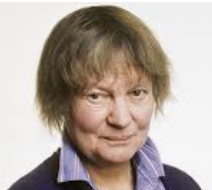
Stuart was not dismayed by his sexual feelings about the boy.
▼
Source
source
The Good Apprentice (1985), p. 247.
4 months 1 week ago
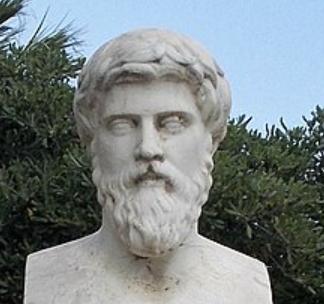
Once when Phocion had delivered an opinion which pleased the people,... he turned to his friend and said, "Have I not unawares spoken some mischievous thing or other?"
▼
Source
source
55 Phocion
4 months 3 days ago
A solitary man is a God, or a beast.
2 months 2 weeks ago
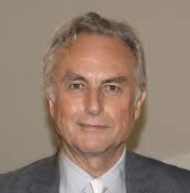
It's been suggested that if the super-naturalists really had the powers they claim, they'd win the lottery every week. I prefer to point out that they could also win a Nobel Prize for discovering fundamental physical forces hitherto unknown to science. Either way, why are they wasting their talents doing party turns on television?By all means let's be open-minded, but not so open-minded that our brains drop out.
CivilSimian.com created by AxiomaticPanic, CivilSimian, Kalokagathia