

4 months 2 weeks ago
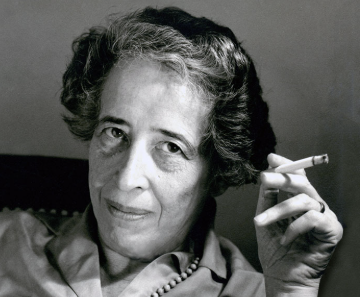
The ideal subject of totalitarian rule is not the convinced Nazi or the convinced Communist, but people for whom the distinction between fact and fiction (i.e., the reality of experience) and the distinction between true and false (i.e., the standards of thought) no longer exist.
▼
Source
source
Part 3, Ch. 13, § 3

3 months 2 weeks ago
He who carries self-regard far enough to keep himself in good health and high spirits, in the first place thereby becomes an immediate source of happiness to those around, and in the second place maintains the ability to increase their happiness by altruistic actions. But one whose bodily vigour and mental health are undermined by self-sacrifice carried too far, in the first place becomes to those around a cause of depression, and in the second place renders himself incapable, or less capable, of actively furthering their welfare. In estimating conduct we must remember that there are those who by their joyousness beget joy in others, and that there are those who by their melancholy cast a gloom on every circle they enter.
▼
Source
source
Ethics (New York:1915), § 72, pp. 193-194

4 months 2 weeks ago
The man described for us, whom we are invited to free, is already in himself the effect of a subjection much more profound than himself. A 'soul' inhabits him and brings him to existence...the soul is the effect and instrument of political anatomy; the soul is the prison of the body.

4 months 3 weeks ago
The means employed by Nature to bring about the development of all the capacities of men is their antagonism in society, so far as this is, in the end, the cause of a lawful order among men.
▼
Source
source
Fourth Thesis

4 months 3 weeks ago
Philosophy ... is a science, and as such has no articles of faith; accordingly, in it nothing can be assumed as existing except what is either positively given empirically, or demonstrated through indubitable conclusions.
▼
Source
source
Vol I


2 months 1 week ago
However long Jewish, Christian and Muslim theologians struggle to find multiple meanings in this text, the dominant seems to be this: Abraham's unquestioning willingness to heed gods command to sacrifice the thing he loved most is what qualified him to become the father of what are called still the Abrahamic faiths.
1 month ago
This letter, if judged by the novelty and profundity of ideas it contains, is perhaps the most substantial piece of writing in the whole literature of mankind.
▼
Source
source
Symmetry (1952), quote on p. 138; referring to a letter by Évariste Galois to Auguste Chevalier from May 29, 1832, two days before Galois' death, containing a testamentary summary of Galois' discoveries

2 weeks 4 days ago
Nothing great has great beginnings.
▼
Source
source
XXIII, p. 73
3 months 1 week ago
It is a great good fortune, as Stendhal said, for one "to have his passion as a profession."
▼
Source
source
p. 4
2 weeks 3 days ago
Of things that are external, happen what will to that which can suffer by external accidents. Those things that suffer let them complain themselves, if they will; as for me, as long as I conceive no such thing, that that which is happened is evil, I have no hurt; and it is in my power not to conceive any such thing.

4 months 2 weeks ago
But since he has decided to have the impossibility of living, every misfortune is an opportunity which lays this importance of living before his eyes and obliges him to decide, once again, to die.
▼
Source
source
p. 158

3 months 3 weeks ago
He laid it down as a maxim, that monarchy was the basis of all good government and the nearer to monarchy any government approached, the more perfect it was, and vice versa; and he certainly in his wildest moments, never had so far forgotten the nature of government, as to argue that we ought to wish for a constitution that we could alter at pleasure, and change like a dirty shirt. He was by no means anxious for a monarchy with a dash of republicanism to correct it. But the French constitution was the exact opposite of the English in every thing, and nothing could be so dangerous as to set it up to the view of the English, to mislead and debauch their minds.
▼
Source
source
Speech in the House of Commons (6 May 1791), quoted in The Parliamentary History of England, From the Earliest Period to the Year 1803, Vol. XXIX (1817), column 385

4 months 3 weeks ago
In obedience to the feeling of reality, we shall insist that, in the analysis of propositions, nothing "unreal" is to be admitted. But, after all, if there is nothing unreal, how, it may be asked, could we admit anything unreal? The reply is that, in dealing with propositions, we are dealing in the first instance with symbols, and if we attribute significance to groups of symbols which have no significance, we shall fall into the error of admitting unrealities, in the only sense in which this is possible, namely, as objects described.
▼
Source
source
Ch. 16: Descriptions
3 months 2 weeks ago
What, then, is the animal? First of all, a system of plant-souls. The unity of those plant-souls, which unity nature itself produces, is the soul of the animal. Its world is therefore partly that of the plants - its nourishment, for instance, it receives partly through synthesis from vegetable, and through analysis from animal nature - and partly that of the animals, whereof we shall speak directly. Each product of nature is an organically in-itself completed totality in space, like the plant. Hence, the unknown x which we are looking for must also be such a whole or totality, and in so far it must also have a principle of organization, a sphere and central point of this organization ; in short, the same which we have called the soul of the plant, which thus remains common to both. ... The animal is a system of plant-souls, and the plant is a separated, isolated part of an animal. Both reciprocally affect each other.
▼
Source
source
P. 502, 503, 504

3 months 2 days ago
What the horrors of war are, no one can imagine - they are not wounds and blood and fever, spotted and low, or dysentery, chronic and acute, cold and heat and famine - they are intoxication, drunken brutality, demoralization and disorder on the part of the inferior, jealousies, meanness, indifference, selfish brutality on the part of the superior.
▼
Source
source
Letter (5 May 1855), published in Florence Nightingale : An Introduction to Her Life and Family (2001), edited by Lynn McDonald, p. 141
5 months 3 weeks ago
The bodies of which the world is composed are solids, and therefore have three dimensions. Now, three is the most perfect number, it is the first of numbers, for of one we do not speak as a number, of two we say both, but three is the first number of which we say all. Moreover, it has a beginning, a middle, and an end.
2 months 3 days ago
Societies, not states, are 'the social atoms' with which students of history have to deal.
▼
Source
source
Vol. 1

4 months 2 weeks ago
"What is meant by saying that my choice of which way to walk home after the lecture is ambiguous and matter of chance?...It means that both Divinity Avenue and Oxford Street are called but only one, and that one either one, shall be chosen.
▼
Source
source
The Dilemma of Determinism (1884) p.155
4 months 3 weeks ago
For my own part, not believing in universal selfishness, I have no difficulty in admitting that Communism would even now be practicable among the elite of mankind, and may become so among the rest.

2 weeks 4 days ago
Just as without the monad there is in general no composition of anything, so also without it there is no knowledge of anything whatsoever, since it is a pure light, most authoritative over everything in general, and it is sun-like and ruling, so that in each of these respects it resembles God, and especially because it has the power of making things cohere and combine, even when they are composed of many ingredients and are very different from one another, just as he made this universe harmonious and unified out of things which are likewise opposed.
▼
Source
source
On the Monad

4 months 4 weeks ago
I speak truth, not so much as I would, but as much as I dare; and I dare a little the more as I grow older.
▼
Source
source
Book iii. Chap 2. Of Repentance
3 months 4 days ago
A philosopher of imposing stature doesn't think in a vacuum. Even his most abstract ideas are, to some extent, conditioned by what is or is not known in the time when he lives.
▼
Source
source
Ch. 29, June 10, 1943.
4 months 1 week ago
But what is lawful for all extends across wide-ruling aether and, without cease, through endless sunshine.
▼
Source
source
fr. 135, as quoted in Aristotle's Rhetoric, 1373 b16

3 months 2 weeks ago
The pessimist has to invent new reasons to exist every day: he is a victim of the "meaning" of life.

1 month 5 days ago
What man can you show me who places any value on his time, who reckons the worth of each day, who understands that he is dying daily?
2 months 2 weeks ago
The judge is condemned when the guilty is absolved.
▼
Source
source
Maxim 407 Adopted by the original Edinburgh Review magazine as its motto.

3 months 6 days ago
It is precisely those artists and writers who are most inclined to think of their art as the manifestation of their personality who are in fact the most in bondage to public taste.
▼
Source
source
p. 57
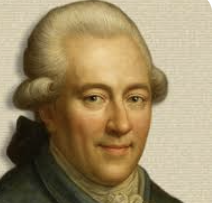
3 months ago
The journalists have constructed for themselves a little wooden chapel, which they also call the Temple of Fame, in which they put up and take down portraits all day long and make such a hammering you can't hear yourself speak.
▼
Source
source
D 20
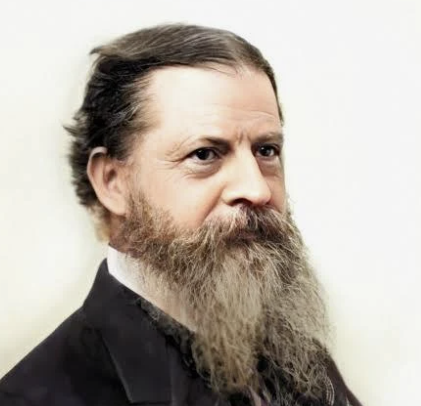
3 months 2 weeks ago
If we endeavor to form our conceptions upon history and life, we remark three classes of men. The first consists of those for whom the chief thing is the qualities of feelings. These men create art. The second consists of the practical men, who carry on the business of the world. They respect nothing but power, and respect power only so far as it [is] exercized. The third class consists of men to whom nothing seems great but reason. If force interests them, it is not in its exertion, but in that it has a reason and a law. For men of the first class, nature is a picture; for men of the second class, it is an opportunity; for men of the third class, it is a cosmos, so admirable, that to penetrate to its ways seems to them the only thing that makes life worth living.
▼
Source
source
Vol. I, par. 43

4 months 2 weeks ago
So long as men worship the Caesars and Napoleons, Caesars and Napoleons will duly rise and make them miserable.
▼
Source
source
Ch. 8, p. 99 [2012 reprint]
4 months 2 weeks ago
I myself believe that the evidence for God lies primarily in inner personal experiences.
▼
Source
source
Lecture III, Some Metaphysical Problems Pragmatically Considered
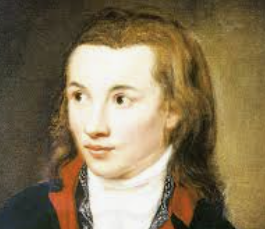
3 months 2 weeks ago
If the world is a precipitation of human nature, so to speak, then the divine world is a sublimation of the same. Both occur in one act. No precipitation without sublimation. What goes lost there in agility, is won here.
▼
Source
source
Fragment No. 96
3 months 2 weeks ago
We must make a very precise distinction between the official and consequently dictatorial prerogatives of society organized as a state, and of the natural influence and action of the members of a non-official, non-artificial society.
4 months 4 weeks ago
A good marriage would be between a blind wife and a deaf husband.
▼
Source
source
Book III, Ch. 5

2 weeks 6 days ago
Our different States have differently modified their several judiciaries as to the tenure of office. Some appoint their judges for a given term of time; some continue them during good behavior, and that to be determined on by the concurring vote of two-thirds of each legislative House. In England they are removable by a majority only of each House. The last is a practicable remedy; the second is not. The combination of the friends and associates of the accused, the action of personal and party passions, and the sympathies of the human heart, will forever find means of influencing one-third of either the one or the other House, will thus secure their impunity, and establish them in fact for life. The first remedy is the best, that of appointing for a term of years only, with a capacity of reappointment if their conduct has been approved.

2 months 2 weeks ago
No feats of heroism are needed to achieve the greatest and most important changes in the existence of humanity; neither the armament of millions of soldiers, nor the construction of new roads and machines, nor the arrangement of exhibitions, nor the organization of workmen's unions, nor revolutions, nor barricades, nor explosions, nor the perfection of aerial navigation; but a change in public opinion. And to accomplish this change no exertions of the mind are needed, nor the refutation of anything in existence, nor the invention of any extraordinary novelty; it is only needful that we should not succumb to the erroneous, already defunct, public opinion of the past, which governments have induced artificially; it is only needful that each individual should say what he really feels or thinks, or at least that he should not say what he does not think.
▼
Source
source
Ch. 17
3 months 1 week ago
The philosopher ... subjects experience to his critical judgment, and this contains a value judgment - namely, that freedom from toil is preferable to toil, and an intelligent life is preferable to a stupid life. It so happened that philosophy was born with these values. Scientific thought had to break this union of value judgment and analysis, for it became increasingly clear that the philosophic values did not guide the organisation of society.
▼
Source
source
p. 126

4 months 2 weeks ago
The world is his, who has money to go over it.
▼
Source
source
Wealth
2 months 1 week ago
Liberty is not the same thing as equality, and that those who call themselves liberals are far more interested in equalizing than in liberating their fellows.
▼
Source
source
The Limits of Liberty, The American Spectator
3 months 3 weeks ago
There are three principal means of acquiring knowledge available to us: observation of nature, reflection, and experimentation. Observation collects facts; reflection combines them; experimentation verifies the result of that combination. Our observation of nature must be diligent, our reflection profound, and our experiments exact. We rarely see these three means combined; and for this reason, creative geniuses are not common.
▼
Source
source
No. 15
3 months 6 days ago
The struggle between the opponents and defenders of capitalism is a struggle between innovators who do not know what innovation to make and conservatives who do not know what to conserve.
▼
Source
source
p. 233
4 months 4 weeks ago
Wonder is the foundation of all philosophy, research is the means of all learning, and ignorance is the end.
3 months 2 weeks ago
It is the peculiarity of privilege and of every privileged position to kill the intellect and heart of man. The privileged man, whether he be privileged politically or economically, is a man depraved in intellect and heart.
▼
Source
source
As quoted in "Socialism" article of Encyclopaedia Britannica, 9th edition (1887), edited by Thomas Spencer Baynes with assistance of William Robertson Smith, Vol. 22, p. 216, Charles Scribner's Sons
3 months 2 weeks ago
Nothing could be more natural than the developement of the passions, nor more striking than the views of the human heart. What delicate struggles! and uncommonly pretty turns of thought!
▼
Source
source
Mary: A Fiction
3 months 2 weeks ago
The more I see of the world, the more I am convinced that civilisation is a blessing not sufficiently estimated by those who have not traced its progress; for it not only refines our enjoyments, but produces a variety which enables us to retain the primitive delicacy of our sensations. Without the aid of the imagination all the pleasures of the senses must sink into grossness, unless continual novelty serve as a substitute for the imagination, which, being impossible, it was to this weariness, I suppose, that Solomon alluded when he declared that there was nothing new under the sun!
▼
Source
source
Letter 2
3 months 4 days ago
That knowledge which adds greatness to character is knowledge so handled as to transform every phase of immediate experience.
4 months 2 weeks ago
Every way of classifying a thing is but a way of handling it for some particular purpose.

2 months 2 weeks ago
Literacy affects the physiology as well as the psychic life of the African.
▼
Source
source
(p. 38)

5 months 2 weeks ago
Great feelings take with them their own universe, splendid or abject. They light up with their passion an exclusive world in which they recognize their climate. There is a universe of jealousy, of ambition, of selfishness or generosity. A universe in other words a metaphysic and an attitude of mind.
CivilSimian.com created by AxiomaticPanic, CivilSimian, Kalokagathia