


4 months 3 days ago
Patience cometh by the grace of the Soul.

3 months 1 week ago
In a general way, the literature of the twentieth century is essentially psychological; and psychology consists of describing states of the soul by displaying them all on the same plane, without any discrimination of value, as though good and evil were external to them, as though the effort toward the good could be absent at any moment from the thought of any man.
▼
Source
source
"The responsibility of writers," p. 168
3 months 2 weeks ago
We must now turn to the question of how the existence of archetypes can be proved. Since archetypes are supposed to produce certain psychic forms, we must discuss how and where one can get hold of the material demonstrating these forms. The main source, then, is dreams, which have the advantage of being involuntary, spontaneous products of nature not falsified by any conscious purpose. By questioning the individual one can ascertain which of the motifs appearing in the dream are known to him... Consequently, we must look for motifs which could not possibly be known to the dreamer and yet behave functionally of the archetype known from historical sources.
▼
Source
source
p. 48

3 weeks ago
I have stated that the constitutions of our several States vary more or less in some particulars. But there are certain principles in which all agree, and which all cherish as vitally essential to the protection of the life, liberty, property, and safety of the citizen:

4 months 3 weeks ago
There is something feeble and a little contemptible about a man who cannot face the perils of life without the help of comfortable myths. Almost inevitably some part of him is aware that they are myths and that he believes them only because they are comforting. But he dare not face this thought! Moreover, since he is aware, however dimly, that his opinions are not rational, he becomes furious when they are disputed.
▼
Source
source
p. 219-220
3 months 2 weeks ago
It is imperative that we should not pare down the meaning of a dream to fit some narrow doctrine. ... No language exists that cannot be misused. It is hard to realize how badly we are fooled by the abuse of ideas, it even seems as if the unconscious had a way of strangling the physician in the coils of his own theory. p 11; this was originally listed here in a somewhat misleading form combining it with another statement on the interpretations of dreams on p. 14: No language exists that cannot be misused ... Every Interpretation is hypothetical, for it is a mere attempt to read an unfamiliar text.
2 months 1 day ago
We should always speak what would please the man of whom we expect a favour, like the hunter who sings sweetly when he desires to shoot a deer.
4 months 3 weeks ago
Suicide evokes revulsion with horror, because everything in nature seeks to preserve itself: a damaged tree, a living body, an animal; and in man, then, is freedom, which is the highest degree of life, and constitutes the worth of it, to become now a principium for self-destruction? This is the most horrifying thing imaginable. For anyone who has already got so far as to be master, at any time, over his own life, is also master over the life of anyone else; for him, the door stands open to every crime, and before he can be seized he is ready to spirit himself away out of the world. So suicide evokes horror, in that a man thereby puts himself below the beasts. We regard a suicide as a carcase, whereas we feel pity for one who meets his end through fate.
▼
Source
source
Part II, p. 146

4 months 2 weeks ago
We are told that Christ was killed for us, that His death has washed out our sins, and that by dying He has disabled death itself. That is the formula. That is Christianity. That is what has to be believed. Any theories we build up as to how Christ's death did all this are, in my view, quite secondary: mere plans or diagrams to be left alone if they do not help us, and, if they do help us, not to be confused with the thing itself.
▼
Source
source
Book II, Chapter 4, "The Perfect Penitent"
2 months 2 weeks ago
Faith is the great cop-out, the great excuse to evade the need to think and evaluate evidence. Faith is belief in spite of, even perhaps because of, the lack of evidence.
▼
Source
source
From speech at the Edinburgh International Science Festival, 1992-04-15.
3 months 2 weeks ago
The unconscious is not just evil by nature, it is also the source of the highest good: not only dark but also light, not only bestial, semihuman, and demonic but superhuman, spiritual, and, in the classical sense of the word, "divine."
▼
Source
source
The Practice of Psychotherapy, p. 364

4 months 3 weeks ago
But petitional prayer is only one department of prayer; and if we take the word in the wider sense as meaning every kind of inward communion or conversation with the power recognized as divine, we can easily see that scientific criticism leaves it untouched. Prayer in this wide sense is the very soul and essence of religion.
▼
Source
source
Lecture XIX, "Other Characteristics"

3 months 1 week ago
The greater part of Eastern teachers of the Church, from Clement of Alexandria to Maximus the Confessor, were supporters of Apokatastasis, of universal salvation and resurrection. And this is characteristic of (contemporary) Russian religious thought. Orthodox thought has never been suppressed by the idea of Divine justice and it never forgot the idea of Divine love. Chiefly - it did not define man from the point of view of Divine justice but from the idea of transfiguration and Deification of man and cosmos.
▼
Source
source
"The Truth of Orthodoxy" as translated in Vestnik of the Russian West European Patriarchal Exarchate

1 month 1 week ago
All this of Liberty and Equality, Electoral suffrages, Independence and so forth, we will take, therefore, to be a temporary phenomenon, by no means a final one. Though likely to last a long time, with sad enough embroilments for us all, we must welcome it, as the penalty of sins that are past, the pledge of inestimable benefits that are coming.

4 months 3 weeks ago
He who dares not offend cannot be honest.
▼
Source
source
24 April 1776, The Forester's Letters", Letter III: To Cato, Pennsylvania Journal

3 months 3 weeks ago
He who seeks freedom for anything but freedom's self is made to be a slave.
▼
Source
source
p. 204
3 weeks 1 day ago
The Cry within me is a call to arms. It shouts: "I, the Cry, am the Lord your God! I am not an asylum. I am not hope and a home. I am not the Father nor the Son nor the Holy Ghost. I am your General! "You are not my slave, nor a plaything in my hands. You are not my friend, you are not my child. You are my comrade-in-arms! "Hold courageously the passes which I entrusted to you; do not betray them. You are in duty bound, and you may act heroically by remaining at your own battle station. "Love danger. What is most difficult? That is what I want! Which road should you take? The most craggy ascent! It is the one I also take: follow me!
4 months 3 days ago
Disbelieve nothing wonderful concerning the gods, nor concerning divine dogmas.
▼
Source
source
Symbol 4

4 months 3 weeks ago
What's sauce for the gander is sauce for the goose.
▼
Source
source
Introduction, p. 37.
5 months 1 week ago
All human laws are nourished by one divine law.
4 months 2 weeks ago
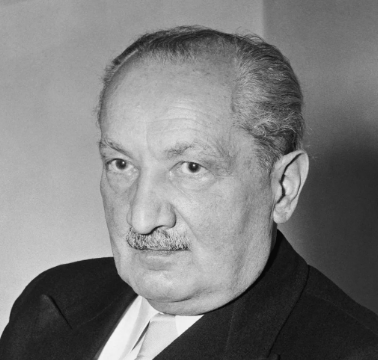
Philosophy will not be able to bring about a direct change of the present state of the world. This is true not only of philosophy but of all merely human meditations and endeavors. Only a god can still save us. I think the only possibility of salvation left to us is to prepare readiness, through thinking and poetry, for the appearance of the god or for the absence of the god during the decline; so that we do not, simply put, die meaningless deaths, but that when we decline, we decline in the face of the absent god.
2 weeks 3 days ago
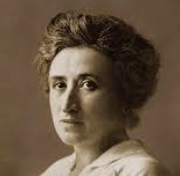
The times when the centre of gravity of political development and the crystallising agent of capitalist contradictions lay on the European continent, are long gone by. To-day Europe is only a link in the tangled chain of international connections and contradictions.
3 months 3 weeks ago
Life is writing. The sole purpose of mankind is to engrave the thoughts of divinity onto the tablets of nature.
▼
Source
source
"On Philosophy: To Dorothea," in Theory as Practice (1997), p. 420
4 months 2 weeks ago
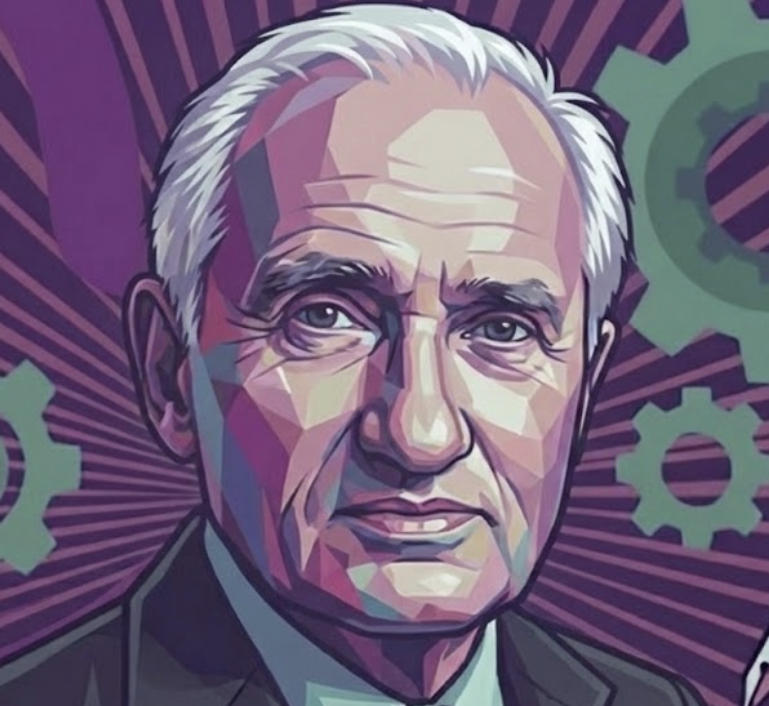
Philosophy's position with regard to science, which at one time could be designated with the name "theory of knowledge," has been undermined by the movement of philosophical thought itself. Philosophy was dislodged from this position by philosophy.
▼
Source
source
p. 4

4 months 3 weeks ago
You must read Plato. But you must hold him at arm's length and say, 'Plato, you have delighted and edified mankind for two thousand years. What have you to say to me?'
▼
Source
source
Said to a young Oliver Wendell Holmes, Jr., as reported by Felix Frankfurter in Harlan Buddington Phillips, Felix Frankfurter Reminisces (1960), p. 59
3 weeks ago
Terms which imply theoretical views are admissible, as far as the theory is proved.
5 months 1 week ago
What is the Church? She is the body of Christ. Join to it the Head, and you have one man: The Head and the body make up one man. Who is the head? He who was born of the Virgin Mary. And what is His body? It is His Spouse, that is, the Church.... The Father willed that these two, the God Christ and the Church, should be one man. All men are one man in Christ, and the unity of the Christians constitutes but one man. And this man is all men, all men are this man; for all are one, since Christ is one.
▼
Source
source
p. 414

3 months 2 weeks ago
I get along quite well with someone only when he is at his lowest point and has neither the desire nor the strength to restore his habitual illusions.
4 months 3 weeks ago
The right of voting for representatives is the primary right by which other rights are protected. To take away this right is to reduce a man to slavery, for slavery consists in being subject to the will of another, and he that has not a vote in the election of representatives is in this case.
3 weeks ago
Truths once obtained by legitimate Induction are Facts: these Facts may be again connected, so as to produce higher truths: and thus we advance to 'Successive Generalizations'.
5 months 1 week ago
The best people renounce all for one goal, the eternal fame of mortals; but most people stuff themselves like cattle. For what sense or understanding have they? They follow minstrels and take the multitude for a teacher, not knowing that many are bad and few good. For the best men choose one thing above all immortal glory among mortals; but the masses stuff themselves like cattle.
3 months 1 week ago
The aim is to replace economic oligarchies by the State, which has a will-to-power of its own and is quite as little concerned with the public good; and a will-to-power, moreover, which is not economic but military and therefore much more dangerous to any good folk who have a taste for staying alive. And on the bourgeois side what on earth is the sense of objecting to State control in economic affairs if one accepts private monopolies which have all the economic and technical disadvantages of State monopolies and possibly some others as well?
▼
Source
source
p. 230

5 months ago
Riches are a good handmaid, but the worst mistress.
▼
Source
source
De Augmentis Scientiarum, Book II, "Antitheta"
3 months 2 weeks ago
But this priviledge, is allayed by another; and that is, by the priviledge of Absurdity; to which no living creature is subject, but man only.
▼
Source
source
The First Part, Chapter 5, p. 20
3 months 2 weeks ago
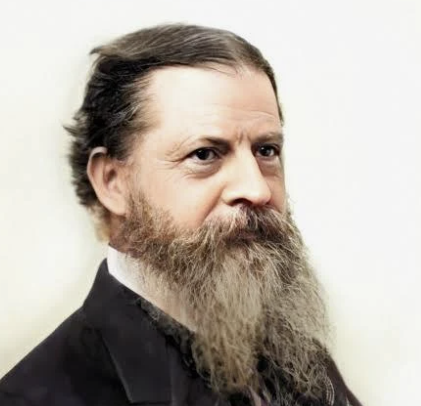
Philosophy, as I understand the word, is a positive theoretical science, and a science in an early stage of development. As such it has no more to do with belief than any other science. Indeed, I am bound to confess that it is at present in so unsettled a condition, that if the ordinary theorems of molecular physics and of archaeology are but the ghosts of beliefs, then to my mind, the doctrines of the philosophers are little better than the ghosts of ghosts. I know this is an extremely heretical opinion.
▼
Source
source
Lecture II : The Universal Categories, §3. Laws: Nominalism, CP 5.61

4 months 4 weeks ago
It is an unsufferable blasphemy to reject the public ministry or to say that people can become holy without sermons and Church. This involves a destruction of the Church and rebellion against ecclesiastical order; such upheavals must be warded off and punished like all other revolts.
▼
Source
source
In Luther, Hartmann Grisar, 1915, London, Kegan Paul, Trench, vol. 4, p. 126,

3 months 3 weeks ago
Every man may claim the fullest liberty to exercise his faculties compatible with the possession of like liberties by every other man.
▼
Source
source
Pt. II, Ch. 4 : Derivation of a First Principle, § 3
3 months 2 weeks ago
In an article published in The Monist for January, 1891, I endeavored to show what ideas ought to form the warp of a system of philosophy, and particularly emphasized that of absolute chance. In the number of April, 1892, I argued further in favor of that way of thinking, which it will be convenient to christen tychism (from τύχη, chance). A serious student of philosophy will be in no haste to accept or reject this doctrine; but he will see in it one of the chief attitudes which speculative thought may take, feeling that it is not for an individual, nor for an age, to pronounce upon a fundamental question of philosophy. That is a task for a whole era to work out. I have begun by showing that tychism must give birth to an evolutionary cosmology, in which all the regularities of nature and of mind are regarded as products of growth, and to a Schelling-fashioned idealism which holds matter to be mere specialized and partially deadened mind.
3 months 1 week ago
True science teaches, above all, to doubt and be ignorant.

1 month 4 weeks ago
The most important feature of natural selection is that it is a process of drift. Evolution has no end-point or direction, so if the development of society is an evolutionary process it is one that is going nowhere.
▼
Source
source
An Old Chaos: Humanism and Flying Saucers (p. 78)
4 months 1 week ago
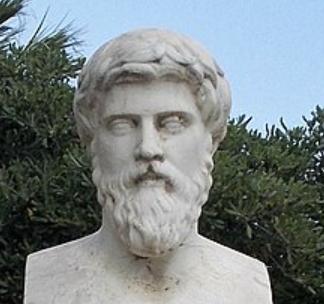
When Eudæmonidas heard a philosopher arguing that only a wise man can be a good general, "This is a wonderful speech," said he; "but he that saith it never heard the sound of trumpets."
▼
Source
source
62 Eudæmonidas
4 months 3 weeks ago
Great minds are related to the brief span of time during which they live as great buildings are to a little square in which they stand: you cannot see them in all their magnitude because you are standing too close to them.
▼
Source
source
Vol. 2, Ch. 20, § 242
2 months 4 weeks ago
Statistics began as the systematic study of quantitative facts about the state.
▼
Source
source
Chapter 12, Political Arithmetic, p. 102.
5 months ago
The two ways of contemplation are not unlike the two ways of action commonly spoken of by the ancients: the one plain and smooth in the beginning, and in the end impassable; the other rough and troublesome in the entrance, but after a while fair and even. So it is in contemplation: If a man will begin with certainties, he shall end in doubts; but if he will be content to begin with doubts he shall end in certainties.
▼
Source
source
Book I, v, 8
4 months 4 weeks ago
It is easier for the prince to make friends of those men who were contented under the former government, and are therefore his enemies, than of those who, being discontented with it, were favourable to him and encouraged him to seize it.
▼
Source
source
Ch. 20
5 months 1 week ago
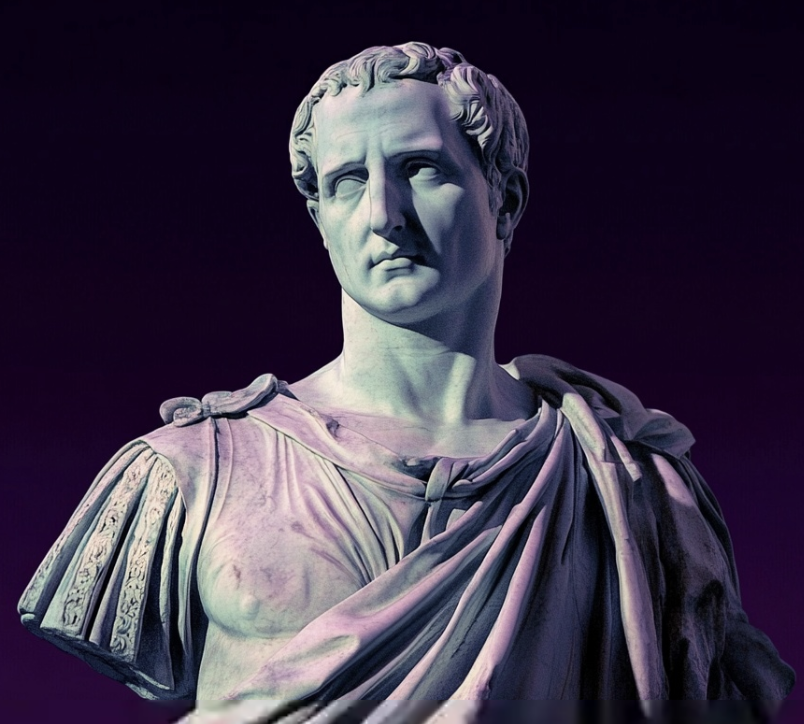
I will speak in a low voice, just so as to let the judges hear me. For men are not wanting who would be glad to excite that people against me and against every eminent man; and I will not assist them and enable them to do so more easily.
▼
Source
source
Cicero, The Orations of Marcus Tullius Cicero; Translation by C.D. Yonge., 1856.
3 months 1 week ago
Nonbeing must in some sense be, otherwise what is it that there is not? This tangled doctrine might be nicknamed Plato's beard; historically it has proved tough, frequently dulling the edge of Occam's razor.
▼
Source
source
"On What There Is"
CivilSimian.com created by AxiomaticPanic, CivilSimian, Kalokagathia