

5 months 3 weeks ago
The state is therefore everyone; the rules within the state are laws which safeguard the welfare of all and which must originate from the welfare of all.

6 months 3 weeks ago
We are never without a pilot. When we know not how to steer, and dare not hoist a sail, we can drift. The current knows the way, though we do not. The ship of heaven guides itself, and will not accept a wooden rudder.
▼
Source
source
"The Sovereignty of Ethics", in The North America Review, no. 262 (May-June 1878) p. 407

6 months 3 weeks ago
I wish to suggest that a man may be very industrious, and yet not spend his time well. There is no more fatal blunderer than he who consumes the greater part of his life getting his living. All great enterprises are self-supporting. The poet, for instance, must sustain his body by his poetry, as a steam planing-mill feeds its boilers with the shavings it makes. You must get your living by loving.
▼
Source
source
pp. 486-7

5 months 1 week ago
Nothing is lost, nothing wholly passes away, for in some way or another everything is perpetuated; and everything, after passing through time, returns to eternity.

6 months 3 weeks ago
Communism differs from all previous movements in that it overturns the basis of all earlier relations of production and intercourse, and for the first time consciously treats all natural premises as the creatures of hitherto existing men, strips them of their natural character and subjugates them to the power of the united individuals. Its organisation is, therefore, essentially economic, the material production of the conditions of this unity; it turns existing conditions into conditions of unity. The reality, which communism is creating, is precisely the true basis for rendering it impossible that anything should exist independently of individuals, insofar as reality is only a product of the preceding intercourse of individuals themselves.
▼
Source
source
Vol. I, Part 4.
7 months 2 days ago
For my own part, I cannot without grief see so much as an innocent beast pursued and killed that has no defence, and from which we have received no offence at all.
▼
Source
source
Ch. 11, tr. Cotton, 1685

6 months 3 weeks ago
The facts of science, as they appeared to him [Heraclitus], fed the flame in his soul, and in its light, he saw into the depths of the world.
▼
Source
source
Ch. 1: Mysticism and Logic

5 months 2 weeks ago
The same, without such opinion, DESPAIRE.
▼
Source
source
The First Part, Chapter 6, p. 25
3 months 1 week ago
If a concept lacks an essence, nothing will ever be found that completely fits that concept. If you are lacking in the concept of human being, it will immediately expose that you are something individual, something that cannot be expressed by the term human being, thus, in every instance, an individual human being.
▼
Source
source
Landstreicher, p. 16
4 months 3 weeks ago
Seduction is the world's elementary dynamic... All this has changed significantly for us, at least in appearance. For what has happened to good and evil? Seduction hurls them against one another, and unites them beyond meaning, in a paroxysm [sudden outbreak of emotion] of intensity and charm.
▼
Source
source
(p. 59)
5 months 3 weeks ago
No moral system can rest solely on authority.
▼
Source
source
Humanist Outlook (1968), p. 4.

2 months 3 weeks ago
All pain is a punishment, and every punishment is inflicted for love as much as for justice.
▼
Source
source
"Fifth Dialogue," p. 149
7 months 3 weeks ago
The greatest saving one can make in the order of thought is to accept the unintelligibility of the world and to pay attention to man.
4 months 3 weeks ago
This is how one puts an end to totality. If all information can be found in each of its parts, the whole loses its meaning. It is also the end of the body, of this singularity called body, whose secret is precisely that it cannot be segmented into additional cells, that it is an indivisible configuration, to which its sexuation is witness (paradox: cloning will fabricate sexed beings in perpetuity, since they are similar to their model, whereas thereby sex becomes useless-but precisely sex is not a function, it is what makes a body a body, it is what exceeds all the parts, all the diverse functions of this body). Sex (or death: in this sense it is the same thing) is what exceeds all information that can be collected on a body. Well, where is all this information collected? In the genetic formula. This is why it must necessarily want to forge a path of autonomous reproduction, independent of sexuality and of death.
▼
Source
source
"Clone Story," p. 97
6 months 3 weeks ago
It was mathematics, the non-empirical science par excellence, wherein the mind appears to play only with itself, that turned out to be the science of sciences, delivering the key to those laws of nature and the universe that are concealed by appearances.
▼
Source
source
p. 7
5 months 2 days ago
Until the seventeenth century there was no concept of evidence with which to pose the problem of induction!
▼
Source
source
Chapter 4, Evidence, p. 31.

5 months 1 week ago
Today, to live means merely to produce.
5 months 4 days ago
There exists a species of transcendental ventriloquism by means of which men can be made to believe that something said on earth comes from Heaven.
▼
Source
source
F 84
6 months 2 weeks ago
Harvard now, I think, suffers from a kind of self-idolatry, that it needs to be critical of itself in order to grow. And again, if you can be in contact with the best of its past, then it's got a chance. But if it just remains well adjusted to the status quo, generating careerist and opportunist students rather than critically oriented students who have a heart and soul, concerned about suffering here and around the world - then Harvard has a chance. I'm not giving up on Harvard, but I am making my way to New York.
▼
Source
source
Speaking in Too Radical for Harvard? Cornel West on Failed Fight for Tenure, Biden's First 50 Days & More, Democracy Now!

2 months 3 weeks ago
Always take the short cut; and that is the rational one. Therefore say and do everything according to soundest reason.
▼
Source
source
IV, 51
7 months 3 weeks ago
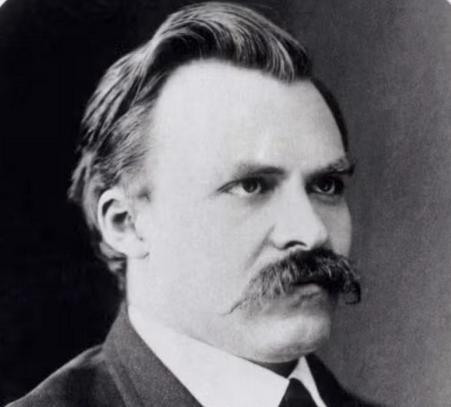
The various languages placed side by side show that with words it is never a question of truth, never a question of adequate expression; otherwise, there would not be so many languages. The "thing in itself" (which is precisely what the pure truth, apart from any of its consequences, would be) is likewise something quite incomprehensible to the creator of language and something not in the least worth striving for. This creator only designates the relations of things to men, and for expressing these relations he lays hold of the boldest metaphors.' To begin with, a nerve stimulus is transferred into an image: first metaphor. The image, in turn, is imitated in a sound: second metaphor. And each time there is a complete overleaping of one sphere, right into the middle of an entirely new and different one.

2 months 3 weeks ago
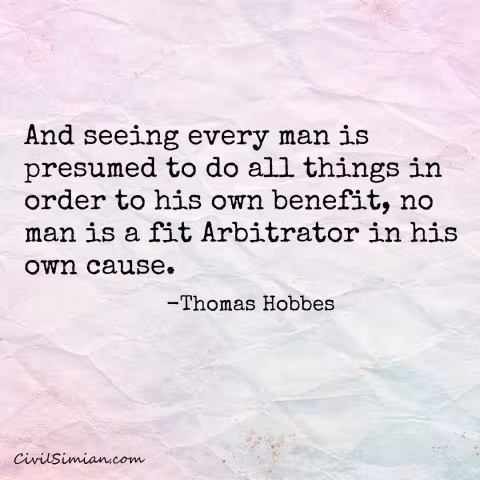
As pure a son of liberty as I have ever known.
▼
Source
source
Statement about Tadeusz Kościuszko, in a letter to Horatio Gates
4 months 1 week ago
Oh! wherefore come ye forth, in triumph from the North,With your hands, and your feet, and your raiment all red? And wherefore doth your rout send forth a joyous shout? And whence be the grapes of the wine-press which ye tread?
▼
Source
source
The Battle of Naseby (1824), quoted in The Works of Lord Macaulay Complete, Vol. VIII, ed. Lady Trevelyan (1866), p. 551
6 months 3 weeks ago
A false science makes atheists, a true science prostrates men before the Deity.
▼
Source
source
The critical review, or annals of literature, Volume XXVI, by A Society of Gentlemen (1768) p. 450

6 months ago
Thus is man that great and true Amphibium, whose nature is disposed to live not only like other creatures in diverse elements, but in divided and distinguished worlds.
▼
Source
source
Section 34
5 months 2 weeks ago
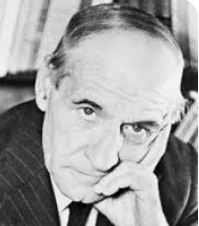
The State is always, whatever be its form - primitive, ancient, medieval, modern - an invitation issued by one group of men to other human groups to carry out some enterprise in common. That enterprise, be its intermediate processes what they may, consists in the long run in the organisation of a certain type of common life. ... [As Renan says,] "To have common glories in the past, a common will in the present; to have done great things together; to wish to do greater; these are the essential conditions which make up a people.... In the past, an inheritance of glories and regrets; in the future, one and the same programme to carry out.... The existence of a nation is a daily plebiscite."
▼
Source
source
Chapter XIV: Who Rules The World?
5 months 2 weeks ago
The RIGHT OF NATURE, which Writers commonly call Jus Naturale, is the Liberty each man hath, to use his own power, as he will himself, for the preservation of his own Nature; that is to say, of his own Life; and consequently, of doing any thing, which in his own Judgement, and Reason, he shall conceive to be the aptest means thereunto.
▼
Source
source
The First Part, Chapter 14, p. 64
5 months 2 weeks ago
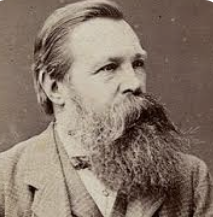
What each individual wills is obstructed by everyone else, and what emerges is something that no one willed.
▼
Source
source
Letter to Jean-Richard Bloch
6 months 1 day ago
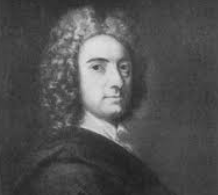
Abstract terms (however useful they may be in argument) should be discarded in meditation, and the mind should be fixed on the particular and the concrete, that is, on the things themselves.
▼
Source
source
Paragraph 4

5 months 2 weeks ago
Nothing is a better proof of how far humanity has regressed than the impossibility of finding a single nation, a single tribe, among whom birth still provokes mourning and lamentations.

6 months 3 weeks ago
But, if it will help ease your irritated souls, please know, dearly departed, that you have ruined our lives.
▼
Source
source
Aegistheus, Act 2
3 months 4 days ago
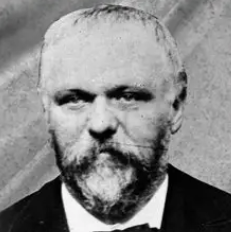
Everyone explains that discussions about Socialism are exceedingly obscure; this obscurity is due, to a large extent, to the fact that contemporary socialists use a terminology which no longer corresponds to their ideas.
▼
Source
source
p. 47
3 months 1 week ago
The English, generally remarkable for doing very good things in a very bad manner, seem to have reserved the maturity and plenitude of their awkwardness for the pulpit.
▼
Source
source
Vol. I, ch. 3, p. 83
6 months 2 weeks ago
Analytical philosophy was very interesting. It always struck me as being very interesting and full of tremendous intellectual curiosities. It is wonderful to see the mind at work in such an intense manner, but, for me, it was still too far removed from my own issues.
▼
Source
source
Interview in African-American Philosophers: 17 Conversations (1998) edited by George Yancy, p. 35
2 months 3 weeks ago
Man, servant and interpreter of Nature, does and understands only as much as he has observed of the order of Nature, either in reality or in mind; he neither knows nor can do more.
7 months 2 weeks ago
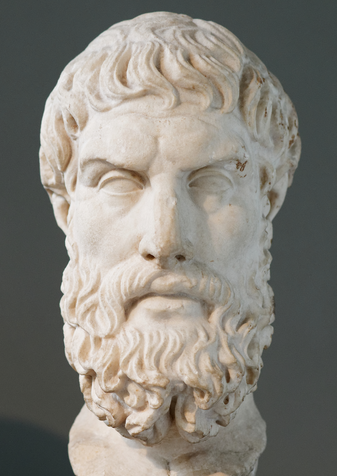
Among the things held to be just by law, whatever is proved to be of advantage in men's dealings has the stamp of justice, whether or not it be the same for all; but if a man makes a law and it does not prove to be mutually advantageous, then this is no longer just. And if what is mutually advantageous varies and only for a time corresponds to our concept of justice, nevertheless for that time it is just for those who do not trouble themselves about empty words, but look simply at the facts.
6 months 3 weeks ago
One cannot become a saint when one works sixteen hours a day.
▼
Source
source
Act 5, sc. 2
6 months 3 weeks ago
It is remarkable, that almost all speakers and writers feel it to be incumbent on them, sooner or later, to prove or to acknowledge the personality of God. ... In reading a work on agriculture, we have to skip the author's moral reflections, and the words "Providence" and "He" scattered along the page, to come at the profitable level of what he has to say. What he calls his religion is for the most part offensive to the nostrils. ... There is more religion in men's science than there is science in their religion.
3 months 4 days ago
Cities are, first of all, seats of the highest economic division of labor. They produce thereby such extreme phenomena as in Paris the remunerative occupation of the quatorzième. They are persons who identify themselves by signs on their residences and who are ready at the dinner hour in correct attire, so that they can be quickly called upon if a dinner party should consist of thirteen persons. In the measure of its expansion, the city offers more and more the decisive conditions of the division of labor. It offers a circle which through its size can absorb a highly diverse variety of services.
▼
Source
source
p. 420
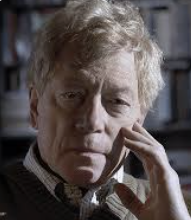
4 months 2 weeks ago
For we are social beings, who can exist and behave as autonomous agents only because we are supported in our ventures by that feeling of primal safety that the bond of society brings. We can envisage no project and no satisfaction on which the eyes of others do not shine. We are joined to those others, and even when they are strangers to us, they are also part of us. It is the indispensable need for membership that brings the national idea to our minds; and there is no rational argument that will expel it, once it is there. Without it, we are homeless; and even if our attitude to home is one of sour disaffection, home is no less necessary to our sense of who we are.
▼
Source
source
'The First Person Plural', in Ronald Beiner (ed.), Theorizing Nationalism (1999), p. 291
2 months 2 weeks ago
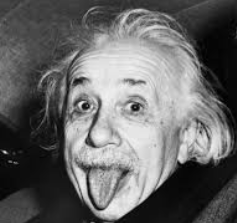
The standard bearers have grown weak in the defense of their priceless heritage, and the powers of darkness have been strengthened thereby. Weakness of attitude becomes weakness of character; it becomes lack of power to act with courage proportionate to danger. All this must lead to the destruction of our intellectual life unless the danger summons up strong personalities able to fill the lukewarm and discouraged with new strength and resolution.
2 months 2 weeks ago
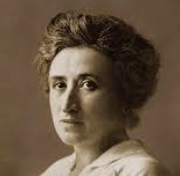
Every right of suffrage, like any political right in general, is not to be measured by some sort of abstract scheme of "justice," or in terms of any other bourgeois-democratic phrases, but by the social and economic relationships for which it is designed. The right of suffrage worked out by the Soviet government is calculated for the transition period from the bourgeois-capitalist to the socialist form of society, that is, it is calculated for the period of the proletarian dictatorship. But, according to the interpretation of this dictatorship which Lenin and Trotsky represent, the right to vote is granted only to those who live by their own labor and is denied to everyone else.
▼
Source
source
Chapter Five, "The Question of Suffrage"


5 months 1 week ago
The motto should not be: Forgive one another; rather, Understand one another.

4 months 1 week ago
The business of grabbing and money-making, through a violent extractive economy that the 1% have built, is burdening the earth and humanity with unbearable and non-sustainable costs, and has brought us to the brink of extinction. We do not have to escape from the earth; we have to escape from the illusions that enslave our minds and make extinction look inevitable.
3 months 4 days ago
The brutality of a man purely motivated by monetary considerations ... often does not appear to him at all as a moral delinquency, since he is aware only of a rigorously logical behavior, which draws the objective consequences of the situation.
▼
Source
source
"Domination" (1908), in On Individuality and Social Forms (1971), p. 110
3 months 3 weeks ago
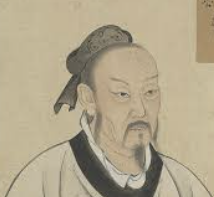
If an action ... involves little profit but much righteousness, do it.
▼
Source
source
Readings in Classical Chinese Philosophy (2001), p. 263

5 months 1 week ago
I also am other than what I imagine myself to be. To know this is forgiveness.
▼
Source
source
p. 200
CivilSimian.com created by AxiomaticPanic, CivilSimian, Kalokagathia