


4 months 1 week ago
For my own part, I cannot without grief see so much as an innocent beast pursued and killed that has no defence, and from which we have received no offence at all.
▼
Source
source
Ch. 11, tr. Cotton, 1685
2 months 2 weeks ago
The uniting of Orthodoxy with state absolutism came about on the soil of a non-belief in the Divineness of the earth, in the earthly future of mankind; Orthodoxy gave away the earth into the hands of the state because of its own non-belief in man and mankind, because of its nihilistic attitude towards the world. Orthodoxy does not believe in the religious ordering of human life upon the earth, and it compensates for its own hopeless pessimism by a call for the forceful ordering of it by state authority.
▼
Source
source
Nihilism On A Religious Soil

2 months 4 weeks ago
To suffer is to produce knowledge.

4 months 1 day ago
Mr. Neo-Angular - I am doing my duty. My ethics are based on dogma, not on feeling. Vertue - I know that a rule is to be obeyed because it is a rule and not because it appeals to my feelings at the moment.
▼
Source
source
Pilgrim's Regress 90

3 weeks 2 days ago
"Do the Duty which lies nearest thee," which thou knowest to be a Duty! Thy second Duty will already have become clearer.
▼
Source
source
Bk. II, ch. 9.

3 months 2 weeks ago
Man is the measure of all things: of things which are, that they are, and of things which are not, that they are not.
▼
Source
source
As quoted in Theaetetus by Plato section 152a
4 months 2 weeks ago
Inasmuch as love grows in you, in so much beauty grows; for love is itself the beauty of the soul.
▼
Source
source
as translated by H. Browne and J. H. Meyers, The Nicene and Post Nicene Fathers (1995)
4 months 2 weeks ago
Rules for Axioms. I. Not to omit any necessary principle without asking whether it is admittied, however clear and evident it may be. II. Not to demand, in axioms, any but things that are perfectly evident in themselves.
2 weeks 3 days ago
The criterion of truth is that it works even if nobody is prepared to acknowledge it.
▼
Source
source
Chapter 5: On Some Popular Errors Concerning the Scope and Method of Economics, § 9 : The Belief in the Omnipotence of Thought

4 months 4 weeks ago
The Autarch maintained his indifferent calm, but a certain lack of certainty was gathering, and he did not like to experience a lack of certainty. He liked nothing which made him aware of limitations. An Autarch should have no limitations, and on Lingane he had none that natural law did not impose.
2 months 4 weeks ago
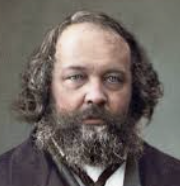
The modern state, in its essence and objectives, is necessarily a military state, and a military state necessarily becomes an aggressive state. If it does not conquer others it will itself be conquered, for the simple reason that wherever force exists, it absolutely must be displayed or put into action. From this again it follows that the modern state must without fail be huge and powerful; that is the indispensable condition for its preservation.
2 months 3 weeks ago
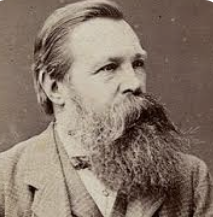
It is a universal revolution and will, accordingly, have a universal range.
3 weeks 5 days ago
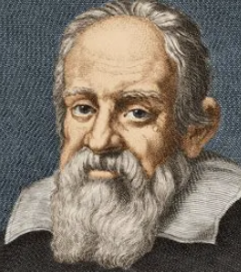
It always seems to me extreme rashness on the part of some when they want to make human abilities the measure of what nature can do. On the contrary, there is not a single effect in nature, even the least that exists, such that the most ingenious theorists can arrive at a complete understanding of it. This vain presumption of understanding everything can have no other basis than never understanding anything. For anyone who had experienced just once the perfect understanding of one single thing, and had truly tasted how knowledge is accomplished, would recognize that of the infinity of other truths he understands nothing.
▼
Source
source
Day One
2 months 4 weeks ago
If truth were not boring, science would have done away with God long ago. But God as well as the saints is a means to escape the dull banality of truth.

2 months 2 weeks ago
At root what is needed for scientific inquiry is just receptivity to data, skill in reasoning, and yearning for truth. Admittedly, ingenuity can help too.
▼
Source
source
S.4

1 month 4 weeks ago
Computers can do better than ever what needn't be done at all. Making sense is still a human monopoly.
▼
Source
source
(p. 109)

2 months 2 weeks ago
The combination of these two facts - the longing in the depth of the heart for absolute good, and the power, though only latent, of directing attention and love to a reality beyond the world and of receiving good from it - constitutes a link which attaches every man without exception to that other reality. Whoever recognizes that reality recognizes also that link. Because of it, he holds every human being without any exception as something sacred to which he is bound to show respect. This is the only possible motive for universal respect towards all human beings. Whatever formulation of belief or disbelief a man may choose to make, if his heart inclines him to feel this respect, then he in fact also recognizes a reality other than this world's reality. Whoever in fact does not feel this respect is alien to that other reality also.
3 months 3 weeks ago
Whatever the poverty of our knowledge in this respect, it is certain that the question of the sign is itself more or less, or in any event something other, than a sign of the times. To dream of reducing it to a sign of the times is to dream of violence.
▼
Source
source
Force and Signification
1 week 3 days ago
If every one in the world will love universally; states not attacking one another; houses not disturbing one another; thieves and robbers becoming extinct; emperor and ministers, fathers and sons, all being affectionate and filial -- if all this comes to pass the world will be orderly. Therefore, how can the wise man who has charge of governing the empire fail to restrain hate and encourage love? So, when there is universal love in the world it will be orderly, and when there is mutual hate in the world it will be disorderly.
▼
Source
source
Book 4; Universal Love I

3 weeks 6 days ago
So this is something... we see happening... in the war in Ukraine. A lot of people raise the question, "Why are Ukrainians resisting the Russian invasion as ferociously as they are?" and there's been a little bit of a debate over whether this is due to the fact that Ukrain is democratic, a liberal democracy, and Russia is not, or whether it's simply a fight over sovereignty... I think that that's a false dichotomy because you really don't fight for liberalism as an abstract principle. You fight for it as it is embedded in... your nation... From my... frequent visits to Ukraine... I believe... that's what's really going on, that Ukrainians want their sovereignty, but the reason they want it so desperately is that they want to have a free Ukraine and not Putin's Ukraine, not a... centralized dictatorship, and that's why they're willing to fight so tenaciously.
▼
Source
source
25:44:00
4 months 5 days ago
By a lie a man throws away and, as it were, annihilates his dignity as a man. A man who himself does not believe what he tells another ... has even less worth than if he were a mere thing. ... makes himself a mere deceptive appearance of man, not man himself.
▼
Source
source
Doctrine of Virtue as translated by Mary J. Gregor (1964), p. 93
3 months 3 weeks ago
There is no information about the thingness of the thing without knowledge of the kind of truth in which the thing stands. But there is no information about this truth of the thing without knowledge of the thingness of the thing whose truth is in question. Where are we to get a foothold? The ground slips away under us. Perhaps we are already close to falling into the well. At any rate the housemaids are already laughing.
▼
Source
source
p. 27
2 months 2 weeks ago
Meditation on the chance which led to the meeting of my mother and father is even more salutary than meditation on death.
▼
Source
source
p. 277
4 months 2 weeks ago
I will speak in a low voice, just so as to let the judges hear me. For men are not wanting who would be glad to excite that people against me and against every eminent man; and I will not assist them and enable them to do so more easily.
▼
Source
source
Cicero, The Orations of Marcus Tullius Cicero; Translation by C.D. Yonge., 1856.
2 months 4 weeks ago
By striving to do the impossible, man has always achieved what is possible. Those who have cautiously done no more than they believed possible have never taken a single step forward.
▼
Source
source
As quoted in The Explorers (1996) by Paolo Novaresio ISBN 1-55670-495-X

3 weeks 6 days ago
The fact of being within capital and sustaining capital is what defines the proletariat as a class.
▼
Source
source
53
4 months 2 weeks ago
It is the act of an ill-instructed man to blame others for his own bad condition; it is the act of one who has begun to be instructed, to lay the blame on himself; and of one whose instruction is completed, neither to blame another, nor himself.
▼
Source
source
(5) [tr. George Long (1888)].

4 months 2 days ago
It is a bad thing to perform menial duties even for the sake of freedom; to fight with pinpricks, instead of with clubs. I have become tired of hypocrisy, stupidity, gross arbitrariness, and of our bowing and scraping, dodging, and hair-splitting over words. Consequently, the government has given me back my freedom.
▼
Source
source
Letter from Marx to Arnold Ruge (25 January 1843)
1 month 1 week ago
Philosophy is said to have taken the 'linguistic turn' in this century. One hundred years ago, a philosopher would think in terms of mind, spirit, experience, consciousness; now the by-word is language.
▼
Source
source
Chapter 2, Metaphysics and Metaphor, p. 26
4 months 2 weeks ago
Man desires to praise thee, for he is a part of thy creation; he bears his mortality about with him and carries the evidence of his sin and the proof that thou dost resist the proud. Still he desires to praise thee, this man who is only a small part of thy creation. Thou hast prompted him, that he should delight to praise thee, for thou hast made us for thyself and restless is our heart until it comes to rest in thee.
▼
Source
source
I, 1

4 months 2 days ago
When Confucius and the Indian Scriptures were made known, no claim to monopoly of ethical wisdom could be thought of... It is only within this century [the 1800 's] that England and America discovered that their nursery tales were old German and Scandinavian stories; and now it appears that they came from India, and are therefore the property of all the nations.
▼
Source
source
Quoted in S. Londhe, A Tribute to Hinduism, 2008

4 months 1 week ago
But men must know that in this theater of man's life it is reserved only for God and angels to be lookers on.
▼
Source
source
Book II, xx, 8

2 months 2 weeks ago
I am dreaming ...? Let me dream, if this dream is my life. Do not awaken me from it. I believe in the immortal origin of this yearning for immortality, which is the very substance of my soul. But do I really believe in it ...? And wherefore do you want to be immortal? you ask me, wherefore? Frankly, I do not understand the question, for it is to ask the reason of the reason, the end of the end, the principle of the principle.
2 months 2 weeks ago
And above all, we must feel and act as if an endless continuation of our earthly life awaited us after death; and if it be that nothingness is the fate that awaits us we must not, in the words of Obermann, so act that it shall be a just fate.

4 months 1 day ago
I mean, a genuinely productive society. I mean you could produce plenty of goods without much freedom, but I think the whole sort of creative life of man is ultimately impossible without a considerable measure of individual freedom, of initiative, creation, all these things which we value, and I think value properly, are impossible without a large measure of freedom.
2 days ago
Humanity is such a lump of mud, each one of us is such a lump of mud. What is our duty? To struggle so that a small flower may blossom from the dunghill of our flesh and mind. Out of things and flesh, out of hunger, out of fear, out of virtue and sin, struggle continually to create God.

3 months 1 week ago
To make an end of all things on Earth, and our Planetical System of the World, he (God) need but put out the Sun.
2 weeks 3 days ago
That the individual is of himself a world's history, and possesses his property in the rest of the world's history, goes beyond what is Christian. To the Christian the world's history is the higher thing, because it is the history of Christ or 'man'; to the egoist only his history has value, because he wants to develop only himself not the mankind-idea, not God's plan, not the purposes of Providence, not liberty, and the like. He does not look upon himself as a tool of the idea or a vessel of God, he recognizes no calling, he does not fancy that he exists for the further development of mankind and that he must contribute his mite to it, but he lives himself out, careless of how well or ill humanity may fare thereby.
▼
Source
source
Cambridge 1995, p. 323

4 months 4 days ago
To hold a pen is to be at war.
▼
Source
source
Letter to Jeanne-Grâce Bosc du Bouchet, comtesse d'Argental (4 October 1748)

4 months 3 days ago
I do not pretend to start with precise questions. I do not think you can start with anything precise. You have to achieve such precision as you can, as you go along.
1 month 1 week ago
The result of toppling tyranny in divided countries is usually civil war and ethnic cleansing.
▼
Source
source
The death of this crackpot creed is nothing to mourn, The Guardian
3 weeks 2 days ago
The Soldier is perhaps one of the most difficult things to realise; but Governments, had they not realised him, could not have existed: accordingly he is here.

3 months 1 week ago
For nature is not merely present, but is implanted within things, distant from none; naught is distant from her except the false, and that which existed never and nowhere-nullity. And while the outer face of things changeth so greatly, there flourisheth the origin of being more intimately within all things than they themselves. The fount of all kinds, Mind, God, Being, One, Truth, Destiny, Reason, Order.
▼
Source
source
VIII 10 as translated by Dorothea Waley Singer

4 months 3 weeks ago
Against the diseases of the mind, philosophy provides sufficient antidotes. The instruments which it employs for this purpose are the virtues; the root of which, whence all the rest proceed, is prudence. This virtue comprehends the whole art of living discreetly, justly, and honorably, and is, in fact, the same thing with wisdom. It instructs men to free their understandings from the clouds of prejudice; to exercise temperance and fortitude in the government of themselves: and to practice justice towards others. Although pleasure, or happiness, which is the end of living, be superior to virtue, which is only the means, it is every one's interest to practice all the virtues; for in a happy life, pleasure can never be separated from virtue.
4 weeks ago
An empire derives no advantage from the caresses of two turtledoves who spend a year cooing to each other in public meetings.
▼
Source
source
Charles Fourier: The Visionary and His World, J. Beecher (1986), p. 315

4 months 2 weeks ago
Charity, by which God and neighbor are loved, is the most perfect friendship.
▼
Source
source
Disputed Questions: On Charity, c. 1270
4 months 3 weeks ago
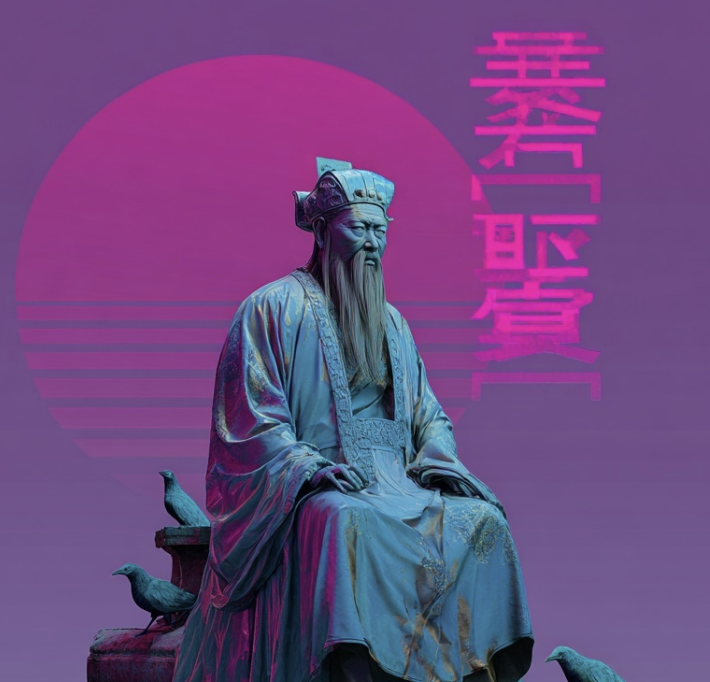
There is no body but eats and drinks. But they are few who can distinguish flavors.
3 weeks 2 days ago
These are the two vices that beset Government Offices; both of them originating in insufficient Intellect,-that sad insufficiency from which, directly or indirectly, all evil whatsoever springs!
3 months 2 weeks ago
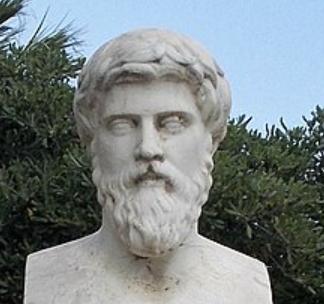
When one told Plistarchus that a notorious railer spoke well of him, "I 'll lay my life," said he, "somebody hath told him I am dead, for he can speak well of no man living."
▼
Source
source
Of Plistarchus
CivilSimian.com created by AxiomaticPanic, CivilSimian, Kalokagathia