

6 months 4 weeks ago
De Lubac discusses an atheism which means to suppress this searching, he says, "even including the problem as to what is responsible for the birth of God in human consciousness."
▼
Source
source
p. 45

6 months 3 weeks ago
The ultimate metaphysical principle is the advance from disjunction to conjunction, creating a novel entity other than the entities given in disjunction.
▼
Source
source
Pt. I, ch. 2, sec. 2.

8 months 1 week ago
Those who promise us paradise on earth never produced anything but a hell.
▼
Source
source
As quoted in In Passing: Condolences and Complaints on Death, Dying, and Related Disappointments (2005) by Jon Winokur, p. 144

4 months 4 weeks ago
He who first shortened the labor of copyists by device of movable types was disbanding hired armies, and cashiering most kings and senates, and creating a whole new democratic world: he had invented the art of printing.
▼
Source
source
Bk. I, ch. 5.

8 months 2 weeks ago
A man must be a little mad if he does not want to be even more stupid.
▼
Source
source
Ch. 9
8 months 4 days ago
The Geschick of being: a child that plays... Why does it play, the great child of the world-play Heraclitus brought into view in the aiôn? It plays, because it plays. The "because" withers away in the play. The play is without "why." It plays since it plays. It simply remains a play: the most elevated and the most profound. But this "simply" is everything, the one, the only... The question remains whether and how we, hearing the movements of this play, play along and accommodate ourselves to the play.
▼
Source
source
The Principle of Reason (1955-1956) as translated by Reginald Lilly

6 months 3 weeks ago
There are two atheisms of which one is a purification of the notion of God.
▼
Source
source
As quoted in The New Christianity (1967) edited by William Robert Miller

4 months 1 week ago
Of the various executive abilities, no one excited more anxious concern than that of placing the interests of our fellow-citizens in the hands of honest men, with understanding sufficient for their stations. No duty is at the same time more difficult to fulfil. The knowledge of character possessed by a single individual is of necessity limited. To seek out the best through the whole Union, we must resort to the information which from the best of men, acting disinterestedly and with the purest motives, is sometimes incorrect.
▼
Source
source
Letter to Elias Shipman and others of New Haven (12 July 1801).

7 months 1 day ago
Freed from the sublimated form which was the very token of its irreconcilable dreams-a form which is the style, the language in which the story is told-sexuality turns into a vehicle for the bestsellers of oppression. ... This society turns everything it touches into a potential source of progress and of exploitation, of drudgery and satisfaction, of freedom and of oppression. Sexuality is no exception.
▼
Source
source
pp. 77-78
7 months 4 weeks ago
When some one reminded him that the people of Sinope had sentenced him to exile, he said, "And I sentenced them to stay at home."
▼
Source
source
Diogenes Laërtius, vi. 49


8 months 1 week ago
The blazing evidence of immortality is our dissatisfaction with any other solution.
▼
Source
source
July 1855

8 months 2 weeks ago
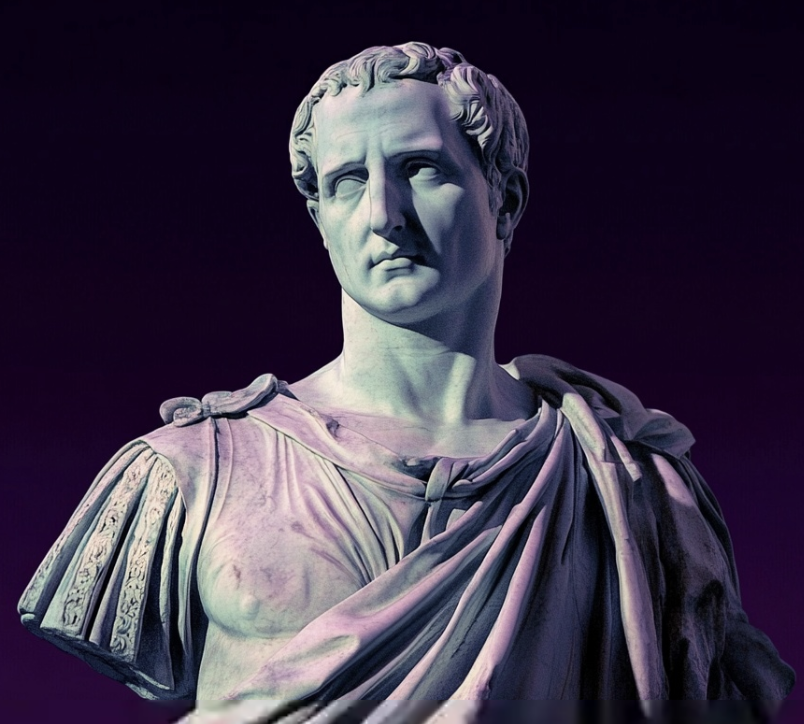
This world, the whole of the planet called earth, is the common country of all who live and breathe upon it.
8 months 3 weeks ago
We know, that of all living beings man is the best formed, and, as the gods belong to this number, they must have a human form. ... I do not mean to say that the gods have body and blood in them; but I say that they seem as if they had bodies with blood in them. . . , Epicurus, for whom hidden things were as tangible as if he had touched them with his finger, teaches us that gods are not generally visible, but that they are intelligible; that they are not bodies having a certain solidity . . . but that we can recognize them by their passing images; that as there are atoms enough in the infinite space to produce such images, these are produced before us . . . and make us realize what are these happy, immortal beings.
▼
Source
source
Book I, Section 18

4 months 5 days ago
Man... whatever the origin of his soul, if it is pure, noble, and lofty, it is a beautiful soul which dignifies the man endowed with it.

7 months 4 days ago
Who does not believe in Fate proves that he has not lived.
8 months 2 weeks ago
I have ever loved to repose myself, whether sitting or lying, with my heels as high or higher than my head.
▼
Source
source
Book III, Ch. 13. Of Experience
4 months 4 weeks ago
Talk never yet could guide any man's or nation's affairs; nor will it yours, except towards the Limbus Patrum, where all talk, except a very select kind of it, lodges at last.
4 months 4 weeks ago
Everywhere the human soul stands between a hemisphere of light and another of darkness on the confines of two everlasting hostile empires, - Necessity and Free Will.
▼
Source
source
Essays, Goethe's Works.
1 year 1 week ago
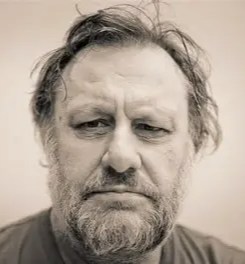
Precisely as an enigma, the symptom, so to speak, announces its dissolution through interpretation: the aim of psychoanalysis is to re-establish the broken network of communication by allowing the patient to verbalize the meaning of his symptom: through this verbalization the symptom is automatically dissolved. This, then is the basic point: in its very construction, the symptom implies the field of the big Other as consistent, complete, because its very function is an appeal to the Other which contains its meaning.

4 months 3 weeks ago
You are doing an excellent thing, one which will be wholesome for you, if, as you write me, you are persisting in your effort to attain sound understanding; it is foolish to pray for this when you can acquire it from yourself. We do not need to uplift our hands towards heaven, or to beg the keeper of a temple to let us approach his idol's ear, as if in this way our prayers were more likely to be heard. A god is near you, with you, and in you. This is what I mean, Lucilius: there sits a holy spirit within us, one who marks our good and bad deeds, and is our a guardian.
4 months 2 weeks ago
Know all ye mortals who have entered this contest, that according to our laws and decrees the victor is allowed to exult but the vanquished must not complain. Depart then wherever you please, and in future live every one of you under the guidance of the gods. Let every man choose his own guardian and guide.

6 months 3 weeks ago
Warmth, warmth, more warmth! for we are dying of cold and not of darkness. It is not the night that kills, but the frost.
8 months 1 week ago
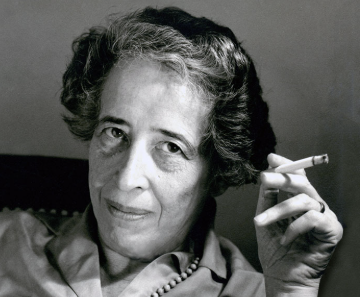
It was mathematics, the non-empirical science par excellence, wherein the mind appears to play only with itself, that turned out to be the science of sciences, delivering the key to those laws of nature and the universe that are concealed by appearances.
▼
Source
source
p. 7
7 months 4 weeks ago
We assume that our own advances in objectivity are steps along a path that extends beyond them and beyond all our capacities. But even allowing unlimited time, or an unlimited number of generations, to take as many successive steps as we like, the process can never be completed. ... What is wanted is some way of making the most objective standpoint the basis of action.
▼
Source
source
pp. 128-129.

8 months 1 week ago
Each human reality is at the same time a direct project to metamorphose its own For-itself into an In-itself-For-itself, a project of the appropriation of the world as a totality of being-in-itself, in the form of a fundamental quality. Every human reality is a passion in that it projects losing itself so as to found being and by the same stroke to constitute the In-itself which escapes contingency by being its own foundation, the Ens causa sui, which religions call God. Thus the passion of man is the reverse of that of Christ, for man loses himself as man in order that God may be born. But the idea of God is contradictory and we lose ourselves in vain.
▼
Source
source
Man is a useless passion. Part 4, Chapter 2, III
8 months 1 week ago
I believe that the advance of science depends upon the free competition of thought, and thus upon freedom, and that it must come to an end if freedom is destroyed (though it may well continue for some time in some fields, especially in technology).
▼
Source
source
Ch. 10 "Corroboration, or How a Theory Stands up to Tests", section 85: The Path of Science, p. 279, note 2.

6 months 3 weeks ago
Compared with the wholesale violence of capital and government, political acts of violence are but a drop in the ocean. That so few resist is the strongest proof how terrible must be the conflict between their souls and unbearable social iniquities.
8 months 1 week ago
All philosophical sects have run aground on the reef of moral and physical ill. It only remains for us to confess that God, having acted for the best, had not been able to do better.
▼
Source
source
"Power, Omnipotence," Dictionnaire philosophique, 1785-1789

7 months 1 week ago
The most formidable of all the ills that threaten the future of the Union arises from the presence of a black population upon its territory; and in contemplating the cause of the present embarrassments, or the future dangers of the United States, the observer is invariably led to this as a primary fact.
▼
Source
source
Chapter XVIII.
9 months 6 days ago
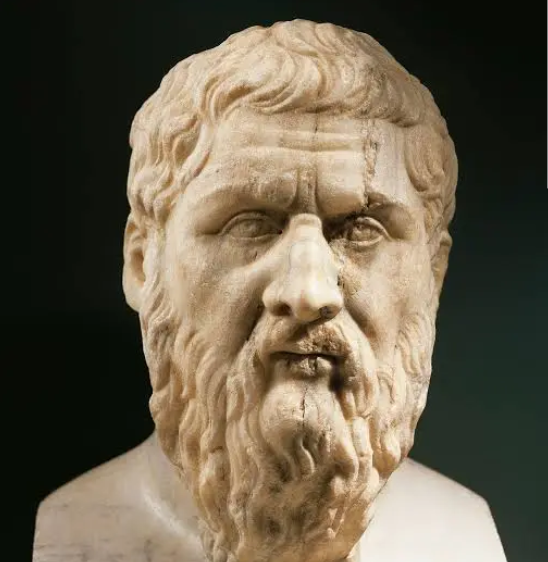
Parmenides: If anyone, with his mind fixed on all these objections and others like them, denies the existence of ideas of things, and does not assume an idea under which each individual thing is classed, he will be quite at a loss, since he denies that the idea of each thing is always the same, and in this way he will utterly destroy the power of carrying on discussion... Then what will become of philosophy? To what can you turn, if these things are unknown?
6 months 2 weeks ago
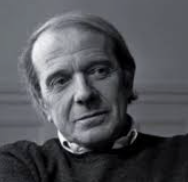
Instead of gambling on the eternal impossibility of the revolution and on the fascist return of a war-machine in general, why not think that a new type of revolution is in the course of becoming possible, and that all kinds of mutating, living machines conduct wars, are combined and trace out a plane of consistence which undermines the plane of organization of the World and the States?
▼
Source
source
from Dialogues with Claire Parnet, p. 147 [emphasis in original].
4 months 6 days ago
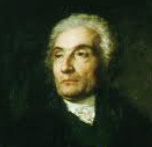
False opinions are like false money, struck first of all by guilty men and thereafter circulated by honest people who perpetuate the crime without knowing what they are doing. Original text:Les fausses opinions ressemblent à la fausse monnaie qui est frappée d'abord par de grands coupables et dépensée ensuite par d'honnêtes gens qui perpétuent le crime sans savoir ce qu'ils font.
▼
Source
source
"First Dialogue," p. 13
7 months 1 day ago
We return to our analysis of qualities. Something preserves itself throughout this flux, something that passes into other things, but also stands against them as a being for itself. This something can exist only as the product of a process through which it integrates its otherness with its own proper being. Hegel says that its existence comes about through 'the negation of the negation.' The first negation is the otherness in which it turns, and the second is the incorporation of this other into its own self. Such a process presupposes that things possess a certain power over their movement, that they exist in a certain self-relation that enables them to 'mediate' their existential conditions.
▼
Source
source
P. 132-133

6 months 1 week ago
Giving alms is only a virtuous deed when you give money that you yourself worked to get.
▼
Source
source
p. 83
4 months 2 weeks ago
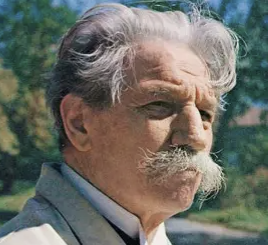
Not one of us knows what effect his life produces, and what he gives to others; that is hidden from us and must remain so, though we are often allowed to see some little fraction of it, so that we may not lose courage.
▼
Source
source
p. 164
4 months 4 weeks ago
Such souls are, in these days, getting somewhat out of humour with the world. Your very Byron, in these days, is at least driven mad; flatly refuses fealty to the world. The world with its injustices, its golden brutalities, and dull yellow guineas, is a disgust to such souls: the ray of Heaven that is in them does at least pre-doom them to be very miserable here. Yes:-and yet all misery is faculty misdirected, strength that has not yet found its way. The black whirlwind is mother of the lightning. No smoke, in any sense, but can become flame and radiance! Such soul, once graduated in Heaven's stern University, steps out superior to your guinea.
8 months 1 week ago
Seeing only what is fair, Sipping only what is sweet, Thou dost mock at fate and care.
▼
Source
source
To the Humble Bee, st. 6
4 months 3 weeks ago
I will tell you: that perfect man, who has attained virtue, never cursed his luck, and never received the results of chance with dejection; he believed that he was citizen and soldier of the universe, accepting his tasks as if they were his orders. Whatever happened, he did not spurn it, as if it were evil and borne in upon him by hazard; he accepted it as if it were assigned to be his duty. "Whatever this may be,"he says, "it is my lot; it is rough and it is hard, but I must work diligently at the task."

7 months 2 weeks ago
I am in no way facetious, nor disposed for the mirth and galliardize of company, yet in one dream I can compose a whole Comedy, behold the action, apprehend the jests, and laugh myself awake at the conceits thereof.
▼
Source
source
Section 11

4 months 4 days ago
Marxism is a revolutionary worldview that must always struggle for new revelations. Marxism must abhor nothing so much as the possibility that it becomes congealed in its current form. It is at its best when butting heads in self-criticism, and in historical thunder and lightning, it retains its strength.
▼
Source
source
As quoted in Quote Junkie : Political Edition (2008) by Hagopian Institute
4 months 1 week ago
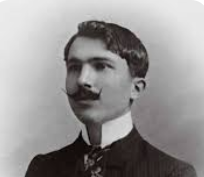
I felt that human partitions - bodies, brains, and souls - were capable of being demolished, and that humanity might return again, after frightfully bloody wandering, to its primeval, divine oneness. In this condition, there is no such thing as "me", "you", and "he"; everything is a unity and this unity is a profound mystic intoxication in which death loses its scythe and ceases to exist. Separately, we die one by one, but all together we are immortal. Like prodigal sons, after so much hunger, thirst, and rebellion, we spread our arms and embrace our two parents: heaven and earth.
▼
Source
source
Liberty, Ch. 12, p. 105
8 months 1 week ago
If you are not already dead, forgive. Rancor is heavy, it is worldly; leave it on earth: die light.
▼
Source
source
Act 1

6 months 2 weeks ago
Do we write books so that they shall merely be read? Don't we also write them for employment in the household? For one that is read from start to finish, thousands are leafed through, other thousands lie motionless, others are jammed against mouseholes, thrown at rats, others are stood on, sat on, drummed on, have gingerbread baked on them or are used to light pipes.
▼
Source
source
E 65
7 months 1 day ago
At midday the daily food of all Spaniards was the puchero or cocido, as the dish is really called which the foreigners call pot-pourri or olla podrida. This contains principally yellow chick-peas, with a little bacon, some potatoes or other vegetables and normally also small pieces of beef or sausage, all boiled in one pot at a very slow fire; the liquid of the same makes the substantial broth that is served first.
▼
Source
source
p. 14
9 months 1 week ago
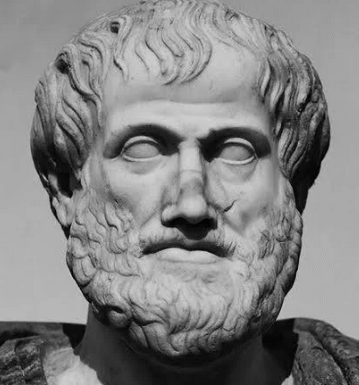
The best friend is he that, when he wishes a person's good, wishes it for that person's own sake.

8 months 1 week ago
As to the Approbation or Esteem of those Blockheads who call themselves the Public, & whom a Bookseller, a Lord, a Priest, or a Party can guide, I do most heartily despise it.
▼
Source
source
Letter 138, To Gilbert Elliot of Minto; August 9, 1757

CivilSimian.com created by AxiomaticPanic, CivilSimian, Kalokagathia