

3 weeks ago
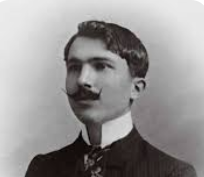
We come from a dark abyss, we end in a dark abyss, and we call the luminous interval life. As soon as we are born the return begins, at once the setting forth and the coming back; we die in every moment. Because of this many have cried out: The goal of life is death! But as soon as we are born we begin the struggle to create, to compose, to turn matter into life; we are born in every moment. Because of this many have cried out: The goal of ephemeral life is immortality! In the temporary living organism these two streams collide ... both opposing forces are holy. It is our duty, therefore, to grasp that vision which can embrace and harmonize these two enormous, timeless, and indestructible forces, and with this vision to modulate our thinking and our action.
4 months 3 weeks ago
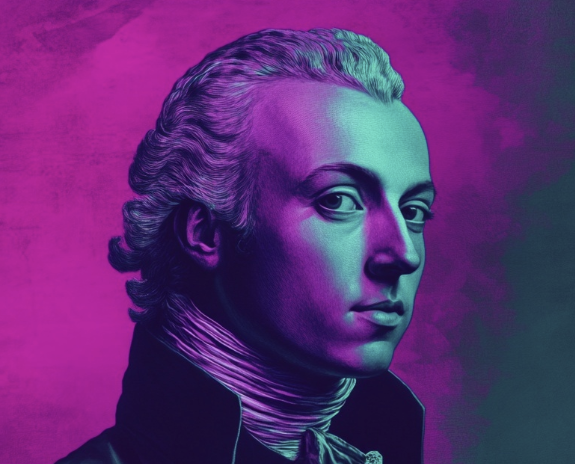
Nature made women mature early and had them demand gentle and polite treatment from men, so that they would find themselves imperceptibly fettered by a child due to their own magnanimity; and they would find themselves brought, if not quite to morality itself, then at least to that which cloaks it, moral behavior, which is the preparation and introduction to morality.
▼
Source
source
Kant, Immanuel (1996), pages 219-220
4 months 2 weeks ago
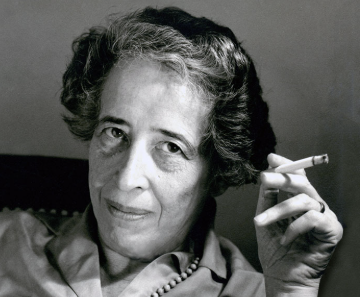
The law of progress holds that everything now must be better than what was there before. Don't you see if you want something better, and better, and better, you lose the good? The good is no longer even being measured.
▼
Source
source
Interview with French writer Roger Errera in New York Review of Books
3 weeks ago
Monarch of earth, I shall confess my secret craft:I've always fought to purify wild flame to light,and kindle whatever light I found to burst in flame.
▼
Source
source
Odysseus to Hades, Book XI, line 145

3 months 3 weeks ago
What terrible tragedies realism inflicts on people.'
4 months 4 days ago
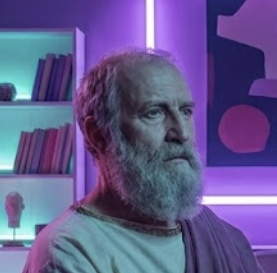
So people should abstain from other animals just as they should from the human.
▼
Source
source
4, 9, 6
2 months 1 week ago
No realistic, sane person goes around Chicago without protection.
▼
Source
source
Humboldt's Gift (1975), p. 452

4 months 2 weeks ago
What do I know about God and the purpose of life? I know that this world exists. That I am placed in it like my eye in its visual field. That something about it is problematic, which we call its meaning. This meaning does not lie in it but outside of it. That life is the world. That my will penetrates the world. That my will is good or evil. Therefore that good and evil are somehow connected with the meaning of the world. The meaning of life, i.e. the meaning of the world, we can call God. And connect with this the comparison of God to a father. To pray is to think about the meaning of life.
▼
Source
source
Journal entry (11 June 1916), p. 72e and 73e

4 months 4 weeks ago
The value of life lies not in the length of days, but in the use we make of them... Whether you find satisfaction in life depends not on your tale of years, but on your will.
▼
Source
source
Book I, Ch. 20

3 months 6 days ago
Liberty, taking the word in its concrete sense, consists in the ability to choose.
▼
Source
source
Ch. 3, Liberty
3 months 2 weeks ago
The life of the wealthy is one long Sunday.

5 months 2 weeks ago
All mankind, right down to those you most despise, are your neighbors.
2 months 2 weeks ago
Money alone sets all the world in motion.
▼
Source
source
Maxim 656

3 months 3 weeks ago
No passion so effectually robs the mind of all its powers of acting and reasoning as fear.
▼
Source
source
Part II Section II
3 months 1 week ago
Most men's conscience, habits, and opinions are borrowed from convention and gather continual comforting assurances from the same social consensus that originally suggested them.
▼
Source
source
Ch. VIII: Ideal Society
1 month 4 weeks ago
Dialogue never ends not for lack of time or opportunity but for essential reasons.
▼
Source
source
Chapter 7, Vigilance and Interruption, p. 121

3 months 3 days ago
The main problem for the average reader -- particularly of The Great Beast -- is that Crowley seems such an intolerable show-off that it is hard to believe anything he says.
▼
Source
source
p. 73
3 months 5 days ago
There remains the final reflection, how shallow, puny, and imperfect are efforts to sound the depths in the nature of things. In philosophical discussion, the merest hint of dogmatic certainty as to finality of statement is an exhibition of folly.
▼
Source
source
Preface, p. 16 (Corrected Edition)

3 months 2 weeks ago
An anxious man constructs his terrors, then installs himself within them: a stay-at-home in a yawning chasm.
4 months 3 weeks ago
[E]xperience has taught me that those who give their time to the absorbing claims of what is called society, not having leisure to keep up a large acquaintance with the organs of opinion, remain much more ignorant of the general state either of the public mind, or of the active and instructed part of it, than a recluse who reads the newspapers need be.
▼
Source
source
(p. 262)

1 month 5 days ago
I commend you and rejoice in the fact that you are persistent in your studies, and that, putting all else aside, you make it each day your endeavour to become a better man.
3 months 2 weeks ago
...the relatively unconscious man driven by his natural impulses because, imprisoned in his familiar world, he clings to the commonplace, the obvious, the probable, the collectively valid, using for his motto: 'Thinking is difficult. Therefore, let the herd pronounce judgement.'
▼
Source
source
Frequently misquoted as "Thinking is difficult, that's why most people judge" and close variants. Flying Saucers: A Modern Myth of Things Seen in the Sky. (1959), C.G. Jung, R.F.C. Hull (translator) (Princeton Press, 1979, ISBN 9780691018225

4 months 2 weeks ago
Assembled in a crowd, people lose their powers of reasoning and their capacity for moral choice.
▼
Source
source
Chapter 5 (p. 42)

3 months 1 week ago
It is not for you to know the times or the seasons, which the Father hath put in his own power. But ye shall receive power, after that the Holy Ghost is come upon you: and ye shall be witnesses unto me both in Jerusalem, and in all Judaea, and in Samaria, and unto the uttermost part of the earth.
▼
Source
source
1:7-8 (KJV)
3 months 6 days ago
It is the aim of public life to arrange that all forms of power are entrusted, so far as possible, to men who effectively consent to be bound by the obligation towards all human beings which lies upon everyone, and who understand the obligation. Law is the quality of the permanent provisions for making this aim effective.

5 months 2 weeks ago
Like great works, deep feelings always mean more than they are conscious of saying.
2 weeks 3 days ago
If it is not right, do not do it, if it is not true, do not say it. For let thy efforts be -
▼
Source
source
XII, 17

3 months 1 week ago
To live one's love and hatred, to live that which one is means defeat, resignation, and death. The crimes of society, the hell that man has made or man become unconquerable cosmic forces.
▼
Source
source
p. 61
5 months 2 weeks ago
For it is the chief characteristic of the religion of science, that it works, and that such curses as that of Aporat's are really deadly.
3 months 2 weeks ago
The great honor of Christianity, its incontestable merit, and the whole secret of its unprecedented and yet thoroughly legitimate triumph, lay in the fact that it appealed to that suffering and immense public to which the ancient world, a strict and cruel intellectual and political aristocracy, denied even the simplest rights of humanity. Otherwise it never could have spread.
▼
Source
source
Dover edition, p. 75
4 months 2 weeks ago
My sympathies are, of course, with the Government side, especially the Anarchists; for Anarchism seems to me more likely to lead to desirable social change than highly centralized, dictatorial Communism.
▼
Source
source
Authors Take Sides on the Spanish War (1937) edited by Nancy Cunard and publisehd by the Left Review

3 months 1 week ago
Religion is better described than defined and better felt than described. But if there is any one definition that latterly has obtained acceptance, it is that of Schleiermacher, to the effect that religion consists in the simple feeling of a relationship of dependence upon something above us and a desire to establish relations with this mysterious power.
3 weeks ago
Death gestured with his hands and bade the king thrice welcome.
▼
Source
source
Book VIII, line 168
5 months 3 weeks ago
It is impossible for motion to subsist without place, and void, and time.
3 months 1 week ago
Antiquity believed that the forces of love in the universe were limited. Therefore they were to be used sparingly,and everyone was to be loved only according to his value.
▼
Source
source
L. Coser, trans. (1961), p. 94

1 month 1 week ago
These are the two vices that beset Government Offices; both of them originating in insufficient Intellect,-that sad insufficiency from which, directly or indirectly, all evil whatsoever springs!

2 months 2 weeks ago
After Plotinus, says Schassler, fifteen centuries passed without the slightest scientific interest for the world of beauty and art. ...In reality, nothing of the kind happened. The science of aesthetics ... neither did nor could vanish, because it never existed. ... the Greeks were so little developed that goodness and beauty seemed to coincide. On that obsolete Greek view of life the science of aesthetics was invented by men of the eighteenth century, and especially shaped and mounted in Baumgarten's theory. The Greeks (as anyone may read in Bénard's book on Aristotle and Walter's work on Plato) never had a science of aesthetics.
1 month 6 days ago
The proof of a theory is in its reasoning, not in its sponsorship.
3 months 3 weeks ago
A common monetary standard will be established, with the consent of the various governments, by which industrial transactions will be greatly facilitated. Three spheres made respectively of gold, silver, and platinum, and each weighing fifty grammes, would differ sufficiently in value for the purpose. The sphere should have a small flattened base, and on the great circle parallel to it the Positivist motto would be inscribed. At the pole would be the image of the immortal Charlemagne, the founder of the Western Republic, and round the image his name would be engraved, in its Latin form, Carolus; that name, respected as it is by all nations of Europe alike, would be the common appellation of the universal monetary standard.
▼
Source
source
p. 430
2 months 1 week ago
Those who compare the age in which their lot has fallen with a golden age which exists only in imagination, may talk of degeneracy and decay; but no man who is correctly informed as to the past, will be disposed to take a morose or desponding view of the present.
▼
Source
source
Vol. I, ch. 1
3 months 2 weeks ago
Tyranny is just what one can develop a taste for, since it so happens that man prefers to wallow in fear rather than to face the anguish of being himself.
3 months 1 week ago
Although the formulations of science now offer the most advanced knowledge of nature, men continue to use obsolete forms of thought long discarded by scientific theory. In so far as these obsolete forms are superfluous for science, the fact that they persist violated the principle of the economy of thought, that characteristic trait of the bourgeois temper.
▼
Source
source
p. 133.

4 months 3 weeks ago
Love is a severe critic. Hate can pardon more than love.
▼
Source
source
Pearls of Thought (1881) p. 159
3 months 1 week ago
Operational analysis ... cannot raise the decisive question whether the consent itself was not the work of manipulation-a question for which the actual state of affairs provides ample justification. The analysis cannot raise it because it would transcend its terms toward transitive meaning-toward a concept of democracy which would reveal the democratic election as a rather limited democratic process. Precisely such a non-operational concept is the one rejected by the authors as "unrealistic" because it defines democracy on too articulate a level as the clear-cut control of representation by the electorate-popular control as popular sovereignty.
▼
Source
source
p. 116
2 weeks 6 days ago
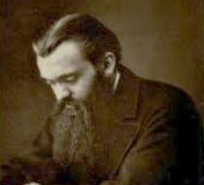
We may believe what goes beyond our experience, only when it is inferred from that experience by the assumption that what we do not know is like what we know. We may believe the statement of another person, when there is reasonable ground for supposing that he knows the matter of which he speaks, and that he is speaking the truth so far as he knows it.It is wrong in all cases to believe on insufficient evidence; and where it is presumption to doubt and to investigate, there it is worse than presumption to believe.
2 weeks 6 days ago
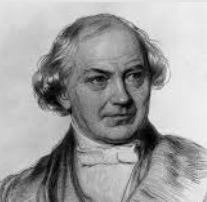
The Sensations are the 'Objective', the Ideas the 'Subjective' part of every act of perception or knowledge.

4 months 2 weeks ago
Reality is harsh to the feet of shadows.
▼
Source
source
Ch. 5

4 months 3 weeks ago
We tend to believe the premises because we can see that their consequences are true, instead of believing the consequences because we know the premises to be true. But the inferring of premises from consequences is the essence of induction; thus the method in investigating the principles of mathematics is really an inductive method, and is substantially the same as the method of discovering general laws in any other science.
▼
Source
source
"The Regressive Method of Discovering the Premises of Mathematics" (1907), in Essays in Analysis (1973), pp. 273-274

5 months 1 week ago
Sincerity becomes apparent. From being apparent, it becomes manifest. From being manifest, it becomes brilliant. Brilliant, it affects others. Affecting others, they are changed by it. Changed by it, they are transformed. It is only he who is possessed of the most complete sincerity that can exist under heaven, who can transform.
4 months 2 weeks ago
The Quaestor turned back the pages until he found himself among the Pensées. "We are not satisfied," he read, "with the life we have in ourselves and our own being; we want to live an imaginary life in other people's idea of us. Hence all our efforts are directed to seeming what we are not. We labor incessantly to preserve and embellish this imaginary being, and neglect that which is really ours." The Quaestor put down the book, ... and ruefully reflected that all his own troubles had arisen from this desire to seem what in fact he was not. To seem a man of action, when in fact he was a contemplative; to seem a politician, when nature had made him an introspective psychologist; to seem a wit, which God had intended him for a sage.
▼
Source
source
"Variations on a Philosopher" in Themes and Variations (1943), p. 2
CivilSimian.com created by AxiomaticPanic, CivilSimian, Kalokagathia