

3 months 2 weeks ago
Till mankind be satisfied with the naked statement of what they really perceive, till they confess virtue to be then most illustrious, when she more disdains the aid of ornament, they will never arrive at that manly justice of sentiment at which they seem destined one day to arrive. By his scheme of naked virtue will be every day a gainer; every succeeding observer willl more fully do her justice, while vice, deprived of that varnish with which she delighted to glow her actions of that gaudy exhibition which may be made alike by every pretender will speedily sink into unheeded contempt.
▼
Source
source
Book V, Chapter 12, "Of Titles"

2 months 2 weeks ago
Every technology contrived and "outered" by man has the power to numb human awareness during the period of its first interiorization.
▼
Source
source
(p. 174)
3 months 1 week ago
Religions are not true or false, but better or worse.
▼
Source
source
This statement is presented in quotes in The Philosophy of Religion and Advaita Vedanta (2008) by Arvind Sharma, p. 216
4 months 1 week ago
Cato instigated the magistrates to punish all offenders, saying that they that did not prevent crimes when they might, encouraged them. Of young men, he liked them that blushed better than those who looked pale.
▼
Source
source
Cato the Elder

4 months 2 weeks ago
When a philosopher addresses himself to... a tyrant, and tells him... tyranny is incompatible with justice, then the philosopher speaks... and believes he is speaking the truth, and... takes a risk...
▼
Source
source
[T]hat was Plato's situation with Dionysius in Syracuse... reference... Plato's Seventh Letter, and... The Life of Dion by Plutarch. Ref: 1) Ludwig Edelstein, Plato's seventh letter (1966) 2) Plutarch, Life of Dion

4 months 3 weeks ago
A propensity to hope and joy is real riches: One to fear and sorrow, real poverty.
▼
Source
source
Part I, Essay 18: The Sceptic
2 weeks 3 days ago
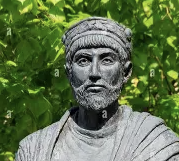
It may possibly be true that, to continue to live on and to act in a world like ours, it is vitally necessary to seek a way out of this uncertainty of multiple alternatives; and accordingly people may be led to embrace some immediate goal as if it were absolute, by which they hope to make their problems appear concrete and real. But it is not primarily the man of action who seeks the absolute and immutable, but rather it is he who wishes to induce others to hold on to the status quo because he feels comfortable and smug under conditions as they are.
4 weeks 1 day ago
Let us not admit discourses by Epicureans or Pyrrhonists - though indeed the gods have already in their wisdom destroyed their works, so that most of their books are no longer available. Nevertheless, there is no reason why I should not, by way of example, mention these works too, to show what sort of discourses priests must especially avoid; and if such discourses, then much more must they avoid such thoughts.
▼
Source
source
Fragmentum Epistulae, 288a-305d
3 months 1 week ago
A philosophy has no private store of knowledge or methods for attaining truth, so it has no private access to good. As it accepts knowledge and principles from those competent in science and inquiry, it accepts the goods that are diffused in human experience. It has no Mosaic or Pauline authority of revelation entrusted to it. But it has the authority of intelligence, of criticism of these common and natural goods.

4 months 3 weeks ago
To found a great empire for the sole purpose of raising up a people of customers, may at first appear a project fit only for a nation of shopkeepers. It is however, a project altogether unfit for a nation of shopkeepers; but extremely fit for a nation whose government is influenced by shopkeepers.
▼
Source
source
Chapter VII, Part Third, p. 667.
2 weeks 6 days ago
The Catastrophist constructs theories, the Uniformitarian Demolishes them.

3 months 3 weeks ago
Dreams, as we all know, are very queer things: some parts are presented with appalling vividness, with details worked up with the elaborate finish of jewellery, while others one gallops through, as it were, without noticing them at all, as, for instance, through space and time. Dreams seem to be spurred on not by reason but by desire, not by the head but by the heart, and yet what complicated tricks my reason has played sometimes in dreams, what utterly incomprehensible things happen to it!

4 months 3 weeks ago
You will have seen that my brother died suddenly in Marseilles. I inherit from him a title, but not a penny of money, as he was bankrupt. A title is a great nuisance to me, and I am at a loss what to do, but at any rate I do not wish it employed in connection with any of my literary work. There is, so far as I know, only one method of getting rid of it, which is to be attainted of high treason, and this would involve my head being cut off on Tower Hill. This method seems to me perhaps somewhat extreme...
▼
Source
source
Letter to W. W. Norton, 11 March, 1931
3 months 1 week ago
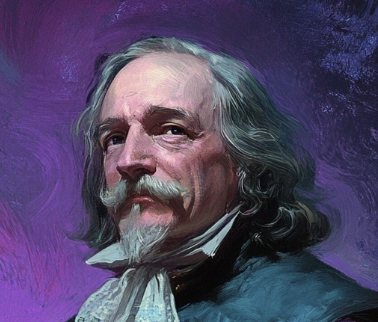
A naturall foole that could never learn by heart the order of numerall words, as one, two, and three, may observe every stroak of the Clock, and nod to it, or say one, one, one; but can never know what houre it strikes.
▼
Source
source
The First Part, Chapter 4, p. 14

3 months 3 weeks ago
I have in general no very exalted opinion of the virtue of paper government.
2 months 2 weeks ago
The present is always invisible because it's environmental. No environment is perceptible, simply because it saturates the whole field of attention.
▼
Source
source
Mademoiselle: the magazine for the smart young woman, Volume 64, 1966, p. 114
1 month ago
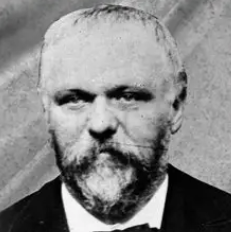
Revolutionary syndicalism keeps alive the desire to strike in the masses and only prospers when important strikes, accompanied by violence, take place.
▼
Source
source
p. 39

4 months 2 weeks ago
Clichés, stock phrases, adherence to conventional, standardized codes of expression and conduct have the socially recognized function of protecting us against reality.
▼
Source
source
p. 4
4 months 3 weeks ago
Reason is a harmonising, controlling force rather than a creative one.
▼
Source
source
Ch. 1: Mysticism and Logic
4 months 3 weeks ago
I have no great faith in political arithmetic, and I mean not to warrant the exactness of either of these computations.
▼
Source
source
Chapter V, p. 577.
1 month 5 days ago
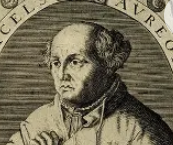
God, our Father, has given us the life and the art of healing to protect and maintain it.

4 months 2 weeks ago
Literature is the effort of man to indemnify himself for the wrongs of his condition.
▼
Source
source
"Walter Savage Landor", from The Dial, xii, 1841

3 months 3 days ago
I have tried to show how religion, the backbone of civilisation, hardens into a Church that is unacceptable to Outsiders, and the Outsiders - the men who strive to become visionaries - become the Rebels. In our case, the scientific progress that has brought us closer than ever before to conquering the problems of civilisation, has also robbed us of spiritual drive; and the Outsider is doubly a rebel: a rebel against the Established Church , a rebel against the unestablished church of materialism. Yet for all this, he is the real spiritual heir of the prophets, of Jesus and St. Peter, of St. Augustine and Peter Waldo. The purest religion of any age lies in the hands of its spiritual rebels. The twentieth century is no exception.
▼
Source
source
p. 320
3 months 1 week ago
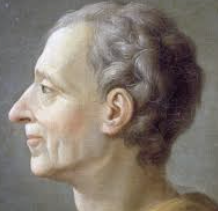
Horace and Aristotle told us of the virtues of their fathers, and the vices of their own time, and authors down through the centuries have told us the same. If they were right, men would now be bears.

5 months 3 weeks ago
Once in his early youth a man allowed himself to be so far carried away in an overwrought irresponsible state as to visit a prostitute. It is all forgotten. Now he wants to get married. Then anxiety stirs. He is tortured day and night with the thought that he might possibly be a father, that somewhere in the world there could be a created being who owed his life to him. He cannot share his secret with anyone; he does not even have any reliable knowledge of the fact. –For this reason the incident must have involved a prostitute and taken place in the wantonness of youth; had it been a little infatuated or an actual seduction, it would be hard to imagine that he could know nothing about it, but now this this very ignorance is the basis of his agitated torment. On the other hand, precisely because of the rashness of the whole affair, his misgivings do not really start until he actually falls in love.

3 months 2 weeks ago
The source of an emotion is very difficult to grasp, but it comes to just that. That holds for all phenomena, for faith, etc. Why did it begin, how did it develop? and so forth-only he who has the gift of divination can perceive where it really comes from. But it is not accessible to reflection.
2 months 1 week ago
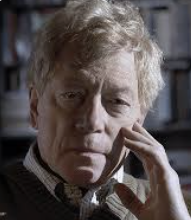
The ethical life... is maintained in being by a common culture, which also upholds the togetherness of society... Unlike the modern youth culture, a common culture sanctifies the adult state, to which it offers rites of passage.
▼
Source
source
"Idle Hands" (p. 127)

4 months 3 weeks ago
Eloquence may strike the ear, but the language of poverty strikes the heart; the first may charm like music, but the second alarms like a knell.
▼
Source
source
The Case of the Officers of Excise (1772), p. 20
2 months 1 week ago
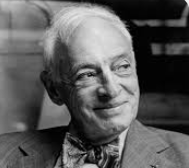
We are all such accidents. We do not make up history and culture. We simply appear, not by our own choice. We make what we can of our condition with the means available. We must accept the mixture as we find it - the impurity of it, the tragedy of it, the hope of it.
▼
Source
source
Great Jewish Short Stories, introduction to the Dell paperback edition
3 months 3 days ago
The Outsider may be an artist, but the artist is not necessarily an Outsider.
▼
Source
source
Chapter one, The Country of the Blind
3 months 2 weeks ago
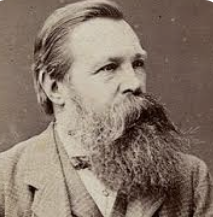
People think they have taken quite an extraordinarily bold step forward when they have rid themselves of belief in hereditary monarchy and swear by the democratic republic. In reality, however, the state is nothing but a machine for the oppression of one class by another, and indeed in the democratic republic no less than in the monarchy.
▼
Source
source
Introduction to 1891 edition of Karl Marx's, The Civil War in France
1 month 2 weeks ago
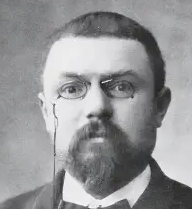
Roemer used eclipses of the satellites of Jupiter, and sought how much the event fell behind its prediction. But... this prediction is made... by... astronomic laws; for instance Newton's... The velocity of light... is adopted, such that the astronomic laws compatible with this value may be as simple as possible.

4 months 4 weeks ago
This misplacing hath caused a deficience, or at least a great improficience in the sciences themselves. For the handling of final causes, mixed with the rest in physical inquiries, hath intercepted the severe and diligent inquiry of all real and physical causes, and given men the occasion to stay upon these satisfactory and specious causes, to the great arrest and prejudice of further discovery. For this I find done not only by Plato, who ever anchoreth upon that shore, but by Aristotle, Galen, and others which do usually likewise fall upon these flats of discoursing causes.
▼
Source
source
Book VII, 7
3 months 2 weeks ago
Obviously God was a solution, and obviously none so satisfactory that will ever be found again.
3 months 3 weeks ago
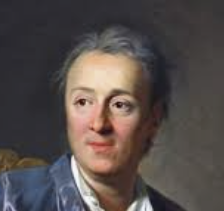
When superstition is allowed to perform the task of old age in dulling the human temperament, we can say goodbye to all excellence in poetry, in painting, and in music.
▼
Source
source
Ch. 3, as quoted in Selected Writings (1966) edited by Lester G. Crocker
3 months 2 weeks ago
The mind that puts everything in question, reaches, after a thousand interrogations, an almost total inertia, a situation which the inert, in fact, knows from the start, by instinct. For what is inertia but a congenital perplexity?

2 months 3 weeks ago
It is precisely because we can destroy that we are under an obligation to know why we ought not to do it, and to summon those countervailing powers that curb our destructive capacity. Nonviolence becomes an ethical obligation by which we are bound precisely because we are bound to one another; it may well be an obligation against which we rail, in which ambivalent swings of the psyche make themselves known, but the obligation to preserve the social bond can be resolved upon without precisely resolving that ambivalence. The obligation not to destroy each other emerges from, and reflects, the vexed social form of our lives, and it leads us to reconsider whether self-preservation is not linked to preserving the lives of others.
▼
Source
source
p. 148
3 months 3 weeks ago
Laws, like houses, lean on one another.
▼
Source
source
From the Tracts Relative to the Laws Against Popery in Ireland (c. 1766), not published during Burke's lifetime.

2 weeks 3 days ago
External things are not the problem. It's your assessment of them. Which you can erase right now.
▼
Source
source
(Hays translation) VIII, 47

4 months 2 weeks ago
It's only by thinking even more crazily than philosophers do that you can solve their problems.
▼
Source
source
p. 75e
4 months 1 week ago
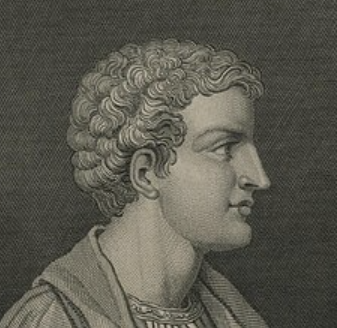
Conquered Greece took captive her savage conqueror and brought her arts into rustic Latium.
▼
Source
source
Book II, epistle i, lines 156-157

1 month 4 weeks ago
By far my greatest dread in life [...] is that (some variant of) the Everett interpretation of Quantum Mechanics is true. Dave's Diary, BLTC Research, May 1996
4 months 3 weeks ago
Better red than dead.
▼
Source
source
Bertrand Russell, attributes this phrase to 'West German friends of peace' but adopted this slogan for the Campaign for Nuclear Disarmament he helped found William Safire, Safire's Political Dictionary, (2008) p. 49-50
3 months 1 week ago
The color is of the object and the object in all its qualities is expressed through color. For it is objects that glows- gems and sunlight; and it is objects that are splendid- crowns, robes, sunlight. Except as they express objects, through being the significant color-quality of materials of ordinary experience, colors effect only transient excitations.
▼
Source
source
p. 212

2 months 2 weeks ago
The Quakers sent me books, from which I learnt how they had, years ago, established beyond doubt the duty for a Christian of fulfilling the command of non-resistance to evil by force, and had exposed the error of the Church's teaching in allowing war and capital punishment.
▼
Source
source
Chapter I, The Doctrine of Non-resistance to Evil by Force has been Professed by a Minority of Men from the Very Foundation of Christianity
2 weeks 4 days ago
Frenchmen, it was to the noise of hellish songs, the blasphemy of atheism, the cries of death, and the prolonged moans of slaughtered innocence, it was by the light of flames, on the debris of throne and altar, watered by the blood of the best of kings and an innumerable host of other victims, it was by the contempt of morality and the established faith, it was in the midst of every crime that your seducers and your tyrants founded what they call your liberty.
▼
Source
source
Chapter X, p. 84
2 months 1 week ago
Human beings can lose their lives in libraries. They ought to be warned.
▼
Source
source
Him with His Foot in His Mouth, from Him with His Foot in His Mouth and Other Stories (1984) [Penguin Classics, 1998, ISBN 0-141-18023-4], p. 11
3 months 1 week ago
The avant-garde and the beatniks share in the function of entertaining without endangering the good conscience of the men of good will.
▼
Source
source
p. 70
4 months 2 weeks ago
There are two classes of poets - the poets by education and practice, these we respect; and poets by nature, these we love.
▼
Source
source
Parnassus (1874) Preface
4 months 1 week ago
People are enticed by a desire which continually cheats them.'Nothing is enough,' they say, 'for you're only worth what you have.'
▼
Source
source
Book I, satire i, lines 61-62, as translated by N. Rudd
CivilSimian.com created by AxiomaticPanic, CivilSimian, Kalokagathia