

8 months 3 weeks ago
These people who have fled inward for their freedom also have to live outwardly, become visible, let themselves be seen; they are united with mankind through countless ties of blood, residence, education, fatherland, chance, the importunity of others; they are likewise presupposed to harbour countless opinions simply because these are the ruling opinions of the time; every gesture which is not clearly a denial counts as agreement.

3 months 3 weeks ago
The equal rights of man, and the happiness of every individual, are now acknowledged to be the only legitimate objects of government. Modern times have the signal advantage, too, of having discovered the only device by which these rights can be secured, to wit: government by the people, acting not in person, but by representatives chosen by themselves, that is to say; by every man of ripe years and sane mind, who either contributes by his purse or person to the support of his country.

4 months 2 weeks ago
The regular rhythms of factory production and its clear divisions of work time and nonwork time tend to decline in the realm of immaterial labor. Think how at the high end of labor market companies like Microsoft try to make the office more like home, offering free meals and exercise programs to keep employees in the office as many of their waking hours as possible. At the low end of the labor market workers have to juggle several job to make ends meet. Such practices always existed, but today, with the passage from Fordism to post-Fordism, the increased flexibility and mobility imposed on workers, and the decline of the stable, long-term employment typical of factory work, this tends to become the norm. At both the high end and low ends or labor market the new paradigm undermines the division between work time and the time of life.
▼
Source
source
145

7 months 3 weeks ago
He wanted to assume his entire condition, to carry the world on his shoulders and to become, in defiance of all, what all have made of him.
▼
Source
source
p. 384

5 months 3 weeks ago
The artist is the person who invents the means to bridge biological inheritance and the environments created by technological innovation.
▼
Source
source
p. 98

8 months 1 week ago
The living force of his soul gained the day: on he passed far beyond the flaming walls of the world and traversed throughout in mind and spirit the immeasurable universe.
▼
Source
source
Book I, lines 72-74 (tr. H. A. J. Munro); of Epicurus.
6 months 3 weeks ago
The true object of moral and political disquisition is pleasure or happiness.The primary, or earliest, class of human pleasure is the pleasures of external senses.In addition to these, man is susceptible of certain secondary pleasures, as the pleasures of intellectual feeling, the pleasures of sympathy, and the pleasures of self-approbation. The secondary pleasures are probably more exquisite than the primary; Or, at least,The most desirable state of man is that in which he has access to all these sources of pleasure, and is in possession of a happiness the most varied and uninterrupted. This state is a state of high civilization.
▼
Source
source
Summary of Principles 1.1

8 months 1 week ago
You can live, provided you live; that is, you can live for ever, provided you live a good life.
▼
Source
source
229H:3:2
4 months 2 weeks ago
Ever since prehistoric antiquity one field of study after another has crossed the divide between what the historian might call its prehistory as a science and its history proper. These transitions to maturity have seldom been so sudden or so unequivocal as my necessarily schematic discussion may have implied. But neither have they been historically gradual, coextensive, that is to say, with the entire development of the fields within which they occurred.
▼
Source
source
p. 22

7 months 3 weeks ago
A man's body and the needs of his body are now everywhere treated with a tender indulgence. Is the thinking mind then, to be the only thing that is never to obtain the slightest measure of consideration or protection, to say nothing of respect?
▼
Source
source
"On Noise"
8 months 1 week ago
It is difficulties that show what men are.
▼
Source
source
Book I, ch. 24, 1.



7 months 3 weeks ago
Always put the best interpretation on a tenet. Why not on Christianity, wholesome, sweet, and poetic? It is the record of a pure and holy soul, humble, absolutely disinterested, a trutn-speaker, and bent on serving, teaching, and uplifting men. Christianity taught the capacity, the element, to Jove the All-perfect without a stingy bargain for personal happiness. It taught that to love him was happiness,-to love him in other's virtues.

3 months 2 weeks ago
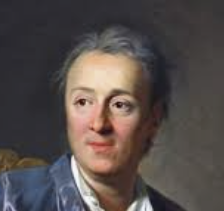
The universe is flux, life is opinion. The universe is (constant) change, life is (mere) presumption.
▼
Source
source
(Analogous translation) The universe is transformation: life is opinion. (Translation by George Long)
6 months 4 weeks ago
Wandering in a vast forest at night, I have only a faint light to guide me. A stranger appears and says to me: "My friend, you should blow out your candle in order to find your way more clearly." This stranger is a theologian.
▼
Source
source
Number VIII

6 months 2 weeks ago
When there were gathered together an innumerable multitude of people, insomuch that they trode one upon another, he began to say unto his disciples first of all, Beware ye of the leaven of the Pharisees, which is hypocrisy. For there is nothing covered, that shall not be revealed; neither hid, that shall not be known. Therefore whatsoever ye have spoken in darkness shall be heard in the light; and that which ye have spoken in the ear in closets shall be proclaimed upon the housetops. And I say unto you my friends, Be not afraid of them that kill the body, and after that have no more that they can do. But I will forewarn you whom ye shall fear: Fear him, which after he hath killed hath power to cast into hell; yea, I say unto you, Fear him.
▼
Source
source
12:1-5
3 months 3 weeks ago
Children till 10. years old to serve as nurses. from 10. to 16. the boys make nails, the girls spin. at 16. go into the ground or learn trades.
▼
Source
source
Jefferson's Farm Book as quoted in The Dark Side of Thomas Jefferson, by Henry Wiencek, Smithsonian Magazine,

7 months 2 weeks ago
Your questions refer to words; so I have to talk about words. You say: The point isn't the word, but its meaning, and you think of the meaning as a thing of the same kind as the word, though also different from the word. Here the word, there the meaning.
▼
Source
source
§ 120
6 months 2 weeks ago
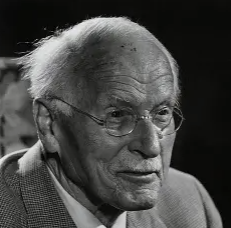
The discussion of the sexual problem is only a somewhat crude prelude to a far deeper question, and that is the question of the psychological relationship between the sexes. In comparison with this the other pales into insignificance, and with it we enter the real domain of woman. Woman's psychology is founded on the principle of Eros, the great binder and loosener, whereas from ancient times the ruling principle ascribed to man is Logos.
▼
Source
source
P.254

8 months 1 week ago
The order of authority derives from God, as the Apostle says [in Romans 13:1-7]. For this reason, the duty of obedience is, for the Christian, a consequence of this derivation of authority from God, and ceases when that ceases. But, as we have already said, authority may fail to derive from God for two reasons: either because of the way in which authority has been obtained, or in consequence of the use which is made of it. There are two ways in which the first may occur. Either because of a defect in the person, if he is unworthy; or because of some defect in the way itself by which power was acquired, if, for example, through violence, or simony or some other illegal method.
▼
Source
source
in Aquinas: Selected Political Writings (Basil Blackwell: 1974), p. 183

6 months 1 week ago
"God does not think, He creates; He does not exist, He is eternal," wrote Kierkegaard (Afslutende uvidenskabelige Efterskrift); but perhaps it is more exact to say with Mazzini, the mystic of the Italian city, that "God is great because his thought is action" (Ai giovani d'Italila), because with Him to think is to create, and He gives existence to that which exists in His thought by the mere fact of thinking it, and the impossible is unthinkable by God. It is not written in the Scriptures that God creates with His word - that is to say, with His thought - and that by this, by His Word, He made everything that exists? And what God has once made does He ever forget? May it not be that all the thoughts that have ever passed through the Supreme Consciousness still subsist therein? In Him, who is eternal, is not all existence eternalized?
6 months 1 week ago
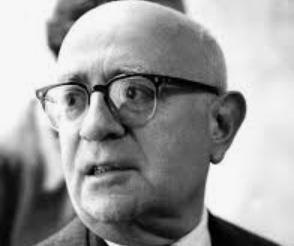
The importance of the culture industry in the spiritual constitution of the masses is no dispensation for reflection on its objective legitimation, its essential being, least of all by a science which thinks itself pragmatic.
6 months 2 weeks ago
Great and enduring civilizations like those of the Hindus and the Chinese were built upon this foundation and developed from it a discipline of self-knowledge which they brought to a high pitch of refinement both in philosophy and practice.
▼
Source
source
Carl Jung, Modern Man in Search of a Soul. quoted in Hindu Culture, K. Guru Dutt, and quoted in Gewali, Salil (2013). Great Minds on India. New Delhi: Penguin Random House.

6 months 2 weeks ago
A self-respecting man is a man without a country. A fatherland is birdlime...
8 months 1 day ago
The diversity of physical arguments and opinions embraces all sorts of methods.
▼
Source
source
Book III, Ch. 13. Of Experience

7 months 3 weeks ago
Never have so many been manipulated so much by so few.
▼
Source
source
Chapter 3 (pp. 19-20)
8 months 1 week ago
Ten thousand do not turn the scale against a single man of worth.
5 months 1 week ago
It is our deliberate opinion that the French Revolution, in spite of all its crimes and follies, was a great blessing to mankind.
▼
Source
source
'Sir James Mackintosh', The Edinburgh Review (July 1835), quoted in T. B. Macaulay, Critical and Historical Essays Contributed to The Edinburgh Review, Vol. II (1843), p. 215

6 months 2 weeks ago
To try curing someone of a "vice," of what is the deepest thing he has, is to attack his very being, and this is indeed how he himself understands it, since he will never forgive you for wanting him to destroy himself in your way and not his.

7 months 3 weeks ago
A man cannot become a child again, or he becomes childish.
▼
Source
source
Introduction, p. 31.

6 months 3 weeks ago
He was not merely a chip of the old Block, but the old Block itself.
▼
Source
source
On Pitt's First Speech (26 February 1781), from Wraxall's Memoirs, First Series, vol. i. p. 342
3 months 3 weeks ago
The ultimate most holy form of theory is action. Not to look on passively while the spark leaps from generation to generation, but to leap and to burn with it!

3 months 3 weeks ago
We may say with truth and meaning that governments are more or less republican, as they have more or less of the element of popular election and control in their composition; and believing, as I do, that the mass of the citizens is the safest depository of their own rights, and especially, that the evils flowing from the duperies of the people are less injurious than those from the egoism of their agents, I am a friend to that composition of government which has in it the most of this ingredient. And I sincerely believe, with you, that banking establishments are more dangerous than standing armies; and that the principle of spending money to be paid by posterity, under the name of funding, is but swindling futurity on a large scale.
▼
Source
source
Letter to John Taylor (28 May 1816) ME 15:23

7 months 2 weeks ago
Beneath the humanization of the penalties, what one finds are all those rules that authorize, or rather demand, 'leniency', as a calculated economy of the powder to punish. But they also provoke a shift in the point of application of this power: it is no longer the body, with the ritual play of excessive pains, spectacular branding in the ritual of the public execution; it is the mind or rather a play of representations and sings circulating discreetly but necessarily and evidently in the minds of all. It is no longer the body, but the soul, said Mably. And we see very clearly what he meant by this term: the correlative of a technique of power. Old 'anatomies' of punishment are abandoned, But have we really entered the age of non-corporal punishment?
▼
Source
source
Chapter Two, Generalized Punishment, pp. 101
3 months 3 weeks ago
Monarch of earth, I shall confess my secret craft:I've always fought to purify wild flame to light,and kindle whatever light I found to burst in flame.
▼
Source
source
Odysseus to Hades, Book XI, line 145
8 months 1 day ago
A man of understanding has lost nothing, if he has himself.
▼
Source
source
Ch. 39

8 months 1 day ago
Lying and guile need only to be revealed and recognized to be undone. When once lying is recognized as such, it needs no second stroke; it falls of itself and vanishes in shame.
▼
Source
source
p. 60
7 months 3 weeks ago
England's genius filled all measure Of heart and soul, of strength and pleasure, Gave to the mind its emperor, And life was larger than before: Nor sequent centuries could hit Orbit and sum of Shakespeare's wit. The men who lived with him became Poets, for the air was fame.
▼
Source
source
Solution, ll. 35-42
6 months 2 weeks ago
Awareness of time: assault on time . . .
6 months 1 week ago
Open, honest, truth-telling individuals value privacy. We all need spaces where we can be alone with thoughts and feelings - where we can experience healthy psychological autonomy and can choose to share when we want to.
▼
Source
source
All About Love: New Visions
7 months 3 weeks ago
An evil may be real, tho' its cause has no relation to us: It may be real, without being peculiar: It may be real, without shewing itself to others: It may be real, without being constant: And it may be real, without falling under the general rules. Such evils as these will not fail to render us miserable, tho' they have little tendency to diminish pride: And perhaps the most real and the most solid evils of life will be found of this nature.
▼
Source
source
Part 1, Section 6
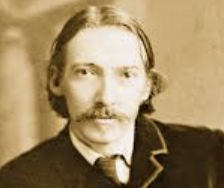
5 months 2 weeks ago
They say cowardice is infectious; but then argument is, on the other hand, a great emboldener.
▼
Source
source
Ch. 4, The Sea Chest.
7 months 3 weeks ago
And O! how the mind is here washed clean of all its early ingrafted Jewish superstition ! It is the most profitable and elevating reading which is possible in the world. It has been the solace of my life, and will be the solace of my death.
▼
Source
source
About the Upanishads. Arthur Schopenhauer, quoted in Europe Looks At India by Mukherhi, D.P.
8 months 1 week ago
People travel to wonder at the height of mountains, at the huge waves of the sea, at the long courses of rivers, at the vast compass of the ocean, at the circular motion of the stars; and they pass by themselves without wondering.
▼
Source
source
Variant: Men go abroad to admire the heights of mountains, the mighty billows of the sea, the broad tides of rivers, the compass of the ocean, and the circuits of the stars, and pass themselves by. X
4 months 3 days ago
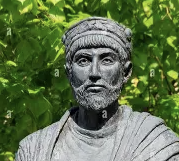
Who then is the Mother of the Gods? She is the Source of the Intelligible and Creative Powers, which direct the visible ones; she that gave birth to and copulated with the mighty Jupiter: she that exists as a great goddess next to the Great One, and in union with the Great Creator; she that is dispenser of all life; cause of all birth; most easily accomplishing all that is made; generating without passion; creating all that exists in concert with the Father; herself a virgin, without mother, sharing the throne of Jupiter, the mother in very truth of all the gods; for by receiving within herself the causes of all the intelligible deities that be above the world, she became the source to things the objects of intellect.
CivilSimian.com created by AxiomaticPanic, CivilSimian, Kalokagathia