


10 months 1 week ago
The politician may change sides so frequently as to find himself always in the majority, but most politicians have a preference for one party to the other, and subordinate their love of power to this preference.

10 months 2 weeks ago
This actual world of what is knowable, in which we are and which is in us, remains both the material and the limit of our consideration.
▼
Source
source
Vol I, Ch. 4, The World As Will: Second Aspect, § 53, as translated by Eric F. J. Payne, 1958

7 months 1 week ago
But there has also been the rise of populist movements within existing liberal democracies, and particularly within the United States and Britain, which were... the leaders of the neoliberal revolution... in the 1980s...
▼
Source
source
20:01

10 months 1 week ago
I cannot get from the nature of the proposition to the individual logical operations!!! That is, I cannot bring out how far the proposition is the picture of the situation. I am almost inclined to give up all my efforts.
▼
Source
source
Journal entries (12 March 1915 and 15 March 1915) p. 41
6 months 1 week ago
If I solve my dispute with my neighbor by killing him, I have certainly solved the immediate dispute. If my neighbor was a scoundrel, then the world is no doubt better for his absence. But in killing my neighbor, though he may have been a terrible man who did not deserve to live, I have made myself a killer - and the life of my next neighbor is in greater peril than the life of the last. In making myself a killer I have destroyed the possibility of neighborhood.
▼
Source
source
A Statement against the War in Vietnam
11 months 2 days ago
Men are at variance with the one thing with which they are in the most unbroken communion, the reason that administers the whole universe.

10 months 1 week ago
The present hour is always wealthiest when it is poorer than the future ones, as that is the pleasantest site which affords the pleasantest prospect.
▼
Source
source
Pearls of Thought (1881) p. 210
8 months 1 week ago
In many ways an artistic nature unfits a man for practical existence.
▼
Source
source
A Lodging for the Night.

10 months 1 week ago
The man described for us, whom we are invited to free, is already in himself the effect of a subjection much more profound than himself. A 'soul' inhabits him and brings him to existence...the soul is the effect and instrument of political anatomy; the soul is the prison of the body.
10 months 2 weeks ago
The tolls for the maintenance of a high road, cannot with any safety be made the property of private persons.
▼
Source
source
Chapter I, Part III, Article I, p. 786 (See also.. Public-private partnerships).

6 months 3 weeks ago
What man can you show me who places any value on his time, who reckons the worth of each day, who understands that he is dying daily?

9 months 1 week ago
It is not by genius, it is by suffering, and suffering alone, that one ceases to be a marionette.
6 months 1 week ago
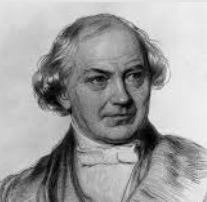
When alterations in technical terms become necessary, it is desirable that the new term should contain in its form some memorial of the old one.
11 months 1 week ago
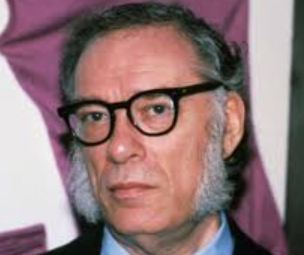
Nonsense. You are a military man and should know better. If there is one science into which man has probed continuously and successfully, it is that of military technology. No potential weapon would remain unrealized for ten thousand years.
10 months 2 weeks ago
Only a male intellect clouded by the sexual drive could call the stunted, narrow-shouldered, broad-hipped and short-legged sex the fair sex.
▼
Source
source
Vol. 2, Ch. 27, § 369

10 months 2 days ago
Strength of body is nobility in beasts of burden, strength of character is nobility in men.
9 months 5 days ago
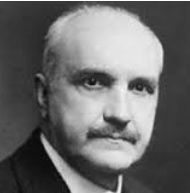
All his life he [the American] jumps into the train after it has started and jumps out before it has stopped; and he never once gets left behind, or breaks a leg.
▼
Source
source
"Materialism and Idealism" p. 175 (Hathi Trust)
10 months 2 weeks ago
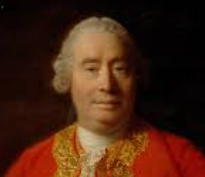
Every thing in the world is purchased by labour.
▼
Source
source
Part II, Essay 1: Of Commerce

10 months 1 week ago
They made me take cod liver oil: that is the height of luxury: a medicine to make you hungry while the others, in the street, would have sold themselves for a beefsteak. I saw them passing my window with their signs: "Give me bread".
▼
Source
source
Act 3, sc. 3

10 months 1 week ago
God!' said the Ghost, glancing around the landscape. 'God what?' asked the Spirit. 'What do you mean, "God what"?' asked the Ghost. 'In our grammar God is a noun' said the Spirit.
▼
Source
source
Ch. 9

8 months 4 weeks ago
When I read the catechism of the Council of Trent, it seems as though I had nothing in common with the religion there set forth.
10 months 1 week ago
Men remain in their present low and primitive condition; but if they should feel the influence of the spring of springs arousing them, they would of necessity rise to a higher and more ethereal life.
▼
Source
source
p. 49
10 months 1 week ago
Courage, not cleverness; not even inspiration, is the grain of mustard that grows up to be a great tree.
▼
Source
source
p. 44e
8 months 3 weeks ago
Cultivate that kind of knowledge which enables us to discover for ourselves in case of need that which others have to read or be told of.
▼
Source
source
D 89
8 months 1 week ago
But the more he is alone with nature, the greater man and his doings bulk in the consideration of his fellow-men.
▼
Source
source
Toils And Pleasures.
9 months 3 weeks ago
Attempt nothing above thy strength!

7 months 3 days ago
It is always a genial laughter. Not at mere weakness, at misery or poverty; never. No man who can laugh, what we call laughing, will laugh at these things. It is some poor character only desiring to laugh, and have the credit of wit, that does so. Laughter means sympathy.
10 months 2 days ago
Strength and beauty are the blessings of youth; temperance, however, is the flower of old age.
▼
Source
source
Fragment quoted in H. Diels and W. Kranz (eds.) Die Fragmente der Vorsokratiker, Vol. II (1952), no. 294
9 months 1 week ago
The Scientific discourse extracts truths from the errors which surround and oppose it on all sides and in every form; and, by demolition of these opposing views as error, and as impossible to true thought, shows the truth as that which alone remains after their withdrawal, and therefore as the only possible truth:--and in this separation of opposites, and elucidation of the truth from the confused chaos in which truth and error lie mingled together, consists the peculiar and characteristic nature of the Scientific discourse. This method creates and produces truth, before our eyes, out of a world full of error.
▼
Source
source
P. 26-27
9 months 1 week ago
No one has the audacity to exclaim: "I don't want to do anything!" - we are more indulgent with a murderer than with a mind emancipated from actions.
11 months 1 week ago
I consider one of the most important duties of any scientist the teaching of science to students and to the general public.

11 months ago
Religious law makes it illegal for the ignorant to drink wine, but intelligence makes it legal for the intellectual.
9 months 2 weeks ago
In order to shake a hypothesis, it is sometimes not necessary to do anything more than push it as far as it will go.
▼
Source
source
No. 50
6 months 3 weeks ago
In whatever state of knowledge we may conceive man to be placed, his progress towards a yet higher state need never fear a check, but must continue till the last existence of society.
▼
Source
source
Ch. 6 Of the Causes of the actual rapid Advance of the Physical Sciences compared with their Progress at an earlier Period
10 months 1 week ago
Truly to escape Hegel involves an exact appreciation of the price we have to pay to detach ourselves from him. It assumes that we are aware of the extent to which Hegel, insidiously perhaps, is close to us; it implies a knowledge, in that which permits us to think against Hegel, of that which remains Hegelian. We have to determine the extent to which our anti-Hegelianism is possibly one of his tricks directed against us, at the end of which he stands, motionless, waiting for us.
▼
Source
source
Discourse on Language, Inaugural Lecture at the Collège de France, 1970-1971. tr. A. M. Sheridan Smith
8 months 4 weeks ago
There is a certain kind of morality which is even more alien to good and evil than amorality is.
▼
Source
source
"The responsibility of writers," p. 169

8 months 1 week ago
World War I a railway war of centralization and encirclement. World War II a radio war of decentralization concluded by the Bomb. World War III a TV guerrilla war with no divisions between civil and military fronts.
▼
Source
source
(p. 152)
10 months ago
When Eudæmonidas heard a philosopher arguing that only a wise man can be a good general, "This is a wonderful speech," said he; "but he that saith it never heard the sound of trumpets."
▼
Source
source
62 Eudæmonidas
8 months 3 weeks ago
Courage, garrulousness and the mob are on our side. What more do we want?
▼
Source
source
E 32

9 months 1 week ago
All men that are ruined, are ruined on the side of their natural propensities.
▼
Source
source
No. 1, volume v, p. 286

10 months 1 week ago
Truth gains more even by the errors of one who, with due study and preparation, thinks for himself, than by the true opinions of those who only hold them because they do not suffer themselves to think.
▼
Source
source
Ch. II: Of the Liberty of Thought and Discussion
7 months 3 days ago
Close thy Byron; open thy Goethe.
▼
Source
source
Bk. I, ch. 9.
9 months 1 week ago
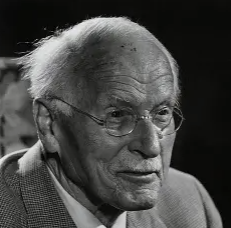
The great problems of life - sexuality, of course, among others - are always related to the primordial images of the collective unconscious. These images are really balancing or compensating factors which correspond with the problems life presents in actuality. This is not to be marvelled at, since these images are deposits representing the accumulated experience of thousands of years of struggle for adaptation and existence.
▼
Source
source
Ch. 5, p. 271
6 months 1 week ago
Sit and be still until in the time of no rain you hear beneath the dry wind's commotion in the trees the sound of flowing water among the rocks, a stream unheard before, and you are where breathing is prayer.

10 months 3 weeks ago
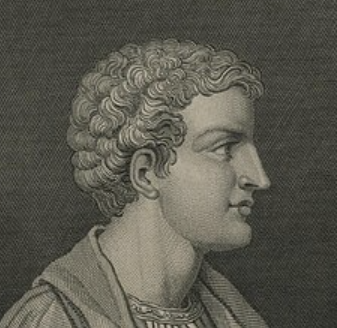
They [theologians] will explain to you how Christ was formed in the Virgin's womb; how accident subsists in synaxis without domicile in place. The most ordinary of them can do this. Those more fully initiated explain further whether there is an instans in Divine generation; whether in Christ there is more than a single filiation; whether 'the Father hates the Son' is a possible proposition; whether God can become the substance of a woman, of an ass, of a pumpkin, or of the devil, and whether, if so, a pumpkin could preach a sermon, or work miracles, or be crucified. And they can discover a thousand other things to you besides these. They will make you understand notions, and instants, formalities, and quiddities, things which no eyes ever saw, unless they were eyes which could see in the dark what had no existence.
▼
Source
source
as quoted by Froude ibid.,
8 months 1 week ago
Every technology contrived and "outered" by man has the power to numb human awareness during the period of its first interiorization.
▼
Source
source
(p. 174)
9 months 1 week ago
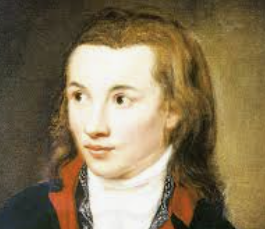
The normal present connects the past and the future through limitation. Contiguity results, crystallization by means of solidification. There also exists, however, a spiritual present that identifies past and future through dissolution, and this mixture is the element, the atmosphere of the poet.
▼
Source
source
Fragment No. 109
CivilSimian.com created by AxiomaticPanic, CivilSimian, Kalokagathia