

4 months 3 weeks ago
India has always been an object of yearning, a realm of wonder, a world of magic... India is the land of dreams. India had always dreamt - more of the Bliss that is man's final goal. And this has helped India to be more creative in history than any other nation. Hence the effervescence of myths and legends, religious and philosophies, music, and dances and the different styles of architecture." ...
▼
Source
source
quoted in Patri, Umesh Hindu scriptures and American transcendentalists 1st ed. quoted from Londhe, S. (2008).
4 months 1 week ago
Brave men were living before Agamemnon.
▼
Source
source
Book IV, ode ix, line 25



5 months 2 weeks ago
Where any answer is possible, all answers are meaningless.
3 months 1 week ago
Strictly speaking, the mass, as a psychological fact, can be defined without waiting for individuals to appear in mass formation. In the presence of one individual we can decide whether he is "mass" or not. The mass is all that which sets no value on itself - good or ill - based on specific grounds, but which feels itself "just like everybody," and nevertheless is not concerned about it; is, in fact, quite happy to feel itself as one with everybody else.
▼
Source
source
Chap.I: The Coming Of The Masses

4 months 2 weeks ago
The horseman serves the horse, The neatherd serves the neat, The merchant serves the purse, The eater serves his meat; 'Tis the day of the chattel, Web to weave, and corn to grind; Things are in the saddle, And ride mankind.
▼
Source
source
Ode: Inscribed to W. H. Channing, st. 7
2 months 2 weeks ago
Human vanity cherishes the absurd notion that our species is the final goal of evolution.
▼
Source
source
Chapter 3 "Accumulating Small Change" (p. 50)
3 months 1 week ago
On fact, the whole machinery of our intelligence, our general ideas and laws, fixed and external objects, principles, persons, and gods, are so many symbolic, algebraic expressions. They stand for experience; experience which we are incapable of retaining and surveying in its multitudinous immediacy. We should flounder hopelessly, like the animals, did we not keep ourselves afloat and direct our course by these intellectual devices.
▼
Source
source
Theory helps us to bear our ignorance of fact. Pt. III, Form; § 30: "The average modified in the direction of pleasure.", p. 125
1 month 2 weeks ago
Hitherto men have speculated vaguely on the unity of universes; it is now about to be demonstrated by reasoning from the passional world to material, guided by the analogy which exists between the two.
▼
Source
source
L'attraction passioneé, Harmonian Man: Selected Writings of Charles Fourier, p. 54

4 months 3 weeks ago
The rush to California, for instance, and the attitude, not merely of merchants, but of philosophers and prophets, so called, in relation to it, reflect the greatest disgrace on mankind. That so many are ready to live by luck, and so get the means of commanding the labor of others less lucky, without contributing any value to society!
▼
Source
source
p. 487
4 months 2 weeks ago
Thus heaven I've forfeited, I know it full well. My soul, once true to God, is chosen for hell.
▼
Source
source
"The Pale Maiden" (1837) ballad

3 months 1 week ago
The real sin - perhaps it is a sin against the Holy Ghost for which there is no remission - is the sin of heresy, the sin of thinking for oneself. The saying has been heard before now, here in Spain, that to be a liberal - that is, a heretic - is worse than being an assassin, a thief, or an adulterer. The gravest sin is not to obey the Church, whose infallibility protects us from reason.
3 months 6 days ago
That is why St. John of the Cross calls faith a night. With those who have received a Christian education, the lower parts of the soul become attached to these mysteries when they have no right at all to do so. That is why such people need a purification of which St. John of the Cross describes the stages. Atheism and incredulity constitute an equivalent of such a purification.
▼
Source
source
Faiths of Meditation; Contemplation of the divine" as translated in The Simone Weil Reader (1957) edited by George A. Panichas, p. 418
4 months 1 week ago
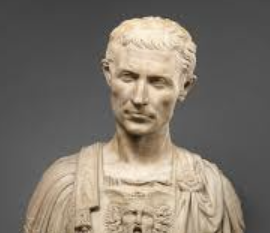
Nay, men, if any of you had heeded what I was ever foretelling and advising, ye would now neither be fearing a single man nor putting your hopes in a single man.
▼
Source
source
Quoted by Plutarch, Life of Cato the Younger, 52 Bernadotte Perrin, ed. Plutarch's Lives, Vol. 8, LCL 100 (1919), pp. 247, 361

4 months 4 weeks ago
One should hasten to put such witches to death. Statement of 20 August 1538;
▼
Source
source
as quoted in Conversations With Martin Luther (1915), translated and edited by Preserved Smith and Herbert Percival Gallinger, p. 163

2 weeks 3 days ago
You could leave life right now. Let that determine what you do and say and think.
▼
Source
source
(Hays translation) II, 11
1 month 6 days ago
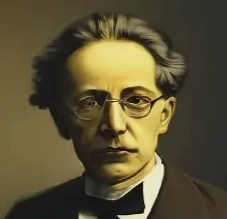
In the pedagogical as in certain other spheres freedom is not allowed to erupt, the power of the opposition is not allowed to put a word in edgewise: they want submissiveness. Only a formal and material training is being aimed at and only scholars come out of the menageries of the humanists, only "useful citizens" out of those of the realists, both of whom are indeed nothing but subservient people. Our good background of recalcitrancy [sic] gets strongly suppressed and with it the development of knowledge to free will. The result of school is then philistinism.
▼
Source
source
p. 23
3 weeks ago
I will not accept boundaries; appearances cannot contain me; I choke! To bleed in this agony, and to live it profoundly, is the second duty. The mind is patient and adjusts itself, it likes to play; but the heart grows savage and will not condescend to play; it stifles and rushes to tear apart the nets of necessity.
4 months 4 weeks ago
Concerning the female sorcerer. Roman law also prescribes this. Why does the law name women more than men here, even though men are also guilty of this? Because women are more susceptible to those superstitions of Satan; take Eve, for example. They are commonly called "wise women." Let them be killed.
▼
Source
source
Sermon on Exodus, 1526, WA XVI, p. 551 as quoted in Luther on Women: A Sourcebook, edited by Susan C. Karant-Nunn, Merry E. Wiesner-Hanks, (2003), p. 231

3 months 2 weeks ago
When I happen to be busy, I never give a moment's thought to the "meaning" of anything, particularly of whatever it is I am doing. A proof that the secret of everything is in action and not abstention, that fatal cause of consciousness.

4 months 2 weeks ago
To be taken without consent from my home and friends; to lose my liberty; to undergo all those assaults on my personality which modern psychotherapy knows how to deliver; to be re-made after some pattern of "normality" hatched in a Viennese laboratory to which I never professed allegiance; to know that this process will never end until either my captors have succeeded or I have grown wise enough to cheat them with apparent success-who cares whether this is called Punishment or not? "The Humanitarian Theory of Punishment"
▼
Source
source
1949

2 weeks 4 days ago
There is nothing but violence in the universe; but we are spoiled by a modern philosophy that tells us all is good, whereas evil has tainted everything, and in a very real sense, all is evil, since nothing is in its place.
▼
Source
source
Chapter III, p. 31
3 months 6 days ago
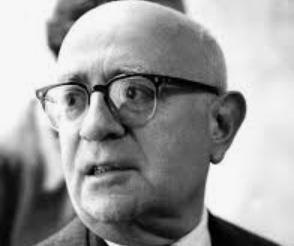
If one is to take Lulu's twelve-tone chord as the integral totality of complementary harmony, then Berg's allegorical genius proves itself within a historical perspective which makes the brain reel: just as Lulu in the world of total illusion longs for nothing but her murderer and finally finds him in that sound, so does all harmony of unrequited happiness long for its fatal chord as the cipher of fulfillment - twelve-tone music is not to be separated from dissonance. Fatal: because all dynamics come to a standstill within it without finding release. The law of complementary harmony already implies the end of the musical experience of time, as this was heralded in the dissociation of time according to Expressionistic extremes.
▼
Source
source
Philosophy of Modern Music (1973) as translated by Anne G. Mitchell and Wesley V. Blomster

4 months 4 weeks ago
Let me mention another requirement for a better understanding of Holy Scripture. I would suggest that you read those commentators who do not stick so closely to the literal sense. The ones I would recommend most highly after St. Paul himself are Origen, Ambrose, Jerome, and Augustine. Too many of our modern theologians are prone to a literal interpretation, which they subtly misconstrue.
▼
Source
source
p.37
4 months 2 weeks ago
What would really satisfy us would be a God who said of anything we happened to like, "What does it matter so long as they are contented?" We want, in fact, not so much a Father in Heaven as a grandfather in heaven - a senile benevolence who, as they say, "liked to see young people enjoying themselves" and whose plan for the universe was simply that it might be truly said at the end of each day, "a good time was had by all".
4 months 4 weeks ago
A Christian has no need of any law in order to be saved, since through faith we are free from every law. Thus all the acts of a Christian are done spontaneously, out of a sense of pure liberty. As Christians we do not seek our own advantage or salvation because we are already fully satisfied and saved by God's grace through faith. Now our only motive is to do that which is pleasing to God.
▼
Source
source
pp. 75-76
4 months 3 weeks ago
Among the Romans in Christian times Mithras-worship as very widely spread, and so late as the Middle Ages we meet with a secret Mithras-worship ostensibly connected with the order of the Knights-Templars. Mithras thrusting the knife into the neck of the ox is a figurative representation belonging essentially to the cult of Mithras, of which examples have been frequently found in Europe. Hegel, Georg Wilhelm Friedrich, Lectures on the philosophy of religion, together with a work on the proofs of the existence of God.
▼
Source
source
Vol 2 Translated from the 2d German ed. 1895 Ebenezer Brown Speirs 1854-1900, and J Burdon Sanderson p. 81-82
4 months 3 weeks ago
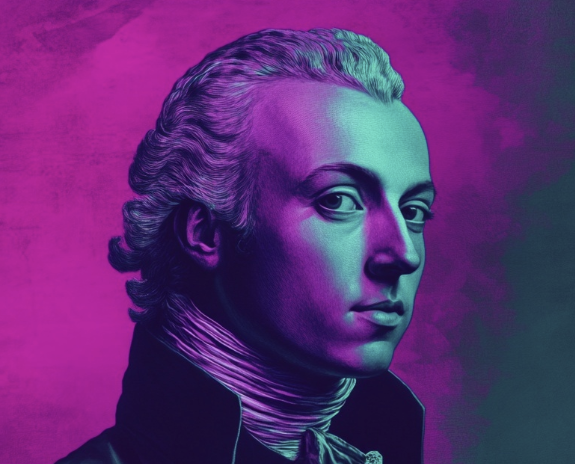
The use of the intellect in the sciences whose primitive concepts as well as axioms are given by sensuous intuition is only logical, that is, by it we only subordinate cognitions to one another according to their relative universality conformably to the principle of contradiction, phenomena to more general phenomena, and consequences of pure intuition to intuitive axioms. But in pure philosophy, such as metaphysics, in which the use of the intellect in respect to principles is real, that is to say, where the primary concept of things and relations and the very axioms are given originally by the pure intellect itself, and not being intuitions do not enjoy immunity from error, the method precedes the whole science, and whatever is attempted before its precepts are thoroughly discussed and firmly established is looked upon as rashly conceived and to be rejected among vain instances of mental playfulness.
4 months 2 weeks ago
The person who screams, or uses the superlative degree, or converses with heat, puts whole drawing-rooms to flight. If you wish to be loved, love measure. You must have genius or a prodigious usefulness if you will hide the want of measure.
▼
Source
source
p. 167

4 months 3 weeks ago
I do wish I believed in the life eternal, for it makes me quite miserable to think man is merely a kind of machine endowed, unhappily for himself, with consciousness.
▼
Source
source
Greek Exercises (1888); at the age of fifteen, Russell used to write down his reflections in this book, for fear that his people should find out what he was thinking.

2 weeks 6 days ago
War is an instrument entirely inefficient toward redressing wrong; and multiplies, instead of indemnifying losses.
▼
Source
source
Letter to John Sinclair
4 months 3 weeks ago
I have no doubt that the present Prime Minister, for instance, is a most sincere Christian, but I should not advise any of you to go and smite him on one cheek. I think you might find that he thought this text was intended in a figurative sense.
▼
Source
source
"The Character of Christ"
3 months 2 weeks ago
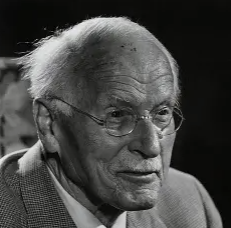
There are as many nights as days, and the one is just as long as the other in the year's course. Even a happy life cannot be without a measure of darkness, and the word "happy" would lose its meaning if it were not balanced by sadness.
▼
Source
source
"The Art of Living", interview with journalist Gordon Young first published in 1960

1 month 5 days ago
Show me that the good in life does not depend upon life's length, but upon the use we make of it; also, that it is possible, or rather usual, for a man who has lived long to have lived too little. Say to me when I lie down to sleep: "You may not wake again!" And when I have waked: "You may not go to sleep again!" Say to me when I go forth from my house: "You may not return!" And when I return: "You may never go forth again!"
4 months 3 weeks ago
A whole from necessary substances is impossible. The whole, therefore, of substances is a whole of contingent things, and the world consists essentially of only contingent things.
4 months 3 weeks ago
All natural capacities of a creature are destined to evolve completely to their natural end. First Thesis Variant translations: All natural capacities of a creature are destined sooner or later to be developed completely and in conformity with their end. All natural capacities of a creature are destined to develop themselves completely and to their purpose.

3 months 1 week ago
The open society is one that is deemed in principle to embrace all humanity.
▼
Source
source
Chapter IV
3 months 2 weeks ago
Why don't I commit suicide? Because I am as sick of death as I am of life.
3 months 2 weeks ago
One of the most difficult tasks men can perform, however much others may despise it, is the invention of good games and it cannot be done by men out of touch with their instinctive selves.
▼
Source
source
Jung and the Story of Our Time, Laurens van der Post
2 months 3 weeks ago
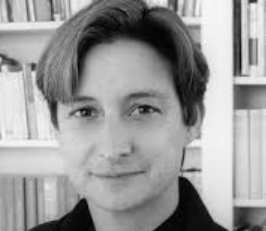
The ethical stand of nonviolence has to be linked to a commitment to radical equality. And more specifically, the practice of nonviolence requires an opposition to biopolitical forms of racism and war logics that regularly distinguish lives worth safeguarding from those that are not-populations conceived as collateral damage, or as obstructions to policy and military aims.
▼
Source
source
p. 62
3 months 2 weeks ago
The terrifying experience and obsession of death, when preserved in consciousness, becomes ruinous. If you talk about death, you save part of yourself. But at the same time, something of your real self dies, because objectified meanings lose the actuality they have in consciousness.
4 months 3 weeks ago
Apart from logical cogency, there is to me something a little odd about the ethical valuations of those who think that an omnipotent, omniscient, and benevolent Deity, after preparing the ground by many millions of years of lifeless nebulae, would consider Himself adequately rewarded by the final emergence of Hitler and Stalin and the H-bomb.
▼
Source
source
Preface

4 months 2 weeks ago
Darwinism is not a testable scientific theory, but a metaphysical research program. Unsourced variant: Evolution is not a fact. Evolution doesn't even qualify as a theory or as a hypothesis. It is a metaphysical research program, and it is not really testable science.
2 months 2 weeks ago
Genes do indirectly control the manufacture of bodies, and the influence is strictly one way: acquired characteristics are not inherited. No matter how much knowledge and wisdom you acquire during your life, not one jot will be passed on to your children by genetic means. Each new generation starts from scratch.
▼
Source
source
Ch. 3. Immortal Coils
2 months 1 week ago
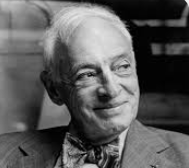
There is simply too much to think about. It is hopeless - too many kinds of special preparation are required. In electronics, in economics, in social analysis, in history, in psychology, in international politics, most of us are, given the oceanic proliferating complexity of things, paralyzed by the very suggestion that we assume responsibility for so much. This is what makes packaged opinion so attractive.
▼
Source
source
There Is Simply Too Much to Think About (1992), pp. 173-174
5 months 3 weeks ago
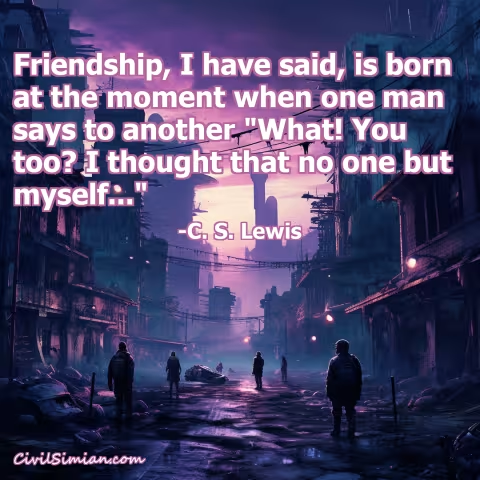
The best friend is he that, when he wishes a person's good, wishes it for that person's own sake.
3 months 2 weeks ago
After all, why should ordinary people want to contemplate the End, especially when we see the condition of those who do?
CivilSimian.com created by AxiomaticPanic, CivilSimian, Kalokagathia