

2 weeks 6 days ago
By scientific thought we mean the application of past experience to new circumstances by means of an observed order of events. By saying that this order of events is exact we mean that it is exact enough to correct experiments by, but we do not mean that it is theoretically or absolutely exact, because we do not know. The process of inference [is] in itself an assumption of uniformity, and... as the known exactness of the uniformity became greater, the stringency of the inference [is] increased. By saying that the order of events is reasonable we do not mean that everything has a purpose, or that everything can be explained, or that everything has a cause; for neither of these is true. But we mean that to every reasonable question there is an intelligible answer, which either we or posterity may know by the exercise of scientific thought.
▼
Source
source
155-156.

4 months 2 weeks ago
Tell them I've had a wonderful life.
▼
Source
source
Last words, to his doctor's wife (28 April 1951)-as quoted in Ludwig Wittgenstein : A Memoir (1966) by Norman Malcolm, p. 100


5 months 1 week ago
It is only he, possessed of all sagely qualities that can exist under heaven, who shows himself quick in apprehension, clear in discernment, of far-reaching intelligence, and all-embracing knowledge, fitted to exercise rule; magnanimous, generous, benign, and mild, fitted to exercise forbearance; impulsive, energetic, firm, and enduring, fitted to maintain a firm hold; self-adjusted, grave, never swerving from the Mean, and correct, fitted to command reverence; accomplished, distinctive, concentrative, and searching, fitted to exercise discrimination. All-embracing is he and vast, deep and active as a fountain, sending forth in their due season his virtues. All-embracing and vast, he is like Heaven. Deep and active as a fountain, he is like the abyss. He is seen, and the people all reverence him; he speaks, and the people all believe him; he acts, and the people all are pleased with him.
3 months 3 days ago
Ritual practices ensure that we treat not only other people but also things in beautiful ways, that there is an affinity between us and other people as well as things.
5 months 5 days ago
The philosophers who wished us to have the gods for our friends rank the friendship of the holy angels in the fourth circle of society, advancing now from the three circles of society on earth to the universe, and embracing heaven itself. And in this friendship we have indeed no fear that the angels will grieve us by their death or deterioration. But as we cannot mingle with them as familiarly as with men (which itself is one of the grievances of this life), and as Satan, as we read, sometimes transforms himself into an angel of light, to tempt those whom it is necessary to discipline, or just to deceive, there is great need of God's mercy to preserve us from making friends of demons in disguise, while we fancy we have good angels for our friends; for the astuteness and deceitfulness of these wicked spirits is equalled by their hurtfulness.
▼
Source
source
XIX, 9

4 months 1 day ago
Dear youths, I warn you cherish peace divine, And in your hearts lay deep these words of mine.
▼
Source
source
As reported by Heraclides, son of Sarapion, and Diogenes Laërtius, in Lives and Opinions of Eminent Philosophers, "Pythagoras", Sect. 7, in the translation of C. D. Yonge
1 week 3 days ago
Generations to come, it may well be, will scarce believe that such a man as this one ever in flesh and blood walked upon this Earth.
5 months 1 week ago
Withdraw into yourself and look. And if you do not find yourself beautiful yet, act as does the creator of a statue that is to be made beautiful: he cuts away here, he smoothes there, he makes this line lighter, this other purer. ... Cut away all that is excessive, straighten all that is crooked, bring light to all that is overcast, labor to make all one glow or beauty and never cease chiseling your statue, until there shall shine out on you from it the godlike splendor of virtue.
4 months 2 weeks ago
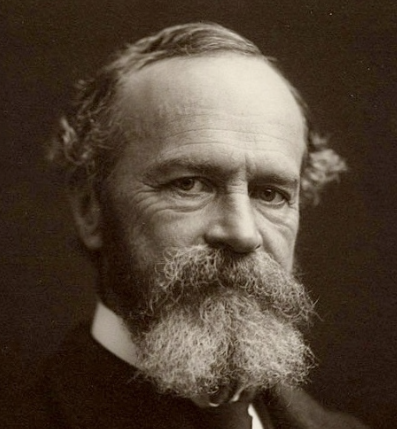
This practically amounts to saying that much that it is legitimate to admire in this field need nevertheless not be imitated, and that religious phenomena, like all other human phenomena, are subject to the law of the golden mean. Political reformers accomplish their successive tasks in the history of nations by being blind for the time to other causes. Great schools of art work out the effects which it is their mission to reveal, at the cost of a one-sidedness for which other schools must make amends. We accept a John Howard, a Mazzini, a Botticelli, a Michael Angelo, with a kind of indulgence. We are glad they existed to show us that way, but we are glad there are also other ways of seeing and taking life. So of many of the saints we have looked at. We are proud of a human nature that could be so passionately extreme, but we shrink from advising others to follow the example.
▼
Source
source
Lectures XIV and XV, "The Value of Saintliness"

1 month 1 week ago
To me, in these circumstances, that of "Hero-worship" becomes a fact inexpressibly precious; the most solacing fact one sees in the world at present. There is an everlasting hope in it for the management of the world. Had all traditions, arrangements, creeds, societies that men ever instituted, sunk away, this would remain. The certainty of Heroes being sent us; our faculty, our necessity, to reverence Heroes when sent: it shines like a polestar through smoke-clouds, dust-clouds, and all manner of down-rushing and conflagration.
4 weeks 1 day ago
If the immediate creator of the universe be he who is proclaimed by Moses, then we hold nobler beliefs concerning him, inasmuch as we consider him to be the master of all things in general, but that there are besides national gods who are subordinate to him and are like viceroys of a king, each administering separately his own province; and, moreover, we do not make him the sectional rival of the gods whose station is subordinate to his. But if Moses first pays honour to a sectional god, and then makes the lordship of the whole universe contrast with his power, then it is better to believe as we do, and to recognise the God of the All, though not without apprehending also the God of Moses; this is better, I say, than to honour one who has been assigned the lordship over a very small portion, instead of the creator of all things.
3 months 1 week ago
Liberal philosophy, at this point, ceases to be empirical and British in order to become German and transcendental. Moral life, it now believes, is not the pursuit of liberty and happiness of all sorts by all sorts of different creatures; it is the development of a single spirit in all life through a series of necessary phases, each higher than the preceding one. No man, accordingly, can really or ultimately desire anything but what the best people desire. This is the principle of the higher snobbery; and in fact, all earnest liberals are higher snobs.
▼
Source
source
"The Irony of Liberalism"
2 months 1 week ago
Conservatives have, on the whole, accepted nationality as a sphere of local duties and loyalties, defining an inheritance and a community that has a right to pass on its values from generation to generation. The nation may indeed be the best that we now have, by way of a society linking the dead to the unborn, in the manner extolled by Burke. And for this very reason it arouses the hostility of liberals, who are constantly searching for a place outside loyalty and obedience, from which all human claims can be judged. Hence, in the conflicts of our times, while conservatives leap to the defense of the nation and its interests, wishing to maintain its integrity and to enforce its law, liberals advocate transnational initiatives, international courts, and doctrines of universal rights, all of which, they believe, should stand in judgment over the nation and hold it to account.
▼
Source
source
"The Limits of Liberty," The American Spectator
4 months 3 weeks ago
In order to seek truth, it is necessary once in the course of our life, to doubt, as far as possible, of all things.
▼
Source
source
Descartes, René (1644). Principles of Philosophy.
3 months 1 week ago
Antiquity believed that the forces of love in the universe were limited. Therefore they were to be used sparingly,and everyone was to be loved only according to his value.
▼
Source
source
L. Coser, trans. (1961), p. 94
2 weeks 3 days ago
Whatever happens to you has been waiting to happen since the beginning of time. The twining strands of fate wove both of them together: your own existence and the things that happen to you.
▼
Source
source
V. 8, trans. Gregory Hays

5 months 3 weeks ago
Haste is universal because everyone is in flight from himself.
1 month 1 week ago
A great soul, any sincere soul, knows not what he is,-alternates between the highest height and the lowest depth; can, of all things, the least measure-Himself! What others take him for, and what he guesses that he may be; these two items strangely act on one another, help to determine one another. With all men reverently admiring him; with his own wild soul full of noble ardors and affections, of whirlwind chaotic darkness and glorious new light; a divine Universe bursting all into godlike beauty round him, and no man to whom the like ever had befallen, what could he think himself to be?
1 month 5 days ago
Have the courage to be ignorant of a great number of things, in order to avoid the calamity of being ignorant of everything.
▼
Source
source
Lecture IX : On the Conduct of the Understanding

4 months 2 weeks ago
Thus, while the refugee serfs only wished to be free to develop and assert those conditions of existence which were already there, and hence, in the end, only arrived at free labour, the proletarians, if they are to assert themselves as individuals, will have to abolish the very condition of their existence hitherto (which has, moreover, been that of all society up to the present), namely, labour. Thus they find themselves directly opposed to the form in which, hitherto, the individuals, of which society consists, have given themselves collective expression, that is, the State. In order, therefore, to assert themselves as individuals, they must overthrow the State.
▼
Source
source
"Communism. The Production of the Form of Intercourse Itself", The Marx-Engels Reader
2 months 2 weeks ago
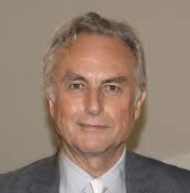
In particular, it is certainly wrong to condemn poor old Homo sapiens as the only species to kill his own kind, the only inheritor of the mark of Cain, and similar melodramatic charges. Whether a naturalist stresses the violence or the restraint of animal aggression depends partly on the kinds of animals he is used to watching, and partly on his evolutionary preconceptions-Lorenz is, after all, a 'good of the species' man. Even if it has been exaggerated, the gloved fist view of animal fights seems to have at least some truth. Superficially this looks like a form of altruism. The selfish gene theory must face up to the difficult task of explaining it. Why is it that animals do not go all out to kill rival members of their species at every possible opportunity?
▼
Source
source
Ch. 5. Aggression: stability and the selfish machine
4 months 3 weeks ago
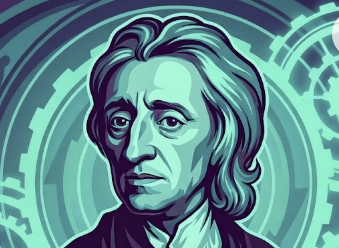
To this I answer: That force is to be opposed to nothing, but to unjust and unlawful force. Whoever makes any opposition in any other case, draws on himself a just condemnation, both from God and man...
▼
Source
source
Second Treatise of Government, Ch. XVIII, sec. 204
1 month 1 day ago
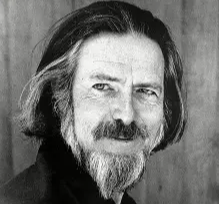
I have suggested that behind almost all myth lies the mono-plot of the game of hide-and-seek.
▼
Source
source
The Two Hands of God : The Myths of Polarity (1963), p. 29
3 months 6 days ago
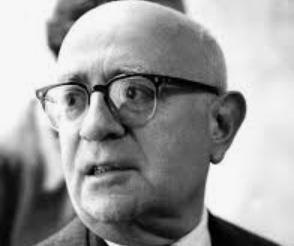
The importance of the culture industry in the spiritual constitution of the masses is no dispensation for reflection on its objective legitimation, its essential being, least of all by a science which thinks itself pragmatic.

2 months 2 weeks ago
Art is anything you can get away with.

1 month 5 days ago
Virtue alone affords everlasting and peace-giving joy; even if some obstacle arise, it is but like an intervening cloud, which floats beneath the sun but never prevails against it.

4 months 3 weeks ago
Here am I who have written on all sorts of subjects calculated to excite hostility, moral, political, and religious, and yet I have no enemies - except, indeed, all the Whigs, all the Tories, and all the Christians.
▼
Source
source
Statement to a friend shortly before his death, as recounted in Men of Letters by Lord Henry Brougham
2 months 1 week ago
The conservative response to modernity is to embrace it, but to embrace it critically, in full consciousness that human achievements are rare and precarious, that we have no God-given right to destroy our inheritance, but must always patiently submit to the voice of order, and set an example of orderly living.
▼
Source
source
"Eliot and Conservatism" (p. 208)
1 month 1 week ago
Paganism we recognized as a veracious expression of the earnest awe-struck feeling of man towards the Universe; veracious, true once, and still not without worth for us. But mark here the difference of Paganism and Christianism; one great difference. Paganism emblemed chiefly the Operations of Nature; the destinies, efforts, combinations, vicissitudes of things and men in this world; Christianism emblemed the Law of Human Duty, the Moral Law of Man. One was for the sensuous nature: a rude helpless utterance of the first Thought of men,-the chief recognized virtue, Courage, Superiority to Fear. The other was not for the sensuous nature, but for the moral. What a progress is here, if in that one respect only-!
5 months 1 week ago
When the Superior Man (Junzi) eats he does not try to stuff himself; at rest he does not seek perfect comfort; he is diligent in his work and careful in speech. He avails himself to people of the Tao and thereby corrects himself. This is the kind of person of whom you can say, "he loves learning."

5 months 2 weeks ago
It is change, continuing change, inevitable change, that is the dominant factor in society today. No sensible decision can be made any longer without taking into account not only the world as it is, but the world as it will be ... This, in turn, means that our statesmen, our businessmen, our everyman must take on a science fictional way of thinking.
4 months 2 weeks ago
Romeo wants Juliet as the filings want the magnet; and if no obstacles intervene he moves towards her by as straight a line as they. But Romeo and Juliet, if a wall be built between them, do not remain idiotically pressing their faces against its opposite sides like the magnet and the filings with the card. Romeo soon finds a circuitous way, by scaling the wall or otherwise, of touching Juliet's lips directly. With the filings the path is fixed; whether it reaches the end depends on accidents. With the lover it is the end which is fixed, the path may be modified indefinitely.
▼
Source
source
Ch. 1 : The Scope of Psychology
4 weeks ago
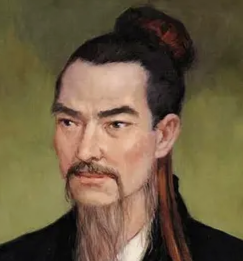
What is the purpose of houses? It is to protect us from the wind and cold of winter, the heat and rain of summer, and to keep out robbers and thieves. Once these ends have been secured, that is all. Whatever does not contribute to these ends should be eliminated.
▼
Source
source
Ch 20, as quoted in Van Norden, Bryan W. (2011). Introduction to Classical Chinese Philosophy. Hackett Publishing. p. 52. ISBN 978-1-60384-468-0.

4 months 3 weeks ago
It is the duty of every patriot to protect his country from its government.
▼
Source
source
Edward Abbey, "A patriot must always be ready to defend his country against his government." as written in "A Voice Crying in the Wilderness" (Vox Clamantis en Deserto): Notes from a Secret Journal (1990), ISBN 0312064888


4 months 3 weeks ago
My opinion concerning God differs widely from that which is ordinarily defended by modern Christians. For I hold that God is of all things the cause immanent, as the phrase is, not transient. I say that all things are in God and move in God, thus agreeing with Paul, and, perhaps, with all the ancient philosophers, though the phraseology may be different ; I will even venture to affirm that I agree with all the ancient Hebrews, in so far as one may judge from their traditions, though these are in many ways corrupted. The supposition of some, that I endeavour to prove in the Tractatus Theologico-Politicus the unity of God and Nature (meaning by the latter a certain mass or corporeal matter), is wholly erroneous. As regards miracles, I am of opinion that the revelation of God can only be established by the wisdom of the doctrine, not by miracles, or in other words by ignorance.
▼
Source
source
Letter 21 (73) to Henry Oldenburg , November
2 months 1 week ago
Democracies owe their existence to national loyalties - the loyalties that are supposedly shared by government and opposition, by all political parties, and by the electorate as a whole. Wherever the experience of nationality is weak or non-existent, democracy has failed to take root. For without national loyalty, opposition is a threat to government, and political disagreements create no common ground.
4 months 1 week ago
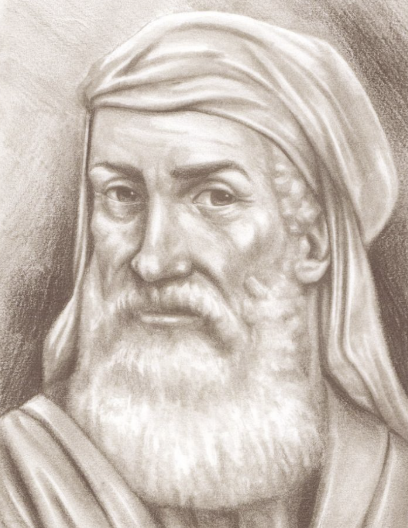
As it has long been and shall be, not ever, I think, will unfathomable time be emptied of either. This quote refers to Love and Strife, the fundamental opposing and ordering forces in Empedocles' model of the cosmos.
▼
Source
source
fr. 16
4 months 3 weeks ago
The society adopts neither rites nor priesthood, and it will never lose sight of the resolution not to advance any thing as a society inconvenient to any sect or sects, in any time or country, and under any government. It will be seen that it is so much the more easy for the society to keep within this circle, because, that the dogmas of the Theophilanthropists are those upon which all the sects have agreed, that their moral is.that upon which there has never been the least dissent; and that the name they have taken expresses the double end of all the sects, that of leading to the adoration of God and love of man.
▼
Source
source
Introduction
1 month 2 weeks ago
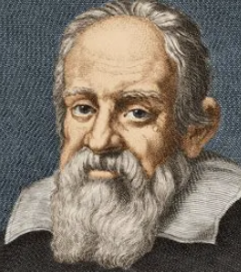
What has philosophy got to do with measuring anything? It's the mathematicians you have to trust, and they measure the skies like we measure a field.
▼
Source
source
Matteo in Concerning the New Star
2 weeks 3 days ago
To live your brief life rightly, isn't that enough?
▼
Source
source
(Hays translation) X, 31


3 months 2 weeks ago
From the cradle to the grave, each individual pays for the sin of not being God. That's why life is an uninterrupted religious crisis, superficial for believers, shattering for doubters.

2 months 2 weeks ago
Love hinders death. Love is life. All, everything that I understand, I understand only because I love. Everything is, everything exists, only because I love. Everything is united by it alone. Love is God, and to die means that I, a particle of love, shall return to the general and eternal source.
▼
Source
source
Thoughts of Prince Andrew Bk XII, Ch. 16
2 months 2 weeks ago
He doubly benefits the needy who gives quickly. Maxim 6
CivilSimian.com created by AxiomaticPanic, CivilSimian, Kalokagathia