

2 months 1 week ago
One's language is a spiritual location. It houses your soul. If you were born in America all essential communication, your deepest conversations with yourself, will be in English. ... Your English is the principal instrument of your humanity.
▼
Source
source
Part I, p. 27

2 weeks 1 day ago
Whatsoever any man either doth or saith, thou must be good; not for any man's sake, but for thine own nature's sake; as if either gold, or the emerald, or purple, should ever be saying to themselves, Whatsoever any man either doth or saith, I must still be an emerald, and I must keep my colour.
▼
Source
source
VII, 12
1 month 1 week ago
What has philosophy got to do with measuring anything? It's the mathematicians you have to trust, and they measure the skies like we measure a field.
▼
Source
source
Matteo in Concerning the New Star
2 months 2 weeks ago
They say cowardice is infectious; but then argument is, on the other hand, a great emboldener.
▼
Source
source
Ch. 4, The Sea Chest.
3 months 1 week ago
Eternal vigilance is the price of knowledge.
▼
Source
source
p. 58
4 months 3 weeks ago
Lying and guile need only to be revealed and recognized to be undone. When once lying is recognized as such, it needs no second stroke; it falls of itself and vanishes in shame.
▼
Source
source
p. 60
4 months 1 week ago
As soon as we cease to believe in such an engineer and in a discourse which breaks with the received historical discourse, and as soon as we admit that every finite discourse is bound by a certain bricolage and that the engineer and the scientist are also species of bricoleurs, then the very idea of bricolage is menaced and the difference in which it took on its meaning breaks down.
▼
Source
source
"Structure, Sign, and Play in the Discourse of the Human Sciences," Writing and Difference, tr. w/ intro & notes by Alan Bass. The University of Chicago Press. Chicago, 1978. p. 285

3 months 1 week ago
The transition from Hegel to Marx is, in all respects, a transition to an essentially different order of truth, no to be interpreted in terms of philosophy. We shall see that all the philosophical concepts of Marxian theory are social and economic categories, whereas Hegel's social and economic categories are all philosophical concepts.
▼
Source
source
P. 258


4 months 2 weeks ago
We have to learn to think in a new way. We have to learn to ask ourselves, not what steps can be taken to give military victory to whatever group we prefer, for there no longer are such steps; the question we have to ask ourselves is: what steps can be taken to prevent a military contest of which the issue must be disastrous to all parties?
3 months 2 days ago
Since we live in a society that promotes faddism and temporary superficial adaptation of different values, we are easily convinced that changes have occurred in arenas where there has been little or no change.

3 months 3 weeks ago
I thanke God for my happy Dreams|dreames, as I doe for my good rest, for there is a satisfaction in them unto reasonable desires, and such as can be content with a fit of happinesse; and surely it is not a melancholy conceite to thinke we are all asleepe in this world, and that the conceits of this life are as meare dreames to those of the next, as the Phantasmes of the night, to the conceit of the day. There is an equall delusion in both, and the one doth but seeme to bee the embleme or picture of the other;
▼
Source
source
Section 12

1 month 1 week ago
If you look at the sociology of populism in the United States, it is tied most closely to population density, which... is correlated... to these types of cultural differences... to belief... in traditional cultural values, in family, in religion and the like, and conversely to... belief in immigration and diversity as strengths... This is the fundamental division that's taken hold of the United States. It has been augmented by technology because the internet has succeeded in... destroying every other source of authority that used to filter news and facts and information that... formed the basis of a democratic ability to have political discourse.
▼
Source
source
25:32

4 months 2 weeks ago
The youth gets together his materials to build a bridge to the moon, or, perchance, a palace or temple on the earth, and, at length, the middle-aged man concludes to build a woodshed with them.
▼
Source
source
July 14, 1852
4 months 2 weeks ago
Power may be defined as the production of intended effects.
▼
Source
source
Ch. 3: The Forms of Power

3 months 2 weeks ago
Endless brooding over a question undermines you as much as a dull pain.

4 months 1 week ago
Men in their prayers beg the gods for health, not knowing that this is a thing they have in their own power. Through their incontinence undermining it, they themselves become, because of their passions, the betrayers of their own health.
2 months 1 week ago
The modern world gives proof at every point that it is far easier to destroy institutions than to create them. Nevertheless, few people seem to understand this truth.
▼
Source
source
Rousseau & the origins of liberalism, The New Criterion
4 months 3 weeks ago
This proof can at most, therefore, demonstrate the existence of an architect of the world, whose efforts are limited by the capabilities of the material with which he works, but not of a creator of the world, to whom all things are subject.
▼
Source
source
A 627, B 655 (Physico-Theological Proof Impossible)

4 months 3 weeks ago
We are wont to call that human reasoning which we apply to Nature the anticipation of Nature (as being rash and premature) and that which is properly deduced from things the interpretation of Nature.

3 months 1 week ago
I am the resurrection and the life. The one who exercises faith in me, even though he dies, will come to life; and everyone who is living and exercises faith in me will never die at all.
▼
Source
source
11:25-26, NWT
3 months 2 weeks ago
I have never seen a class so deeply demoralised, so incurably debased by selfishness, so corroded within, so incapable of progress, as the English bourgeoisie; and I mean by this, especially the bourgeoisie proper, particularly the Liberal, Corn Law repealing bourgeoisie. For it nothing exists in this world, except for the sake of money, itself not excluded. It knows no bliss save that of rapid gain, no pain save that of losing gold. In the presence of this avarice and lust of gain, it is not possible for a single human sentiment or opinion to remain untainted.
▼
Source
source
p. 275

2 months 4 days ago
Regarded anatomically, the resemblances between the foot of Man and the foot of the Gorilla are far more striking and important than the differences. ...be the differences between the hand and foot of Man and those of the Gorilla what they may-the differences between those of the Gorilla and those of the lower Apes are much greater.
▼
Source
source
Ch.2, p. 110
3 months 1 week ago
No doubt the spirit or energy of the world is what is acting in us, as the sea is what rises in every little wave; but it passes through us, and cry out as we may, it will move on. Our privilege is to have perceived it as it moves.
▼
Source
source
p. 199

3 months 3 weeks ago
The pit of a theatre is the one place where the tears of virtuous and wicked men alike are mingled.
2 months 3 weeks ago
Even Darwin's natural selection only predicts that survivors will be fit enough, that is, fitter than their losing competitors; it postulates satisficing, not optimizing.
▼
Source
source
p. 166; As cited in Ronald J. Baker (2010, p. 122).
1 month 4 days ago
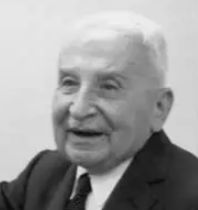
All this talk: the state should do this or that, ultimately means: the police should force consumers to behave otherwise than they would behave spontaneously.
2 months 1 week ago
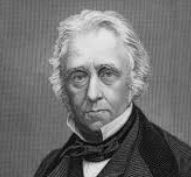
Hence it may be concluded that the happiest state of society is that in which supreme power resides in the whole body of a well-informed people. This is an imaginary, perhaps an unattainable, state of things. Yet, in some measure, we may approximate to it; and he alone deserves the name of a great statesman, whose principle it is to extend the power of the people in proportion to the extent of their knowledge, and to give them every facility for obtaining such a degree of knowledge as may render it safe to trust them with absolute power. In the mean time, it is dangerous to praise or condemn constitutions in the abstract; since, from the despotism of St. Petersburg to the democracy of Washington, there is scarcely a form of government which might not, at least in some hypothetical case, be the best possible.
▼
Source
source
pp. 161-162

4 months 2 weeks ago
The necessity of speaking, the predicament of having nothing to say, and the desire for tact are three things that can turn the greatest man into a laughingstock.

5 months 2 weeks ago
No matter how various the subject matter I write on, I was a science-fiction writer first and it is as a science-fiction writer that I want to be identified.
2 weeks ago
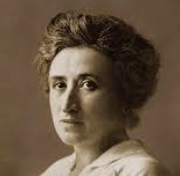
But here is the "ego" of the Russian revolutionary again! Pirouetting on its head, it once more proclaims itself to be the all-powerful director of history - this time with the title of His Excellency the Central Committee of the Social Democratic Party of Russia.

3 months 2 weeks ago
It shews the anxiety of the great men who influenced the conduct of affairs at that great event, to make the Revolution a parent of settlement, and not a nursery of future revolutions.
▼
Source
source
Referring to the Glorious Revolution of 1688
3 months 2 weeks ago
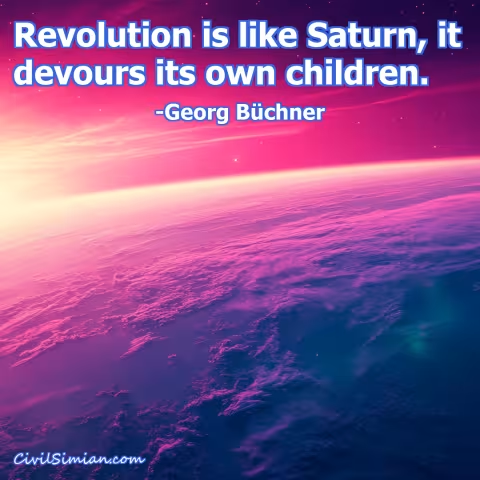
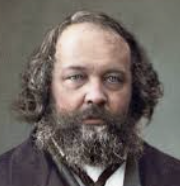
There can be no revolution without widespread and passionate destruction, a destruction salutary and fruitful precisely because out of it, and by means of it alone, new worlds are born and arise.
2 months 4 days ago
The students of physical science are not unfrequently told that their pursuits unfit them for the estimation of moral probability. And it may be so, for I am afraid that to those who are accustomed to severe reasoning, either in the province of Science or in that of Law, reasoning from 'moral probability' is apt to be regarded as a process of accumulating inconclusive arguments, in the hope that a great heap of them may, at least, look as firm as one good demonstration.
▼
Source
source
The Evidence of the Miracle of the Resurrection
3 months 2 weeks ago
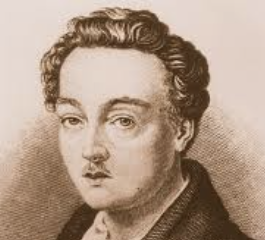
I'll know how to die with courage; that is easier than living.
▼
Source
source
Act II.

4 months 2 weeks ago
I am my world.
▼
Source
source
(The microcosm.) (5.63) Original German: Ich bin meine welt (Der Mikrokosmos.)

4 months 3 weeks ago
The difference between the most dissimilar characters, between a philosopher and a common street porter, for example, seems to arise not so much from nature, as from habit, custom, and education.
▼
Source
source
Chapter II, p. 17.
2 weeks 3 days ago
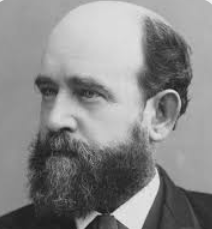
The primary error of the advocates of land nationalization is in their confusion of equal rights with joint rights, and in their consequent failure to realize the nature and meaning of economic rent... In truth the right to the use of land is not a joint or common right, but an equal right; the joint or common right is to rent, in the economic sense of the term. Therefore it is not necessary for the state to take land, it is only necessary for it to take rent. This taking by the commonalty of what is of common right, would of itself secure equality in what is of equal right - for since the holding of land could be profitable only to the user, there would be no inducement for any one to hold land that he could not adequately use, and monopolization being ended no one who wanted to use land would have any difficulty in finding it.
▼
Source
source
Part III : Recantation, Ch. XI Compensation

4 months 2 days ago
The Platonic doctrine of Ideas has been, in all ages, the derision of the vulgar, and the admiration of the wife. Indeed, if we consider that ideas are the most sublime objects of speculation, and that their nature is no less bright in itself, than difficult to investigate, this opposition in the conduct of mankind will be natural and necessary; for, from our connection with a material nature, our intellectual eye, previous to the irradiations of science, is as ill adapted to objects the most splendid of all, "as the eyes of bats to the light of day.
▼
Source
source
A Dissertation on the Doctrine of Ideas, &c." Footnote: see second book of Aristotle's Metaphysics.

1 month 1 week ago
A man perfects himself by work much more than by reading.
2 months 4 weeks ago
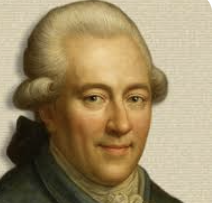
Actual aristocracy cannot be abolished by any law: all the law can do is decree how it is to be imparted and who is to acquire it.
▼
Source
source
L 44

4 months 2 weeks ago
Ha! to forget. How childish! I feel you in my bones. Your silence screams in my ears. You may nail your mouth shut, you may cut out your tongue, can you keep yourself from existing? Will you stop your thoughts.
▼
Source
source
Inès reiterating to Garcin that they cannot ignore one another, Act 1, sc. 5
1 month 1 week ago
The stupendous Fourth Estate, whose wide world-embracing influences what eye can take in?
3 months 2 weeks ago
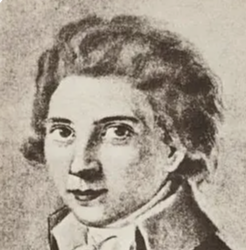
Only a man who is at one with the world can be at one with himself.
▼
Source
source
"Ideas," Lucinde and the Fragments, P. Firchow, trans. (1991), § 130

4 months 2 weeks ago
The measure of action is the sentiment from which it proceeds. The greatest action may easily be one of the most private circumstance.
▼
Source
source
Goethe; or, The Writer
3 months 2 weeks ago
Nothing is a better proof of how far humanity has regressed than the impossibility of finding a single nation, a single tribe, among whom birth still provokes mourning and lamentations.
2 weeks 4 days ago
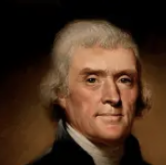
One of our fan-coloring biographers, who paints small men as very great, inquired of me lately with real affection too, whether he might consider as authentic, the change of my religion much spoken of in some circles. Now this supposed that they knew what had been my religion before, taking for it the word of their priests, whom I certainly never made the confidants of my creed. My answer was "say nothing of my religion. It is known to my God and myself alone. Its evidence before the world is to be sought in my life; if that has been honest and dutiful to society, the religion which has regulated it cannot be a bad one."
▼
Source
source
Letter to John Adams (11 January 1817), published in The Works of Thomas Jefferson in Twelve Volumes, Federal Edition, Paul Leicester Ford, ed., New York: G. P. Putnam's Sons, 1904, Vol. 12, pp. 48-49
3 months ago
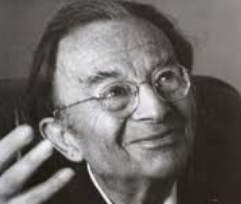
I believe that man is the product of natural evolution that is born from the conflict of being a prisoner and separated from nature, and from the need to find unity and harmony with it.

4 months 2 weeks ago
Consumption is also immediately production, just as in nature the consumption of the elements and chemical substances is the production of the plant.
▼
Source
source
Introduction, p. 10.
2 weeks 4 days ago
Freedom of the press, subject only to liability for personal injuries. This formidable censor of the public functionaries, by arraigning them at the tribunal of public opinion, produces reform peaceably, which must otherwise be done by revolution. It is also the best instrument for enlightening the mind of man, and improving him as a rational, moral, and social being.
CivilSimian.com created by AxiomaticPanic, CivilSimian, Kalokagathia